

AUSSIE motorsport legend Greg Crick has urged Supercars and Motorsport Australia to act in the best interests of the long-term health of drivers after some of the top stars in the sport were heat-affected in the Sunday race at the Dunlop Sydney 500 season-opener.
Winner Broc Feeney was visibly impacted when he stepped from his Red Bull Ampol Mustang in Victory Lane post-race at Sydney Motorsport Park, while teammate Will Brown and Team 18’s David Reynolds were both taken to the track’s medical centre after the end of the race.
Crick, who won the Targa Tasmania road rally twice and retired from racing in 2015, was badly affected by his body overheating while racing a Mercedes-Benz SLS AMG in the 2014 Bathurst 12 Hour.
The Tasmanian still suffers daily from the damage to his body, including it no longer being able to regulate its temperature.
He suffered moderate carbon monoxide poisoning but had more damage done to his body and brain by being ‘superheated’, essentially being cooked internally on the 39-degree race day while driving a double stint with no water and no cool suit.

Crick finished a stunning third alongside Will Davison and Jack Le Brocq in the GT classic – that included a titanic struggle with eventual winner Mika Salo’s Ferrari – but fell sick a few days later and ended up in and out of hospital for the months that followed.
He has strongly encouraged MA and Supercars to establish a more rigid heat protocol for drivers, to examine and implement enhanced understanding of post-race cooling methods, and sees air conditioning systems and monitoring of in-car cabin temperatures as crucial.
“I can only share what I have experienced and am living through daily and I don’t want these young blokes having to also deal with it in the near or long-term future,” Crick told V8 Sleuth this week.
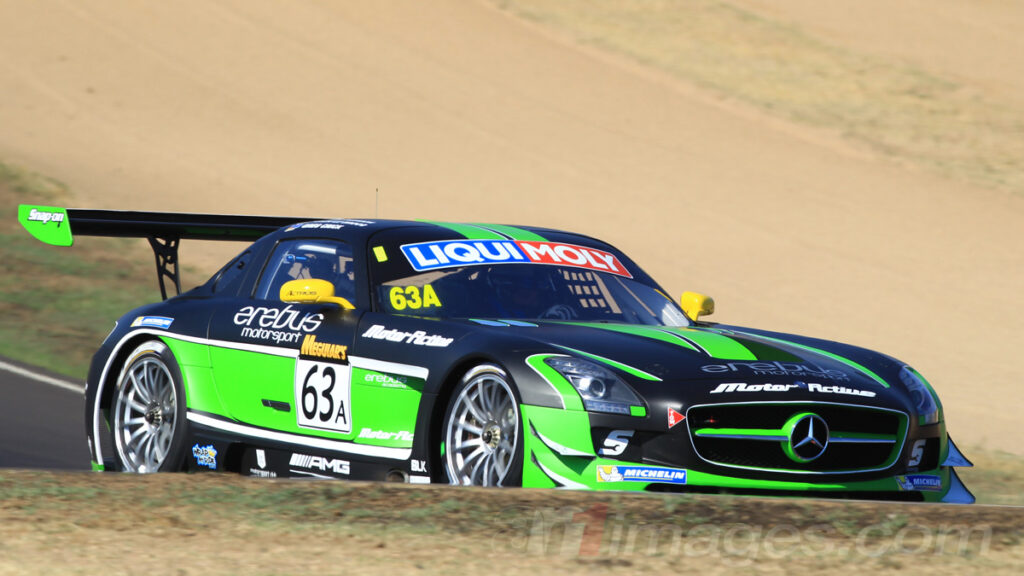 Crick turned in a sublime drive in the 2014 Bathurst 12 Hour, but it has come at a cost. Photo: an1images.com / Dirk Klynsmith.
“The cabin and core temperatures of the drivers need to be controlled, and should things get out of hand they (Race Control) need to be able to pull people into the pits when things have gone too far or systems fail.
“Safety is so important. Cars get black-flagged to the pits if they have flailing body work that could damage other cars or themselves, or has the potential of flying over the fence and hurting someone. This is no different. If something is unsafe from a driver health and heating perspective, it needs to be dealt with.

“There’s not many other sports that can compare to motorsport for extreme heat. When you’re covered up your body has no cooling mechanism.
“I’m certainly no doctor or medical expert; I can only relate how it’s affected me. It’s so important everyone close to these drivers understands the sort of care and treatment that is required and find as many ways as possible of avoiding heat to begin with, or the effects of it when it does have an impact.
“The difference with the body and brain-related issues is that they often don’t become apparent until down the track.
“We might only have one or two hot races a year that affect the drivers this way, but being affected by them on multiple occasions can all add up over a driver’s career.”

Crick, 71, made 13 Bathurst 1000 starts between 1989 and 2002, won the 1991 Australian Sports Sedan Championship and the 2006 Australian GT Championship in addition to his two wins in the Targa Tasmania road rally.
The Repco Supercars Championship returns to action in New Zealand next month at the ITM Taupo Super 440 on April 10-12.