
Rafiq Ziayee remembers the moment his friend Amamuddin Sadar died in his arms.
“I could see the pain and suffering in his eyes, and I was trying to do everything to save him, but I couldn’t,” he said.
Mr Sadar was one of three people stabbed by a man who had escaped from Cumberland Hospital on February 7.
Ten days after he absconded, police allege Setefano Leaaetoa went to a shopping strip in Merrylands armed with a knife and stabbed a woman inside a grocery store before attacking two men nearby, including Sadar.
His family have told 7.30 of the immense grief they are suffering.
Sadar’s partner, Becky Ramadani, said the loss had been devastating.
“He was my soulmate. He was my darling. He was my baby … we used to call to each other babe, we just had that connection,” she said.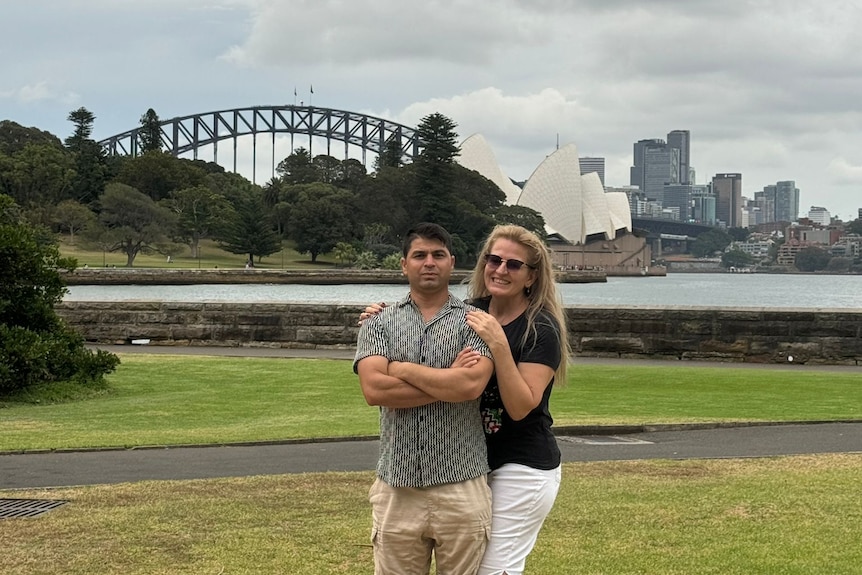
Amamuddin with his partner Becky. (Supplied)
Sadar arrived in Australia 13 years ago.
One of seven children, his family have travelled from across the globe for his funeral this week, including his sister Meena.
“He was more than a brother, more than a father. Like, I lost my everything on that day,” she said.Inside a broken system
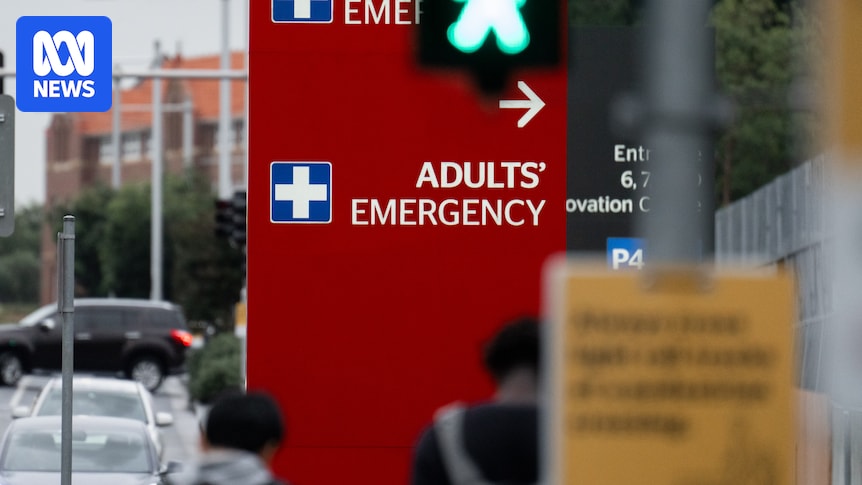
Cumberland Hospital was placed under administration after two separate abscondings resulted in the deaths of three people.

CCTV footage captures the moment Setefano Leaaetoa approaches a woman before she was stabbed in a Merrylands store.
The day after Sadar’s accused killer broke out, another patient escaped — Luke Francis is alleged to have stolen a car and caused a crash that killed two women.
Pramudie Gunaratne is the CEO of the Australian Society of Psychiatrists and has worked at Cumberland Hospital and several other public hospitals in New South Wales.
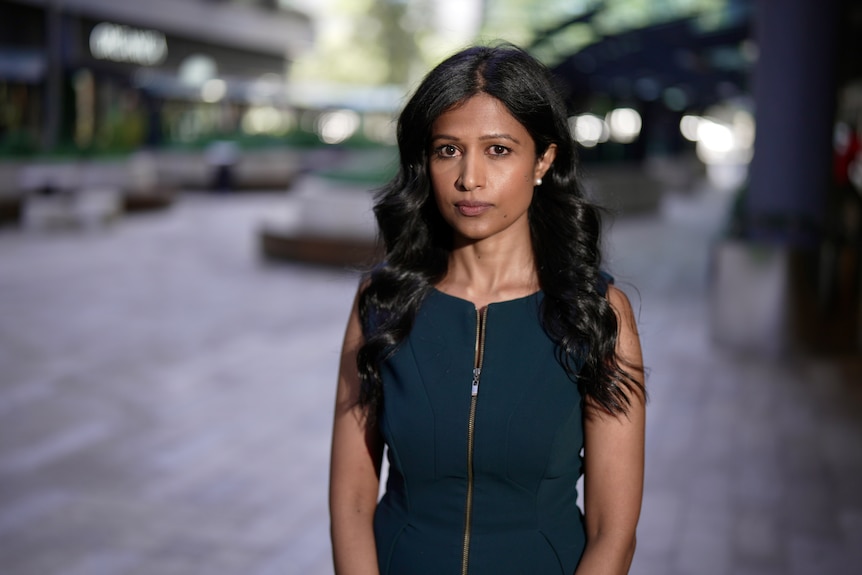
Pramudie Gunaratne says the problems faced by Cumberland Hospital are not isolated. (ABC News: Berge Breiland )
She says these events “could have happened in any hospital across our state”.
“The system has not had what it needs to be able to provide people with good quality care,” she said.
7.30 can also reveal a young man who was detained under mental health laws spent more than 100 hours in the emergency department at Westmead Hospital before he was able to get a bed in a mental health facility in Cumberland Hospital.
If you or anyone you know needs help:Suicide Call Back Service on 1300 659 467Lifeline on 13 11 14Aboriginal & Torres Strait Islander crisis support line 13YARN on 13 92 76Kids Helpline on 1800 551 800Beyond Blue on 1300 224 636Headspace on 1800 650 890ReachOut at au.reachout.comMensLine Australia on 1300 789 978QLife 1800 184 527
Pictures tracking the man’s stay in the emergency department show he was checked in just after 10:20am on March 1 but wasn’t given a bed until 9:25pm on March 5.
In the past week, another man waited four days and 13 hours before a bed was available.
One doctor speaking anonymously has told 7.30 that leaving a mental health patient who needs to be scheduled for such a long time is “akin to torture”.
Nick Howson has worked as a mental health nurse at Cumberland Hospital for a decade and says the problems at the facility are not new.
“It’s a shame, and it’s horrible that people died for this attention to come. We’ve been trying to get this spotlight on mental health services for a very long time,” he said.
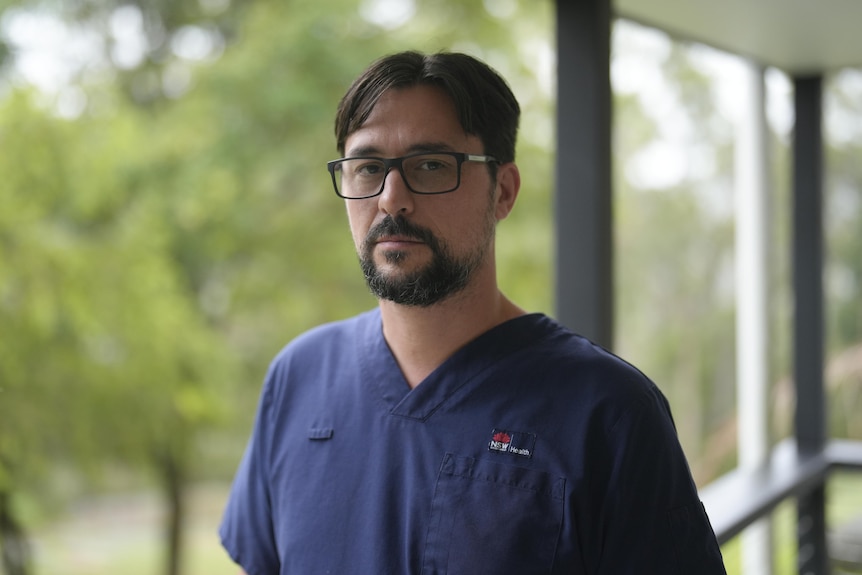
Nick Howson is a nurse at Cumberland Hospital. (ABC News: Jerry Rickard)
In response to the four-day wait times, a spokesperson for Western Sydney Local Health District told 7.30 it “acknowledges the frustration caused when wait times in the Emergency Department are longer than expected and apologises to mental health patients who have experienced this recently.”
It said it had designed contingencies for longer wait times, including a designated mental health area within the ED.
“On occasions when there are more mental health patients requiring admission than there are mental health beds available, patients begin treatment in another area of the emergency department, under the care of a psychiatrist.”
Hospitals, not prisons
Cumberland Hospital is scheduled to close in 2027 when a new mental health facility opens nearby.
While the facility is under administration, the hospital has been provided additional security guards to monitor patients.
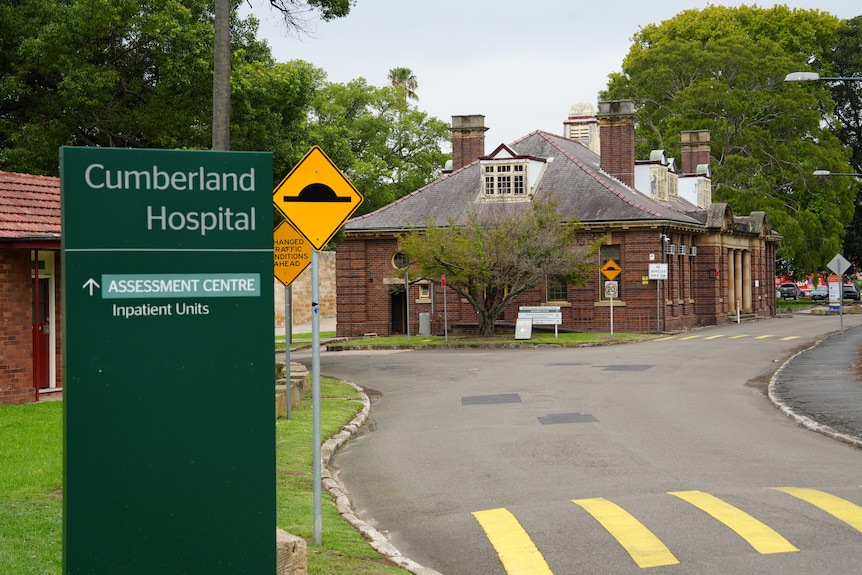
Cumberland Hospital is the largest mental health facility in Australia. (ABC News: Tamara Penniket)
But Mr Howson, who is also a union delegate for the Nursing and Midwives Association, says hospitals are not prisons and is sceptical about the move.
“The vast majority of people who abscond from hospital are people who have been granted leave and just decide not to return,” he said.
“They haven’t broken out, they haven’t hurt anybody, they haven’t run away from care.”
Psychiatrist Matthew Large is one of the administrators appointed to oversee Cumberland Hospital and says the system is being asked to do too much with the resources that it has.
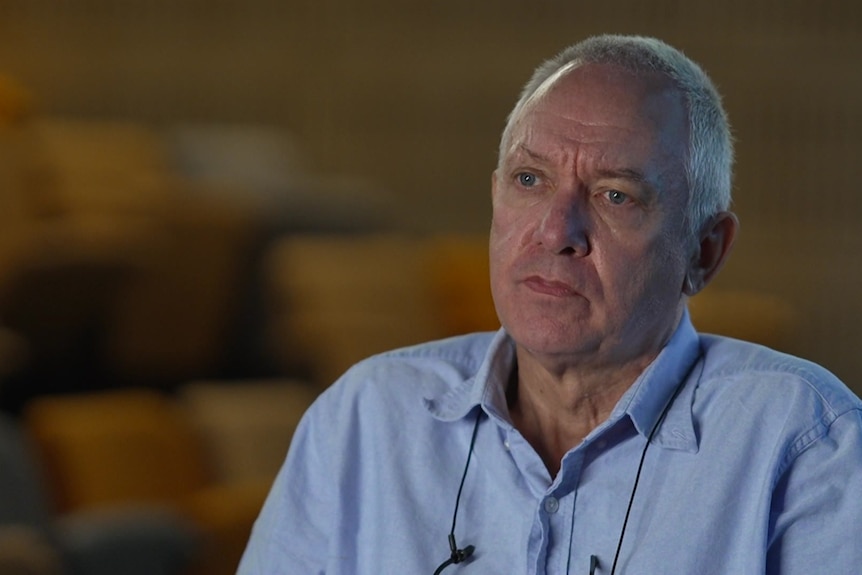
Matthew Large was appointed as one of the administrators of Cumberland Hospital. (ABC News: Laurence Curson)
Dr Large said improving services would require additional funding.
“I don’t think it’s possible to reform mental health care without incurring some additional costs,” he said.
“Mental illness currently accounts for something like eight to 10 per cent of the disability associated with all medical problems, but is funded at a level of about three or four per cent.”
‘Complete decimation’ of services
Among the most urgent areas needing reform is funding for the number of beds available at mental health hospitals.
“In Australia, we have 27 beds per 100,000 people. If you look at the international standard, it should be around 60 or above,” Dr Gunaratne said.
“Then if you look at community care, there is just a complete decimation of our outreach community health services, which means that people need to reach crisis point before they can actually access care.”
Data provided to 7.30 shows 21,923 patients were admitted involuntarily to mental health facilities across NSW last year.
In 2025, there were 191 instances where a patient kept involuntarily at a mental health unit absconded.
NSW Mental Health Minister Rose Jackson told 7.30 in a statement that serious adverse incidents from absconding patients are “extremely rare”, at less than 0.01 per cent.
She also said the state government was investing heavily in the system.
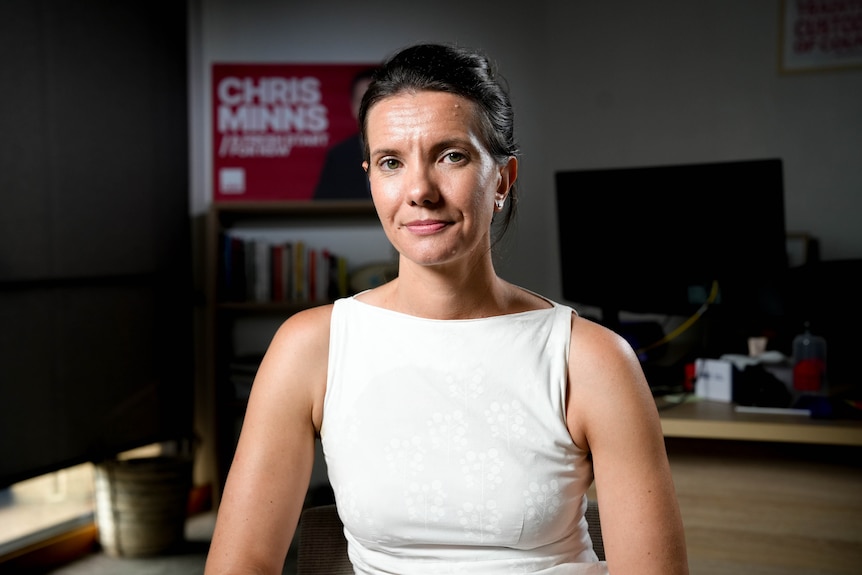
Rose Jackson is the NSW mental health minister. (ABC News: Marcus Stimson)
“For the first time in the last budget, the mental health budget in NSW topped $3 billion. So that is the first time mental health investment had a three in front of it,” she said.
“There is real money going into mental health broadly and specifically into the site at Cumberland with the new Westmead build.”
Dr Gunaratne says preventative and proactive measures need to be a key focus in improving mental health care.
“If we want to prevent these sorts of things happening, the best thing that we can do is to improve our mental health services so that we can actually provide care for people much earlier in the piece before they become so unwell,” she said.
Watch 7.30, Mondays to Thursdays 7:30pm on ABC iview and ABC TV
Contact 7.30
Do you know more about this story? Get in touch with 7.30 here.