
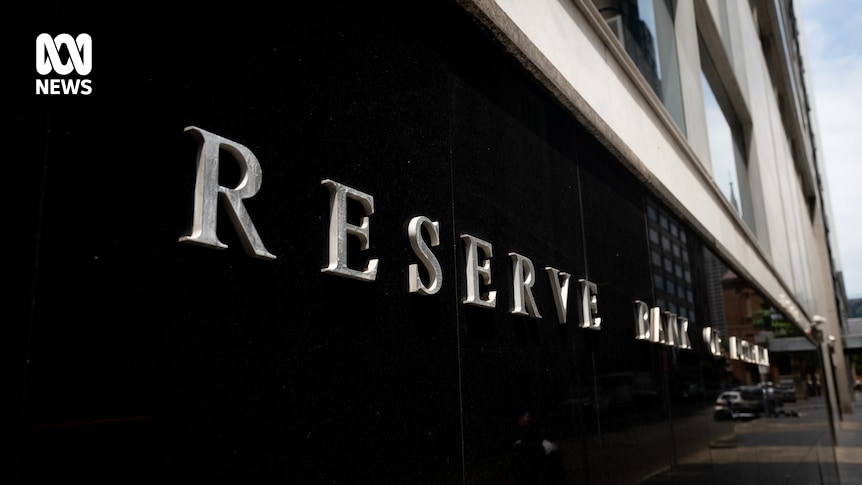
A number of leading economists are forecasting the Reserve Bank will hike interest rates next week, which will be a blow to mortgage borrowers as inflation pressures rise.
Financial markets and most economists had previously considered May the most likely timing of another rate rise, after the 0.25 percentage point hike in February.
However, with inflation already rising ahead of the Middle East war sparking oil price pressure, some economists have shifted their forecasts, bringing the timing forward to March.
Market pricing indicates a nearly 70 per cent chance of a hike on Tuesday, according to data from LSEG — up from about a 30 per cent chance earlier this week.
Economics teams at major banks Commonwealth, NAB, and Westpac have forecast two 0.25 percentage point hikes in March and May, which would raise the cash rate to 4.35 per cent.
“This is a change from our previous view of a single hike in May with further hikes as a risk only,” Westpac chief economist Luci Ellis said.
“The effect of higher oil prices on headline inflation is large but temporary.
“The RBA Monetary Policy Board will nevertheless feel compelled to react, especially given the hit to confidence and financial markets has so far not been severe.”
NAB chief economist Sally Auld cited “hawkish commentary” from RBA governor Michele Bullock and her deputy Andrew Hauser over the past week, which she said “contains more signal than noise”.
“It is clear from their commentary that senior RBA officials are inclined to view the Iranian conflict as an inflationary shock,” Ms Auld said.
However, economists at ANZ have so far maintained their calls for one further hike in May.
According to comparison site Canstar, a rate hike in March and May would increase the minimum monthly repayments on an $800,000 loan by an estimated $182.
Estimated change to monthly minimum mortgage repaymentsHome loan sizeMarch hikeMarch and May hikes (cumulative)$600,000$91$182$800,000$121$243$1 million$151$304Source: Canstar.com.au Notes: based on an owner-occupier paying principal and interest with 25 years remaining in Feb 2026 at the RBA average existing customer variable rate. Calculations assume banks pass on the hikes the month after. Changes are to minimum repayments.
“Borrowers hoping the worst of the rate hikes are behind them might need to brace themselves,” Canstar data insights director Sally Tindall said.
“However, the split among the big four forecasts highlights just how uncertain the outlook currently is.
“The RBA is walking a tightrope between tackling persistent inflation and avoiding pushing too hard.”Hawkish Hauser ignites March hike bets
Many market economists have altered their forecasts following an interview on Tuesday between The Conversation’s Michelle Grattan and RBA deputy governor Andrew Hauser.
Mr Hauser’s language in the interview indicated that the central bank was growing impatient with the length of time taken to return inflation to the bank’s target of 2.5 per cent.
“If we fail to act decisively enough to prevent inflation staying high or even rising … it will be bad for everyone and it’s worth us continuously reminding ourselves just how toxic inflation is,” the deputy governor said.
“We’ve only just had an experience of that and we don’t want to go through that period again.”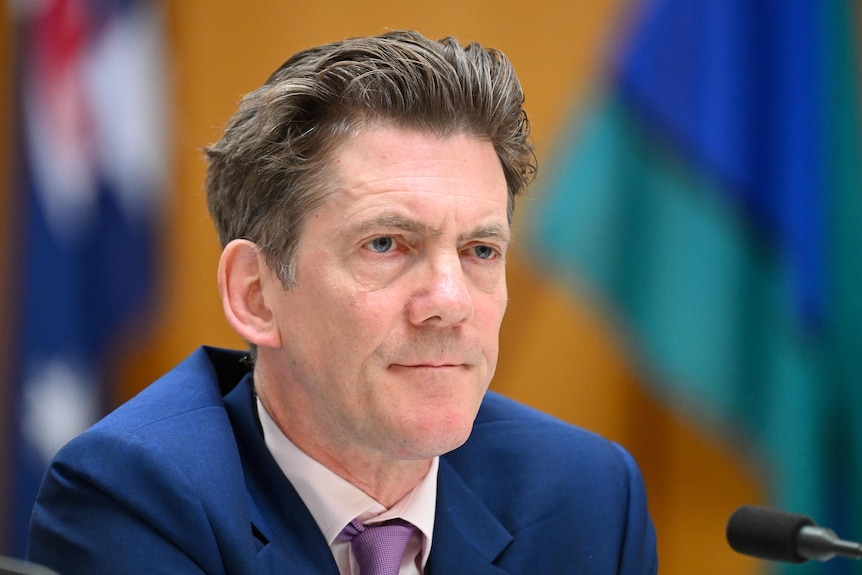
Andrew Hauser says a failure to act decisively will result in a bad outcome “for everyone”. (AAP: Lukas Coch)
His remarks followed comments from RBA governor Michele Bullock, who expressed concern last week that inflation expectations, in the short-term, were getting uncomfortably high.
“Inflation expectations” refers to where households and businesses think prices are heading in the future, which can influence their behaviour and therefore feed into actual price moves.
The fear that short-term inflation expectations are rising is directly related to the Middle East war and the ongoing potential for an oil supply shock and the impact that would have on energy prices.
“It’s too early to say what the impact will be,” Ms Bullock told an Australian Financial Review conference last week.
“A supply shock could, for example, add to inflation pressures.
“And the potential implications for inflation expectations are something we are very alert to.”
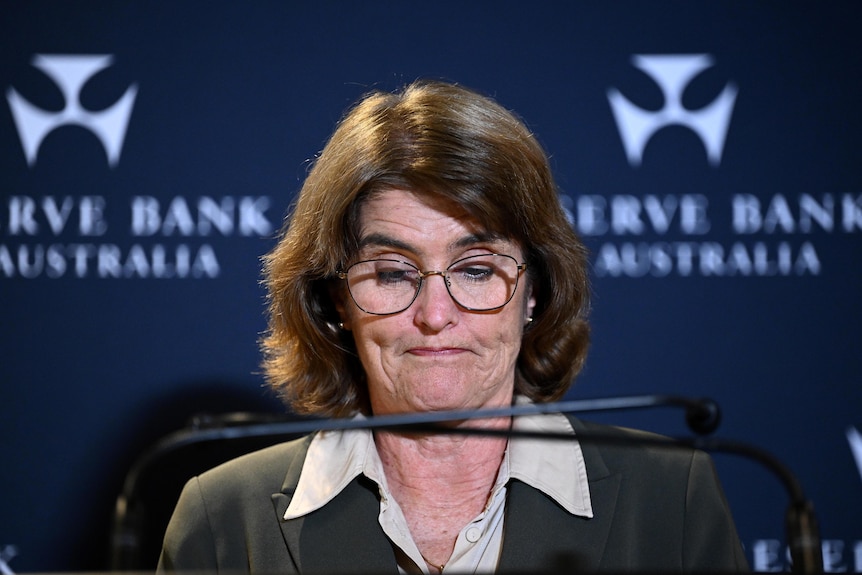
Michele Bullock says a supply shock caused by the war in the Middle East could add to inflation pressures. (AAP: Dan Himbrechts)
Ms Bullock said the RBA had not ruled out a rate hike in March, saying “every meeting is live”.
Bank of America Australia and New Zealand’s Nick Stenner said there was now a “material” upside risk to inflation and was forecasting an interest rate hike on Tuesday.
Iran war-led fuel crisis worst some have seen
In addition to the concerns around the impact of the Middle East war, the RBA has been grappling with a tight labour market, already elevated inflation, and flatlining productivity.
Low levels of productivity, Mr Hauser said, were limiting the economy’s capacity to grow without generating inflation.
“We have seen a wave of growth in our recent past, but we are not seeing the same productive capacity strength today,” he said.
That comment has raised some eyebrows among some analysts, who have a more optimistic view of economic capacity.
Australia’s economy growing at fastest rate in almost three years
“Key information shifting our view is RBA communication revealing it has not changed its pessimistic view of growth in supply capacity following the national accounts, even though data revisions, consumption and unit labour costs paint a more benign picture,” Westpac’s Dr Ellis said.
“In addition, it has signalled a willingness to respond to the spike in headline inflation to head off a sustained rise in inflation expectations.”
The longer the Middle East war drags on, economists say, the higher the risk that inflation will run away, leaving global central banks, including the RBA, playing catch-up with monetary policy.
Expert analysis on the Middle East:
“The conditions for a sustained acceleration in inflation were in place even before the Iran conflict broke out,” Capital Economics senior economist Abhijit Surya said.
“With the spike in energy prices adding further pressure, the risk is that the bank will fall further behind the curve if it doesn’t act decisively to tighten policy.”Loading…
Deutsche Bank chief economist Phil O’Donoghue has suggested it would be in the RBA’s interests, therefore, to lift interest rates sooner rather than later but that one rate hike may be enough.
“One additional rate hike remains our base case, but the risk of that three-in-a-row scenario has increased enough for us to change the timing of our base case so that it becomes a possibility,” Mr O’Donoghue said.
Deutsche Bank now sees one more 0.25 percentage point hike in March, rather than May, taking the cash rate to 4.1 per cent.