
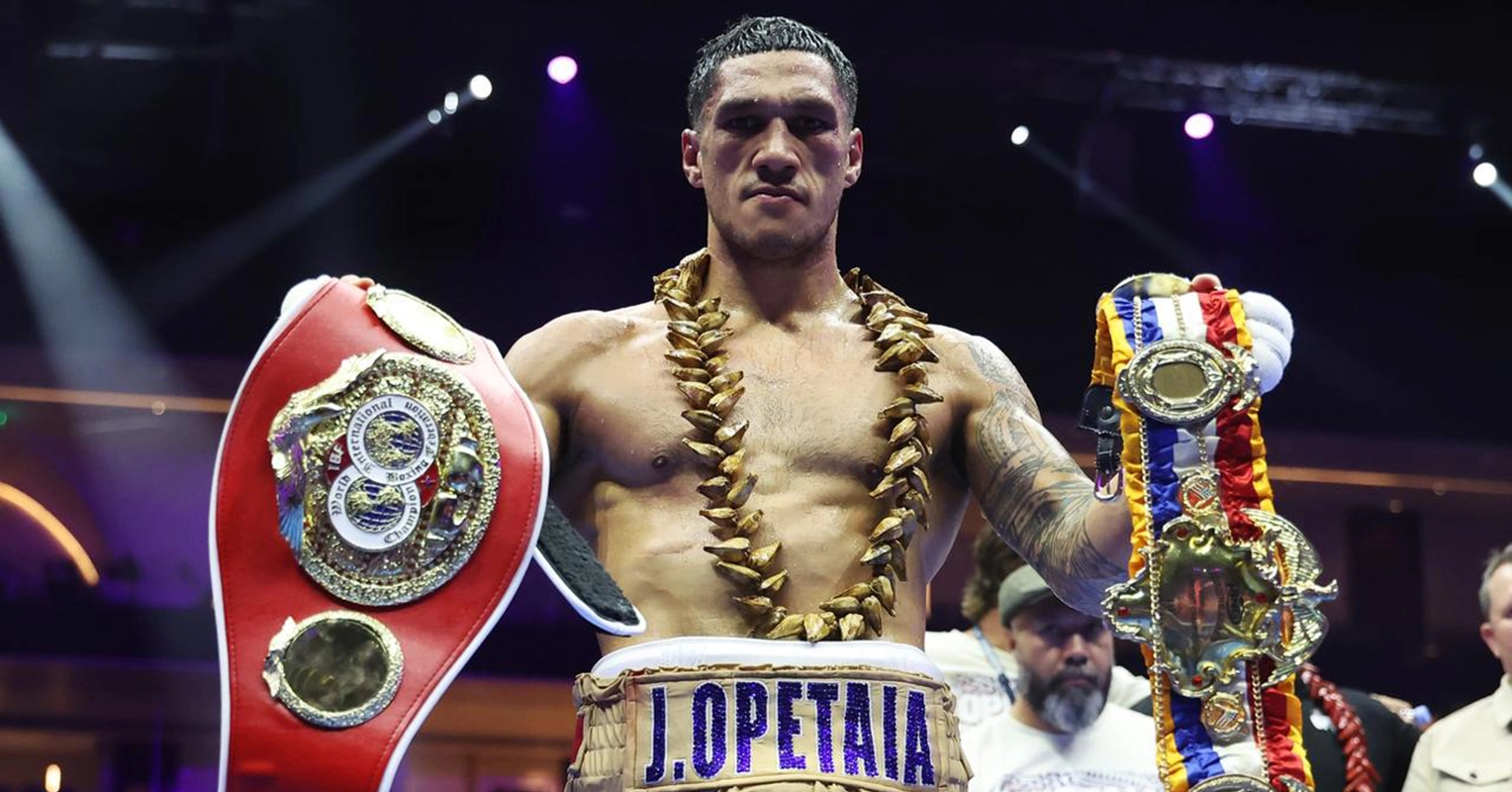
Las Vegas-based attorney Jordan Smith, representing IBF cruiserweight champion Jai Opetaia (30-0, 23 KOs), has sent a formal preservation notice to the International Boxing Federation alleging that its decision to withdraw sanctioning for his March 8 title defense against Brandon Glanton was the product of “coordinated, industry-wide collusion” designed to punish the Australian for working with Zuffa Boxing.
The letter, reported by Ring Magazine on March 10, is a preservation notice, not a filed lawsuit. It alleges the IBF was “aided and abetted by other sanctioning bodies and promoters” to inflict financial and reputational harm on Opetaia, and specifically names the WBC, WBA, WBO, and Matchroom Boxing as entities that may possess documents relevant to the claim.
Opetaia defeated Glanton by unanimous decision on the Zuffa Boxing 04 card at MGM Grand in Las Vegas, but the IBF did not recognize the bout as a title defense. His IBF championship status is currently listed as “in deliberation,” with the sanctioning body yet to formally strip him despite its own Rule 5.H stating that a champion who competes in an unsanctioned contest at their weight limit forfeits the title.
How the Sanction Unraveled
The IBF formally sanctioned the Opetaia vs. Glanton bout on March 5, according to the organization’s own statement. Sean Gibbons, representing Manny Pacquiao Promotions/Knucklehead Boxing, had submitted an application listing his outfit as the promoter after weeks of negotiations over the IBF’s concerns about the Zuffa belt being presented alongside its title.
On the morning of March 6, the IBF received a $73,000 sanctioning fee via wire transfer. That afternoon, at the pre-fight press conference at MGM Grand, IBF officials saw the Zuffa World Cruiserweight title presented as, in their view, the primary championship rather than a “token of recognition” they said they had been promised.
By 8:22 PM that evening, IBF President Daryl Peoples withdrew the sanction via email, writing that “the IBF was presented as secondary” and calling the situation “the embarrassment I was trying to avoid.” The organization returned the $73,000 fee by wire transfer the following day, March 7.
The IBF’s official statement denied acting out of spite and insisted it had operated in “good faith” based on assurances that the Zuffa belt would be treated as a mere trophy. The statement also pushed back against media reports that the dispute was about the physical placement of the IBF belt on the table, noting that “the words ‘belt’ and ‘placement’ were not included in the email at all.”
The Allegations
Smith’s preservation notice goes further than disputing the timeline. According to Ring Magazine, the letter claims Opetaia is “aware of messages between high-level executives essentially admitting to the scheme” and warns that the IBF and its “co-conspirators face substantial civil (and criminal) liability.”
Opetaia himself, speaking after the Glanton fight, framed the dispute as something above his pay grade.
“I honestly don’t know what’s going on. I’ve respected the belt, done everything in my power to keep the belt. I had the double weigh-in, abided by their rules. I’m really hoping they can put the nonsense aside. The beef is not between me.”
Opetaia completed the IBF’s required same-day weigh-in ahead of the bout, coming in at 210.7 pounds, well within the 214-pound cruiserweight limit. He wore the IBF belt into the ring and displayed it during post-fight interviews.
The IBF acknowledged in its own statement that Opetaia may not have been fully briefed by his advisors, noting that his “post-fight press conference” comments “have led the organisation’s leadership to question whether he was made completely and fully aware by his advisors of the decisions he needed to make.”
Zuffa’s Posture
Dana White, the head of Zuffa Boxing and CEO of the UFC, has been blunt in his characterization of the sanctioning bodies’ conduct.
“It’s pretty clear what they’re doing and what’s going on and I see lawsuits coming, that’s what I see,” White said. “He wanted to fight for the belt… the guy has fought for the IBF title like 11 times or something, broke his jaw in two places one time and finished the fight, and that’s the way they’re going to do it? It’s very, very odd and very unprofessional.”
White also pointed out that the IBF’s supervisor “flew over here and got his per diem and hopped back on a f***in’ plane and flew back” despite the sanction being pulled before fight night.
What a Vacancy Would Mean
If the IBF ultimately strips Opetaia, the fallout extends beyond the legal arena and into the cruiserweight division itself. According to World Boxing News, the IBF currently lists no No. 1 or No. 2 contenders at cruiserweight, an unusual vacancy in the rankings that would complicate ordering a title fight. The organization might be forced to match its No. 3 and No. 4 ranked fighters, Chris Billam-Smith and Mateusz Masternak, for the vacant belt.
More pressing for Opetaia is the impact on his path to becoming undisputed. The Australian had targeted the winner of Gilberto “Zurdo” Ramírez vs. David Benavidez, scheduled for May 2, as his route to holding all four major belts. Losing the IBF title would downgrade any such fight from an undisputed bout to a unification.
“I’ve been stripped once before and I’ve been stripped again,” Opetaia said. “I’ll be getting the belt back and will become undisputed.”
The IBF is still deliberating. Opetaia’s legal team has put the broader industry on notice. The next move belongs to either the sanctioning body or the courts.