
The WA government has ruled out using its unique power to temporarily cap the price of petrol to stop gouging from retailers, as leaders held an urgent meeting to discuss exorbitant hikes in the cost of fuel amid the Middle East war.
The cost of unleaded petrol in Perth has risen by 63.4 cents per litre in just a week amid massive volatility in the global oil price since US and Israeli strikes on Iran ignited war on February 28.
Motorists were paying an average of $2.27 per litre on Wednesday, with some fuel stations charging up to $2.45.
The WA government has urged motorists to “shop around” for cheaper fuel, maintaining there are no direct impacts to supply as a result of the war and blaming the increased demand on panic buying.
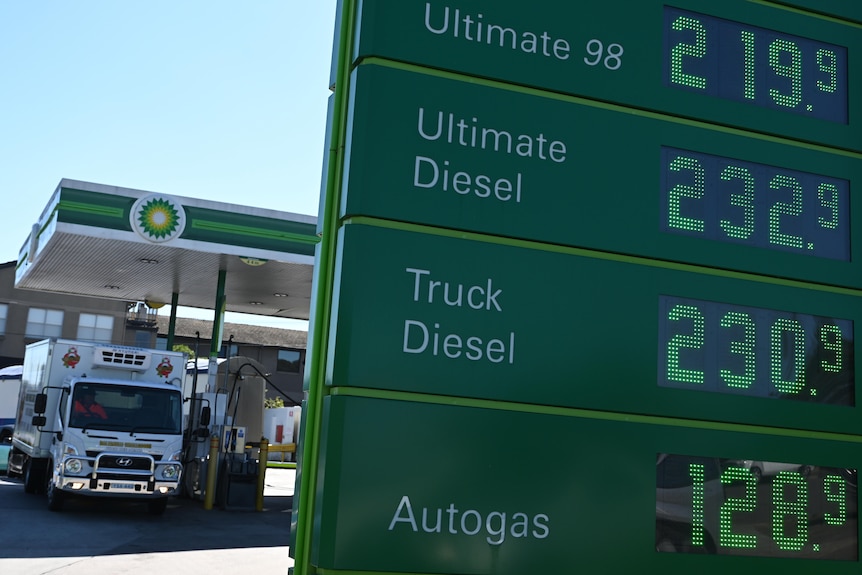
Petrol prices are soaring around Australia. (AAP: Lukas Coch)
Premier Roger Cook said the government would “do what it takes” to minimise the impact of the hikes.
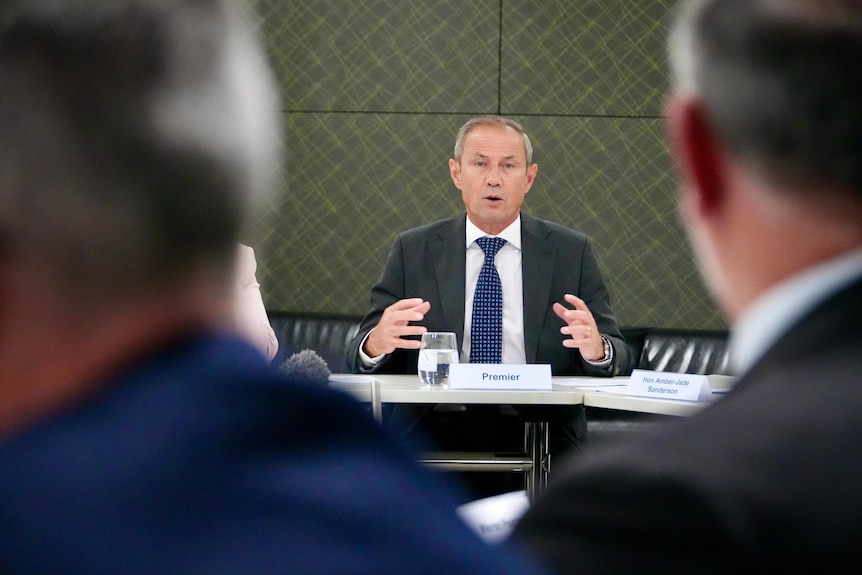
Roger Cook says his government is examining ways of minimising petrol price pain. (ABC News: Courtney Withers)
He was speaking as key government ministers held an urgent meeting on Wednesday with representatives from the farming, commercial airlines and fuel industries.
No price cap
Following the roundtable, Premier Cook said a price cap would not be implemented.
In WA, a unique law allows the state government to enforce price fixing measures to prevent gouging from fuel retailers.
Docked boats, idle tractors: The Iran war fuel crisis is hurting Australia
Premier Cook said the laws were passed in a “bygone era” when muster stations were abusing their position in the fuel market.
“I think it was unanimous in the room that we don’t need price caps but we do need calm,” he said after the meeting.
“Assuring people in relation to supply is the best way we can do that and we are committed to that task.”
He also revealed measures the state government will take to address concerns around fuel supply.
They include prioritising fuel and fertiliser imports through WA’s ports and the timely restocking of fuel in regional WA.
A new industry operational group will also meet weekly to manage domestic supply chain issues as they arise.
“It was an important meeting because what it did is bring people together,” he said.
“The Middle East crisis we can’t control, but we can control how we respond to it and we can work together to make sure we get through it.”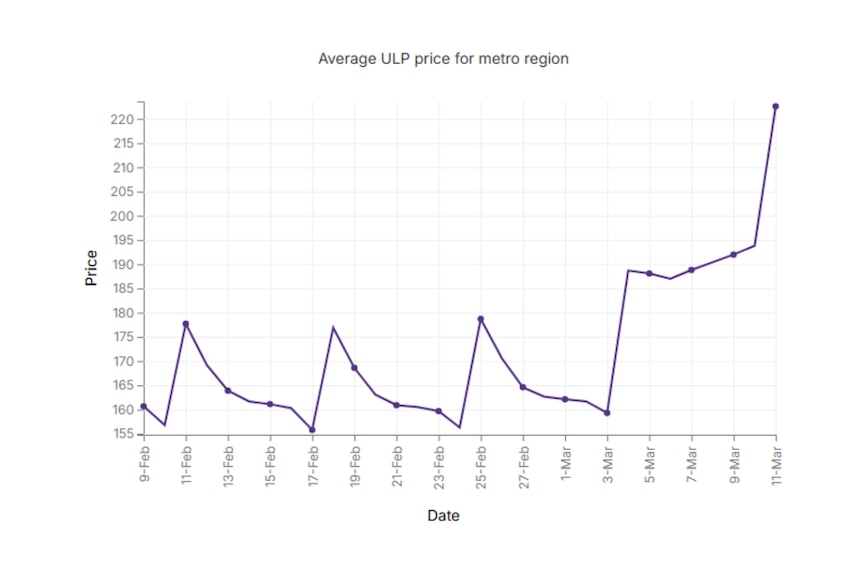
The average cost of unleaded petrol across Perth at the moment, showing how the ‘cheap Tuesday’ cycle has been disrupted. (Supplied: FuelWatch)
Price controls on fuel have not been implemented since WA’s fuel price comparison website FuelWatch was launched in 2001.
‘Shop around’
Mr Buti said the best way for motorists to avoid high pricing is to “shop around”, but said there was “no evidence” of price gouging.
He noted some regional towns were selling fuel cheaper than Perth on Wednesday.
But the situation was impacting farmers.
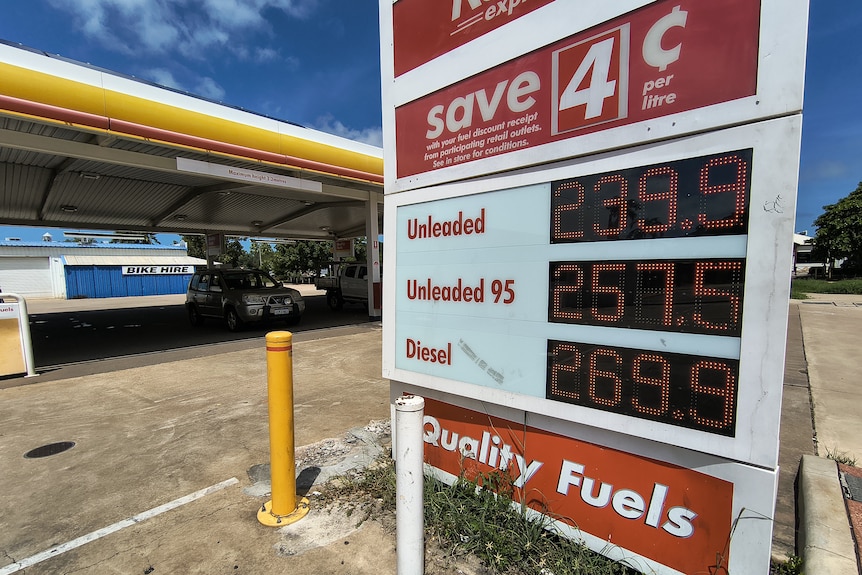
Fuel prices are displayed at a petrol station in Broome. (ABC News: Andy Seabourne)
Kojonup farmer Gordon Coleman said he purchased a 20,000 litre fuel tank during the pandemic but has been told, just two weeks from his planned seeding this year, he could only acquire 10 per cent of that capacity from his supplier.
“They’re [the government] saying there’s no shortage, no issues, whereas the reality that we’re seeing for several days now is the opposite,” he said.
How does Perth’s fuel cycle work?
Perth has a unique fuel pricing system compared to other capital cities, with the city subject to a weekly price cycle that results in Tuesday being the cheapest day to buy petrol.
However, the Middle East War has disrupted that cycle — with the average cost of fuel this Tuesday significantly higher than Monday.
“We’re being told from our suppliers from above them that there are restrictions on what they’re getting.”
Amy Dyer said operations at her mixed crop and sheep farm near Manjimup have been disrupted due to diesel supply uncertainty.
“The big decision that we are having to make, along with everyone else, is whether or not we go ahead with seeding,” she said.
For Carnarvon citrus and vegetable grower Tam Chinnery, high fuel prices are adding to what’s already been a challenging season, where her farm has suffered losses due to heatwaves and a cyclone.
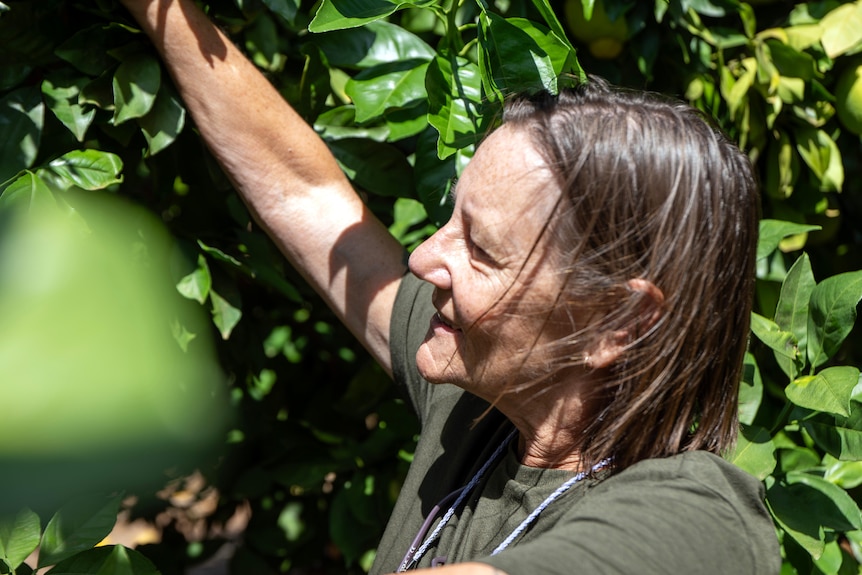
Carnarvon citrus grower Tamara Chinnery. (ABC Mid West Wheatbelt: Chris Lewis )
She said if price hikes aren’t passed onto consumers, she will simply be forced to stop growing.
“Fuel prices are another whammy after a bit of a shocking summer,” Ms Chinnery said.
Opposition wants clarity
Opposition Leader Basil Zempilas urged Mr Cook to “come clean” on the extent of the problem and what action the government is considering.
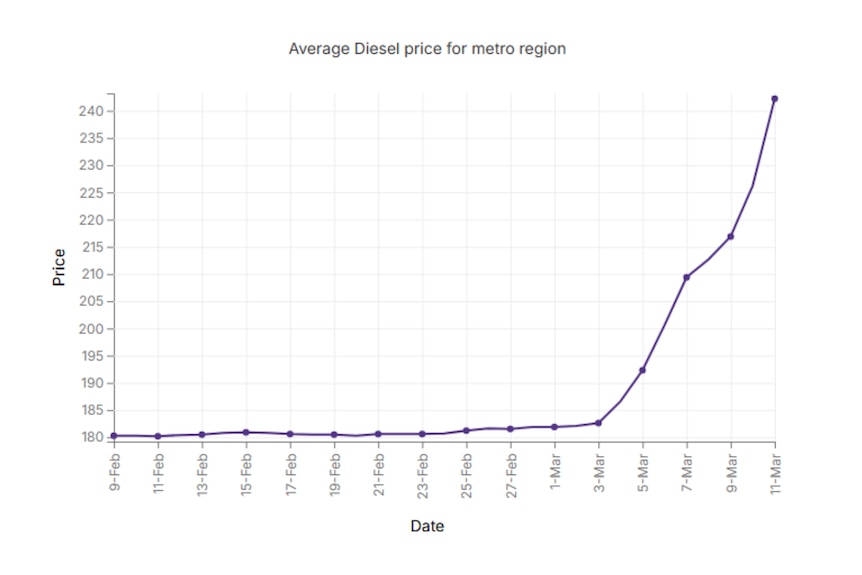
The average cost of diesel across Perth at the moment. (Supplied: FuelWatch)
“Tell us the situation — what are our fuel supplies like, are we in danger of running out?” Mr Zempilas said.
“If we are in danger of running out, or need to ration fuel, how is that going to be managed?”