
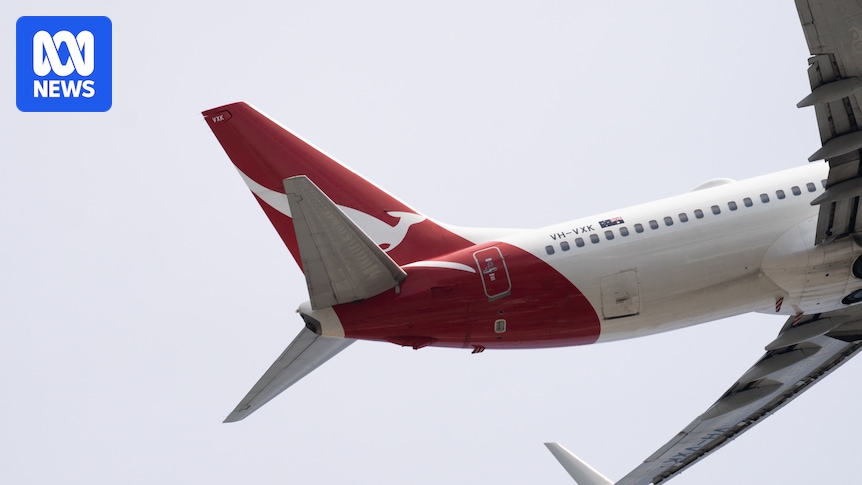
As Qantas hikes the cost of international flights in response to rising fuel prices, industry experts are warning it’s only the start of what’s to come.
Along with carriers around the world, Qantas has announced it’s increasing airfares after jet fuel costs rose “up to 150 per cent over the past fortnight”.
Iran war live updates: For the latest news on the Middle East crisis read our blog.
The Middle East war has disrupted the flow of oil through a key export corridor — the Strait of Hormuz — causing prices to soar from $85 to $90 a barrel to between $150 and $200, in US dollars.
While Qantas said its price changes would vary from route to route, Dean Long from the Australian Travel Industry Association said the carrier’s international airfares would rise by about 5 per cent across the board.
But he said the war’s full impact on flight prices would not be felt for another three to six months.
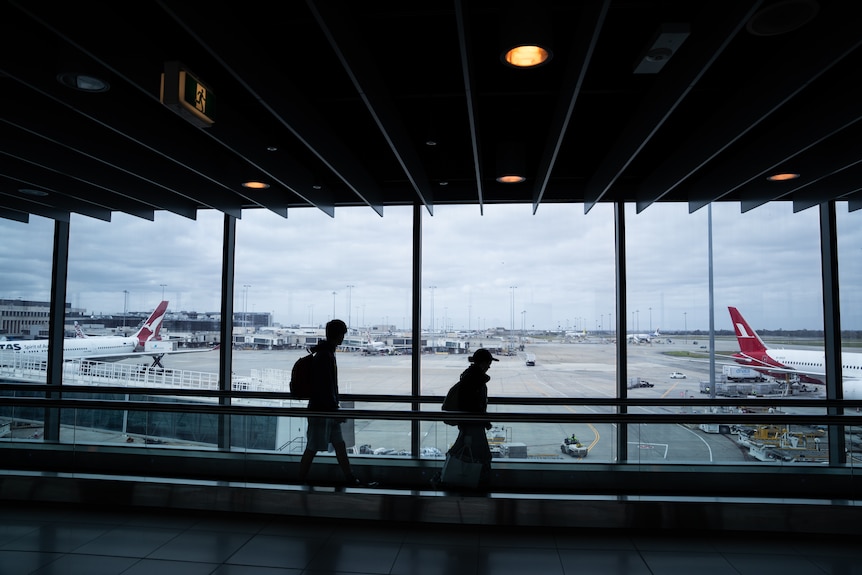
The Middle East conflict has seen fuel costs surge and disrupted key air routes. (ABC News: Matt Roberts)
Why are airfares increasing?
A surge in fuel costs is not the only reason airfares are increasing — flight cancellations are contributing, too.
More than 43,000 flights have been cancelled globally since the crisis began in the Middle East, according to aviation analyst Cirium.
Loading
Mr Long said the war had resulted in the grounding of about half of Australia’s flights to and from Europe.
“That increase in demand through Asia has definitely seen some airfares spike,” he told ABC News Channel.
“We’re also seeing some increases in flights through to North America because people are choosing to go that way to get to Europe.”
Asian hubs boom as Australians avoid Middle East airspace
Some routes have also had to change in order to avoid restricted airspaces.
For example, Qantas’s direct flight between Perth and London now temporarily includes a refuelling stop in Singapore, allowing the airline to avoid flying near the conflict zone.
When will airfares really increase?
While Qantas is hiking international airfares this week, Mr Long said it would take “three to six months” for rising fuel costs to have a real effect on flight prices.
That’s because many airlines hedge against volatility in the global oil market by securing some of their fuel in advance at fixed prices.
“The good news is a lot of the airlines have that three-to-six month strategy of hedging, so that means about 80 per cent of their fuel costs are hedged,” Mr Long said.

Dean Long says rising fuel costs will really start to have an impact on airfares in three to six months. (ABC News: Billy Cooper)
“That means they’ll be operating off the old cost of oil.”
Major Asian and European airlines have oil hedging in place, but US airlines largely stopped the practice in the past two decades.
Tom Fitzgerald, vice-president of equity research on six major US airlines and Air Canada at TD Cowen, said those airlines would feel the brunt of rising fuel costs.
“We assume the airlines are able to recapture a portion of the spike in fuel prices, but it’s hard to envision margin expansion this year barring a rapid decline in energy prices,” he said.
Read more about the Iran war:Will the price of domestic airfares increase?
At the moment, Qantas said it had only increased the cost of its international airfares.
However, other airlines around the world have already passed on fuel increases to both domestic and international flights.
“The good news is, according to the government, there is plenty of aviation fuel in the market today,” Mr Long said.
“That will hold the prices of domestic travel down to some extent.”
But higher airfares could also result in fewer international tourists travelling to Australia.
“The issue for the airlines now is that travel demand may be curtailed as costs become prohibitive for leisure travellers and as some companies start to limit business travel due to the uncertain outlook,” said Morningstar’s director of equity research in Asia, Lorraine Tan.
Higher airfares could result in fewer international travellers coming to Australia. (ABC News: Billy Cooper)
What’s happening around the world?
Like Qantas, carriers around the world are hiking airfares in response to the Middle East war.
Air New Zealand was one of the first airlines to announce broad increases to ticket prices — raising one-way economy domestic fares by $NZ10 ($8), short-haul international services by $NZ20 ($16) and long-haul flights by $NZ90($75).
Mapping the narrowing paths airlines are flying from Asia to Europe
Hong Kong Airlines said it would raise fuel surcharges by up to 35 per cent, while Air India has also announced a phased increase on domestic and international routes.
But some European carriers said there was no immediate need to raise prices.
For example, British Airways said it was well hedged for the near term and had no plans to adjust fares, but has brought forward the end of its winter-season flights to Abu Dhabi because of the “continuing uncertainty.”
When will airfares return to normal?
Mr Long says higher airfares will remain an issue for as long as the Middle East war continues to disrupt global oil trade.
“It’s really going to depend on how long the conflict goes for and how quickly those oil refineries can be turned back on,” he said.
“Going forward, outside of that six months is where we’re going to see those price increases really take off if we don’t see a cease in the conflict in the Middle East.”
ABC/Reuters
How Australians can protect their travel plans
Don’t panic-cancel: If your flight via the Middle East is booked soon, wait for your airline to make any cancellations to preserve your refund and re-booking rights.
Check alternative routes: Consider flying via Asia, North America, or carriers that avoid Middle Eastern airspace.
Book flexible fares: If possible, choose tickets with cancellation options.
Accommodation flexibility: Stick with free-cancellation or refundable bookings whenever possible.
Use accredited travel agents: They can help navigate options, re-book flights, and advise on the safest and most efficient routes.
Stay informed: Follow your airline’s app, DFAT travel advice, and Smartraveller updates to track changing conditions.
Travel insurance: Most travel insurance policies don’t cover disruptions caused by war, so check coverage carefully before relying on it.
Airline refund and booking policies (subject to change)
Middle East and Gulf carriers:
Emirates: Offering full refunds if a flight is cancelled or passengers choose not to travel with flight bookings to March 31.Qatar Airways: Offering full refunds or free re-booking on the unused value of tickets for travel dates between February 28 and March 15.Etihad Airways: Passengers booked to travel between February 28 and March 21 can request a full refund or free re-booking until May 15.
European and other international airlines:
Lufthansa, British Airways, United Airlines, Singapore Airlines, Wizz Air: Offering full refunds or free re-booking for flights to and from the Middle East for affected travel until March 15.
Australia:
Qantas: Continuing to operate its QF9 Perth–London service, with a refuelling stop in Singapore due to the longer route required to avoid restricted airspace.Loading…