
City of Moreton Bay and Wide Bay have the state’s highest rates of young people medicated for anxiety, depression and ADHD.
One in 10 children aged under 18 in places like Caboolture, Redcliffe, Maryborough and Gympie are seeking medical attention for these conditions as diagnosis rates skyrocket, the latest federal data shows.
These figures from 2023-24 are almost double the rates of medication from 2014-15.
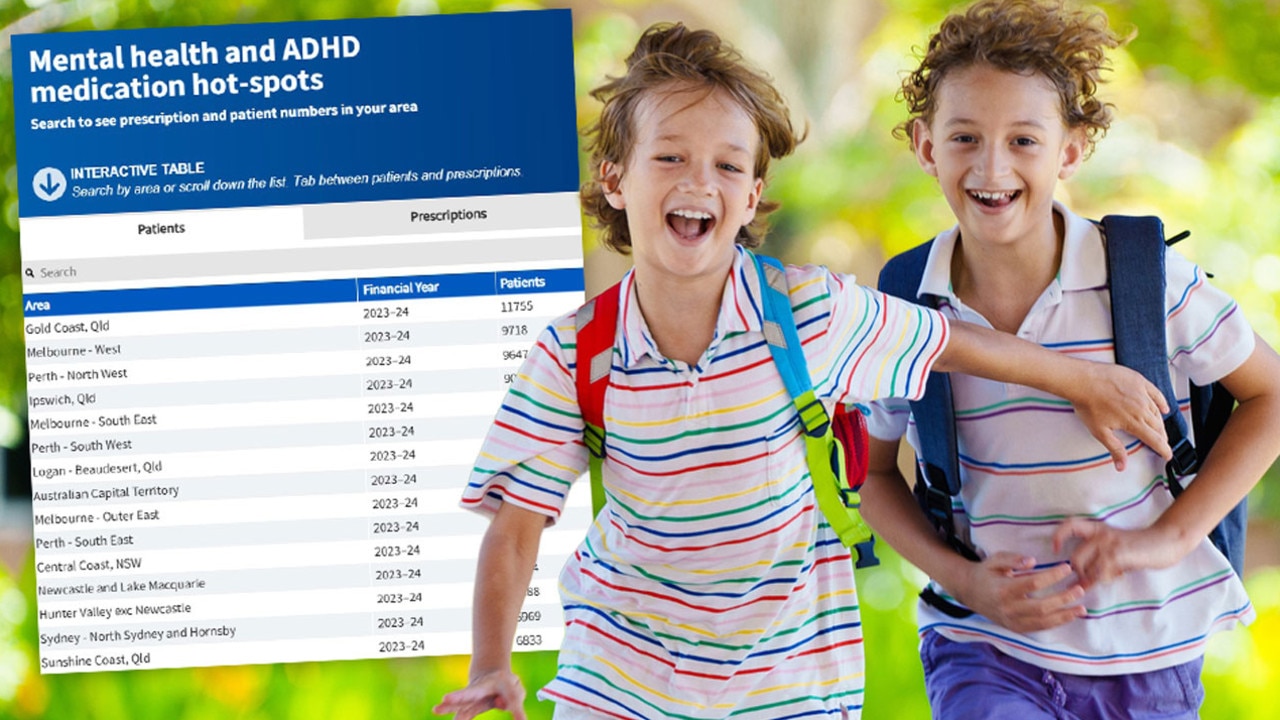
The Gold Coast has the highest number of young patients nationally seeking mental health and ADHD prescriptions – 11,755, followed by 9718 in West Melbourne, 9647 in northwest Perth, and 9080 in Ipswich.
The data covers a wide range of medications prescribed for ADHD and related conditions to children under 18 – antipsychotics, hypnotics and sedatives, antidepressants and psychostimulants, and nootropic medications. It is divided by official ABS statistical regions.
The highest rate nationally is on the idyllic NSW mid north coast, which takes in the towns of Port Macquarie, Forster and Kempsey, where 105 young people per 1000 – almost 5000 children – are being treated for mental health conditions and ADHD. This is up from only 62 young people per 1000 a decade ago.
Educational psychologist Clare Rowe said some regional and coastal towns have pockets of socio-economic disadvantage, with higher rates of unemployment and housing instability.
“Children growing up in those environments often present with behavioural or emotional difficulties that can end up being framed in medical terms,” she said.
“Regional areas can also sometimes experience less access to non-medical support like behavioural programs, parenting support, or school-based interventions. Medication can become the most accessible or quickest pathway to help.”
Ms Rowe is a panellist on Unpacked: A Neurodivergent Generation, an exclusive News Corp video series aimed at supporting those caring for children with ADHD, autism and anxiety.
The first episode, launched today, covers diagnosis pathways and medication decisions and dilemmas.
UNPACKED: A NEURODIVERGENT GENERATION
Watch the first episode at the top of this story
The second episode, launching on Monday March 16, will look at schooling options for neurodivergent students.
Kimberley O’Brien, education and development psychologist from Quirky Kid said diagnosis and medication has “become normalised in some areas”.
“There is less stigma attached and teachers may even say pupils should consider medication,” she said.
Dr Astha Tomar, president of the Royal Australian and New Zealand College of Psychiatrists, said comprehensive telehealth assessments had led to a wider range of people in rural areas being able to access specialist care.
She also said there was a “system incentive through the NDIS to get support and for that you need a diagnosis”.
“People are also more health-seeking post-Covid,” she said.
The data includes the Northern Territory but its figures are not directly comparable as many remote community health programs receive funding to supply medication without a PBS prescription.
What’s your family’s experience with medication for neurodivergent children? Share your story confidentially at education@news.com.au