
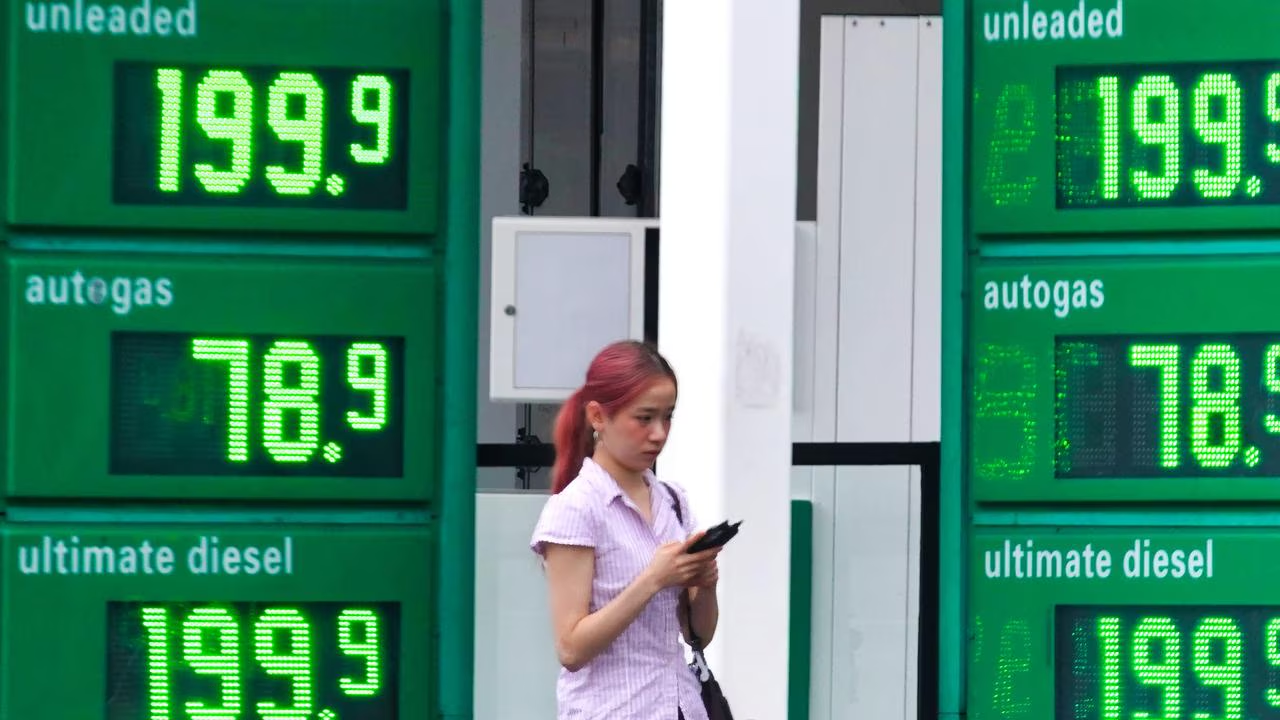
The average price of diesel in South Australia has hit record levels as state and federal governments scramble to combat price gouging.
The Royal Automobile Association of South Australia reported the average price for diesel on Thursday reached a whopping $2.46 per litre – the highest on record and 16 cents higher than the previous October 2022 peak.
Some sites were selling diesel for as much as $2.59 per litre, according to the RAA.
RAA principal adviser energy Peter Nattrass said Adelaide’s wholesale diesel price had spiked by about 47 per cent since the war in Iran began.
“This is the most South Australians have ever paid for diesel at the pump,” Mr Nattrass said.
“These increases will be hurting households and businesses who rely on diesel, and unfortunately we don’t see them coming down in the short term.”
Mr Nattrass said there was still no reason to panic buy.
“We still have plenty of supply in the system and only isolated cases of stations running out,” he said.
It comes as diesel from Singapore, a major source of Australian diesel, sits at $228 per barrel, up from $130 per barrel in February. It has, however, fallen from a high of $269 on Wednesday.
Amid mounting pressure from industry, motorists and the opposition, Energy Minister Chris Bowen on Thursday temporarily relaxed fuel standards to let an extra 100 million litres of petrol into the country.
“In order to assist with getting more supply, and secure downwards pressure on prices, I am temporarily amending Australia’s fuel quality standards to allow higher sulfur levels for the next 60 days,” Mr Bowen said in a statement.
“This will allow around 100 million litres a month of new petrol supply that would otherwise have been exported to be blended instead into Australian domestic supply.
“In return, Ampol Australia has committed to ensure this redirected supply will be prioritised for regions of shortage and for the wholesale spot market that supports independent distributors and harvesters.
“While Australian fuel consumption has not changed, this will help relieve pressure on distribution chains disrupted by elevated demand.”
NSW convenes crack team
Governments in NSW and Western Australia have met in recent days to discuss the current fuel crisis.
Premier Chris Minns on Thursday revealed Premier’s Department secretary Simon Draper had convened a meeting of the state’s departments of energy, transport, police, and emergency services to probe “emergency supplies and critical” reserves in the weeks and months ahead.
Mr Minns said the state’s “big hospitals” and emergency services needed access to diesel and other fuel sources.
“It’s critically important that they have access to it and I want to assure the public that, notwithstanding the conflict in the Middle East, NSW essential services are making preparations today for any eventuality,” he said.
“I think the public would appreciate that they need to take priority in the event of supply shortages in the months ahead.”
Mr Minns confirmed the state and federal government had been in talks over critical fuel reserves.
He said there was “no need” for panic buying, though did acknowledge it was a “stressful time”.
“I think it’s really important that we send a message to consumers to take what you need to fill up your car, don’t take more than you need, because we are seeing supply shortages as a result of people buying excess fuel that they perhaps don’t need,” he said.
“This is a global situation, this conflict is resulting in critical fuel shortages not just in Australia but in every jurisdiction in every part of the world.
“We need to make sure that we’re using common sense here in Australia.”
Questions over price gouging
Earlier, federal Treasurer Jim Chalmers faced questions over whether the Albanese government’s price-gouging crackdown has come too late, as rising prices and stock shortages at the bowser fuel fears of a severe petrol shortage in Australia.
While Australia doesn’t get its oil directly from the Middle East and instead largely relies on shipments from Asia, the US-Israel-Iran war has sent shockwaves through global supply chains.
In particular, Iran’s targeting of the Strait of Hormuz, a critical sea channel and energy chokepoint, has effectively blocked most oil shipments to the world, driving up the cost of oil and subsequently petrol.
But senior Labor minister have repeatedly said shipments to Australia have not been disrupted and the nation’s fuel supply is secure.
These claims come amid reports from Australians living in rural and regional areas who have been hit with skyrocketing prices and shortages at service stations.
On Thursday, Mr Chalmers appeared on Sunrise to spruik the government’s crackdown on price gouging after it was announced penalties would be doubled for petrol companies profiting off Aussies amid the Middle East conflict.
Those found guilty would face fines of up to $100m per offence.
But host Nat Barr questioned the timing of the move, asking: “People have just had to wear this though, haven’t they? Is it a bit late?”
Mr Chalmers then pointed to the government’s previous empowerment of the ACCC to issue on-the-spot fines before Barr asked: “Has anyone been fined yet?”
“Yeah, there have been fines issued. I don’t think I’m able to go into the details of those … but there have (been fines issued) which is important,” he said.
He reiterated that Australia had “sufficient supplies of fuel and where there were localised supply issues, the government was working with industry to address those gaps.
“Ships are arriving … and so there are lots of reasons to be confident about the fuel supply overall,” Mr Chalmers said.
He said “at some stage” fuel prices would go down, but that was contingent on the duration of the Middle East conflict.
“There’s a lot of uncertainty about that. There’s a lot of volatility in the global oil market,” he said.
“Even in the last couple of days, we’ve seen the barrel price as low as the low $80 and as high as almost $120.
“And that shows how volatile the situation is, but overall, the key thing that will determine how long these price pressures hang around for is how long the conflict itself endures.”
Mr Chalmers’ comments come hours after the International Energy Agency agreed to release the largest volume of emergency oil reserves in its history to stem the impacts of the conflict.
It will make 400 million barrels of oil available from its members’ emergency reserves.
Read related topics:Adelaide