
Updated March 12, 2026 — 3:54pm,first published March 12, 2026 — 8:37am
Save
You have reached your maximum number of saved items.
Remove items from your saved list to add more.
Save this article for later
Add articles to your saved list and come back to them anytime.
Got it
AAA
Dirtier fuel marked for export will be released into the local market to tackle the fuel crisis, as analysts forecast the chaos in the global oil market could drive regular unleaded petrol prices close to $3.50 a litre.
Fuel quality standards will be lowered for 60 days to inject about 100 million litres a month of extra petrol into the domestic market to alleviate shortages in regions drained by panic buying.
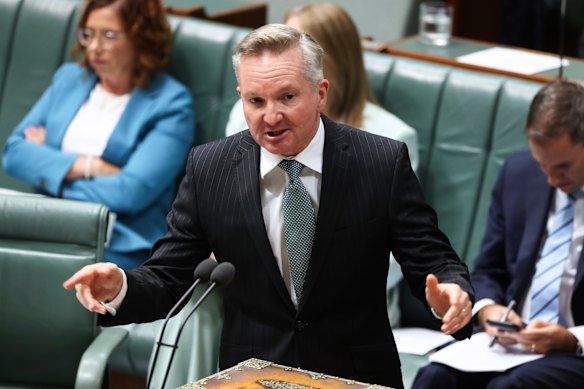 Energy Minister Chris Bowen. Alex Ellinghausen
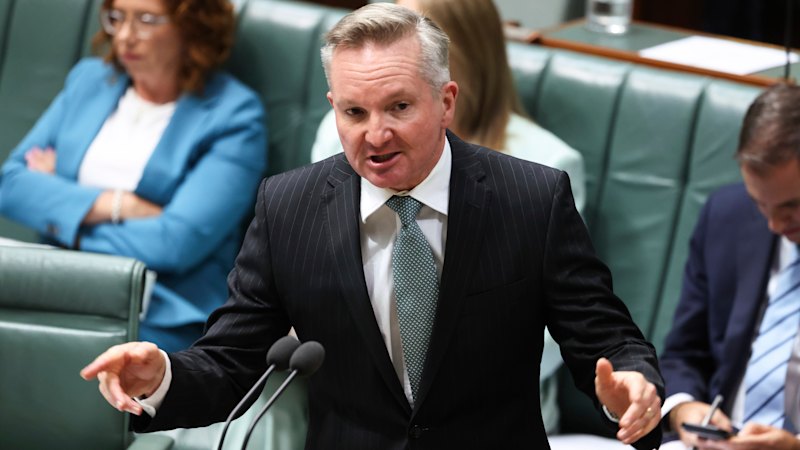
“It is a practical action to help farmers, to help regional Australians through this immediate crisis,” federal Energy Minister Chris Bowen said on Thursday.
The change in fuel standards applies to the Ampol refinery in Brisbane, which currently produces higher sulphur content petroleum for export. Now, higher sulphur content fuel will be blended into Australia’s existing domestic fuel supply over the next 60 days.
In December the government lowered the sulphur limit for all fuel types from 150 parts per million to just 10 parts per million, bringing Australian standards in line with the US, Europe and China, but it relaxed this rule on Thursday.
Related Article
In NSW, Premier Chris Minns has convened a crisis team of top bureaucrats to ensure hospitals and emergency services have enough diesel in the event of major shortages.
Bowen said the boost to supply would help address shortages in regional areas that are being hit by panic buying, and put downward pressure on petrol prices.
He assured Australians there was no shortage of petrol and diesel, in both the month’s worth of each fuel held in Australia and the volume coming into the country.
Ampol Australia will prioritise sending additional supply to the regions, including to the wholesale market that supplies independent distributors, who have found it difficult to meet rising demand.
The emergency fuel standard measures were announced as analysts predicted that without a swift end to the Iran war, which has stopped one-fifth of the world’s oil production from entering the market, the global benchmark Brent oil price could reach US$200 a barrel.
A rule of thumb states that for every US$10 rise in the Brent price, petrol prices rise 10¢ at the bowser in Australia.
Brent oil on Thursday again surged past US$100 a barrel. Regular unleaded petrol is selling for an average of about $2.20 a litre in Sydney and Melbourne. A rise of US$100 a barrel would be likely to add $1 a litre to retail petrol prices in Australia.
Independent fuel suppliers have reported difficulty in filling orders as major companies restrict distribution.
The National Farmers Federation said the government would need to commit to more drastic measures, such as taking over regional fuel supply chains under the powers of the Liquid Fuel Emergency Act, if the emergency supplies did not fill the gaps.
Related Article
Oil tankers are halted in the Persian Gulf as Iran attacks ships in the Strait of Hormuz, the narrow channel through which 20 million barrels usually pass each day.
Global consultancy Wood Mackenzie said oil prices would keep escalating as the conflict continues. Chief analyst Simon Flowers said prices could rise far higher than the US$119-a-barrel peak reached during the 2022 energy crunch caused by Russia’s invasion of Ukraine.
“Supply volumes at risk this time are dimensionally bigger – and real,” said Flowers. “In our view, US$200 a barrel is not outside the realms of possibility in 2026.”
Commonwealth Bank commodities analyst Vivek Dhar said an ongoing conflict would drive unprecedented fuel price rises, which would force oil importers such as the US, EU and UK into an extraordinary response.
“If the conflict is not resolved, oil and refined-product prices are at risk of rising to levels not seen in history. This would seem to make it intolerable for the world to remain unmoved,” Dhar said.
On Thursday, the 32 countries of the International Energy Agency, including Australia, committed to release 400 million barrels of oil to counter the supply shock caused by the Iran war. Global consumption totals about 100 million barrels a day.
The IEA oil pact is a voluntary program that would have Australia tap its fuel reserves to pump supply into the local market. The Albanese government is considering participating in the oil release, as the US pledged to draw on 172 million barrels of oil over the next 120 days.
Treasurer Jim Chalmers said on Thursday morning that the government would crack down on “suspicious” spikes in fuel prices. It has doubled to $100 million the fine for price gouging by service stations and fuel suppliers, which have been accused of raising prices before global market spikes flowed through.
Save
You have reached your maximum number of saved items.
Remove items from your saved list to add more.
 Mike Foley is the climate and energy correspondent for The Age and The Sydney Morning Herald.Connect via email.
 Brittany Busch is a federal politics reporter for The Age and Sydney Morning Herald.Connect via email.From our partners