
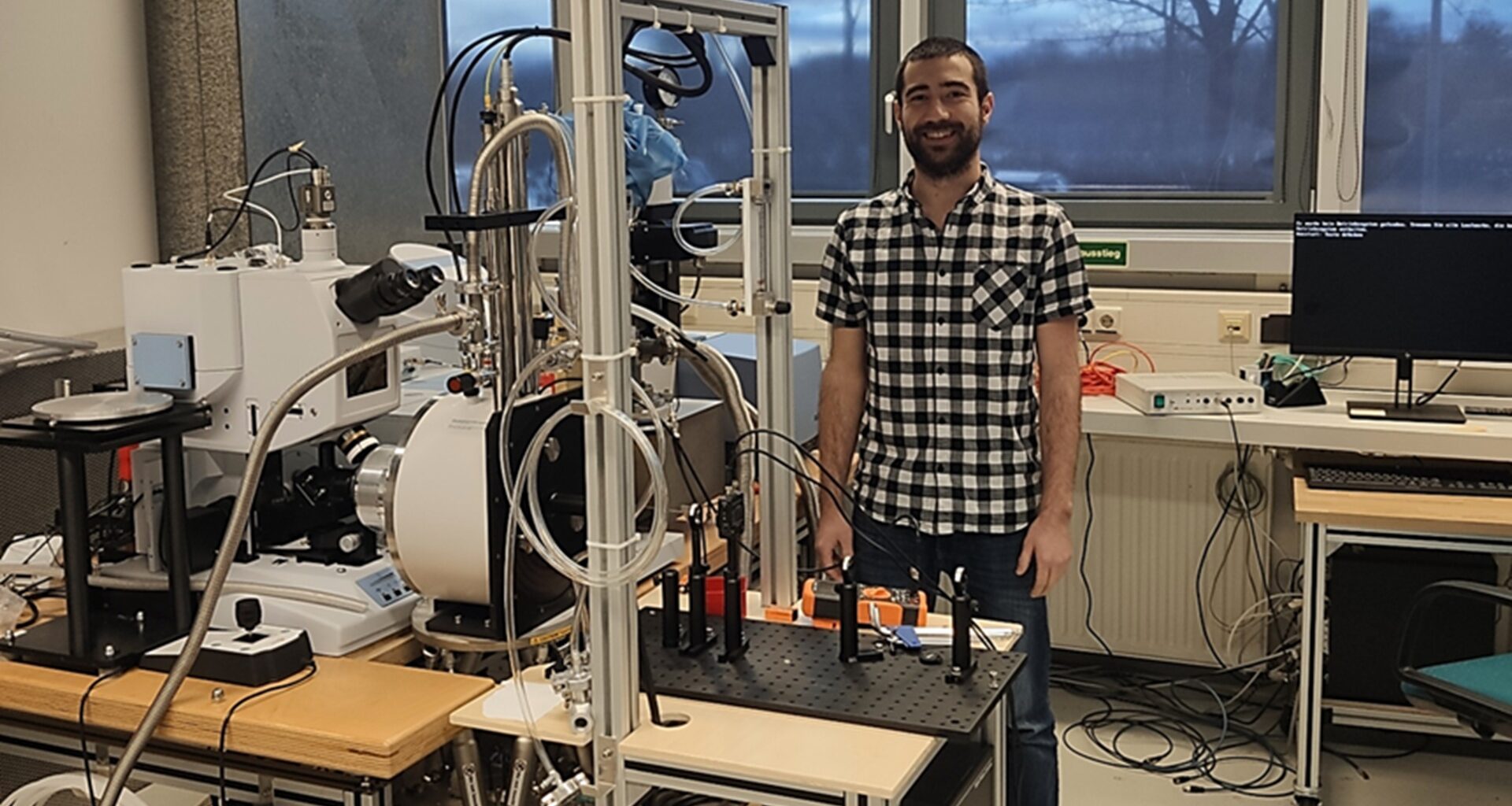
Researchers have potentially discovered a way to make computers process data about 1,000 times faster after evaluating so-called “invisible magnets” as part of a new research project.
The three-year initiative, carried out by a Japanese-German research consortium, will investigate antiferromagnets. Unlike conventional magnets, antiferromagnets are magnetic materials that produce no measurable external magnetic field.
This is why scientists often refer to them as “invisible magnets.” In these materials, each atomic layer has a magnetic direction (spin) that points opposite to the one before it. They’ve recently been attracting growing attention as they could enable ultrafast data processing and slash the energy demands of digital infrastructure.
“Antiferromagnets could help us build much faster and more energy-efficient technologies,” Johannes Knolle, PhD, a professor at the TUM School of Natural Sciences, pointed out.
Magnets without fields
Apart from Knolle, other participating scientists include Davide Bossini, PhD, from the University of Konstanz, Tsuyoshi Kimura, PhD, from the University of Tokyo, as well as Naoki Ogawa, PhD, and Yoshinori Tokura, PhD, from RIKEN, Japan’s largest research institution for the natural sciences.
As per the scientists, antiferromagnets’ invisibility made them difficult to control or manipulate for decades. The reason for this is that, unlike everyday magnets, neighboring magnetic moments in antiferromagnets point in opposite directions and cancel each other out.
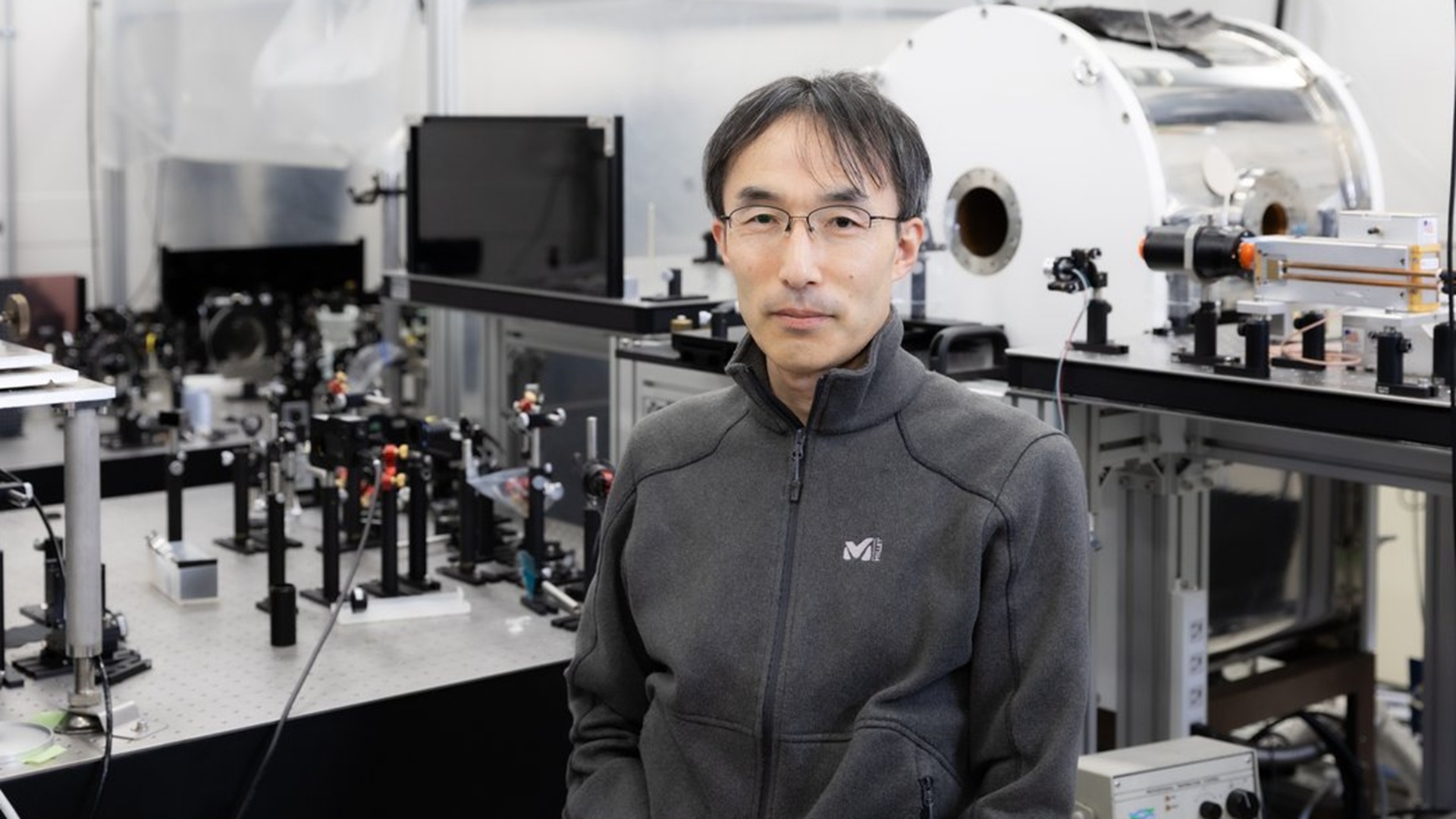 Naoki Ogawa, PhD, from the RIKEN Institute, Japan’s largest research institute for natural sciences. Credit: RIKEN Institute
However, the scientists now believe these materials can be controlled using light, which could unlock new possibilities for computing technologies. Earlier analysis revealed material systems with unexpectedly strong coupling between light and antiferromagnets.
They also proved that antiferromagnetic states can be detected optically. “What I find most exciting about this collaboration is how we can combine new theoretical ideas with cutting-edge experiments to turn these exotic quantum materials into real-world innovations,” Knolle stated.
Based on these findings, the consortium intends to manipulate antiferromagnets using intense light pulses on trillionth-of-a-second timescales. This novel method could make processing 1,000 times faster than modern ferromagnetic storage technologies.
An international collab
The project’s goal is to answer how antiferromagnetic states can be controlled particularly fast and in a targeted manner, and identify new antiferromagnetic materials that can be switched ultrafast by light and/or mechanical strain.
At a later stage, the international research team will develop and experimentally validate novel device functionalities from these materials.
István Kézsmárki, PhD, a professor at the University of Augsburg, who coordinates the project, elaborated that the collaboration brings together expertise from both countries. “We pool the strengths of the teams and ensure that the collaboration runs smoothly,” he concluded in a press release.
 Johannes Knolle, PhD, a professor at the Technical University of Munich (TUM).
Credit: Andreas Heddergott / TUM
The partnership is funded by the two countries’ respective governments, through the German Research Foundation (DFG) in Germany and the Japan Society for the Promotion of Science (JSPS) in Japan.
Kézsmárki additionally acts as spokesperson for the DFG Collaborative Research Centre/Transregio 360 “Constrained Quantum Matter.” In this consortium, teams in Germany investigate quantum states and materials that could power future quantum information technologies.
“This expertise from the University of Augsburg also strengthens the international collaboration in the new Japanese-German consortium,” the team said.