
This year’s Australian Grand Prix was either exciting or a travesty, depending on your outlook. It’s certainly true that the new rules presented a little bit of a culture shock if you were watching the on-boards, especially when it came to visible coasting and clipping on the entry to Melbourne’s Turn 9 in qualifying.
It probably didn’t help that Albert Park was one of the worst layouts for an entirely new, energy-hungry powertrain. Nine days of testing in the prelude to the season was a much greater allocation than usual, but the new power units are still early in their development. Thus, the regeneration and deployment practices are more obvious than you’d expect them to be by the end of the season, especially at a circuit with relatively few hard braking zones.
Although electrical energy deployment has been ingrained in Formula 1’s powertrain layouts in some form for the past 17 years, the motor-generator component had always been ancillary to the main internal combustion engine. Energy deployment hasn’t been quite as overt across the turbo-hybrid age, although the 2009-introduced KERS set-up prioritised driver-operated use. But, since it was only rated at a maximum of 80bhp, it was far easier to charge.
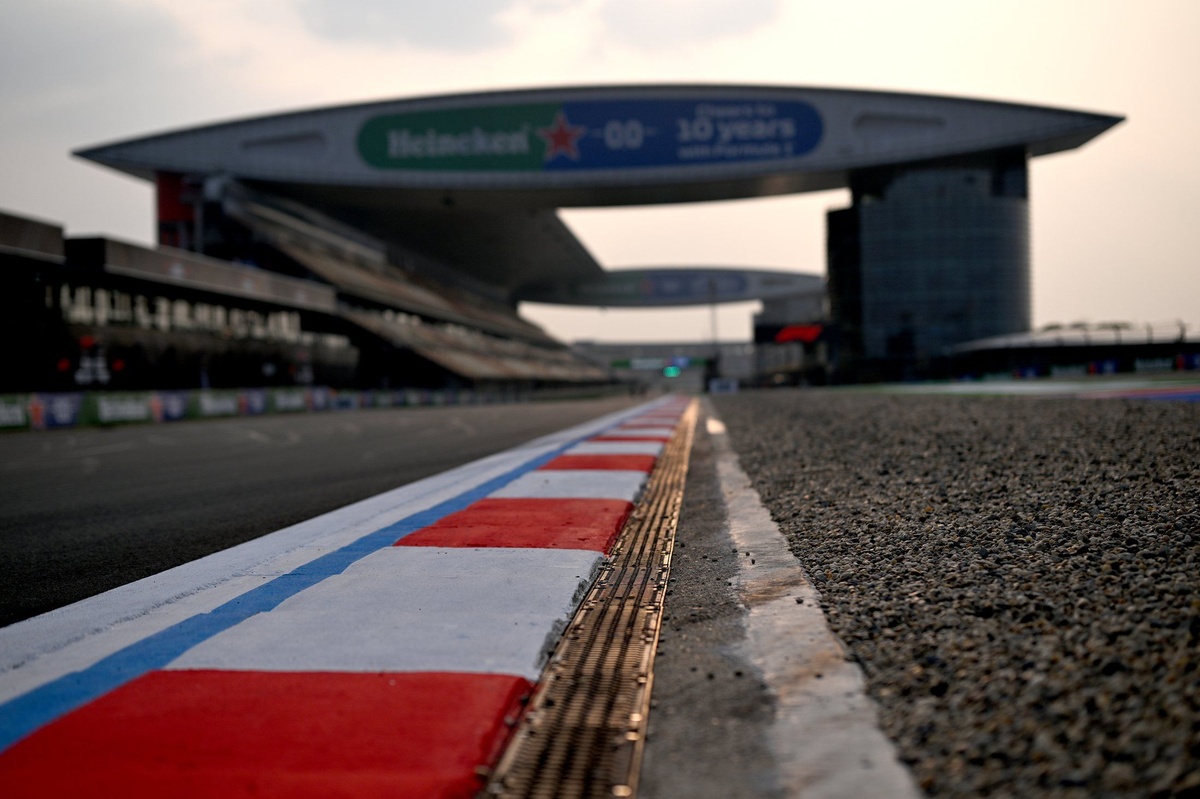
It should be less overt in China. One look at the 1.2km (0.7mi) back straight might fill the traditionalist with a little bit of fear, knowing that we’ll see the dreaded super clip or lift-coast approach to the end-of-straight hairpin, but that should be the only place where it’s a bit more obvious. Battery charging will come more naturally elsewhere around the circuit; drivers lift for Turn 1 anyway, and the cars are not using prolonged periods at full power through the remainder of the lap in Shanghai.
That’s not to say that it’ll be easy – the engineers will still have plenty of work on their hands in mapping out the most high-value deployment areas around the circuit.
“We have different problems with being harvest rich, let’s say, and there’s going to be other things for us to manage,” Oscar Piastri explained. “There probably won’t be much – or any – lift-and-coast and super clipping for anyone, but especially on the back straight it’s incredibly long and you can empty the battery very quickly.”
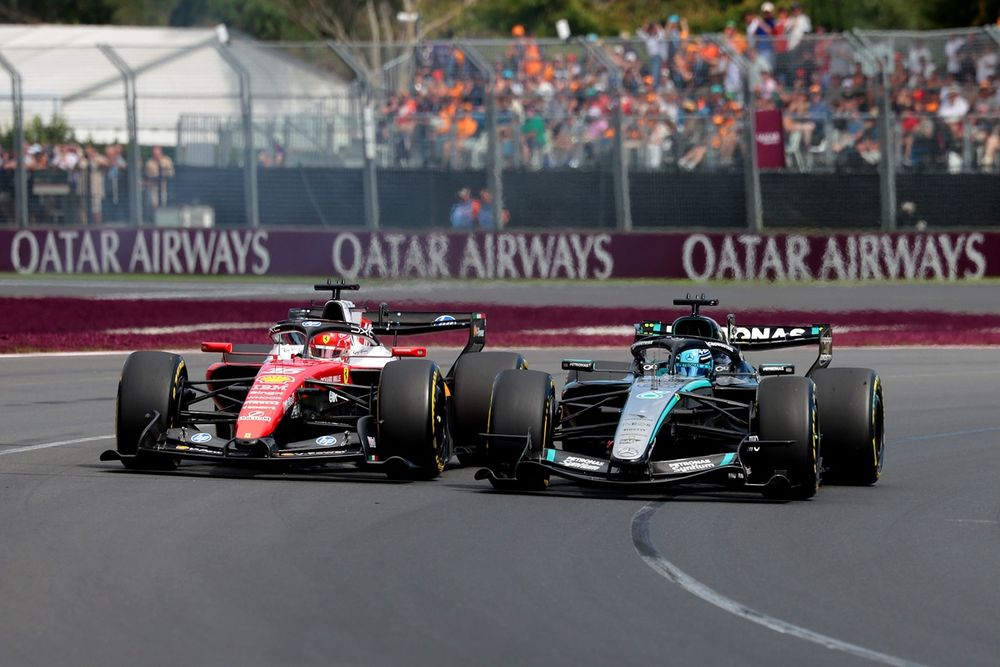
Russell expects different challenges with energy management in China
Photo by: Anni Graf – Formula 1 via Getty Images
Melbourne winner George Russell did not necessarily agree, explaining that the deployment might be a little bit more straightforward in China. He expects to end up dropping most, if not all, of his battery power into the back straight – a very different approach to Melbourne where teams had to amortise their energy across multiple straights and acceleration zones.
“Tracks such as China with one main straight or Barcelona with one main straight, the general battery set-up for the team would be you approach that corner leading onto the straight with 100% battery, you use all of your battery on that one straight, and you end up at zero,” the current championship leader reckoned.
“There isn’t really anything to gain (using the boost button) because all the drivers in their standard set-up are using all their battery on that one straight. You go to tracks like Melbourne, Saudi, Silverstone, Monza, where you’ve got multiple straights and there isn’t a clear one where you want to use all of your battery. One team can decide to use more on the first straight, another team can decide to use more on the second straight, and you’ll get more of that yo-yo.
China should be more “normal”, which will be music to the ears of those who felt that Australia’s racing spectacle appeared overly manufactured
“For tracks with multiple straights, what we saw in Melbourne will be more of a feature. I don’t expect that to be the case this weekend. From what I’ve experienced on the simulator before Melbourne, this track feels more normal in terms of not having these massive super clips or losing massive speed at the end of the straights. I think for the die-hard fans, it will look more like what they’re used to.”
Furthermore, it would be remiss of the teams not to have learned from Australia. One of the main points of attention came to pass in the formation lap, where a staggering majority of the grid failed to balance the tyre warm-up and the energy harvest for the start.
A driver does not need to be at full energy at the start; actually, it’s more helpful for them not to be. If a driver has gathered around 50% battery capacity, the engine can be used as a source of charge while on the grid and this helps to keep the turbo spooled. But it’s still useful to have some degree of charge for the start, otherwise the torque off the line is nowhere near as high – nor as instant – as it needs to be.
Read Also:
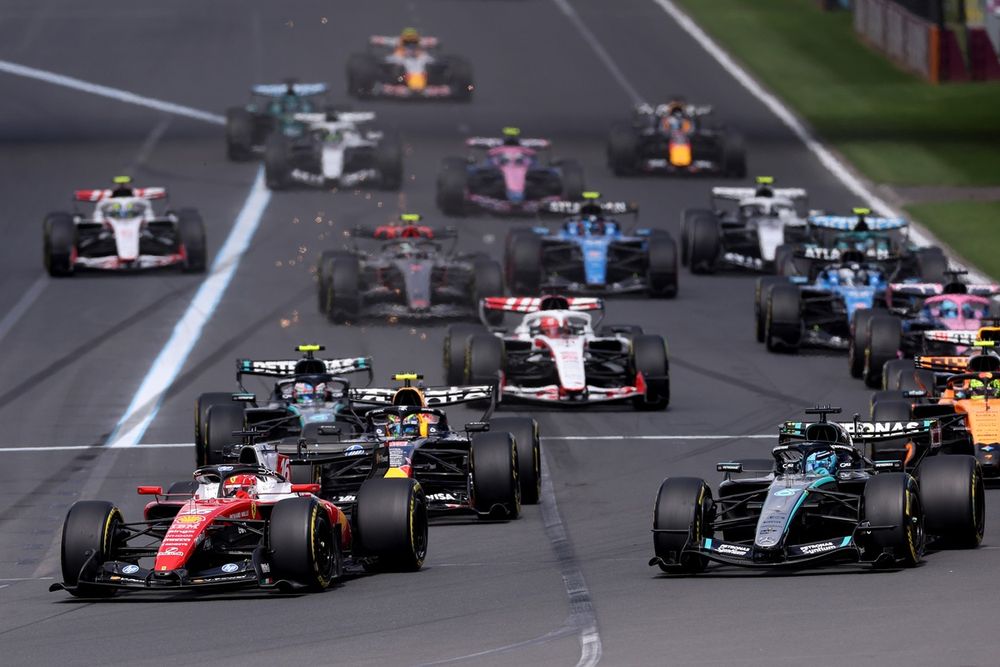
Teams will learn from Australia about how best to deploy energy and battery management
Photo by: Lars Baron / Getty Images
For the frontrunners, the formation lap battery charging in Australia was impaired by a quirk in the rules. Every lap has a harvest limit, which was 8MJ in Australia, and those at the back of the grid could charge their battery a bit more before crossing the line. Those at the front of the grid had very little distance to cover before the limit reset on crossing the line. It doesn’t seem like much, but getting the engine to charge the battery across an extra 100m or so can offer a tangible pay-off.
Some of the teams wanted the FIA to change that limit for the formation lap but, without a supermajority, it cannot do so. Unsurprisingly, those who benefitted from a strong start in Melbourne did not want to give up their advantage.
Without intervention, the teams will have to circumnavigate the difficulties in getting the race starts sorted themselves. They’ll find a way – they always do – but it would be nice to avoid any near-miss incidents akin to Liam Lawson‘s slow getaway. Franco Colapinto‘s cat-like reflexes earned plaudits from the other drivers, but the Argentine won’t want to have to respond like that again.
China should be more “normal”, which will be music to the ears of those who felt that Australia’s racing spectacle appeared overly manufactured, and less appealing to those who enjoyed the cat-and-mouse battles throughout the circuit. Still, since China’s a sprint weekend, the teams might be caught on the hop a little bit more…
Additional reporting by Ronald Vording and Stuart Codling
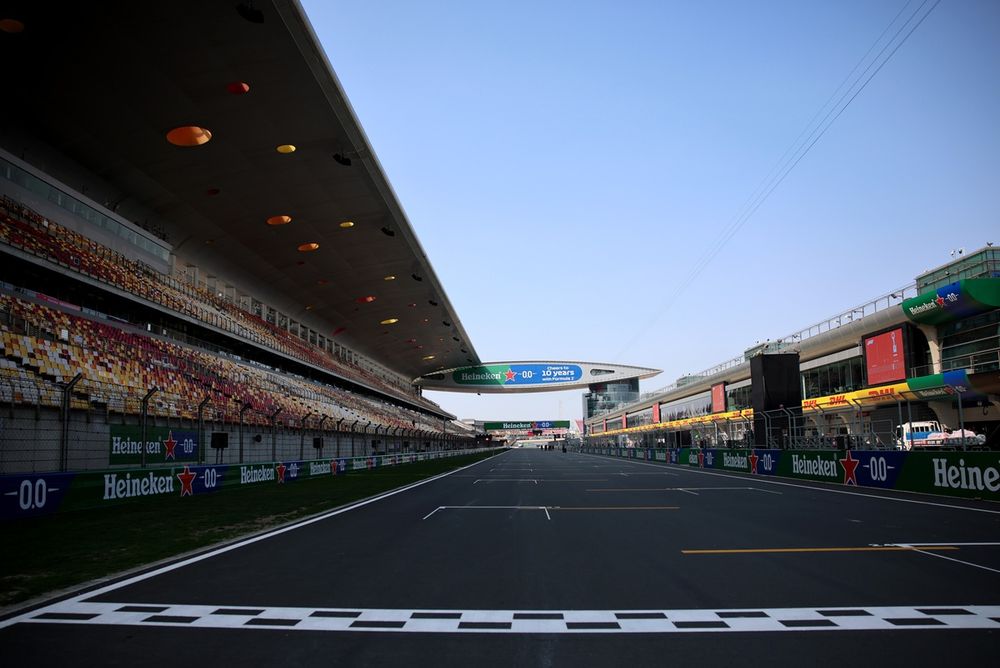
Could the sprint weekend format provide another curveball for F1 teams?
Photo by: Anni Graf – Formula 1 via Getty Images
We want to hear from you!
Let us know what you would like to see from us in the future.
– The Autosport.com Team