
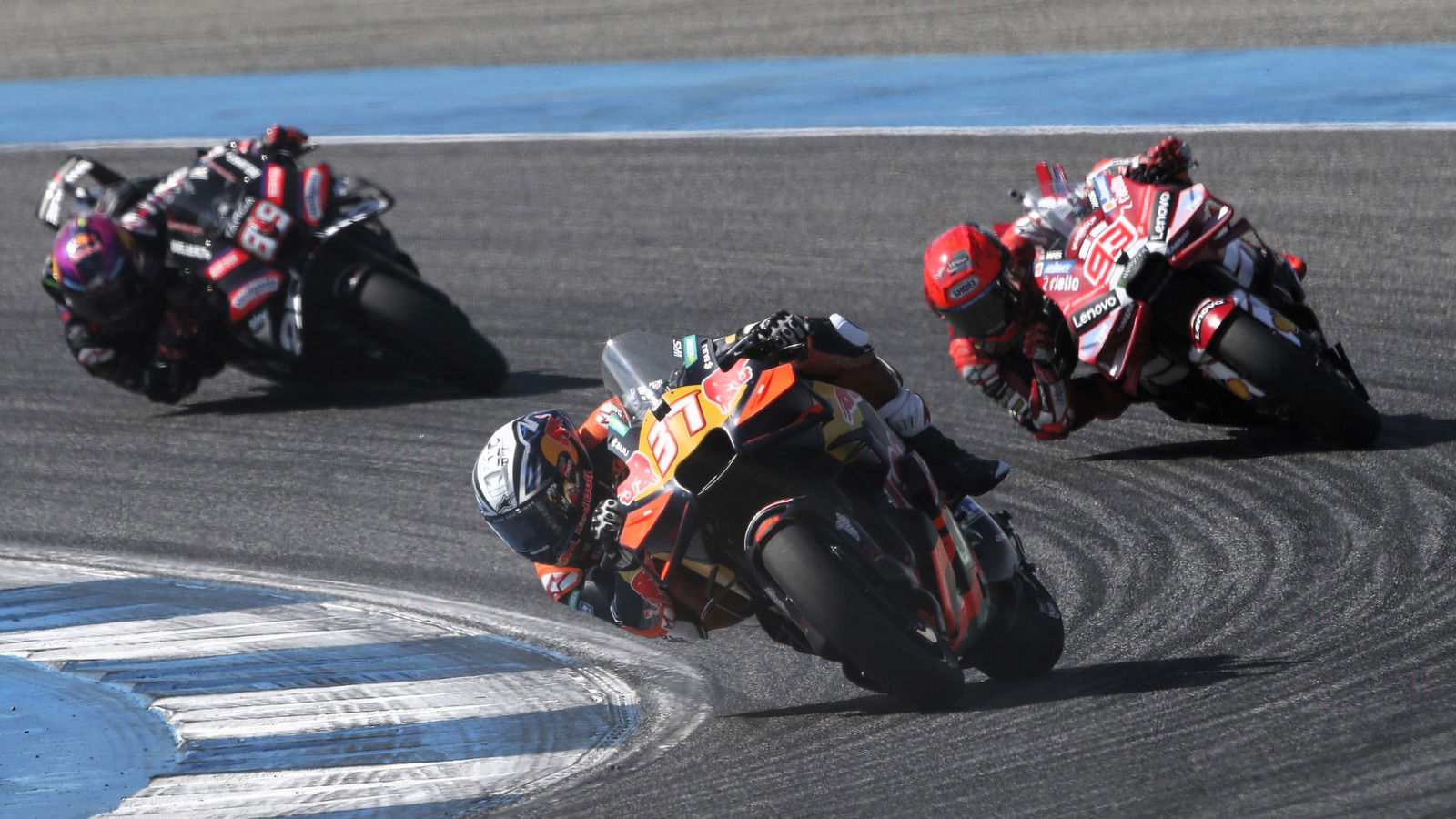
Excessive tyre wear in the latter stages of the Thai MotoGP season-opener also exposed how riders now “play” with use of their rear ride-height device.
In normal dry conditions, wheelies – rather than wheelspin – are the biggest acceleration limitation.
Lowering the rear under hard acceleration on corner exit, also lowers the centre of gravity and allows more torque to be delivered to the rear tyre before the bike starts to wheelie.
However, potential benefits from not using the ride-height device, under some circumstances, were revealed by Francesco Bagnaia during last year’s Malaysian MotoGP Sprint race.
Bagnaia was initially “scared” to discover his Ducati’s rear ride-height device wasn’t working but still stormed to victory.
Article continues below ADVERTISEMENT
Article continues below ADVERTISEMENT
“Honestly, I was quite scared, but then I looked at the times, and I was quite surprised. I was super-fast,” Bagnaia said.
“There are tracks and tracks. Honestly, here, the grip level is very low, so to give the shock more movement [suspension travel] is better.
“In other tracks where the grip is good, without the ride-height device you are accelerating much less.”
At Buriram, the big concern was tyre endurance over the 26-lap grand prix distance, underlined by Honda’s Joan Mir being forced to retire due to excessive wear in the closing stages.
Other riders spoke of battling wheelspin in fourth and fifth gears during the final laps.
Article continues below ADVERTISEMENT
Article continues below ADVERTISEMENT
Although the rear ride-height device provides greater outright performance, it also puts more stress on the rear tyre in the process.
“We optimise everything”
“With the rear devices that we have, the bikes have improved so much, also with the wings, and we stress a lot the tyres when it’s super hot like this,” said Mir’s factory Honda team-mate Luca Marini.
Pressed on whether he tries to save the rear tyre by not always using the ride-height device, the Italian confirmed: “Yes, but we play a lot with the rear device during the race, because we know everything.
“There is a lot of work done before going on the track to really analyse these things, the tyre temperature in every situation of the track, in every corner, to understand in which part we can push and which we cannot.
“I don’t want to spoil our [secrets], but we try to use it in a good way. We optimise everything.”
Article continues below ADVERTISEMENT
Article continues below ADVERTISEMENT
Tech3 KTM’s Enea Bastianini was more open.
“Yeah, I didn’t use [the ride-height device] for all the race,” he said of the connection between the device and tyre wear.
“Especially in the Turn 3 [hairpin], for me, it was too much.”
Factory KTM riders Pedro Acosta and Brad Binder were also seen exiting the hairpin without activating their ride height.
“Some laps yes, some laps no,” the South African said.
Article continues below ADVERTISEMENT
Article continues below ADVERTISEMENT
“Just depends, sometimes if you really spin a lot, it keeps spinning if you drop [the rear], but if you manage to get it to bite and you drop it’s not a problem.”
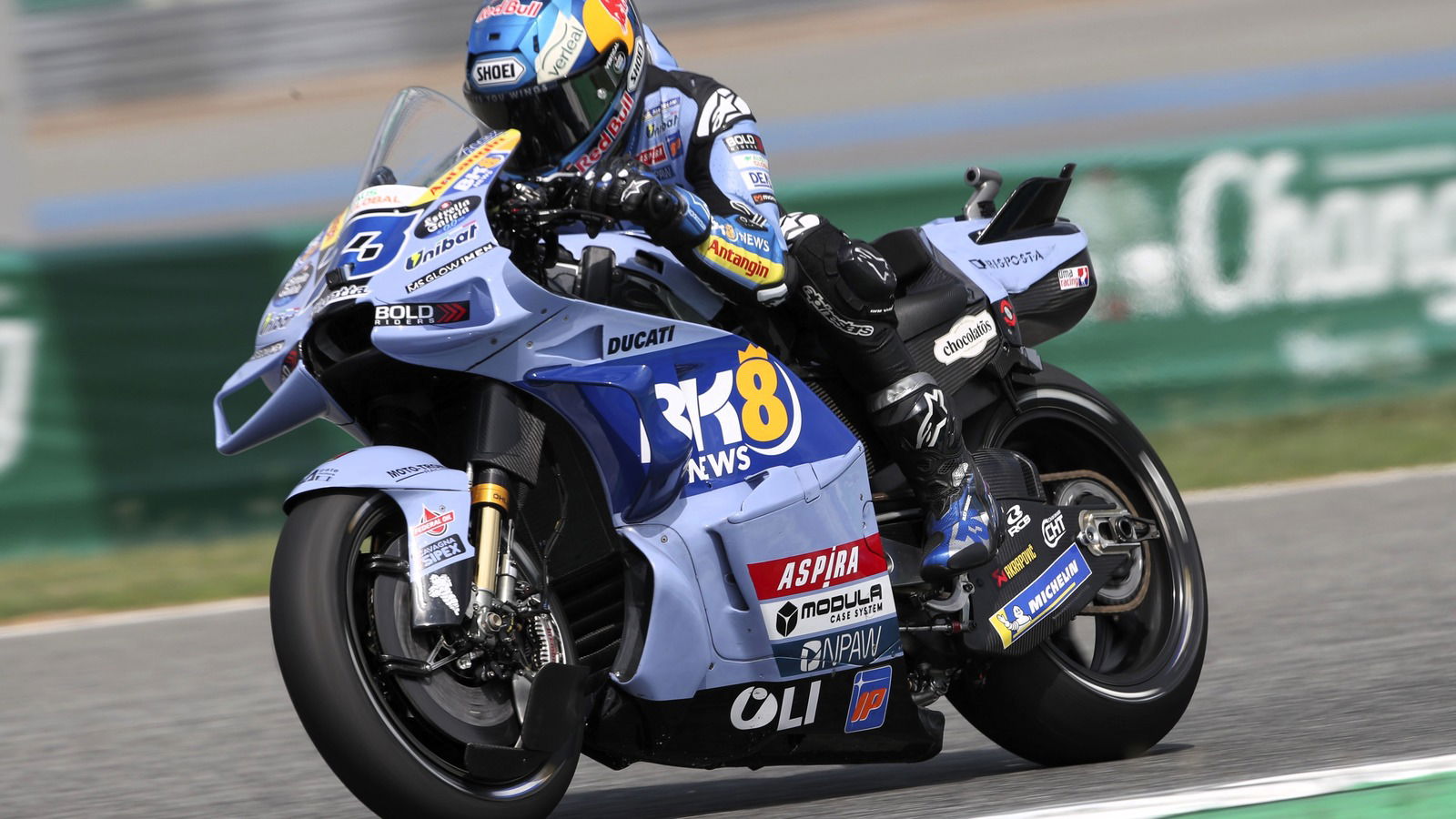
Alex Marquez, with ride height activated, 2026 Thai MotoGP.
© Gold and Goose
Gresini Ducati’s Alex Marquez confirmed: “Yeah, we’re playing a little bit on that [ride-height use] to not overheat the rear tyre.”
MotoGP teams are also thought to be able to tune the trigger point for the ride-height system on corner exit, as well as the rate of drop and final height.
Holeshot devices, which allow even more extreme lowering and are only used for the race start, can also be configured to work at different heights depending on grip levels.
Article continues below ADVERTISEMENT
Article continues below ADVERTISEMENT
Subscribe to our MotoGP Newsletter