
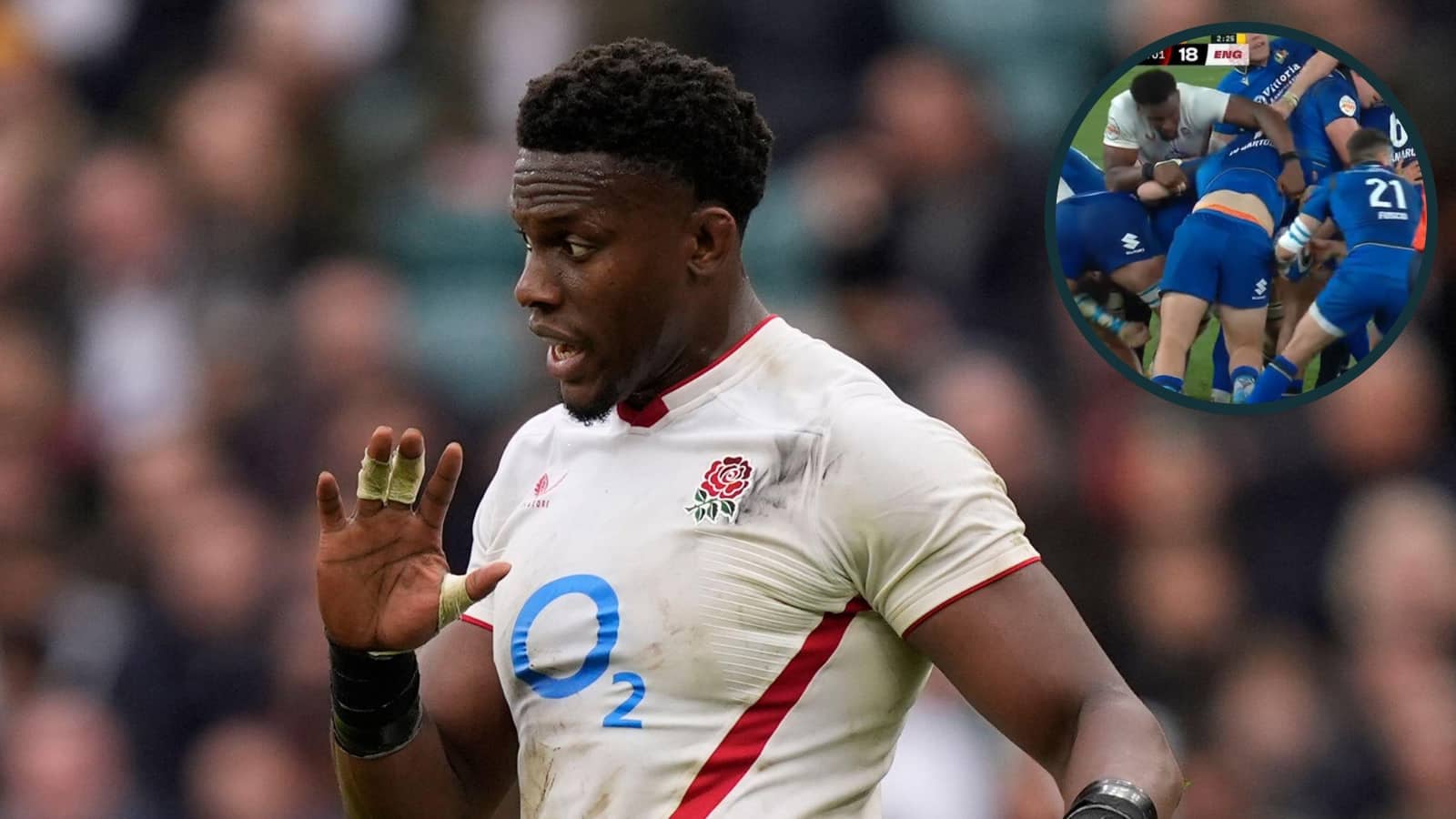
Nigel Owens says that World Rugby want to get rid of cynical acts while weighing in on Luc Ramos’ decision to yellow-card Maro Itoje.
The England captain was sent to the sin bin for slapping the ball out of Italy’s Alessandro Fusco’s hands when the scrum-half attempted to pass the ball away from a maul.
His sanction came at a pivotal time in the fixture as England held an 18-16 advantage and in his absence, Leonardo Marin scored a try to put the Azzurri on course for their maiden victory over the Red Rose and ultimately they held on to seal a 23-18 win.
Itoje’s actions have been slammed by many fans and pundits, whilst others feel that the lock was hard done by, but Owens believes that Ramos made the correct decision.
He even caveated his take by stating that a yellow card would have been warranted before World Rugby made the law change that protects scrum-halves.
In 2024, the game’s governing body implemented law trials aimed at protecting the nine to enable more ball in flow from base of rucks, mauls and scrums.
Law 15.18 now reads: “A player who is, or was part of the ruck may not play an opponent who is near it (within 1m), and who is attempting to play the ball away. Sanction: Penalty.”
Law 16.18 reads: “A player who is, or was part of the maul may not play an opponent near it (within 1m), and who is attempting to play the ball away. Sanction: Penalty”
And law 19.30a: “Once play in the scrum begins, the scrum-half of the team not in possession: a. Takes up a position near the scrum, no further than the centre line of the tunnel.”
Maro Itoje’s yellow card
16.18 is the relevant law in Itoje’s case and before the changes, Owens revealed that the England lock was effective in spoiling the opposition’s ball.
“Yes, it is,” Owens replied when asked if a yellow card was a fair decision on World Rugby’s Whistle Watch show.
“Now, when I was a referee, that was something that he did a lot in the game. He was very good at it. He was getting in lineout and maul set-ups, he would get it because he is quite a big, tall guy, he’d get his hand around and sometimes he’d get hold of that ball or hold of the player’s arm and the player would lose the ball or sometimes he’d knock the ball on or Itoje would knock it towards his own goal line which obviously would be perfectly legal.
“That has changed now and it’s the same as a ruck. You cannot play a nine now within that metre if you’re still part of that maul or ruck. So he can’t reach over now and once the ball comes away with the nine, grab the nine and pull him in.
“You can’t do that anymore if you’re in that maul. So that’s also illegal now. But the key thing here as well, even if they hadn’t changed that law, it still would have been a yellow card because it certainly looks like the ball does travel forward.
Opinion: The issues blighting England and the one statement that says everything
“So he goes to knock the ball and it does look like the ball actually goes forward. So that’s an offence within itself. So there are two things there.
“One, he deliberately knocks the ball forward, which would have been a penalty, yellow card anyway and two, the new law that changed two years ago I think where you can’t be in the maul and once the ball comes away, grab the guy back in or attack somebody else, you’re in the maul.
“So pretty clear, straightforward yellow card there to be honest.”
Prior to Itoje’s sin-binning, Italy hooker Giacomo Nicotera gave a perfect example of the update to Law 15.18 concerning the rucks as he dislodged the ball from Ben Spencer’s grasp as the scrum-half attempted to pass the ball. He too was penalised and yellow-carded.
“It’s very similar to the Itoje one, cynical, although this is a ruck not a maul. He’s part of that ruck and as the nine comes away he just then goes to knock it out of his hand. So he can’t do that,” Owens explained.
“Once you’re in the ruck, you can’t touch that nine and can’t do anything when you are off your feet in that ruck. So again, cynical and again pretty straightforward yellow card.”
Opinion: Maro Itoje is not the problem, he is one of the very few things that isn’t
World Rugby’s message to referees
Legendary Wales centre Jamie Roberts asked Owens if there are instances where a player wouldn’t be yellow-carded for such actions.
The former referee pointed to Tomos Williams’ yellow card against Ireland as a possible example, but added that World Rugby are clamping down on cynical acts like the ones that Itoje and Nicotera committed.
He revealed that the governing body has passed this message down to the officials that they must punish these incidents.
“Well, you can look at the Tomos Williams one in Ireland. So his actions were cynical,” Owens said in reply to Roberts’ question.
“But he doesn’t slow the ball down. The ball still comes back and Ireland go on to score. But what the referees have been told this year is that World Rugby want to be really, really strong on cynical play. They want to get it out to the game.
“So even though Tomos Williams’ actions didn’t really affect what was happening next, they’ve been told that with cynical play, whether they score or not, whether you actually do stop play, it’s going to be dealt with by a penalty or a yellow card.”