

March 12, 2026 — 4:30pm
Save
You have reached your maximum number of saved items.
Remove items from your saved list to add more.
Save this article for later
Add articles to your saved list and come back to them anytime.
Got it
AAA
It took a once-in-a-century pandemic to drive Australia into its first recession in a generation. It could take oil prices at $US200 a barrel and an inflation breakout to again push the nation to the economic brink.
Since the war against Iran was unleashed by Israel and the United States, fears of a lift in inflation have prompted expectations that the Reserve Bank will unleash its own version of “shock and awe”.
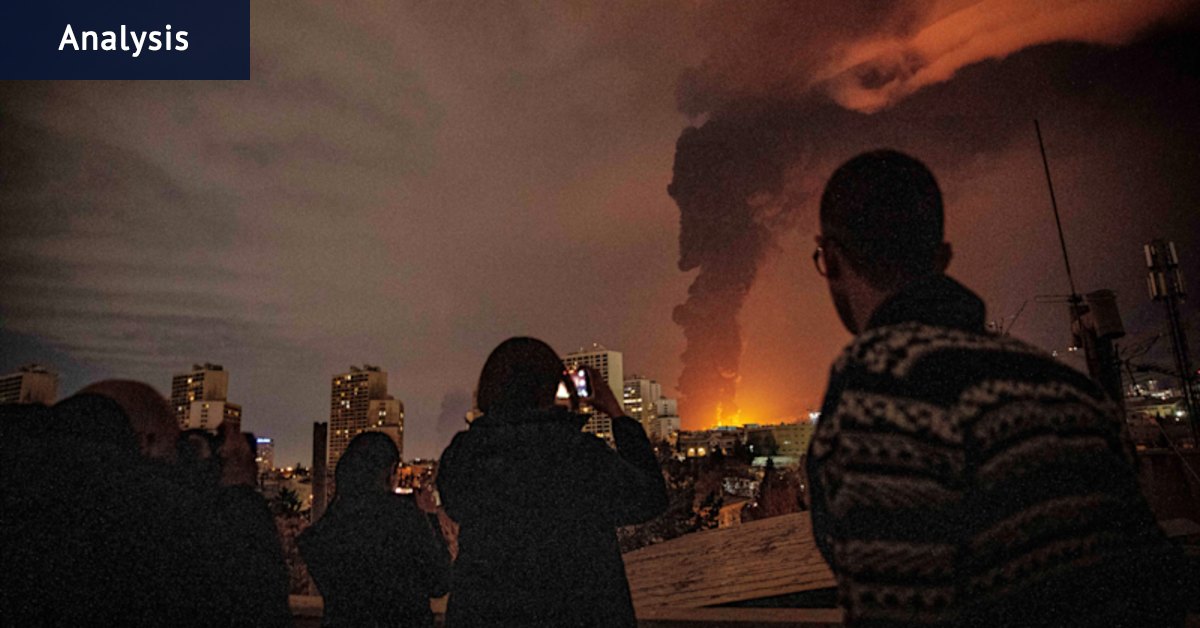
 Residents of Tehran look on as flames and smoke rise from an oil storage facility struck by Israeli troops.AP
Economists at the big four banks in the past two days have tipped the RBA will follow up its February rate rise with increases next week and in May, just days ahead of Jim Chalmers’ fifth budget.
All believe the bank, which has failed to hold inflation within its 2-3 per cent target band for the past decade, will deliver the first back-to-back-to-back rate rises since the end of the pandemic to stop inflation in its tracks.
The expectations of interest rate rises sharpened after RBA deputy governor Andrew Hauser noted the war in Iran, and its impact on oil prices, were clearly going to make the job of bringing inflation under control more difficult.
Related Article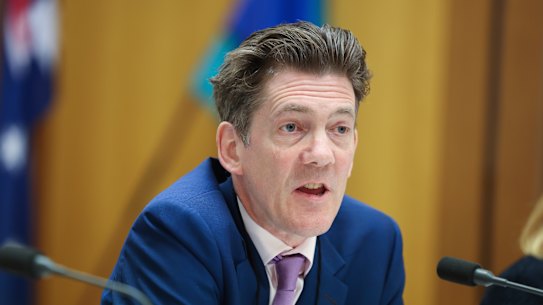
Markets, unsurprisingly, took this as a signal that when the Reserve Bank’s monetary policy committee meets next week, it will sign off on taking the cash rate to 4.1 per cent and 4.35 per cent seven weeks later.
But Hauser attached two important caveats to his hawkish concerns about inflation.
He noted that uncertainty over the Middle East was “extremely high”. If that continued, it would depress global economic activity and Australia would not be immune.
He also said household spending, as revealed in the December quarter, had been a little weaker than the RBA had expected. Data released in the past fortnight seems to confirm that weakness has continued.
The Commonwealth Bank’s measure of household spending, released on Thursday, showed a 0.5 per cent drop in February, the first monthly decline since September 2024. Expenditure dropped on everything from utilities to hospitality. Spending was also flat on household goods and new cars.
As Hauser said, higher interest rates would quell inflation. But there are risks to the broader economy.
“If you act precipitously, if you compound uncertainty, if you drive the economy to slow down too rapidly, then you are going to push inflation down and you are going to harm people as unemployment picks up,” he said.
The bank had expected inflation to reach 4.2 per cent by the middle of the year. Hauser intimated inflation is likely to be higher than that.
When the bank released that inflation forecast last month, it also predicted economic growth to slow to 1.8 per cent by year’s end.
That forecast included an assumption of two rate hikes – one by June and another by year’s end. It did not envisage rate increases in March and May, with a chance of another in the second half of 2026.
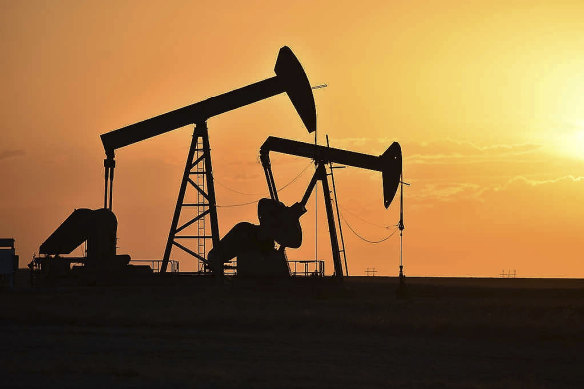 Oil prices could climb as high as $US200 a barrel.AP
A sharp increase in interest rates should drive down inflation (albeit not on petrol prices). But it would also mean a more abrupt slowdown in economic growth.
That forecast was also based on Brent crude averaging $US63.80 a barrel. It hasn’t been at that level since January 12.
Just this month, it has swung between $US77 and a record $US119 a barrel. On Thursday alone, it moved between $US87 and $US101.
Related Article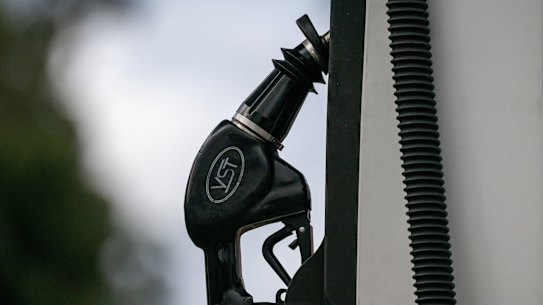
But there are fears that investors do not fully appreciate the real risk of near-unimaginable prices.
Energy and resources research company Wood Mackenzie said even with a quick end to the war, prices will have to push towards $US150 a barrel to rebalance global oil supplies and demand. That would mean average petrol prices in Sydney and Melbourne around 50 cents a litre dearer than today.
And it could easily get worse.
“In our view, $US200 a barrel is not outside the realms of possibility in 2026,” the company’s chairman, Simon Flowers, said.
Commonwealth Bank commodity expert Vivek Dhar says such extraordinary oil prices are not beyond the realms of possibility.
He noted that Brent could reach between $US120 to $US150 a barrel, at which it would be so high that it would drive down demand from developing nations. It could need to go beyond $US150 a barrel to “destroy” demand out of rich nations.
Dhar is expecting the crisis to last months rather than weeks, noting financial markets have yet to come to terms with the possibilities.
“If the conflict is not resolved, oil and refined product prices are at risk of rising to levels not seen in history,” he said.
It means the Reserve Bank could be pushing interest rates up at the same time as oil prices – over which it has no control – reach eye-watering levels that would permeate almost every part of the economy.
Independent economist Nicki Hutley says given the huge amount of uncertainty around oil prices, the war and what it might mean to the global economy, the Reserve Bank should hasten slowly.
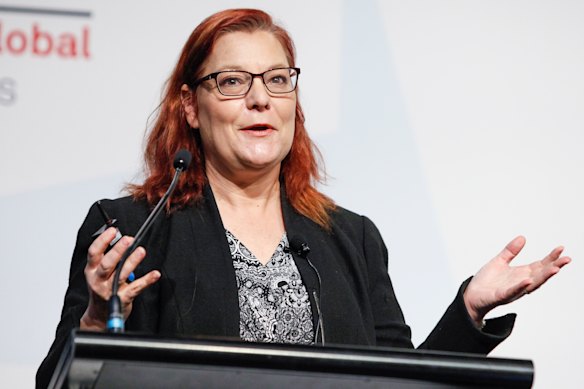 Independent economist Nicki Hutley says the Reserve Bank should hasten slowly on rate rises.Eamon Gallagher
Push up rates too high too quickly, she said, and the Reserve Bank could be facing an economic own-goal.
“They should be cautious. There is a risk of really hurting the economy if they overreact,” she said.
“It’s not as if wages are surging, the economy is punching the lights out, households aren’t spending up a storm. Higher interest rates aren’t going to do anything for petrol prices.”
But AMP deputy chief economist Diana Mousina said the Reserve had good reasons to consider higher interest rates, even if it came with some risks.
“We don’t think there will be another hike after that. If there is, that does increase the risk [of a slowdown],” she said.
“But the economy is not doing that badly. Business investment is strong, household spending is holding up. We know that consumers managed when interest rates were at 4.35 per cent, so why wouldn’t they manage going back up?”
Cut through the noise of federal politics with news, views and expert analysis. Subscribers can sign up to our weekly Inside Politics newsletter.
Save
You have reached your maximum number of saved items.
Remove items from your saved list to add more.
 Shane Wright is a senior economics correspondent for The Age and The Sydney Morning Herald.Connect via X or email.From our partners