

Residents of Allegra Spender’s seat of Wentworth saved $1.8 billion in taxes in a single year from the capital gains tax (CGT) discount, which she wants to rein in.
New analysis from welfare advocacy organisation Australian Council of Social Service (ACOSS) found Wentworth was the number one beneficiary of the 50 per cent discount applied to the tax paid when investment properties or shares were sold.
The federal government is considering CGT changes in the May budget but has not made a decision.
In a tax proposal launched at the National Press Club on Wednesday, Ms Spender proposed a 30 per cent discount as part of a broader package.
Her electorate is a comfortable first, with Kooyong second on $1 billion. Electorates held by teal independents make up five of the top six, with the Labor-held seat of Bennelong the only exception.
Ms Spender said she recognised that her proposal would not win universal support among her constituents.
But she said she had also spoken to beneficiaries of the CGT discount who were happy to pay more to support intergenerational fairness.
“People are concerned about their own financial situation but they’re also concerned about the financial situation of their children and grandchildren, and a country where the idea that if you work hard, you get ahead, is no longer working,” she said.
She said that, despite pockets of high wealth, the Wentworth electorate was diverse, with 40 per cent of her constituents renting and 60 per cent living in apartments, including many young people.
She has proposed to rein in CGT, negative gearing and other tax concessions and use the estimated $29 billion in proceeds to fund income tax cuts for workers, with the overall proposal revenue neutral.
ACOSS proposed to halve the CGT discount, end negative gearing within five years, and invest the proceeds in social housing and higher income support payments.
“It’s clear this tax break funnels billions into the wealthiest parts of our country at the expense of those doing it tough,” ACOSS chief executive Cassandra Goldie said.
“This is money that could be invested in social housing, essential services, income support and the communities that need support the most. Instead, it’s being used to supercharge inequality. That is not a fair or sensible use of funds.”
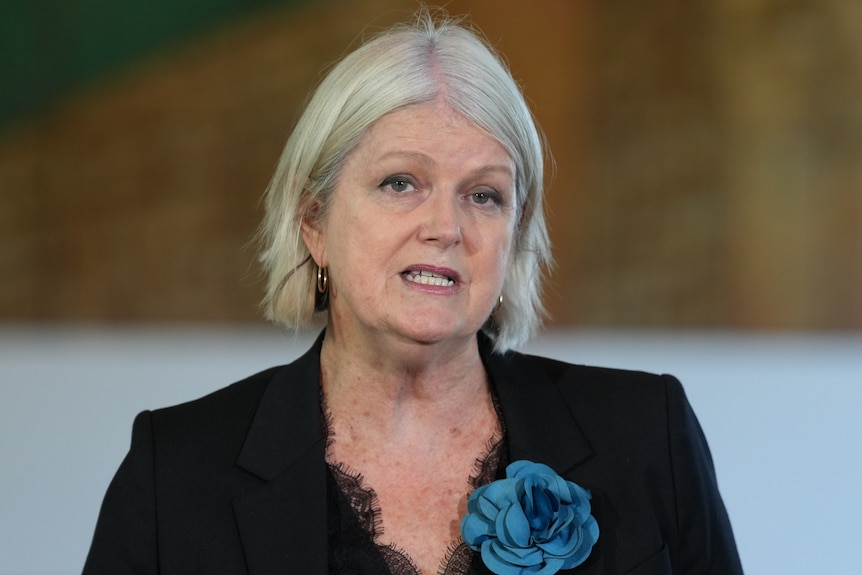
Cassandra Goldie says the proceeds of reform should fund essential services and income support payments. (ABC News: Ian Cutmore)
Chalmers considers generational tax reform
Labor frontbenchers have been open about the fact that they are weighing up their options for tax reform, with a focus on the generational divide and housing affordability.
That has fuelled speculation that the party could revisit its 2019 tax agenda, which included halving the CGT discount, curbing negative gearing and increasing the minimum tax on trusts.
An alternative approach to CGT reform would be to return to the pre-1999 system when the discount was equal to the amount of the capital gain due to inflation.
How much compromise is too much? Labor’s capital gains conundrum
The e61 Institute has also suggested that the payment of capital gains tax could be spread out over several years, to improve the “lumpiness” of the current system in which people are pushed into higher tax brackets for a single year when they sell an asset.
It is one of the reasons the benefits of the CGT discount flow overwhelmingly to those with higher taxable incomes.
Reforming CGT, which has made property investment more attractive than some other forms of investment, would also slightly reduce the price of housing and could have a modest effect on housing supply, depending on its design.
A key design question is whether changes should be “grandfathered” so that they do not apply to properties bought before the rules changed. Labor fully grandfathered its 2019 proposal.
ACOSS suggested changes should be phased in over five years.
Ms Spender proposed the lower discount apply to future gains, regardless of when the property was bought.
Spender warns government reform package should not be tax ‘grab’
Ms Spender told the press club the May budget was “the best opportunity for tax reform in a generation” and that the government should seize it to restore the “faltering” idea that “if you work hard [and] make good choices you can build financial security”.
She congratulated Treasurer Jim Chalmers for his stated ambition to reform the tax system, which she said was “not easy in a rule-in, rule-out world”, but said any package should not raise taxes overall.
“Just raising taxes is not tax reform — it is a tax grab,” she said.
“Australians do not want you to change the tax system so that the government has more money in its pocket.
“They want to see the tax system rebalanced so there is more money in our kids’ pockets.”
Her proposal would do this by cutting the bottom rate of income tax to 13 per cent and all other tax rates by 2.5 percentage points. The result would be a tax cut of $1,643 in 2027–28 for someone earning $100,000 per year.
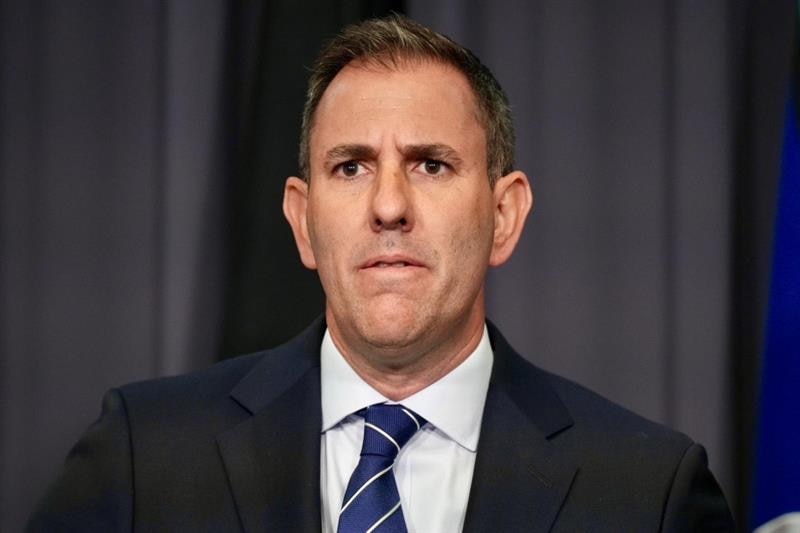
Jim Chalmers has flagged openness to tax reform in the budget. (ABC News: David Sciasci)
She also suggested “ring fencing” negative gearing so that rental losses could only be deducted against rental income, rather than any income as currently.
The proposal would also tax income from investments at 27.5 cents per dollar to reduce distortions and the incentive to use trusts to minimise tax.
“This package is not about penalising wealth,” she said.
“It’s about giving more Australians the opportunity to build wealth.”
The idea of a revenue-neutral package has been supported by the Business Council and former union boss Bill Kelty.
But ACOSS said it should fund an increase in necessary spending and that the tax system should be viewed in tandem with the welfare system.
The Grattan Institute’s Aruna Sathanapally said the government would need more revenue to fund existing expectations for government services, given demographic trends.
But Ms Spender said spending had “grown too fast” in the past four years, from 24.3 per cent of GDP in 2022–23 to 26.9 per cent in the current financial year.
“The government has to prove they can pull back that growth to a more sustainable level before they ask people to pay more,” she said.