
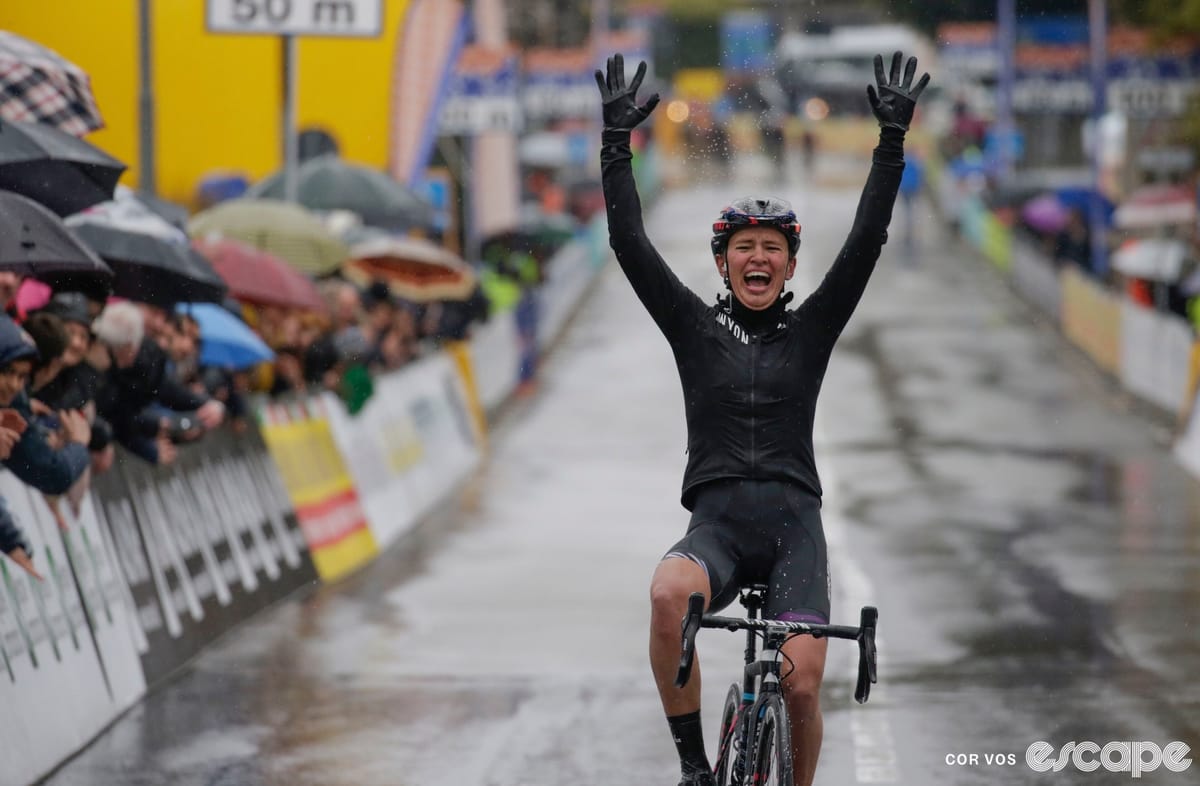
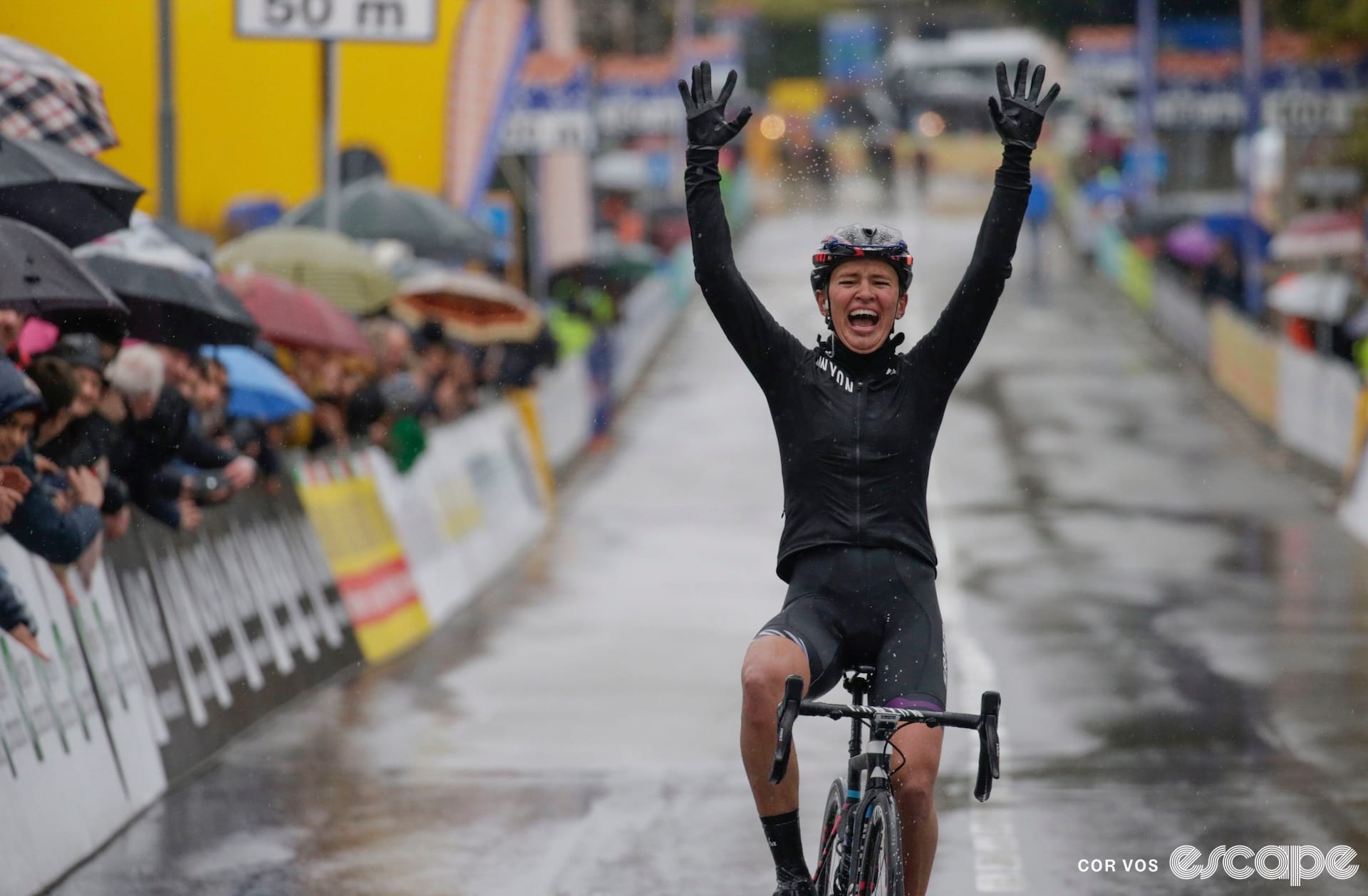
Well, Marianne Vos and Elisa Longo Borghini care, but if that’s not enough for you, let me explain why you should care about this long-running women’s race.

The Omloop Nieuwsblad, as the opening race of the Spring Classics, with its cobbles and steep, decisive climbs, is a race that most cycling fans care about. Strade Bianche, the following weekend, always delivers, with the white gravel roads and picturesque climb into the center of Siena. Later in the spring, there’s Gent-Wevelgem, the Amstel Gold Race, Dwars door Vlaanderen – all of those races have their own draws, reasons to tune in year on year. Then, of course, there’s the “Monuments”, the really big ones that no cycling fan is ever going to miss: the Tour of Flanders, Paris-Roubaix Femmes, Liège-Bastogne-Liège, and now the newly added Milan-Sanremo.
Nestled between Strade Bianche and Milan-Sanremo is another race, the Trofeo Alfredo Binda-Comune di Cittiglio. It’s been around since 1974, one of the only women’s events to stand the test of time. The Trofeo Alfredo Binda doesn’t get the same amount of hype as the races that sandwich it, but it’s a race that means more to the women’s peloton than a lot of other one-day events. There are a lot of reasons you should care about the Trofeo Alfredo Binda – its history, that it is one of the only stand-alone events for women, the junior race that accompanies it, and that every year the race is won in a new way.
But you don’t have to take my word for it. You can listen to Marianne Vos, Elisa Longo Borghini, Evita Muzic, Elisa Balsamo, and Soraya Paladin explain why they love the Trofeo Alfredo Binda.
52 years
There is only one elite race that has stuck with the women’s peloton since 1974: the Trofeo Alfredo Binda. Cycling is obsessed with history, sometimes to its detriment. The fixation on how things have always been done. Other races existed in the 1980’s – the Women’s Challenge that ran from 1984 to 2002 in the USA, the Coors Classic that had a women’s event from 1982 to 1987, the Tour de France Féminin from 1984 to 1993. None of these races exist today, with the exception of the reconstituted Tour, which has gone through many iterations.
Other elite races, like the Tour de Feminin in Czechia, started in the 1990s and continue today without having made the leap to WorldTour status. The second oldest race on the Women’s WorldTour calendar is the Giro d’Italia, which started in 1989.
A lot of the races that prop up the sport – Strade, Flanders, Liège-Bastogne-Liège – were only added in the 2010s. Strade Bianche started in 2015 and Liège-Bastogne-Liège in 2017. Compared to those, and Paris-Roubaix Femmes, which has only existed since 2021, the Tour of Flanders, which has been around since 2004, is practically ancient.
For a sport with such a fixation with history, the Trofeo Alfredo Binda is severely under-appreciated, but not by the riders.
This post is for paying subscribers only
Subscribe now
Already have an account? Sign in
Did we do a good job with this story?
👍Yep
👎Nope