

March 13, 2026 — 11:30am
Save
You have reached your maximum number of saved items.
Remove items from your saved list to add more.
Save this article for later
Add articles to your saved list and come back to them anytime.
Got it
AAA
A week is a long time in Tinseltown. Just ask Timothée Chalamet who has, in the short space of seven days, gone from a movie leading man with Oscar buzz to an artistic pariah whose mockery of ballet and opera has turned the arts world on its head and drawn criticism from around the world.
What is at stake is Chalamet’s chances at winning the best actor Oscar at Monday’s Academy Awards, for which the odds have been – for most of the past three months – largely in his favour. He’s already won the Golden Globe and Critics Choice award, and the Oscar, for a time, seemed inevitable.
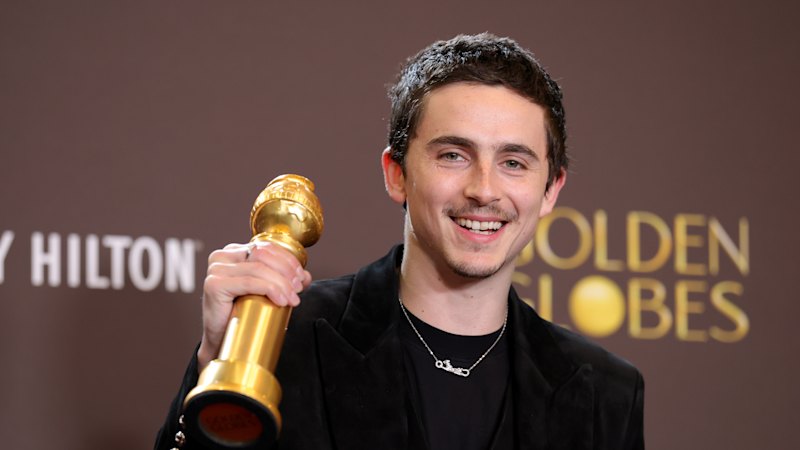
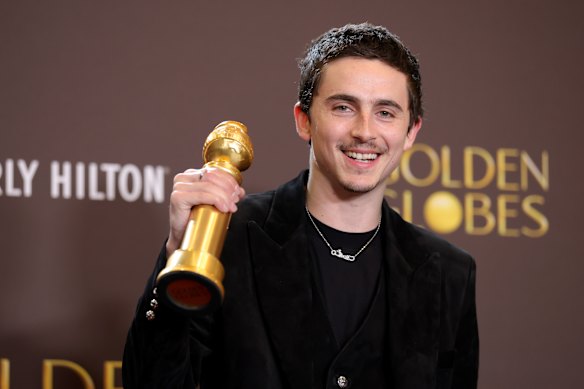 Timothée Chalamet with his Golden Globe. Will he win the Oscar? At this point, who knows?WireImage
Now, after a careless remark – that “no one cares” about ballet and opera – what began as some bad weather on social media has turned into a full-blown cyclone which, this weekend, is threatening to make landfall.
In real terms, the risk to Chalamet’s Oscar for his lead role in Marty Supreme is minimal. The clip featuring the offending remarks surfaced on Thursday, March 5 (US time) – the same day that the final round of Oscar voting closed.
There are random factors in play: how many Oscar voters had voted by then, how many were yet to vote, and how many of those yet to vote might have seen the Chalamet headlines before voting closed at 5pm the same day. The likely answer is few.
But the larger danger is what follows. The remarks have ricocheted around the world, sending the arts world into apoplexy and most ballet and opera company directors into paroxysms of anger. The result? A throwaway remark that will now likely haunt Chalamet, at least for the foreseeable future, and confound efforts by his PR machine to control the message.
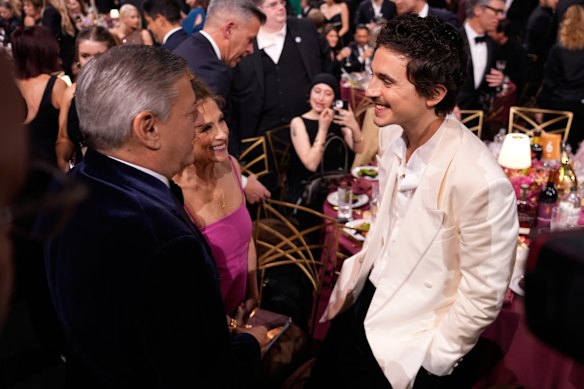 Timothée Chalamet with (left) Netflix boss Ted Sarandos and (centre) his mother, former ballet dancer Nicole Flender.Chris Pizzello/Invision/AP
Worse, credit for the momentum behind fellow nominee Michael B. Jordan, who will almost certainly win the best actor Oscar this weekend, will be unfairly credited to the notion that Chalamet’s remarks cost him the award, rather than the fairer observation that Jordan earned the Oscar off the back of a stunning performance. Exhibit A: Jordan won the best actor award at last weekend’s Screen Actors Guild awards, a key Oscar indicator.
So, how did this all start? Back in February, Chalamet was on a panel with actor Matthew McConaughey at the University of Texas at Austin, in which the topic shifted to the financial challenges facing cinemas. In a town where Paramount is about to swallow Warner Bros, it sounds a reasonable question.
“I admire people, and I’ve done it myself, who go on a talk show and go, ‘hey, we gotta keep movie theatre alive’,” Chalamet told McConaughey. “I don’t want to be working in ballet or opera, or you know, things where it’s like, hey, keep this thing alive, even though it’s like, no one cares about this any more.”
To his credit, he immediately recognised the risk. “All respect to the ballet and opera people out there,” he said. “I just took shots for no reason.”
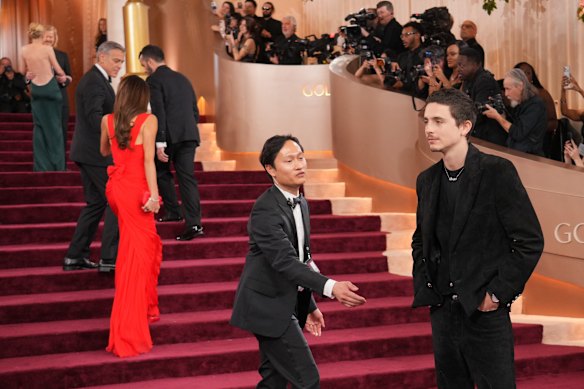 Timothée Chalamet’s extraordinary award season run has hit a bump.Jordan Strauss/Invision/AP
For context, in a clip from 2019, which has resurfaced following the scandal, Chalamet refers to both ballet and opera as “a dying art form”, while promoting the David Michôd film The King. Which turns a lazy sound bite into something more substantial.
And that might have been the end of it, except that last Thursday (US time), the February clip surfaced on social media platforms around the world, with the intimidating energy of a headline unlikely to fizzle out quickly.
Related Article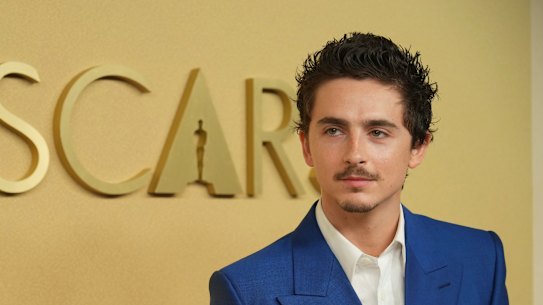
There is a case to be made that Chalamet is right. Ballet and opera are indeed forms of art which depend, in many instances, on either government funding or wealthy patronage. Around the world, without public money, ballet and opera might indeed wither on the vine.
But here’s the thing: film and TV are just as vulnerable to the same subsidy economics. Mainstream Hollywood blockbusters might look like self-funding cash machines, but out here in the real world – in Australia, Canada, the UK, France, Italy and dozens of other countries – the local film and television industries live on the same government subsidies that ballet and opera do.
Ever heard of Screen Australia? Screen NSW? VicScreen? There’s a long list. Telefilm Canada. The National Film Board of Canada. The British Film Institute. France’s Centre National du Cinéma. Italy’s Direzione Generale Cinema e Audiovisivo. Even in the United States, emerging and independent cinema depends on entities including the Sundance Institute, the Academy of Motion Picture Arts and Sciences – the organisation behind the Oscars – and the National Endowment for the Humanities.
The response from Chalamet’s peers has been loud. Oscar-winning actress and The View co-host Whoopi Goldberg: “When you crap on somebody else’s art form, it doesn’t feel good.” American ballerina Misty Copeland: “He wouldn’t be an actor and have the opportunities he has as a movie star if it weren’t for opera and ballet and their relevance in that medium.”
Related Article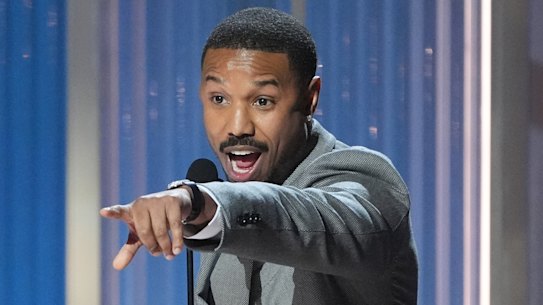
Oscar-winning actress Jamie Lee Curtis: “I’m sure he regrets the comment because you can’t throw those art forms under a bus. They’re too important.” Mezzo-soprano and three-time Grammy winner Isabel Leonard: “To take cheap shots at fellow artists says more in this interview than anything else he could say.”
Perhaps the longest shadow, however, is cast by the smallest of footnotes to this story: Chalamet’s grandmother Enid Flender, mother Nicole Flender and sister Pauline Chalamet were all ballet dancers who trained or performed with the New York City Ballet. And Chalamet himself attended the Fiorello H. LaGuardia performing arts high school in New York, which has its own symphony orchestra, and a curriculum that includes opera and classical ballet.
Which means, whatever you might think of him, and no matter how loudly or long the contretemps lasts, next time he goes home for the weekend he’s likely got an appointment with his mum and the wooden spoon.
Must-see movies, interviews and all the latest from the world of film delivered to your inbox. Sign up for our Screening Room newsletter.
Save
You have reached your maximum number of saved items.
Remove items from your saved list to add more.
 Michael Idato is the culture editor-at-large of The Sydney Morning Herald and The Age.Connect via X or email.From our partners