
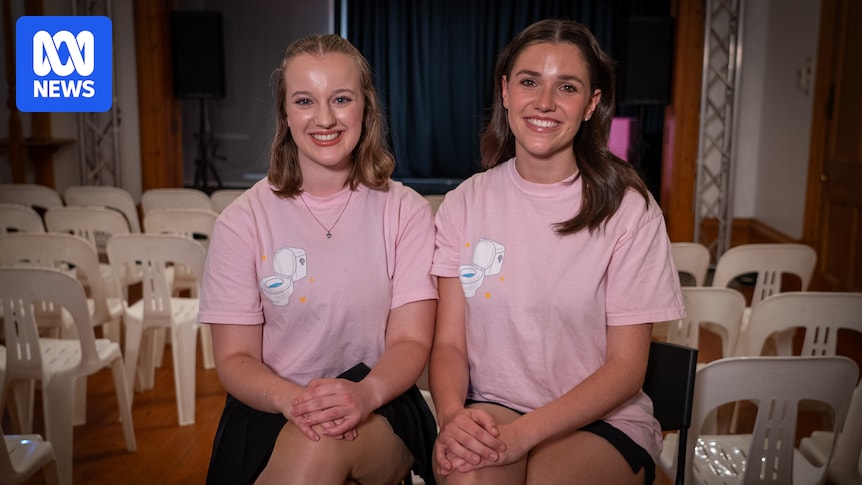
Like many young actors, Sarah Eaton and Hannah Manderson dream of careers on stage or screen.
“I’ve grown to love screen acting, and that’s definitely something that I have an interest for,” Eaton says.
“I’m so, so glad that I decided to go to uni for performing arts because I’ve grown even more to appreciate it as something I could pursue,” Manderson says.
Eaton and Manderson, who are both 21, are two of the five cast members of Girlhood in the Bathroom, a new musical that debuted at the Adelaide Fringe this year.
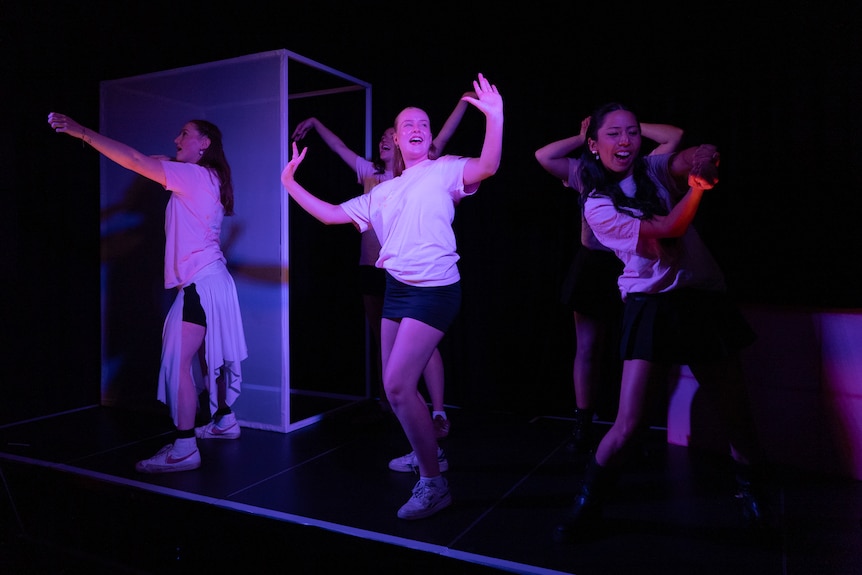
The production is described as a musical testimony to girlhood and growing up. (ABC: Ashlin Blieschke)
“We talk about love and challenges of growing up and sexuality and everything that comes with changing when you get older,” says Imogen Brown, 21, who is also in this production.
These performers are enthusiastic and optimistic about their futures, but they also know finding full-time work as an actor is a tough gig.
“It’s definitely difficult,” Manderson says.
“There are many opportunities, [but] there are twice as many people going after those opportunities.”
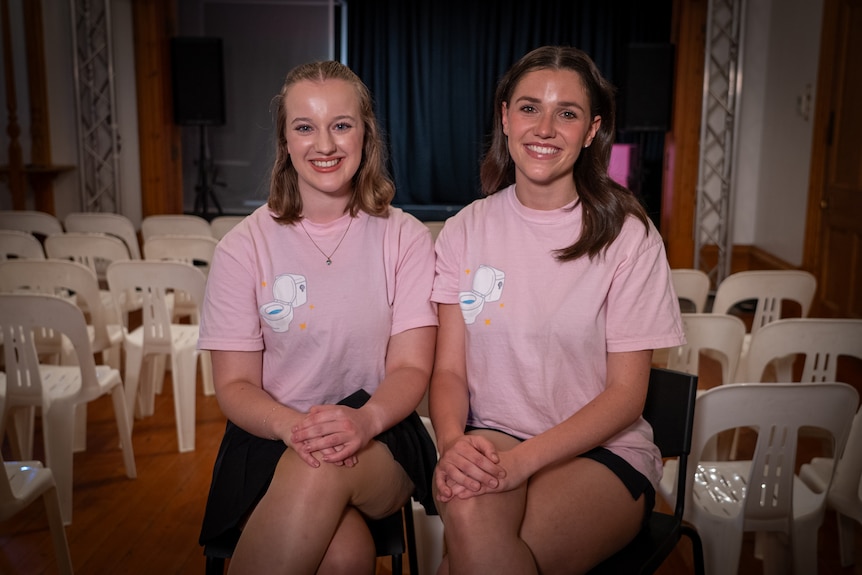
Sarah Eaton and Imogen Brown were on stage at the Adelaide Fringe. (ABC: Ashlin Blieschke)
In Australia, there are only about 1,500 employed actors across film, TV, radio and theatre; just 29 per cent of those are employed full-time.
This might come as a surprise, considering we see plenty of famous Aussies making it in Hollywood.
Robbie and Elordi sizzle, but Wuthering Heights isn’t quite the full Brontë
This year’s highly anticipated film Wuthering Heights, starring Margot Robbie and Jacob Elordi, is a prime example of home-grown talent on the world stage.
In recent years, and more than ever before, we’ve also seen many major international productions, such as Elvis (2022), Mad Max: Fury Road (2015) and Furiosa (2024), and The Fall Guy (2024), come to our shores.
This isn’t just because of our diverse and stunning landscapes, but also a result of tax incentives from both federal and state governments, lower production costs than many other countries, and lots of investment in state-of-the-art studios and training film crews since the COVID pandemic.
In fact, from 2024 to 2025, 174 productions called Australia home and spent a record $2.7 billion here.
This, however, doesn’t always translate to more acting jobs for Australians.
Loading…
Debbie Mitchell, a talent manager with OnCue Talent, says the 2026 film Send Help – a dark comedy and psychological thriller starring Rachel McAdams and Dylan O’Brien – is an example of this.
“We shot a couple of scenes here in Sydney, in the CBD, in the office space,” she says.
“But then, in this movie [Send Help] … they end up on a deserted island.
“In a production, you could have hundreds of actors, [but] on the deserted island, no-one else is coming in.”
If we take a look at local productions, they tend to offer more opportunities to local actors, but there aren’t a whole lot of these being made.
In the 2024/2025 financial year, only 34 Australian theatrical feature films were produced.
In that same year, 37 new TV and video-on-demand dramas were made, the lowest number since 2005, and also the lowest number of total hours made since at least 1995, when records began.
It’s not just an Australian problemCould Western Sydney get its own film studio?
Streaming services have been struggling to make a profit, and in many cases are scaling back production.
To try to combat this here in Australia, new content laws were announced at the end of 2025.
Under the new laws, streaming services with more than 1 million Australian subscribers will be required to invest 7.5 per cent of their revenue into Australian content.
Mitchell believes these laws, alongside recent investment in production spaces across the country, will make a difference.
“You’ve got Russell Crowe, who apparently just got council approval for his studio that he’s building up in Coffs Harbour – that’s going to open up a whole new world there,” she says.
“We have massive studios being set up out at Western Sydney that will just skyrocket.
“These big, A-list, huge movies, they need these studio spaces.”
Screen Australia also has the Crew Placement Scheme, which strongly encourages or requires international productions to use Australian actors through tax rebates and extra funding.
“It means that our guys here are getting main cast roles as well, which is absolutely fantastic for our own actors,” Mitchell says.
AI-shaped elephant in the room
All around the world, acting unions are battling tech companies to try to protect the industry from the impacts of artificial intelligence.
Subscribe to the BTN Newsletter
AI may not be replacing A-listers on screen just yet, but it’s reportedly taking jobs from voice actors and extras, which is something the young performing arts graduates in Girlhood in the Bathroom are concerned about.
“That’s a really frightening idea that these movie sets or animated films will just all be done with no voice actors,” Manderson says.
“That’s a whole section of the performing industry that could be changed, which is really, really scary.”
Despite all the challenges and unknowns that come with an acting career, these performers believe there is something about their profession that can’t be replaced by technological advancements.
“[That] emotional feeling you get between actors being on a set together and working off each other’s energy – AI can’t do that,” Brown says.
“I feel like theatre, like where you’re watching people on a stage, should and will become more important because it’s human connection,” Amaya Pardillo, 21, says.
“You can’t get that through a computer, through anything like that.”
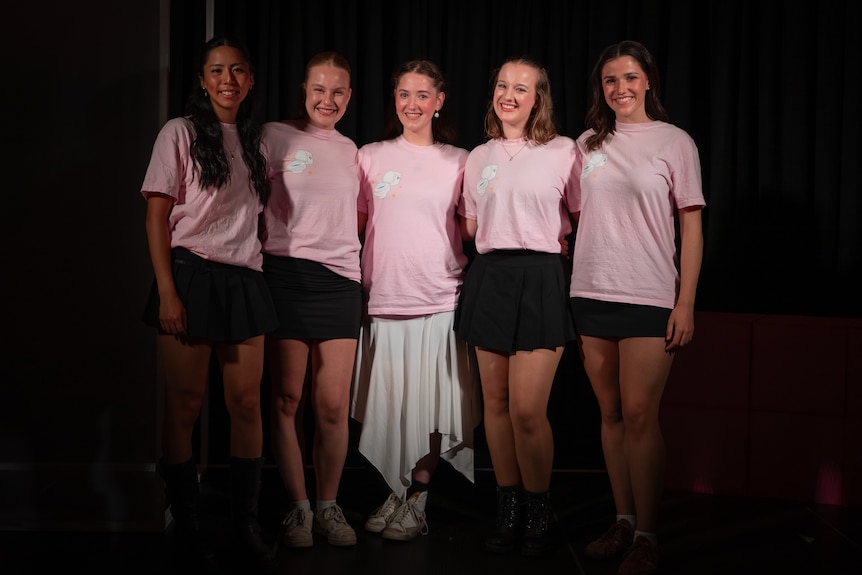
The cast is concerned about AI taking jobs in screen productions. (ABC: Ashlin Blieschke)
These young women say festivals such as the Adelaide Fringe are full of actors who are creating their own opportunities and encourage other performers to lean into the human elements of production that bring audiences through the doors.
“You’re a human being, but that’s why you’re so engaging, and that’s what this industry needs – true, honest people who are vulnerable and open to share their stories and share who they are,” Manderson says.
“And create your own stuff!” adds Alice Quick, 21.
“Don’t wait for opportunities; make your own opportunities,” Pardillo says.
“Grab it by the horns and ride it off into the sunset!”