
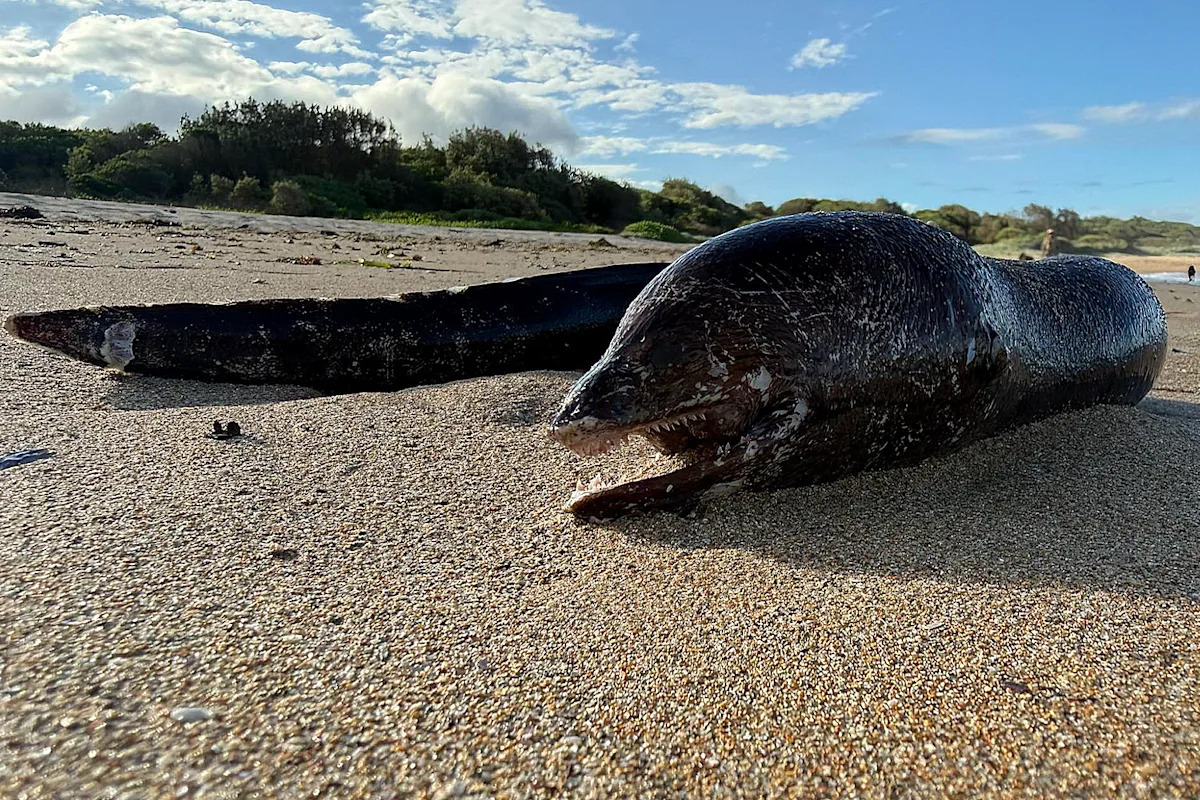
Move over, sharks — another startling kind of sea creature has been spotted at a popular coastal beach this week, raising eyebrows among the locals.
While the ocean predators often grab the spotlight, residents were left debating the origins of an intriguing-looking aquatic beast that drifted onto the sand at North Wollongong Beach on Friday.
Unsure what it could be, one local woman shared a photo of the dead animal on social media, where the strange sight quickly drew attention.
“Any ideas?” she asked, prompting a flurry of responses. Most believed the creature appeared to be a type of eel.
Yahoo News Australia spoke with the University of Wollongong’s Marine Science department, and they confirmed the creature in question is, in fact, a moray eel.
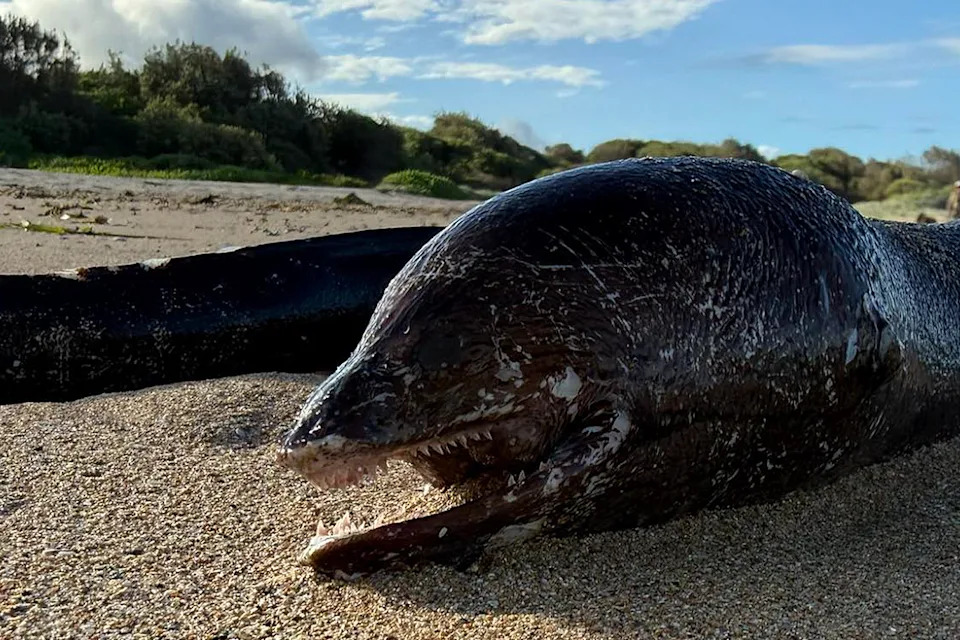
Moray eels are common in Australia, but rarely seen by people on the southern NSW coast. Source: Laura Wells
Where are moray eels typically found?
Moray eels in Australia are mostly found along coastal reefs and rocky areas in tropical and subtropical waters.
These habitats give them plenty of places to hide and hunt.
The Great Barrier Reef in Queensland is one of the most common spots where coral provides ideal crevices and ledges. In the Northern Territory, they’re found in rocky tidal zones and coral-rich areas.
In Western Australia, moray eels appear around the Ningaloo Reef and the Kimberley region reefs, while in NSW, they are less common but can still be seen along rocky reefs and submerged structures.
Moray eels prefer caves, crevices, and ledges, often poking their heads out to ambush prey. Snorkellers and divers are usually the ones lucky enough to spot them.
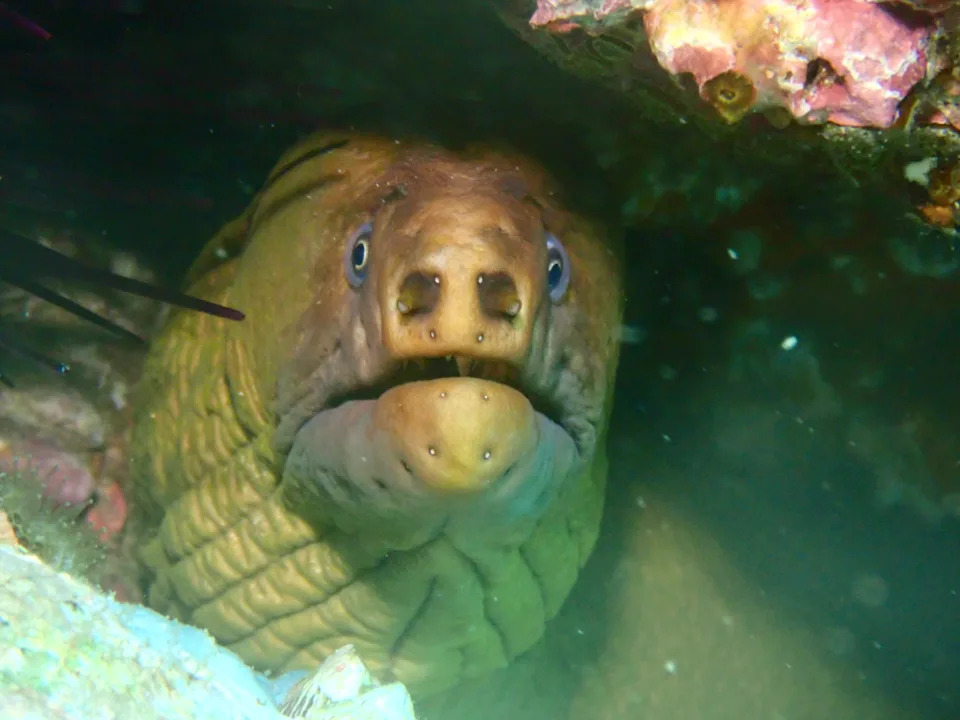
Moray eels in Australia are mostly found along coastal reefs and rocky areas in tropical and subtropical waters. Source: Getty
(Katherine OBrien via Getty Images)Fun facts about moray eels
Moray eels can reach lengths of over three metres, depending on the species.
They have a second set of jaws, called pharyngeal jaws, that help pull prey into their throat.
Most moray eels are nocturnal, hunting at night while hiding in crevices during the day.
They have poor eyesight but an excellent sense of smell, which they rely on to locate prey.
Their skin is slimy and scaleless, which helps them squeeze into narrow reef crevices.
Moray eels are mostly solitary and fiercely territorial.
Some species, like the giant moray, can live for up to 30 years.
Despite their fearsome reputation, they usually only bite if provoked or startled.
Do you have a story tip? Email: newsroomau@yahoonews.com.
You can also follow us on Facebook, Instagram, TikTok, Twitter and YouTube.