
More women in India are stepping onto cricket fields than ever before, highlighting a shift in sports participation and attitudes toward female athletes across the country.
The research, conducted across 14 Indian states, found that one in ten women now say they play cricket, a noticeable increase compared with findings from a similar survey conducted in 2020. The results suggest that women’s participation in the traditionally male-dominated sport is steadily rising, News.Az reports, citing BBC.
The study, carried out by Collective Newsroom as part of the Indian Sportswoman of the Year initiative, surveyed 10,304 respondents aged 15 and above to examine participation levels and public perceptions of women’s sports.
In 2020, the gap between male and female cricket participation was stark. Men were five times more likely to play cricket than women.
By 2026, however, the difference had narrowed significantly. Men are now three times more likely to play the sport, indicating growing female involvement.
Researchers defined “playing” as anyone who said they currently participate in the sport. Among the women who reported playing cricket, 40% said they play at least once a week, showing that many are engaging regularly rather than casually.
The findings suggest that cricket is no longer just a spectator sport for women in India but is increasingly becoming a recreational and competitive activity.
The survey highlights young women aged 15 to 24 as the most influential demographic behind the growth of women’s sports participation and viewership.
Within this age group, 26% said they have considered pursuing sports as a career, a significant jump from 16% in 2020.
This growing interest signals a shift in aspirations among young women, who increasingly see sports as a viable professional path rather than simply a hobby.
The rise in participation also reflects broader social changes, including improved visibility of female athletes, expanding sports programs, and increased media coverage of women’s competitions.
Recent international successes by Indian female athletes appear to be fueling this surge in interest.
Indian shooter Manu Bhaker made headlines at the 2024 Summer Olympics, winning two medals and becoming one of the standout performers for India.
The same year, Indian women also achieved success at the 2024 Summer Paralympics, securing 10 medals.
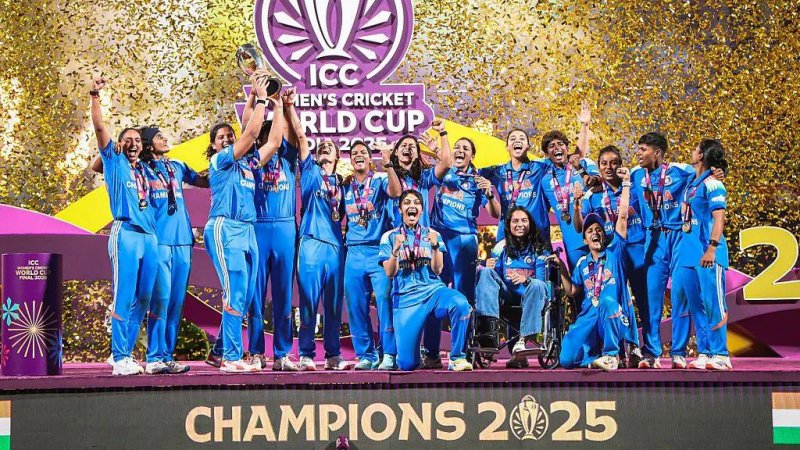
Momentum continued in 2025 when the India women’s national cricket team captured its first-ever ICC Women’s Cricket World Cup title on home soil.
These achievements have elevated the visibility of female athletes and appear to be motivating younger audiences to follow and participate in sports themselves.
Interest in women’s competitions is also rising among spectators.
The study found that 51% of respondents said they had followed women’s sports coverage in the past six months. While this figure still trails the 63% who follow men’s sports, the gap is relatively small compared with historical trends.
Live viewing data reveals a similar pattern.
About 43% of respondents said they watched women’s sporting events live, compared with 54% who watched men’s games.
When it comes to attending events in person, the difference is even narrower. Twenty-nine percent said they had attended women’s sports events, while 37% reported attending men’s competitions.
These figures suggest that audiences are becoming more open to supporting women’s sports both on television and in stadiums.
Cricket is not the only sport experiencing a rise in female participation.
Badminton has also seen growth, with 6% of women surveyed saying they play the sport, compared with 4% in 2020.
Badminton has long been one of India’s most successful Olympic sports, and the presence of internationally recognized players has helped keep the sport popular among younger generations.
The new data suggests that women are increasingly participating in a wider range of athletic activities beyond cricket.
Despite the positive trends, the study highlights that long-standing stereotypes about women in sports continue to persist.
Around 43% of respondents said they believe women’s sports are less entertaining than men’s, up from 38% in 2020.
Another perception gaining traction is that female athletes may not appear “feminine enough,” reflecting cultural expectations that continue to shape attitudes toward sportswomen.
Interestingly, these opinions are not limited to men.
Nearly one in two respondents said sportswomen should look attractive, and women were more likely than men to agree with that statement, according to the survey.
Researchers say such attitudes can influence how female athletes are perceived and promoted in media coverage and sponsorship deals.
While women’s participation is increasing in certain sports, the overall number of people playing sports in India has only improved modestly.
The survey shows that 74% of respondents said they played sports as children, up slightly from 69% in 2020.
However, only about half continue to participate in sports as adults, suggesting that many people drop out as responsibilities grow.
The most common reason cited for not playing sports was lack of time, with two-thirds of respondents saying busy schedules prevent them from participating.
Taken together, the findings paint a picture of a country where attitudes toward women in sports are gradually evolving.
More women are playing, more audiences are watching, and more young people are considering sports as a career path.
At the same time, social expectations and structural barriers remain significant challenges.
Still, researchers say the momentum generated by recent sporting achievements and rising media visibility could continue to reshape the landscape of women’s sports in India in the years ahead.