
The New York Jets took steps to correct the disaster that was the 2025 season. Among the most pleasant surprises of free agency is seeing New York go into the offseason with a plan, execute it and – at least on paper – improve. The bar is low, if not practically nonexistent, after last year’s defense put together a historically poor performance, but the Jets give reason to believe that better days are ahead.
Of course, everything is relative when dealing with a three-win team. It would be an overreaction to say the Jets’ defense is fixed. Only the Dallas Cowboys surrendered more points in 2025, and this unit infamously became the first in NFL history to go an entire season without logging an interception. That cannot be fixed overnight.
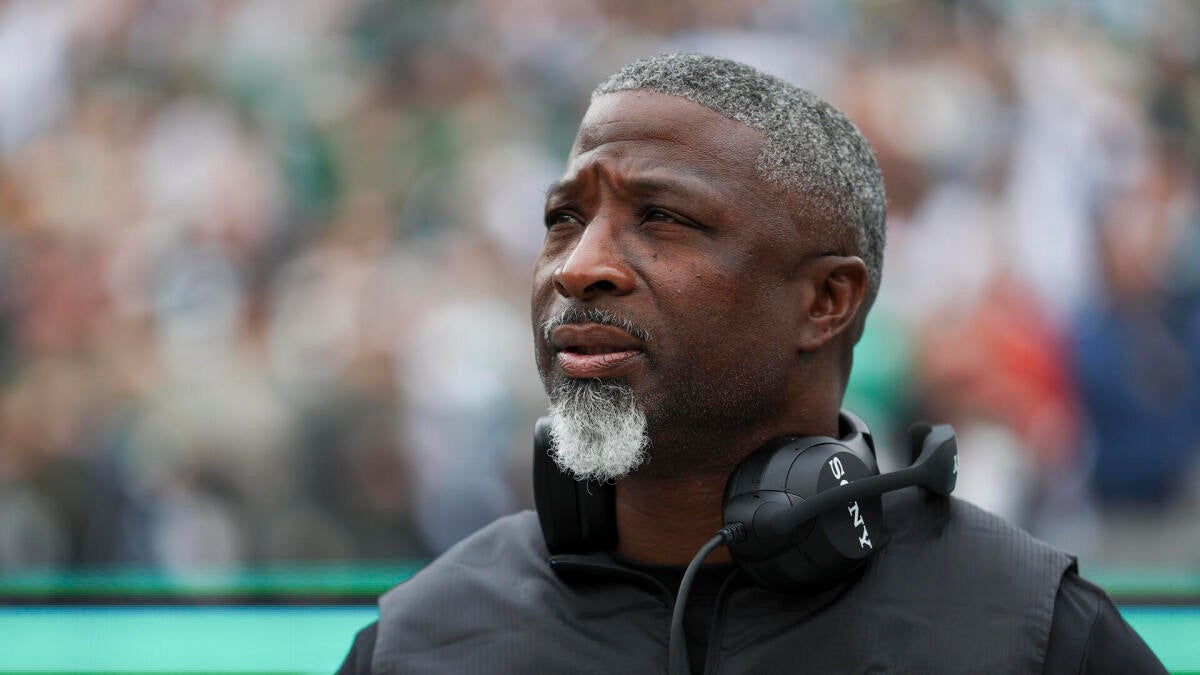
But as coach Aaron Glenn enters what could be a make-or-break second year, he and the front office had to at least try to upgrade the defense. To that end, they did their jobs.
Through free agency, the Jets acquired six players and retained two. They also added Minkah Fitzpatrick via a trade with the Miami Dolphins, which followed their February transaction with the Tennessee Titans that brought T’Vondre Sweat into the fold. No team was more defensively active in the opening days of free agency.
Jets’ defensive moves
S Minkah Fitzpatrick
Acquired via trade
3 years, $40 million
EDGE Joseph Ossai
Free agent addition
3 years, $36 million ($22.5M guaranteed)
Free agent addition
2 years, $22 million ($15M guaranteed)
Free agent addition
1 year, $10.5 million ($9.7M guaranteed)
EDGE Kingsley Enagbare
Free agent addition
1 year, $10 million ($8.5M guaranteed)
Free agent addition
1 year, up to $6 million
DT T’Vondre Sweat
Acquired via trade
2 years, $3.7 million ($2.1M guaranteed)
Free agent addition
1 year, $3.5 million guaranteed (up to $5.5M)
DT Jowon Briggs
Retained
Exclusive rights tender
Retained
Exclusive rights tender
The defensive front looks decent, and the secondary has the combination of proven production and veteran leadership necessary to expel the demons of last year and make life much more difficult for opposing receivers. Fitzpatrick alone is a difference-maker, and Nahshon Wright led the NFL in takeaways last year. If any team needs the latter’s skill set, it is the Jets.
The pressure is on for Aaron Glenn
What jumps off the page with all of those contracts is how short-term they are. Even Wright, on the heels of a breakout year, is on a one-year deal. If the Jets view this signing class as mostly a one-year group, that has all the makings of a situation where they tell Glenn to prove it in 2026 and move on if he does not. With these additions, the Jets are not locked into much of anything beyond next season and can afford to cut bait if they do not see their desired step forward.
Glenn should be thrilled about the new weapons at his disposal. He should also be aware that if the overhaul does not lead to improvement, the players on expiring deals may not be the only ones who get locked out of the facility next offseason.
That is undoubtedly part of the reason why Glenn decided to take over the defensive play-calling duties in 2026. If he is going to go down with the ship, he may as well try to steer it. In a perfect world, he would turn it away from the looming iceberg altogether. If calling plays really is his “superpower,” as he said at the NFL combine, then he should move this unit out of such dangerous waters.
High floor, low ceiling
The cupboard was quite bare after the Jets traded away Sauce Gardner and Quinnen Williams. This batch of incoming talent gives the defense more playable weapons than it had at its disposal in the back half of last season, and a few more should be on the way in the draft.
Fitzpatrick and Davis are the most enticing additions, but therein lies the only real problem with the haul; these are not superstar pickups. Rather, the Jets are bringing in veterans who can stabilize things and offer guidance to the young core around them. That is precisely what they need in order to make sure the defense does not regress further. In fact, it should be noticeably better.
To expect players beyond their prime to come in and help the Jets win more than a handful of games, though, would be misguided. Instead, they raise the floor and set the stage for future, more groundbreaking acquisitions that can take the group to the next level.
What’s next?
The Jets still possess $37.1 million in cap space, per Over the Cap, so more moves should be on the way. Whether Breece Hall inks a long-term deal or plays on the franchise tag will help determine how much more aggressive general manager Darren Mougey can be in the months to come. They will also spend money on their incoming draft picks, of which they have two in the first round: No. 2 and No. 16, the latter of which came via the Indianapolis Colts in the Gardner trade.
Mougey will be expected to select a defensive player with at least one of those picks, and Ohio State edge rusher Arvell Reese should be there for the taking at No. 2. He is widely mocked to come off the board at that spot and would be an immensely promising addition to the new-look front.