
Victoria’s Energy Minister Lily D’Ambrosio has threatened to tap intervention powers to break up a three-way fight over how to get more gas into a major pipeline and save Melbourne from bleak winters.
Without a resolution, shortfalls are set to hit the east coast market in 2029. APA Group has sought regulatory clearance to expand its pipeline in southwest Victoria to ensure enough gas is in place to meet demand during crunch winters.
The pipeline operator identified available gas in Port Campbell, to the west of Melbourne, from producers in the Otway Basin and from Lochard Energy’s Iona gas storage facility.
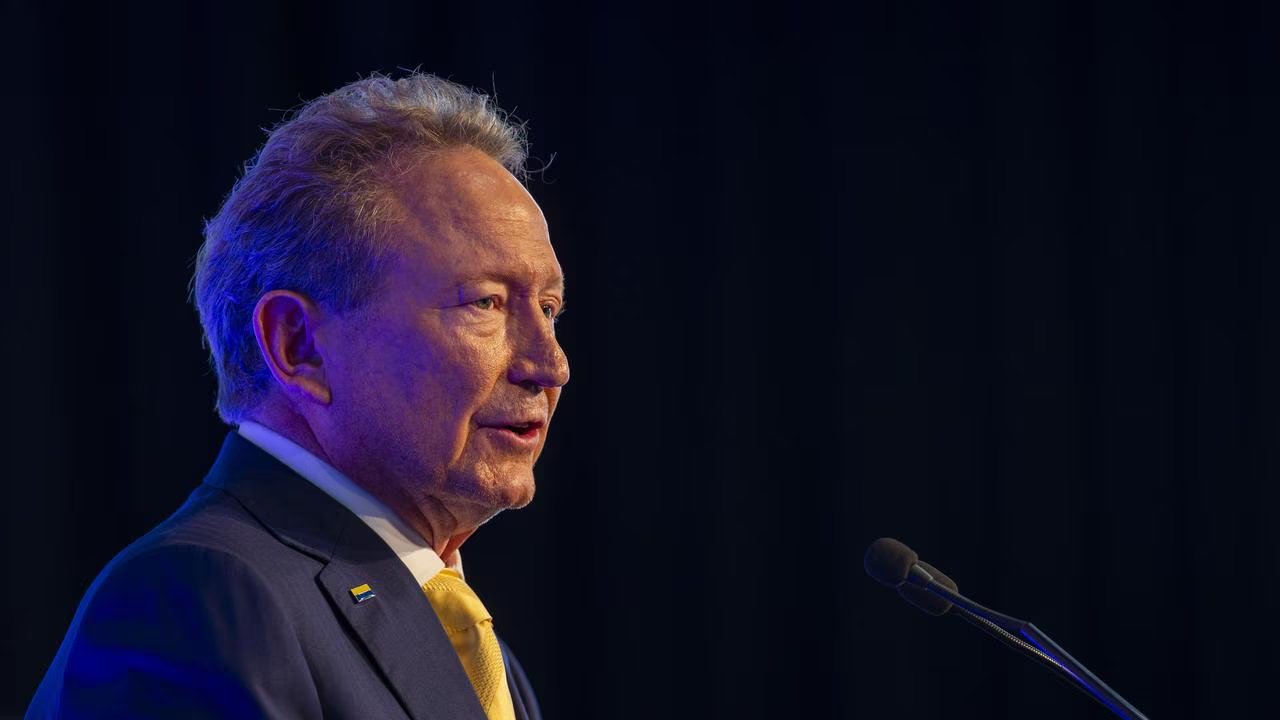
But the proposal has set-off bickering and elicited doubts from several major LNG importers because of the cost that will inevitably be shared, including from Andrew Forrest’s Squadron which claims its rival terminal in New South Wales has been gaslit out of the picture.
APA’s super-sized pipeline is under attack.
Existing domestic gas producers and a new generation of LNG importers such as Viva Energy’s mooted Geelong terminal would become tenants of the same pipeline. This creates an engineering challenge: the competing pressure from gas introduced by the LNG terminal connected to the facility closer to Melbourne would force out domestic gas piped in from facilities in Port Campbell.
The Australian Energy Market Operator has flagged the compression issue as a possible supply risk, even though APA thinks it can be solved and the gas can coexist.
Ms D’Ambrosio wants to see an alternative pipeline looping option developed to better accommodate all Port Campbell sources of supply, including LNG imports. The minister wants all viable supply options kept open.
“The Victorian Government wishes to ensure that any revised proposal put forward by APA does not restrict existing and planned Port Campbell supply sources from servicing Melbourne demand, nor prevent or deter credible supply and expansion projects from progressing, including supply from Otway and Athena Gas Plants, and Iona or from a potential Victorian gas import terminal,” the Victorian minister said in a submission to the Australian Energy Regulator.
Victoria had been pushing for the commonwealth to underwrite importing LNG into Australia for the first time in a major intervention aimed at fixing looming gas shortfalls.
The minister signed off her letter by referencing a current gas amendment bill before the Victorian parliament which would controversially hand her measures of last resort to intervene in the energy market.
“The Victorian government has, and will continue to take, decisive action to preserve the affordability, reliability, and security of Victoria’s energy system. All market participants must know that these powers can and will be used if the Victorian government deems that failure to invoke them would place an unacceptable risk on the affordability, reliability, and security of the Victorian energy system,” Ms D’Ambrosio said.
“AEMO projects structural shortfalls in the east coast gas market by 2029. The imminence of this risk means that action must be taken urgently, by all market participants, to ensure that Victoria’s gas infrastructure does not inhibit the range of potential supply solutions that could ameliorate these risks to the east coast gas market at the lowest possible cost.”
Viva Energy has previously cautioned it could walk away from its proposed LNG import terminal in Victoria unless it secures access to APA’s pipeline, adding to worries about how Australia’s most gas-hungry state will avoid a looming energy shortfall.
Viva told the regulator it wanted independent verification of the cost estimates provided by APA for the pipeline expansion. Its own terminal will not need any immediate capital spent on the pipeline.
“We cannot support a ‘blank cheque’ being issued to APA for any project of this nature where little incentive rests with the project developer to deliver best practice results,” Viva said.
Squadron Energy said long-time rival APA had mischaracterised its Port Kembla LNG facility in NSW, as previously reported by The Australian’s Margin Call column.
APA “characterises LNG import terminals, including Port Kembla, as projects that have ‘not reached final investment decision’ and are therefore uncertain or unavailable within the relevant time frame,” Squadron said.
“This characterisation is materially misleading and calls into question the validity of APA’s
asserted urgency and necessity for accelerated regulatory approval.”
A separate LNG terminal, AG&P LNG, also has plans to import gas into South Australia and Victoria.
Southern fields continue to deplete, new developments face delays and AEMO has repeatedly warned of potential shortfalls in the southern states from the latter half of the decade unless there is new supply, or demand moderation. Neither appears imminent.
The federal government confirmed in December it was favouring a scheme that would require Queensland’s three LNG exporters to supply between 15 and 25 per cent of east coast demand into the domestic market. Manufacturers and heavy users have said their viability is under threat from high prices and supply uncertainty.
Separately, a plan to hand Australia’s electricity grid operator strengthened powers to intervene in the east coast gas market has sparked a stoush with producers amid concern that modelling will be used to prioritise LNG import schemes.
 Perry WilliamsChief Business Correspondent