

Two weeks into the war in the Middle East, Iran’s military command said the world should be prepared for oil to hit $US200 ($286) a barrel.
But what exactly does that mean for Australians?
Running on empty — How we were caught short of oil
The war has thrown global economic activity into chaos, disrupting the flow of oil as Iran attacks vessels in the Strait of Hormuz, where about 20 per cent of the world’s fuel passes through.
In response, the International Energy Agency agreed to release the largest volume of emergency oil reserves in its history, pledging to make 400 million barrels of oil available from its 32 member countries.
Despite this, higher petrol prices, the loss of natural gas, disrupted shipping routes and rising agricultural costs are making its way to the Australian consumer, and a number of everyday items may spike in price as supply lines and markets are disrupted.
Here’s what we may expect to be affected.
Iran war live updates: For the latest news on the Middle East crisis, read our blog.
Bread, beer and other grocery items
Farmers are bracing for a potential fertiliser crisis as the conflict disrupts the supply of urea, the world’s most commonly used nitrogen fertiliser.
The fertiliser is essential for getting high yields out of many crops — including cereals like wheat, barley and oats — as well as vegetables, and it is produced directly through the use of natural gas, whose consumption has also been dramatically affected by the war and access to the Gulf region.
Iran war-led fuel crisis worst some have seen
Professor of Agricultural and Resource Economics Tiho Ancev said the effect would not be seen immediately in Australian shops but it was something consumers “should be wary of”.
“The fertiliser will be used for crops that will be produced in five months, six months, maybe a year … and so we have the pipeline for production,” he added.
“It is important not to panic,” Dr Ancev said.
National Farmers’ Federation president Hamish McIntyre told the ABC urea shortages will drive up the cost of food production and drive down farmers’ margins, but says farmers will absorb the shock and continue using fertiliser at similar volumes.
Dr Ancev said while he did not think Australia will be seeing shortages of groceries in the coming months, supermarkets should be put on notice not to price gouge.
“This is not the time to be playing on panic moods,” he said.
LoadingElectricity
The increase in natural gas prices may also affect electricity prices and could hike up the average household bill, Dr Ancev said.
Natural gas-powered generators are often used to ‘set’ the market price on the natural electricity market (or the wholesale price), he explained.
“So when natural gas prices are very high, electricity prices tend to rise — and that was the case in 2022 when Russia’s invasion of Ukraine erupted,” Dr Ancev said, adding there was substantial studies concluding the two went hand-in-hand.
The region, including Saudia Arabia, Iraq, Iran, UAE, Kuwait, Qatar, Bahrain and Oman, produces 27 per cent of the world’s crude oil. (ABC News: Chris Gillette)
Dr Ancev said the timing of the potential spike has, however, come at the right time.
“We are coming into a period of low electricity demand because of mild weather, and winter hasn’t started yet but cooling isn’t needed as much throughout [homes].
“If it lasts into the winter period, it may affect energy prices.”
He added that the exact nature of the price hikes would, however, depend on how long the war lasts.
Read more about the Iran war:International flights
More than 43,000 flights scheduled in and out of the Middle East have been cancelled since the beginning of the war, according to aviation analyst Cirium.
And as more flights are cancelled and fuel costs rise, carriers around the world are increasing their airfares to cover the costs — including Qantas.
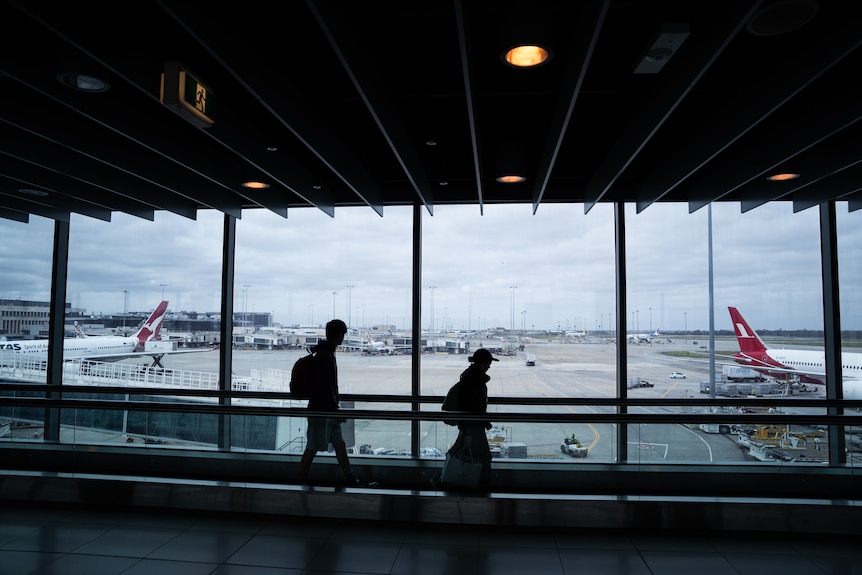
The Middle East conflict has seen fuel costs surge and disrupt key air routes. (ABC News: Matt Roberts)
Dean Long from the Australian Travel Industry Association said the carrier would be raising their international airfares by about 5 per cent across the board.
He added that impact on flight prices would not be felt for another three to six months.
And while not currently affecting the price of domestic flying, other airlines around the world have passed on fuel increases to domestic flights.
Shipping prices/retail goods
The immediate disruption in deliveries because of the shipping crisis will create a shortage and increase the prices in the short term, which will have flow-on effects elsewhere, Dr Ancev.
But he said it was hard to know specifics this early on.
“Petrol is such ubiquitous input into everyday life for individuals, companies and firms,” he said. “It will have a flow-on effect everywhere.”
He said that Australia was lucky it was a larger exporter rather than an importer.
Oil price spike points to drawn-out war, analysts warn
“Shipping will be affecting our export market prices, but we are not importing many foods, so if the price of those imported foods go up, so be it.”
He said the cost of shipping Australia’s agriculture products increase and therefore make the cost of that item to the destination market more expensive.
One small business owner told ABC’s Hack that she has been forced to raise her prices in order to keep up with the amount of petrol she says she needs to keep her business running.
David Leaney, international supply chain expert, Australian National University, told ABC’s Hack program that there is about 36 days supply of fuel in Australia.