
It might sound impossible to build a house that captures the sun when you want the warmth, but shields you from it when it is hot, catches a breeze regardless of the wind direction, and offers 360-degree views.
You might think the only way to achieve all that is to build a house that moves, which is exactly what Luke Everingham did.
Mr Everingham designed and built his own rotating home in 2006.
“After 20 years, I’m still discovering benefits.
“Even down to things like coming home with the shopping — you can put the kitchen right where the car is.”
Loading…
Mr Everingham’s house at Caffrey’s Flat on the New South Wales Mid North Coast is one of only about a dozen known revolving houses worldwide.
The house sits on a rotating platform, which was inspired by Mr Everingham’s late grandfather, an electrical engineer for the state’s railway service.
“When I was a little boy, he was designing a turntable for locomotives,” he said.
The system used in Mr Everingham’s house works on a similar principle; the circular-shaped house sits on a central crane bearing fitted with 32 wheels that run on a circular steel track.
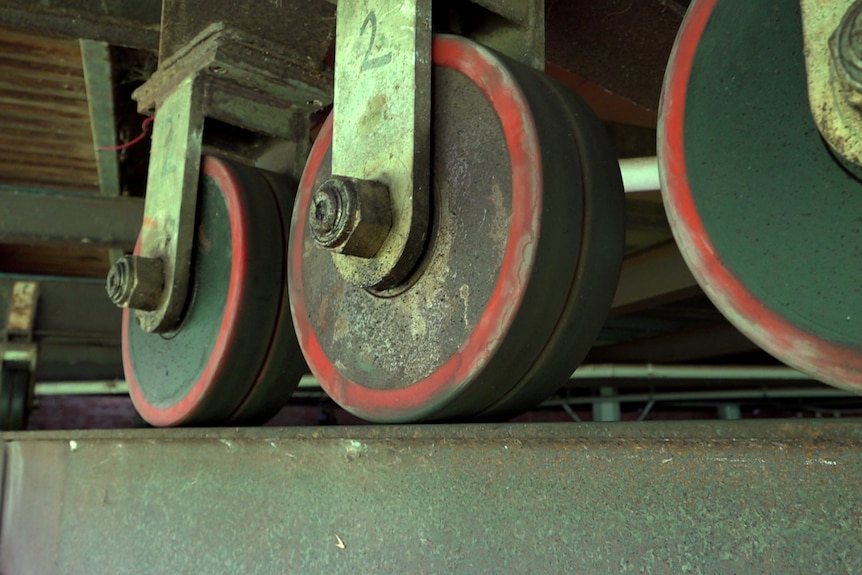
Under the house, 32 wheels roll on a steel track around the outer circle of the house. (ABC Mid North Coast: Wiriya Sati)
The electrical and plumbing services go through the centre, using pipes with enough slack to rotate a full circle before turning back in the opposite direction.
The system and the house position are controlled with an app.
Mr Everingham said being able to position the house to capture or avoid the sun or breeze saved an estimated 50 per cent in energy costs.
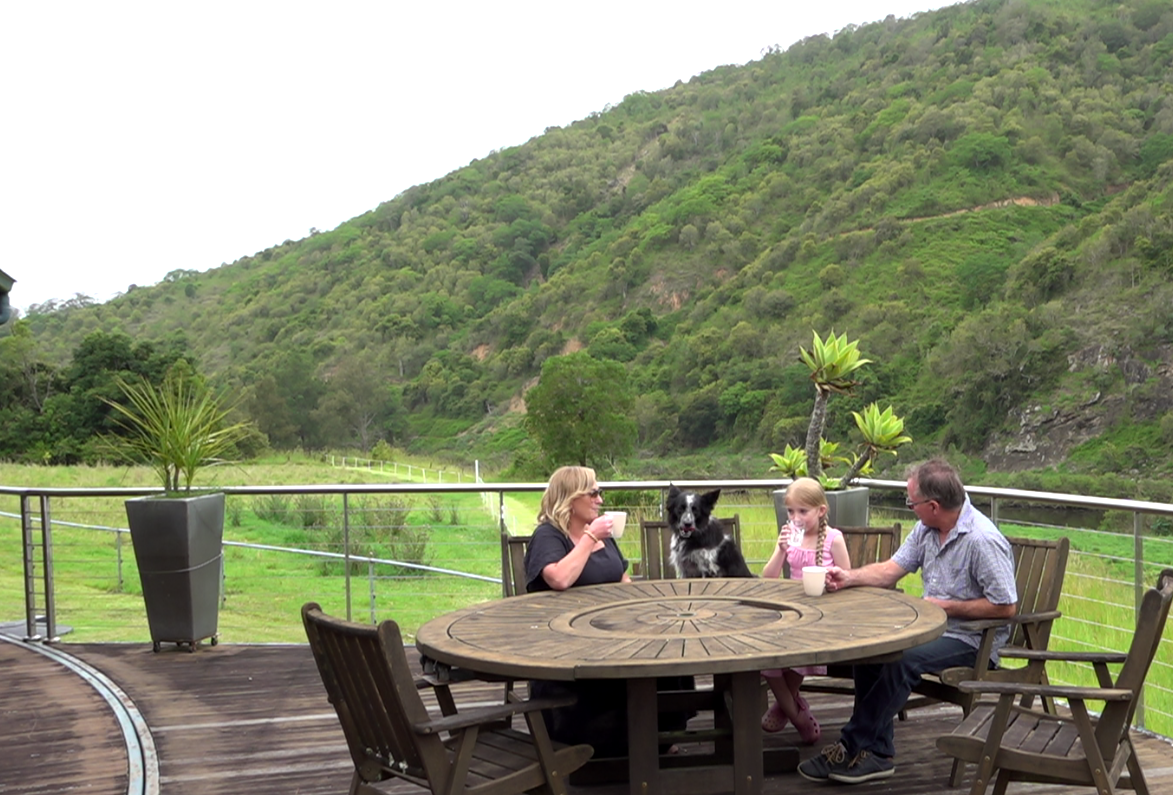
If the Everinghams want to capture the sun in winter or chase a breeze in summer, they simply rotate their house. (ABC Mid North Coast)
“It’s easy to keep the house cool [in summer] and warm in winter compared to the old house [on the property], and it’s double the size and isn’t costing us any more,” he said.
The Everingham family lived in the house up until 2021 when they started a wedding business. However, they are planning to move back in and enjoy it for themselves.
Rotating house rarity
Architect Glen Dowse designed a rotating house in Canberra for builder John Andriolo, who had a similar passion project.
Named The Girasole, which is Italian for turns with the sun, the home was completed in 2013.
The home rotates using silent motors on 28 wheels, which use less energy than a 100-watt light bulb.
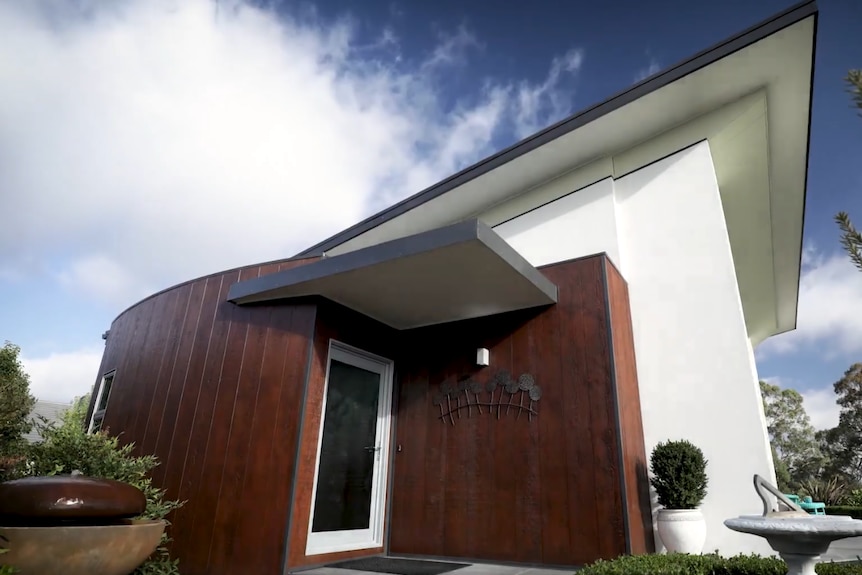
The Girasole stemmed from John Andriolo’s dream of a house that followed the sun. (Supplied: realestate.com)
The design and sustainability features of the home have won multiple awards.
Mr Dowse said while he was surprised there were not more rotating homes, he could understand why, given their price to build.
“The cost is probably prohibitive to most people, and it wouldn’t make sense on a normal residential building budget.
“You’ve got to have something that drives the reason for the rotation.
“In this case, it was energy efficiency, following the sun; in other cases, it’ll be specific views on, say, a rural property that could be spectacular.”
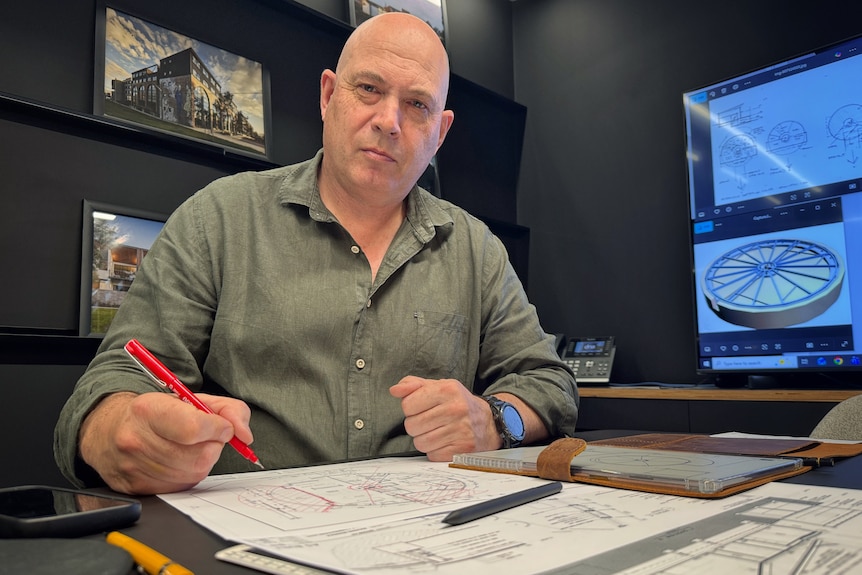
Glen Dowse says he has not been asked to design another rotating house. (ABC News: Luke Stephenson)
Complex design
Engineer Don Dunick designed and built his pedestal revolving home in New Zealand during the late 1990s and while he lived in it initially, he now rents it out while he is living in Australia.
Mr Dunick said his rotating home was unique in that it could turn in the same direction continuously, which required a complex design that rotated around central services like sewerage and drainage, something which took five years to develop.
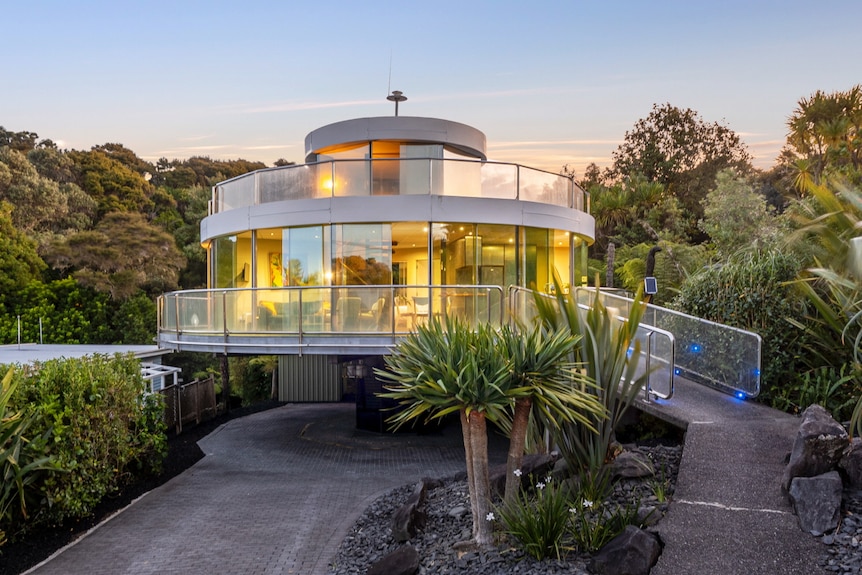
Don Dunick’s pedestal house in New Zealand rotates using a circular guttering system through the centre. (Supplied: Sotheby’s International Realty)
“This is the only house in the world, I believe, that has this technology and simplicity,” he said.
Mr Dunick said maintenance was minimal and nothing had broken down in 26 years.
“There has never been a need for servicing the house; I’ve only ever greased the bearing once,” Mr Dunick said.
Don Dunick designed his unique rotating house that can turn continuously in one direction. (ABC News: Ben Cocklin)
Sharing rotating house designs
Mr Everingham said he received interest in his home design from around the globe.
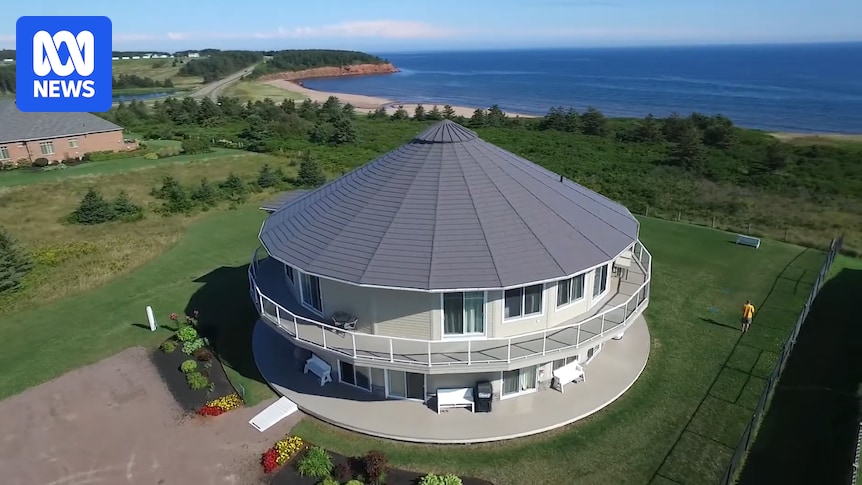
He assisted Canadian couple Steve and Stephanie Arnold to build their rotating house overlooking the water on Prince Edward Island.
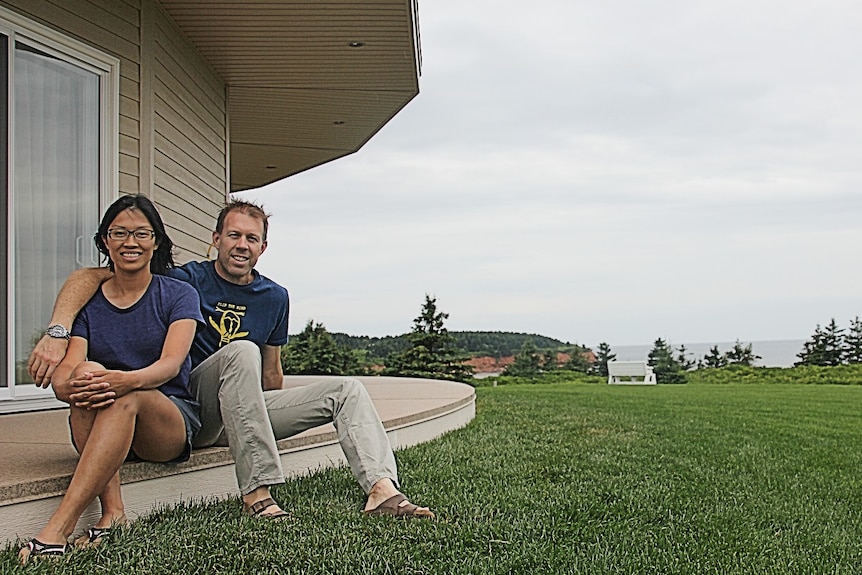
Each room in Steve and Stephanie Arnold’s rotating house on Prince Edward Island, gets a view of the water. (Supplied: Steve Arnold)
The couple had been inspired by Mr Everingham’s house when they saw it featured on a TV show during a holiday to Australia.
“My wife thought I was crazy; I contacted Luke and made plans to visit and see the house,” Mr Arnold said.
The end result is exactly what the couple had dreamed of for their unique location.
“When we position [the house] over the water when the sun sets, and the moon is rising, sometimes we can see the sun and the moon at the same time,” Mr Arnold said.
The dream home came with a hefty price tag.
“In all, to rotate this house [cost] roughly $350,000 extra on top of the land and the house itself.”
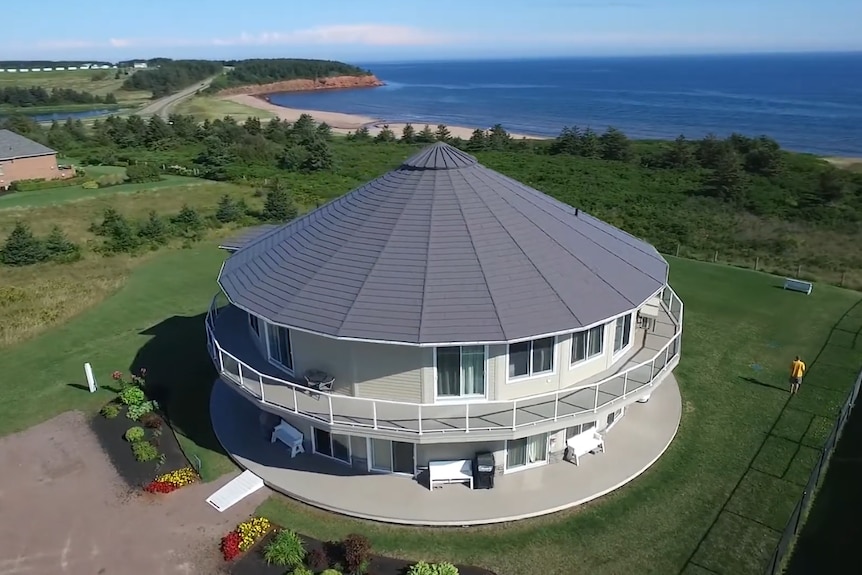
Steve Arnold had a rotating house built using the rotating platform designed by Luke Everingham. (Supplied: Chris Dudley)
According to other rotating-home owners, the cost is varied.
Mr Dunick said his New Zealand home did not cost him much more than what it would cost to build a standard house.
“The only difference, extra, is the bearing.”
Mr Everingham estimated his design would cost approximately $150,000 on top of a normal house build.