

When Terry Woodcroft needs to fill up his trusty Toyota Hilux, he heads straight to the local pub.
Not because he’s hankering for a pot and a parma, but because the cooking oil from the kitchen is what fills the tank of his converted farm ute.
Mr Woodcroft is a retired police officer and hobby farmer who converted his ute about five years ago to run on biofuel, such as vegetable oil.
He buys used cooking oil from restaurants near his 4-hectare timber farm in Kawarren, near the Otway Ranges in south-west Victoria, which he refines and stores on site.
With petrol prices surging as a result of the ongoing war in the Middle East, Mr Woodcroft said his alternative fuel had become a financial and environmental lifeline.
Iran war live updates: For the latest news on the Middle East crisis, read our blog.
“It certainly makes quite a dent in the fuel bill, I have to admit that,” he said.
The conversion is driven by equal parts environment and economy.
He believes everyone should do what they can to reduce their footprint: the hip-pocket benefit is a silver lining.
“I am worried about the future in a way I have never been before,” he said.
“$3 a litre [for diesel fuel] is going to absolutely ruin people.”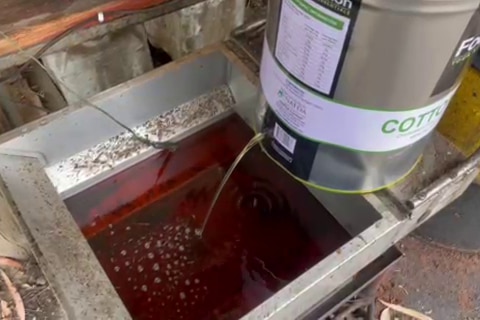
Terry Woodcroft refines the cooking oil at his south-west Victorian farm. (Supplied: Terry Woodcroft)
It’s also helped him gather something of a unique reputation around town.
“Friends make out that they can smell it coming because it smells like fish and chips cooking,” he said.
“It does — it doesn’t smell like a diesel car.”
What is biofuel?
Biofuel is made from organic waste products, including grains, forestry material and agricultural waste, and even used cooking oil from restaurants and takeaway shops.
It can be used in existing petrol and diesel engines with little to no modification, which is part of what makes it attractive to farmers like Mr Woodcroft.
The biofuel industry argues it’s an environmentally friendly fuel source that would boost jobs and firm up Australia’s fuel supply without ripping up the infrastructure already in place.

Shahana McKenzie says more bioenergy production is needed in Australia. (Supplied: Bioenergy Australia)
“Ultimately, Australia really does need to consider how we operate, not only from an emissions perspective, but from the fuel security perspective,” Bioenergy Australia chief executive Shahana McKenzie said.
“This is not only about fuel security, but this is about regional jobs, this is about regional economic development.”More news from regional Victoria
Ian O’Hara, deputy dean of the Faculty of Engineering at Queensland University of Technology, said bolstering the biofuel market would lead to more regional jobs and better fuel security for Australians.
“Twenty years ago in Australia, we produced 80 per cent of the fuel we needed. Now we import 80 per cent,” he said.
“If we can produce even a bit more fuel in Australia, that just makes us a lot more resilient to these global price shocks.”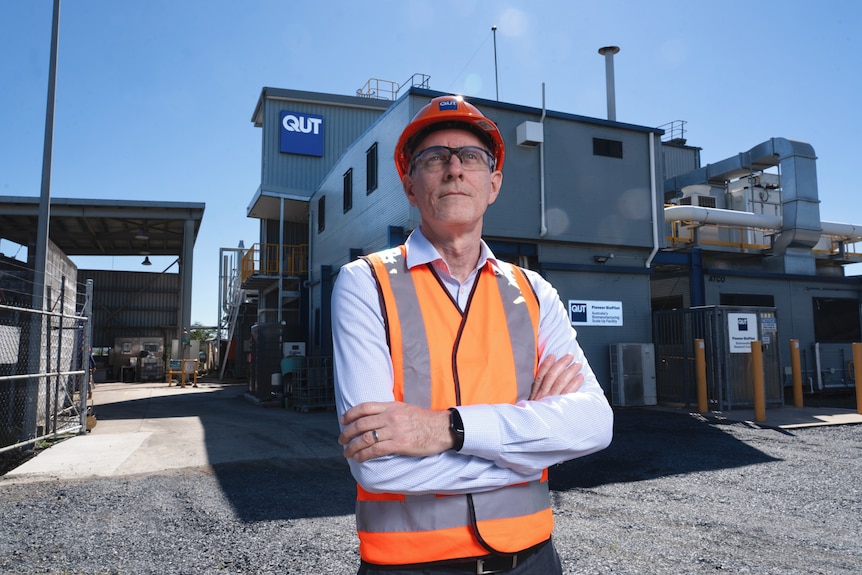
Ian O’Hara says increased biofuel production would help shield Australia from global oil price spikes. (Supplied: Queensland University of Technology)
Professor O’Hara said the industry needed federal government support to become a commercial reality.
A September 2024 report from the Clean Energy Finance Corporation estimated Australia’s low-carbon liquid fuel industry could be worth $36 billion by 2050.
Last year, the government established a $1.1 billion fund to stimulate private investment in the low-carbon fuels sector.
“Our focus is on building Australian supply, Australian refining capability and stronger fuel resilience,” a spokesperson for Energy Minister Chris Bowen said.
How much biofuel do we already produce?
Australia has the ability to produce up to 110 million litres of biofuel per year, but produces just a fraction of that.
Instead, much of the raw products are exported to other nations to be turned into biofuel overseas.
The nation’s largest plant at Barnawartha, in Victoria’s north-east, is running at 20 per cent of its 60 million litre potential.
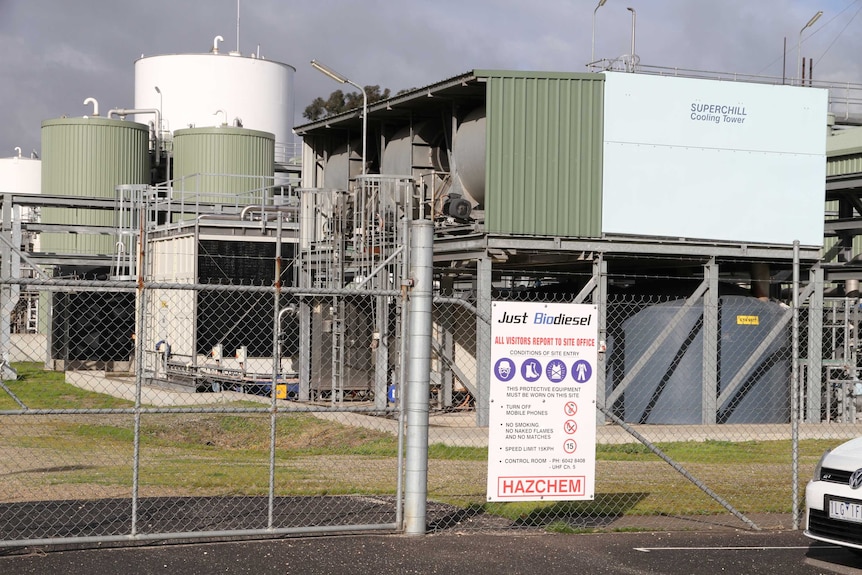
Just Biodiesel’s Barnawartha plant is operating at 20 per cent of capacity. (ABC Goulburn Murray: Erin Somerville)
Just BioDiesel director Peter Chomley said it was too expensive to do otherwise.
“Of course, we’d like that to be at 100 per cent of capacity,” he said.
The cost of making the fuel, he said, was about $2.20 per litre, which is more than the price of mineral diesel.
“There are subsidies in the EU and the US that support renewable fuels, and that’s pushed the price of the [raw materials] up over the years,” he said.
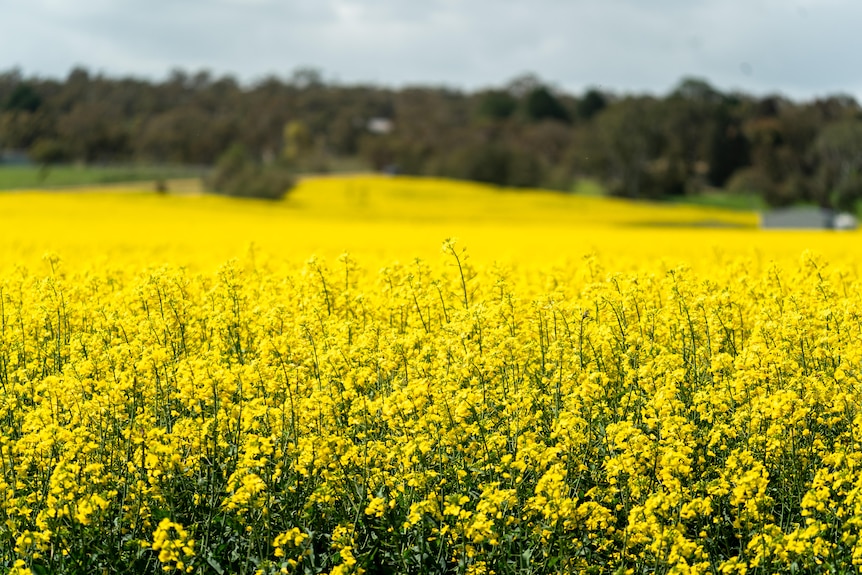
Most canola grown in Australia is sent overseas to make biofuel. (ABC South East SA: Elsie Adamo)
Australia exported nearly 6 million tonnes of canola from 2023–2024 to be turned into biofuel overseas.
Mr Chomley wants the government to put $500 million towards a 50-cent per litre subsidy, which could boost production to 1 billion litres.
“That’s the sort of level of subsidy [needed] to build a significant industry,” he said.

Andrea Polson says a federal biofuel mandate is needed. (Supplied: Licella)
Andrea Polson from bioenergy producer Licella would like to see a country-wide mandate on biofuel use.
“[Mandates] do help build capacity and bring that price down,” she said.
“In Australia, renewable diesel, like other renewable fuels, is quite a small industry from a capacity standpoint.
“As capacity builds, as the industry develops and matures, the price will come down.”
Additional reporting by David Claughton and Warwick Long for the New South Wales and Victorian Country Hour programs.