
A spate of recent lay-offs across the tech sector has the next generation of Australian workers wondering if they were sold a lie that they would be important players in the next industrial revolution.
Struggling software-as-a-service business Atlassian on Thursday announced it would axe 1600 staff, framing the reorganisation as a big bet on AI. Former Microsoft executive and Atlassian chief technology officer Rajeev Rajan also lost his job in the reshuffle.
The announcement came after Afterpay owner Block and WiseTech in late February culled their workforces by 4000 and 2000, respectively.
All Big Four banks have also announced sweeping lay-offs or offshoring as they embark on the so-called AI revolution.
The latest round of firings has young workers wondering if they made the right decision to pursue careers in spaces being taken over by new AI tech.
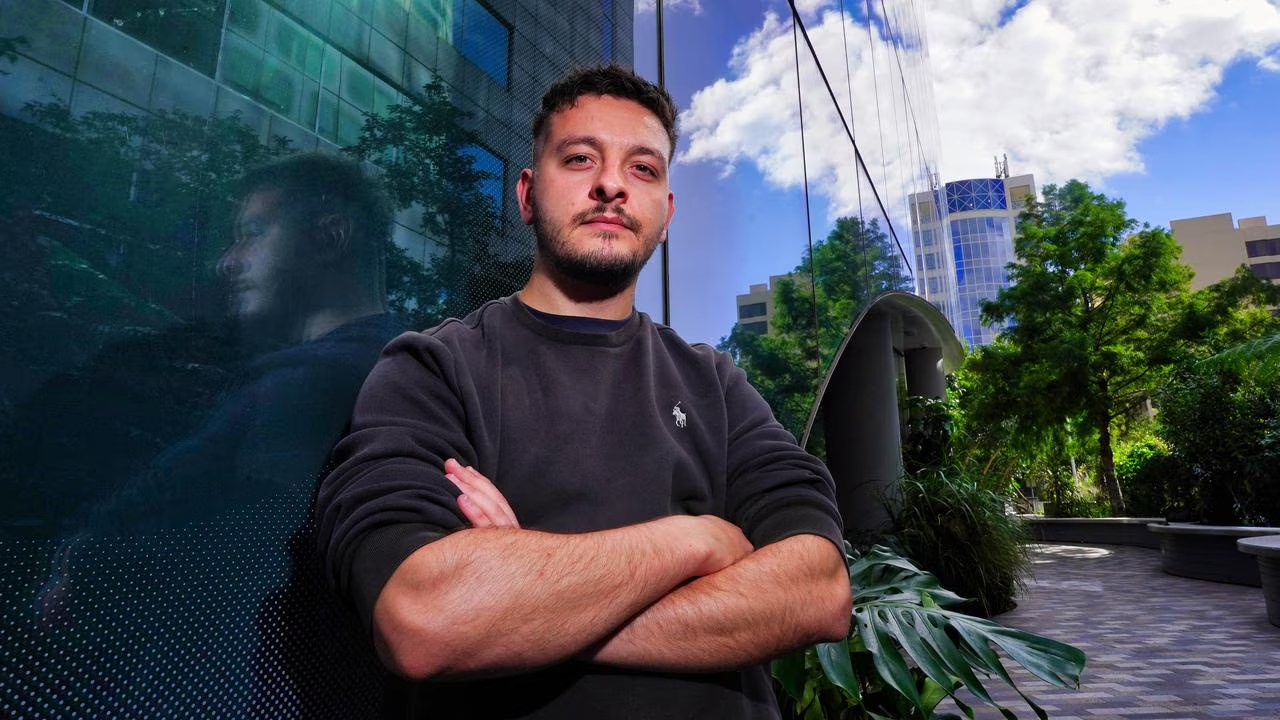
Kosta Drossos studied IT at Swinburne University in Victoria, and although he is holding onto full time employment, he feels an “increasing fear” about the “unsettling” nature of AI stealing tech jobs.
“The IT field already has an incredibly high demand for positions, meaning competition was fierce before AI even entered the conversation. Now there’s an added layer, not just competing with other candidates, but with technology that, if used effectively, can match or exceed what humans are capable of,” he told The Australian.
The 23-year-old explained what worries him the most is the gap between how fast AI advances versus how fast a human can.
“I put in genuine work outside my studies, certificates, personal projects, continuous learning, but AI can be trained on those same topics and execute at a speed and scale that simply isn’t comparable to what any of us can do.”
Mr Drossos explained he can potentially see a world where AI makes him unemployable.
“My concern is companies will prioritise output and profit over the ethical responsibility of keeping humans employed, even in roles where AI isn’t the only option.” He says it ultimately comes down to whether businesses continue to see value in hiring people, or decide it makes more financial sense to invest in the infrastructure to run with AI instead.
“The unsettling part is that none of us really knows where the line is. Which roles are safe? Which aren’t?
“The news cycles through another round of lay-offs, another company restructuring around AI capabilities, and we’re left wondering if we’re watching the future arrive faster than any of us were prepared for.”
University of Sydney masters student Tuba Shakeel, who completed her undergraduate degree in interior architecture at a different Sydney university, quickly realised AI skills she hadn’t learned were prerequisites of joining the workforce.
“By the time I had graduated I assumed that I had all of the experience that would typically prepare someone for a grad role,” she told The Australian.
“There’s an assumption that because we’re younger or more tech savvy that we’re proficient with AI, which wasn’t really part of my undergrad (course).”
After encountering the difficulties of entering the workforce, where she said graduate roles would be filled by people with two to three years of work experience, Ms Shakeel chose to complete a Masters of Heritage Conservation because it’s a field AI has yet to broach.
“The work that I do doesn’t exist in a digital format. We often curate information from historical documents, archaeology research, state and local library archives. The work requires quite a bit of interpretation, context and cultural understanding, and these are things AI can’t grasp,” the 24-year-old said.
“The job market is tough but AI has made it a lot more difficult. It’s gotten rid of a lot of those junior roles you’d think were available for a recent graduate.”