
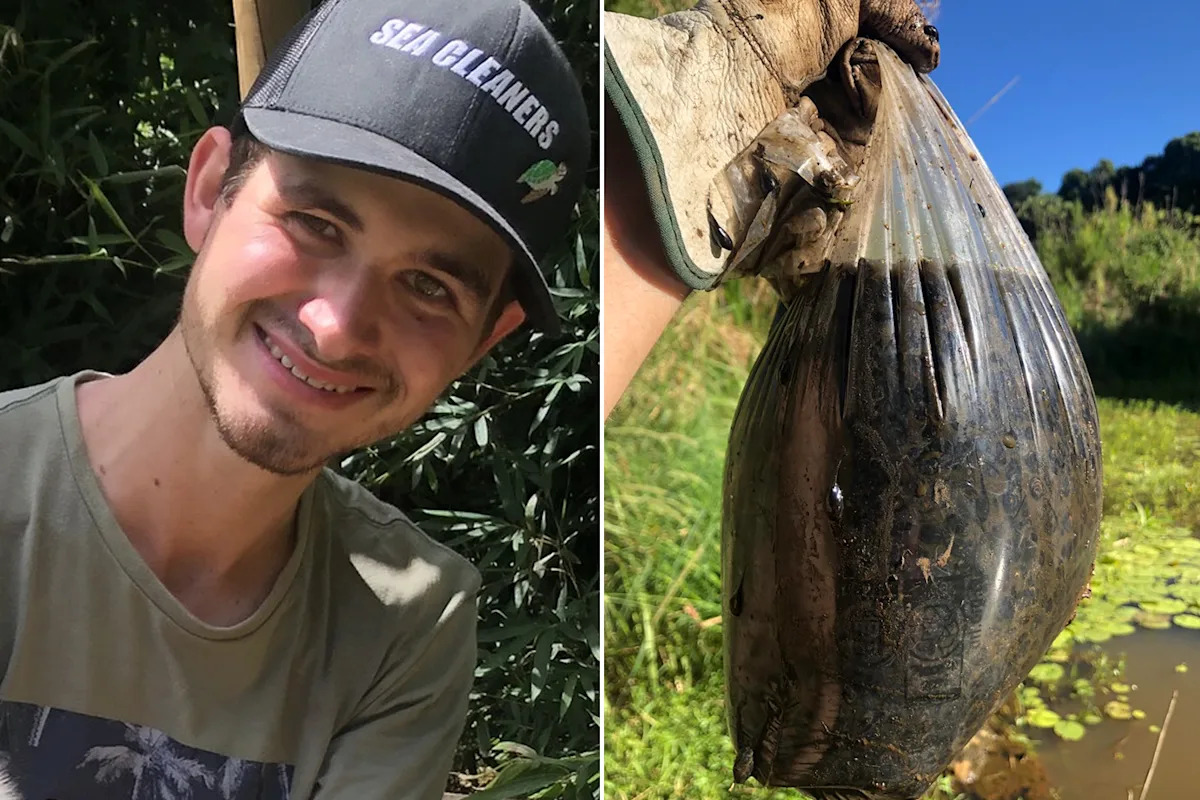
A single trap pulled an eye‑watering 13,000 cane toad tadpoles from an eastern Australian river — all in just eight hours.
The massive catch has again highlighted how prolific cane toads are across the country, with one female able to lay thousands to tens of thousands of eggs at a time.
Dedicated conservationist Patrick Brabant, from Tweed Heads in northern NSW, shared incredible photos from a dam in nearby Terranora earlier this week showing just how many tadpoles are present near the border town.
While impressive, the haul underscores what experts have long warned — the invasive pest continues to choke ecosystems and threaten Australia’s fragile environment.
And urgent help is needed to curb its spread.
Speaking to Yahoo News Australia, Patrick recalled how he set the trap in a local dam during the morning earlier this month.
By late afternoon, it was full.
“It didn’t take me long to collect them,” he said.
Patrick has been “actively controlling cane toads” throughout the Tweed Shire, through a combination of tadpole trapping and toad busting.
Since 2019, he’s prevented tens of thousands from entering the environment.
“In a six-year period, I have removed well over 32,000 toads,” Patrick said.
By removing so many at the tadpole stage in particular, before they grow into adults capable of breeding and laying yet more eggs, conservationists like Patrick are preventing potentially huge numbers of new toads from entering the ecosystem.
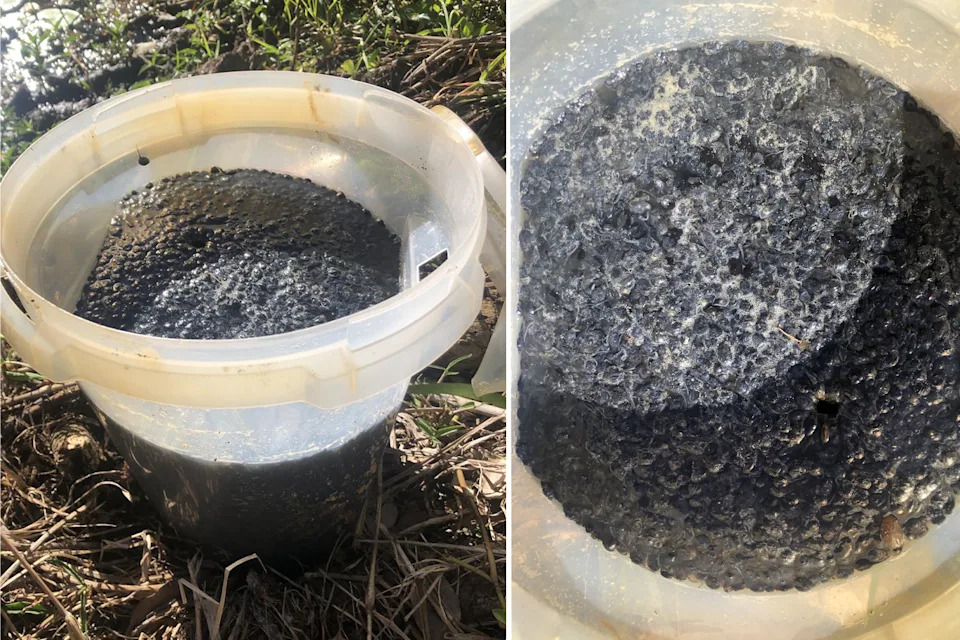
Female cane toads are capable of laying a staggering 30,000 eggs at a time. Source: Patrick Brabant
“The cane toad tadpole trap that I use is produced by Watergum, which is a leading force in cane toad control efforts,” Patrick said.
Yahoo News recently wrote about the device from the non-profit Watergum, which uses researcher-designed lure technology from the University of Queensland to funnel cane toads into a water‑flow chamber where they become trapped.
“It is thanks to dedicated community members like Patrick that this technology is taking off and is helping to break the breeding cycle of cane toads up and down the country,” Watergum’s Emily Straton told Yahoo News this week.
“Cane toads can seem like an impossible problem to tackle, but control at a community level can really help reduce populations in local areas.”
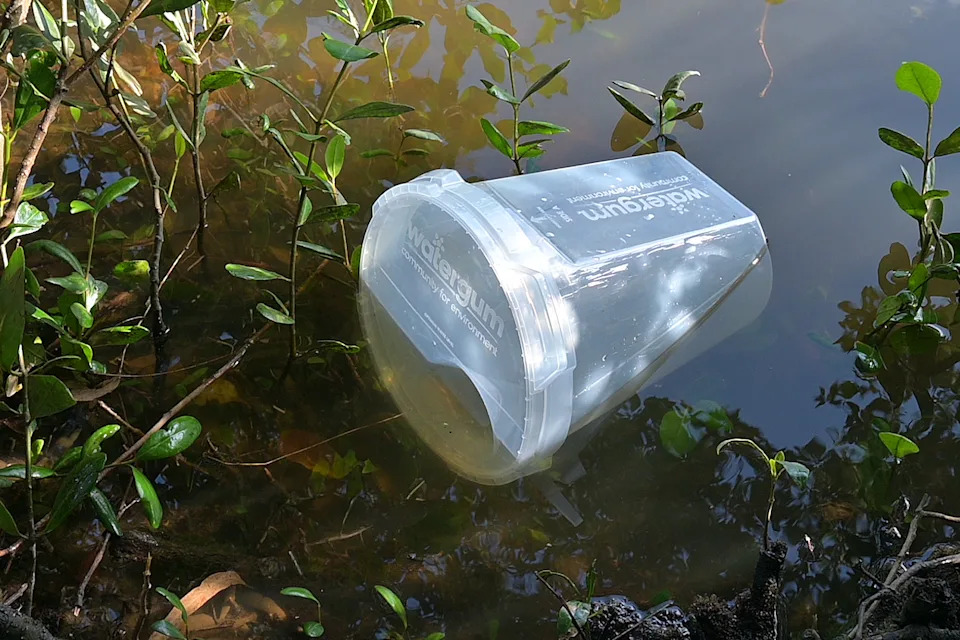
The Watergum cane toad trap lures tadpoles into a funnelled chamber using water flow, where they become trapped and can’t escape. Source: Watergum
Why are cane toads so destructive, and where are they found?
Cane toads exist in plague proportions throughout Australia, with there now believed to be hundreds of millions across the continent.
They suffocate Queensland and have moved into neighbouring states, including the Northern Territory and northern NSW. They’ve also been detected in Western Australia.
Cane toads were introduced to Australia in 1935 after being brought from Hawaii in a failed attempt to control beetles destroying Queensland’s sugar cane crops.
About 100 toads were released in north Queensland, despite warnings at the time that the species could become invasive.
The toads proved ineffective against the pests they were meant to stop, but adapted quickly to Australian conditions and began spreading rapidly.
They continue to expand their range westward and southward, aided by their high reproduction rate — a single female can lay up to 30,000 eggs at a time — and their ability to survive in harsh conditions.
Do you have a story tip? Email: newsroomau@yahoonews.com.
You can also follow us on Facebook, Instagram, TikTok, Twitter and YouTube.