
By Gemma Ferguson, ABC
In the past week, emergency service personnel have braved crocodile-inhabited waters more than half a dozen times to rescue flood-affected Territorians.
Severe weather has battered the Northern Territory’s Top End all week, with Katherine experiencing its worst flooding in 28 years surrounding remote communities. Some were evacuated for the second time this year, Darwin River homes were inundated without warning and floods devastated rural properties.
Stories of dramatic rescues from vehicles and homes – aided by boats and helicopters – have come to light during the widespread flooding, and authorities have been consistently warning people to avoid the water.
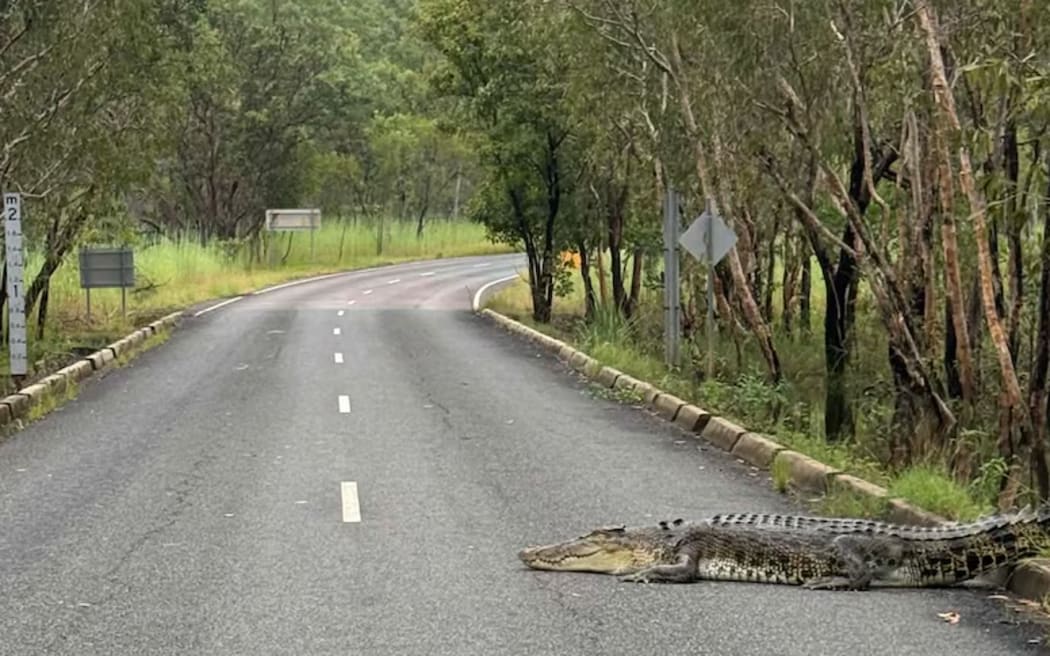
With Top End waterways swollen from the heavy rain, a saltwater crocodile was seen emerging onto a road near Anbangbang Billabong in Kakadu National Park.
Photo: ABC News / Owain Dunn
One reason for that is the potential presence of crocodiles, with NT police incident controller Shaun Gill warning the reptiles were “absolutely everywhere” right now.
Acting NT Police Commissioner Travis Wurst said the predators were an added risk on top of the powerful, swift-moving floodwater officers had been facing.
“Do not make our lives any more difficult than they already are,” he said.
“We have all of our emergency services working hand-in-hand … and if you’re dragging us away to recover you, because you’ve decided to do something silly, it impacts on people’s lives.”
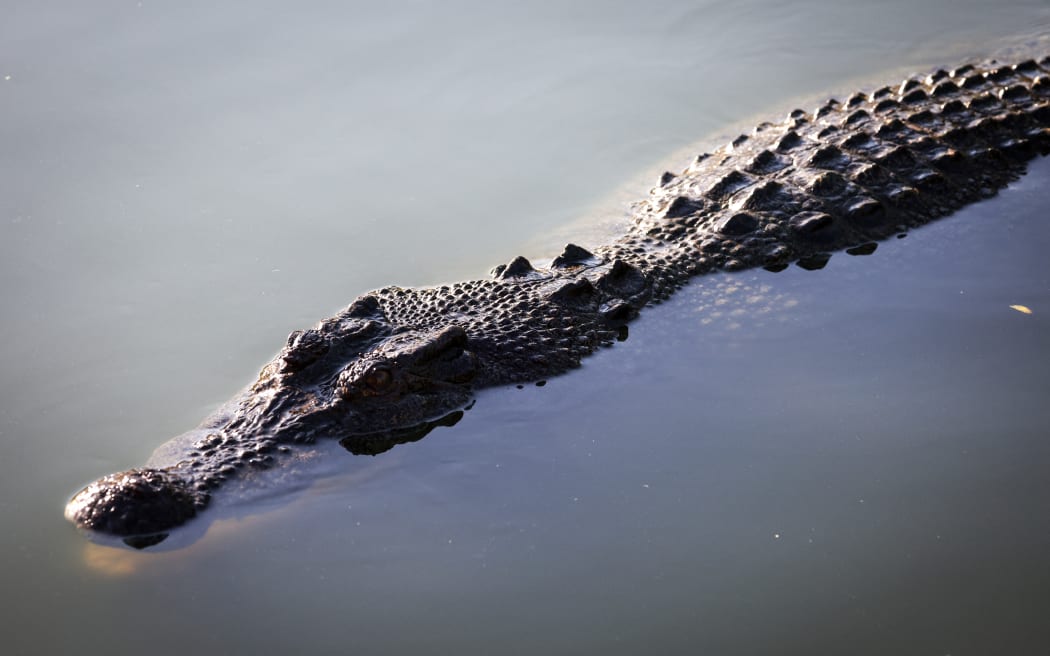
A crocodile swimming in a lagoon at Crocodylus Park located on the outskirts of the Northern Territory town of Darwin on 30 August, 2023.
Photo: AFP / David Gray
Crocodiles capable of travelling great distances
Charles Darwin University researcher Brandon Sideleau said the majority of Australia’s crocs live around the Top End, including an estimated 100,000 to 120,000 of the saltwater variety “and then roughly the same amount of freshwater crocodiles”.
“The [Northern] Territory has roughly one quarter of the global wild population of saltwater crocodiles,” he said.
With so much water around at the moment, the researcher said it was possible they could be pulled further inland, or even pushed out to sea.
“Right now, they do move around a lot because of the increased water levels,” Sideleau said.
“Two or three years ago, there was a freshwater crocodile that was found on the beach here in Nightcliff, which is odd to see but it can happen – especially with these wet season conditions.”
Australia’s elevation levels and arid landscapes can limit how far they travel, but Sideleau said crocodiles can move “about as far inland as you could go before the rivers kind of start petering out”.
He anticipated rangers would catch a few saltwater crocodiles around Katherine Gorge before reopening the area to tourists in the dry season.
“They’ll get further up into Katherine Gorge for sure this year,” he said.
Photo: Jan van der Ploeg / WorldFish Solomon Islands
Crocs can get trapped, but not lost
Sideleau said crocodiles “don’t really get lost because they have a homing instinct, similar to what we see in pigeons and turtles”.
“That’s why they don’t do relocation of crocodiles here, because they’ll come right back,” he said, pointing to a Queensland example where one travelled over 900 kilometres to return home.
But, when floodwater recedes, crocodiles can end up stuck in unexpected places – including inside culverts and along major roads.
“If you have really fast-flowing water, it may push them into areas, or they may be attracted to certain human factors like pets or livestock,” the researcher said.
The good news is, he said, these reptiles are accustomed to the wet season and the ongoing floods won’t really worry them.
He said even if freshwater crocodiles get swept out to sea, their “salt excreting glands” mean “they still can live in the ocean fine”.
But it’s important to be wary of all bodies of water, including smaller puddles and fishing holes, because human interaction can cause the reptiles unnecessary stress.
Some crocodiles ‘gallop’
Both salties and freshwater crocodiles have been spotted in flood-affected parts of the Top End in the past week, with some lurking in floodwater and others making their way onto roads.
Riley Duncombe, 15, was heading along Florina Road near Katherine with his dad last week when they spotted a crocodile nearby.
It quickly hopped across the road, sparking debate online about whether or not the freshwater crocodile had been injured.
But Sideleau said, “given their build and size”, this kind of “galloping” wasn’t unusual for freshwater crocodiles.
“That crocodile was galloping, trying to get away from the car and to get to deeper water,” he said.
“I’ve seen them do it a lot on the Daly River – they see a boat coming and they’ll just gallop into the water like that.
“Salties generally don’t do that unless they’re a very small size … but big salties are simply too heavy.”
Driving to conditions in flood-affected regions, and avoiding flooded roads all together, will help keep both people and nearby wildlife safe.
What should I do if I see a crocodile?
Sideleau said you should try to “maintain a safe distance” of 7 to 10 metres away from any crocodile you find in the wild, no matter its species.
“Just stay away from it – even if it’s a freshie,” Sideleau advised.
“They may look small and cute, but they could still bite, and … you might have to go to the hospital to get antibiotics.”
The crocodile expert said Territorians were quite familiar with how to stay croc-wise, but some may underestimate the impact “big flooding events like this” can have.
“Big salties can get into areas where they’re generally either rare or not found, including much closer to town,” he warned.
If you find a saltwater crocodile in an usual area, you should alert authorities.
“Probably not worth contacting the authorities for a freshie unless it’s in your house or in your yard or in your pool,” Sideleau said.
-ABC