

When Rebecca Powell went to depart Melbourne Airport on February 28 to attend her uncle’s funeral in Ireland, she was expecting to make it back to her family.
But on the day of the funeral, Ms Powell could only do one thing: watch online, sitting alone in the middle of the night, from her home 17,000 kilometres away in Australia.
She is just one of many expats and foreign travellers who have been unable to leave the country due to affordability or lack of alternative flight options.
The 47-year-old described the feeling with one word: “Awful”.
“I had to watch online and couldn’t be there to support my father or siblings,” Ms Powell said.
“My uncle didn’t have children and we were all very close. My father has health issues and my not being able to go home compounded his grief.”
At airports across the country, Middle East carriers remain grounded, a stark visual sign of how airspace closures have rippled through global travel.
Iran war live updates: For the latest news on the Middle East crisis, read our blog.
Flights through US ‘astronomical’
Factory worker John McGuigan was due to leave Australia to head back home to Manchester on March 1.
Almost two weeks later, he’s still here.
While the 57-year-old counts himself lucky that he has a place to stay with his daughter at her home in Victoria, his job doesn’t allow him to work remotely.
“I work 12 hour night/day shifts at a food-processing factory,” Mr McGuigan said.
“While my management have been incredibly understanding about the situation, I need to get back to work as I can’t have it covered indefinitely.
“I will be using up all the leave entitlements and in lieu days I have and expect to be making up for shifts lost due to this unplanned leave when I eventually get back.”
Booking a flight through an alternative route is also increasingly out of reach for would-be travellers, as some airlines have been accused of price gouging.
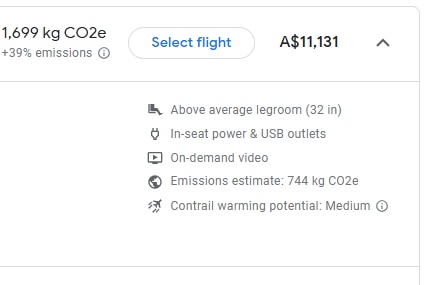
Airlines have been accused of raising prices for flights to Europe that avoid the Middle East. (Supplied)
After his Etihad flights on March 1 and March 10 were cancelled, Mr McGuigan began searching for routes that did not go through the Middle East.
He was quoted $11,000 for a one-way economy ticket to Manchester via Los Angeles — one flight online was even listed for $16,000 via San Francisco.
“The cost is astronomical,” he said.
“Even if I cancel my Etihad flight to get a refund to book an alternative airline and route, the refund isn’t even going to be a fraction of … the cost of a new ticket.
“[If I’m here for much longer] I’ll need to sort out a new tourist visa.”
Read more about the Iran war:
Singapore Airlines told the ABC earlier this week it did not engage in fare gouging.
“Our airfares are dynamic and subject to change, and they fluctuate based on a variety of factors, including proximity to proposed travel date, seat availability, the booking class selected, and the specific dates of the flights or itineraries,” a spokesperson said.
Mr McGuire had another flight booked with Etihad for March 14, but that has now also been cancelled and moved to March 16.
He said the airline had not called him or sent him an email or text message about the cancellation; he just happened to log into his trip management portal and noticed the date had changed.
LoadingLong, expensive way round the world
Some Aussies and foreign travellers facing a disrupted journey to Europe or back home are turning east — taking a longer, more expensive, but more certain multi-stop trip through the US.
Visiting Australia for two years on a working holiday visa that was about to expire, Hope Mountford thought it was the right time to move back to the UK.
She didn’t expect to be left stranded in Sydney domestic airport after being de-boarded from the plane, with no greeting by Etihad staff and no way to get home.
Loading…
“There were multiple elderly passengers waiting in wheelchairs, babies crying and no staff to be seen,” Ms Mountford said.
“I understand the severity of the situation but the lack of communication and support from Etihad is abhorrent.”
The 24-year-old is one of many stranded travellers who had to find an alternative way to get back home, given she had already gotten rid of her apartment and left her job.
She spent an extra $1,100 for a 34-hour flight from Sydney, through San Francisco, then to London.
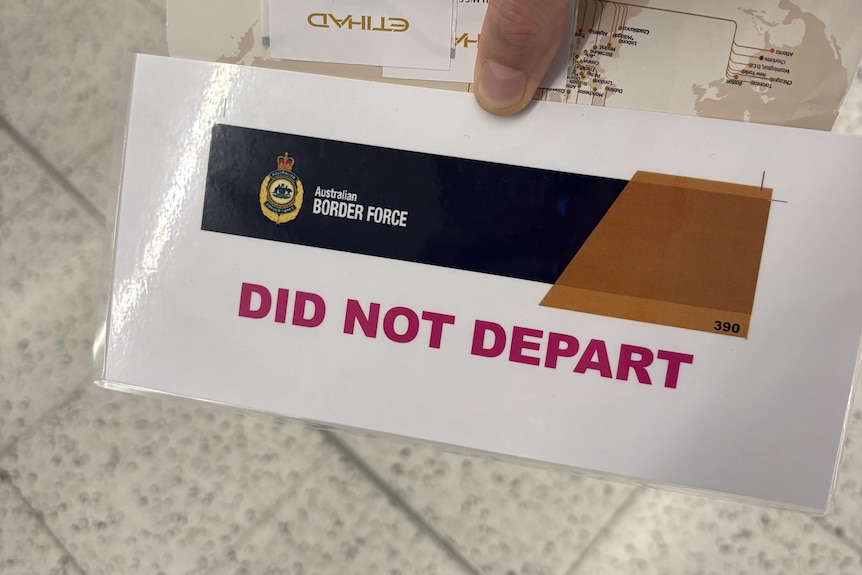
Hope Mountford was given this “did not depart” card at the airport after her plane was de-boarded. (Supplied)
That figure doesn’t include the extra Uber costs she had to pay to and from the airport, extra baggage charges with United Airlines and the $70 Electronic System for Travel Authorization (ESTA) she needed to purchase to get into the US.
Ms Mountford’s visa was also another issue that needed to be taken care of.
Stranded Aussies pay thousands in desperate dash home
Because she had stayed beyond her working visa expiration by six days, she had to apply for an emergency BVE 50 visa — which was, fortunately, granted by the government.
Ms Mountford, who is now at home in the UK, counts herself lucky that she was able to return home safely.
“I am conscious that I am privileged to not be living in the areas affected by the conflict or have any fear for my safety or life,” she said.
She is yet to receive compensation for her cancelled flight.
How Australians can protect their travel plans
Don’t panic-cancel: If your flight via the Middle East is booked soon, wait for your airline to make any cancellations to preserve your refund and re-booking rights.
Check alternative routes: Consider flying via Asia, North America, or carriers that avoid Middle Eastern airspace.
Book flexible fares: If possible, choose tickets with cancellation options.
Accommodation flexibility: Stick with free-cancellation or refundable bookings whenever possible.
Use accredited travel agents: They can help navigate options, re-book flights, and advise on the safest and most efficient routes.
Stay informed: Follow your airline’s app, DFAT travel advice, and Smartraveller updates to track changing conditions.
Travel insurance: Most travel insurance policies don’t cover disruptions caused by war, so check coverage carefully before relying on it.
Airline refund and booking policies (subject to change)
Middle East and Gulf carriers:
Emirates: Offering full refunds if a flight is cancelled or passengers choose not to travel with flight bookings to March 31.Qatar Airways: Offering full refunds or free re-booking on the unused value of tickets for travel dates between February 28 and March 15.Etihad Airways: Passengers booked to travel between February 28 and March 21 can request a full refund or free re-booking until May 15.
European and other international airlines:
Lufthansa, British Airways, United Airlines, Singapore Airlines, Wizz Air: Offering full refunds or free re-booking for flights to and from the Middle East for affected travel until March 15.
Australia:
Qantas: Continuing to operate its QF9 Perth–London service, with a refuelling stop in Singapore due to the longer route required to avoid restricted airspace.Loading…