
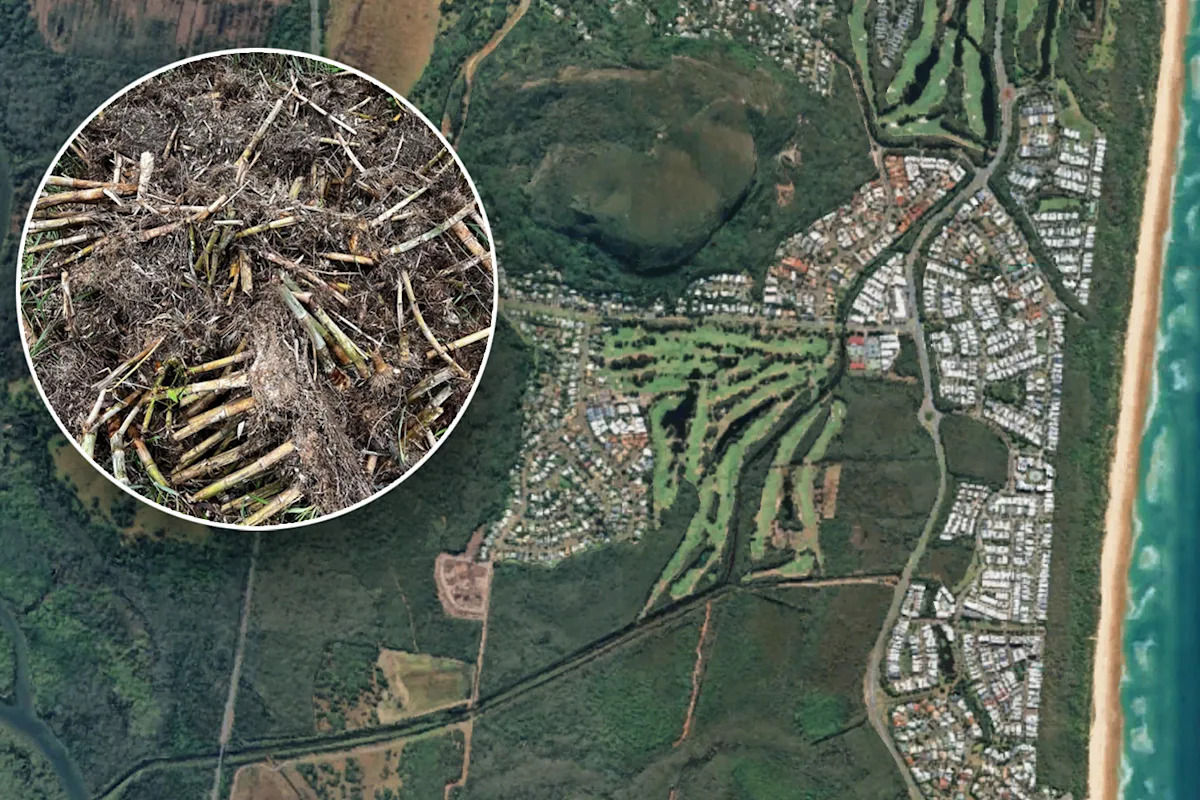
A potentially devastating illegal dump on Australia’s east coast has prompted a stern warning from conservationists, with the trend continuing to soar across communities.
Authorities on the Sunshine Coast earlier revealed tens of thousands of dollars in fines had been handed out to offenders in recent months, amid growing concerns over environmental damage and safety risks.
And now, conservationists are renewing their plea after a local spotted a pile of bamboo that had been dumped inside a national park.
“If your neighbour was digging out their bamboo, ask them where they tipped it? Please. Help protect our wild spaces. Don’t let ignorance win,” a local man said on social media, sharing photos showing a huge haul of chopped bamboo dumped in bushland.
Yahoo News spoke to the Invasive Species Council about why bamboo dumping can be especially problematic.
Dr Carol Booth said the situation could have easily turned into a “nightmare”.
“Bamboo is a nightmare weed!” she said.
“Dumping bamboo waste in the bush is a problem, because it can spread from rhizomes or stems with nodes.
“I’ve had experience trying to get rid of it on a property that adjoined a national park.”
Sunshine Coast Council said it has been actively fighting illegal dumping for several years, which continues to keep officers away from other important work.
“Over the past three years, council has received and investigated more than 6,100 community reports of illegal dumping,” a spokesperson said this week.
They said over 270 fines had recently been dished out.
Is there another story we should be covering? Contact reporter joe.attanasio@yahooinc.com
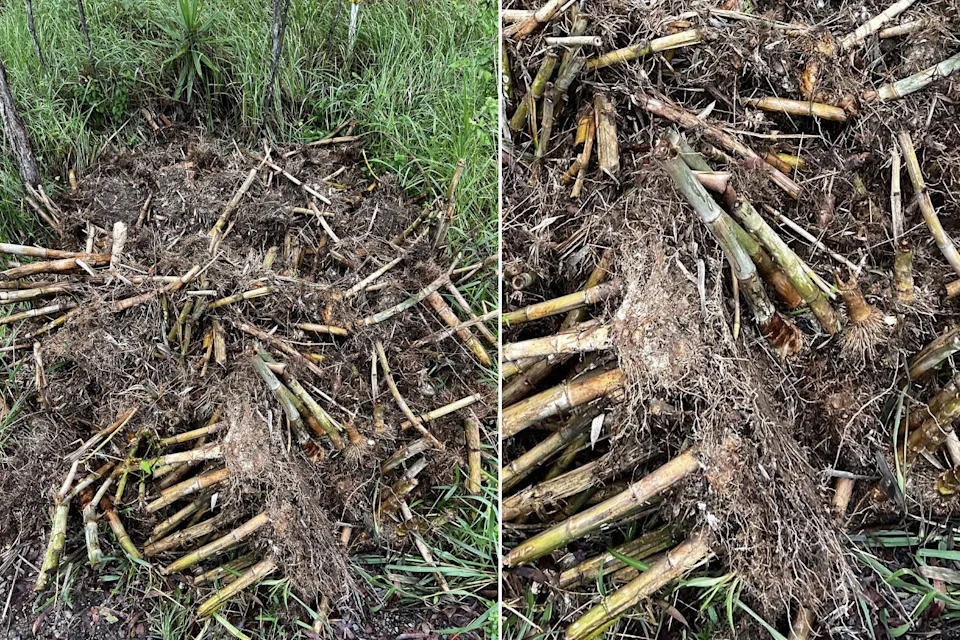
Cut fragments can grow, meaning dumped cuttings or root material have the potential to establish new infestations in surrounding bushland. Source: Simon Kluckow
Why is bamboo such a problem in Australia?
While it may appear harmless, bamboo is widely considered one of the most difficult garden plants to control once it escapes cultivation.
Many species spread through underground stems known as rhizomes, which can travel significant distances beneath the soil before sending up new shoots.
Even small fragments can regrow, meaning dumped cuttings or root material have the potential to establish new infestations in surrounding bushland.
That risk is particularly concerning near protected areas, where fast-spreading plants can crowd out native vegetation and alter ecosystems.
Across Australia, illegal dumping remains a persistent and growing problem.
To help tackle the issue, the Queensland government has committed $17.7 million to a new program aimed at cracking down on illegal dumping.
Councils and environmental groups say everything from green waste to construction materials is routinely dumped in bushland, reserves and roadsides, costing local governments millions of dollars each year to clean up while putting wildlife and natural habitats at risk.
Once established, bamboo can be extremely difficult and labour-intensive to remove. Thick underground root systems can spread widely and may require repeated digging, cutting or chemical treatment to fully eradicate.
Karissa Hodge said she had no idea of the task ahead of her when she set out to remove the “decades-old” bamboo she inherited with her newly purchased home.
“It’s so rooted, I don’t even know how far down it goes — when I dig into it, it feels like I’m hitting concrete,” she said.
Experts say the example highlights why green waste should never be dumped in bushland. Even seemingly harmless garden plants can quickly spread beyond control, turning into costly and damaging infestations if they take hold in natural environments.
Do you have a story tip? Email: newsroomau@yahoonews.com.
You can also follow us on Facebook, Instagram, TikTok, Twitter and YouTube.