
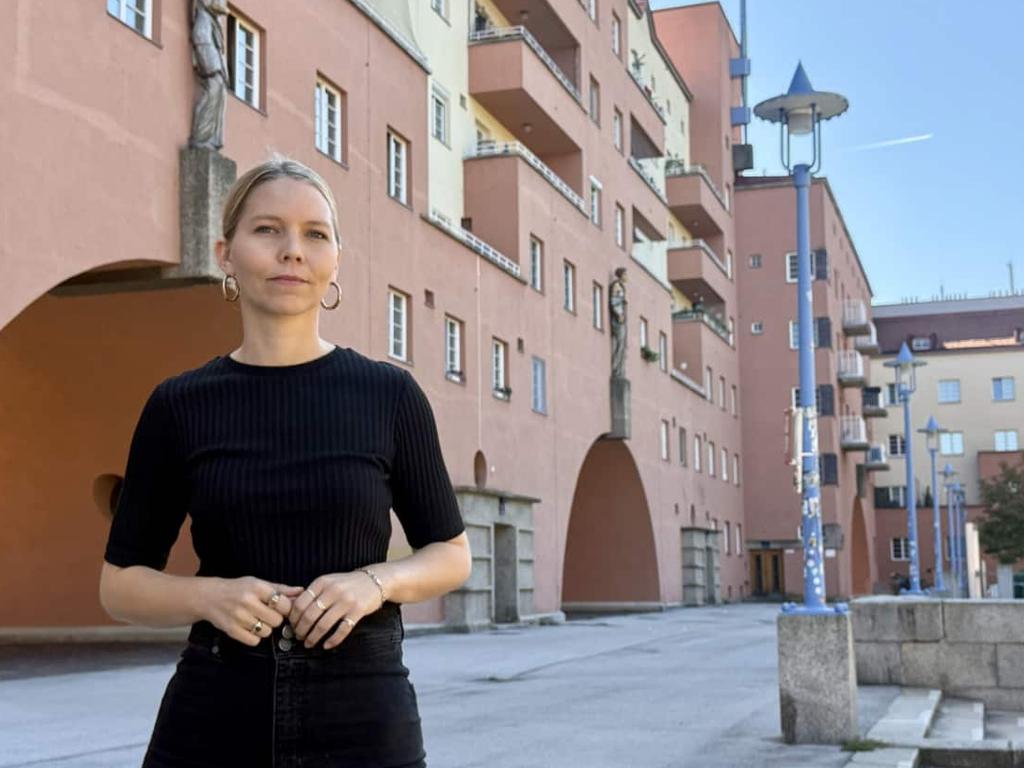
Europe’s former most liveable city in the world offers a radical alternative to Australia’s view on real estate and homeownership.
While Australia is in the middle of a housing crisis, Vienna – named most liveable city in the world several times – has a unique and affordable social housing system that makes it a tenants utopia.
Fifty per cent of the population is eligible for affordable and secure housing, including apartment complexes with facilities such as pools and gyms and once in, you do not have to leave.
Dateline host and SBS reporter Jennifer Scherer travels to Austria’s capital in an upcoming episode to investigate if Australia can learn anything from Europe’s largest landlord.
MORE: ‘Brutal reality’: Salary you now need to buy in Sydney

Vienna has been named the most liveable city in the world several times
“Vienna is a magical city which is steeped in history and it was really interesting to meet people who lived within the city’s famous social housing system which has been around for 100 years,” Ms Scherer said.
“The affordability of rent is what drives the term renter’s paradise, some also call it a renter’s utopia.
“We met people in the documentary paying €640 per month rent for a one-bedroom apartment for example, which is a little over $1,000 Australian dollars.
“We even meet someone paying €350 a month rent, which is about $570 Australian dollars.
“I think for many people here, that rental price could be seen as quite remarkable.”
Many apartment complexes visited in the documentary are built with access to comforts such as natural light, green spaces and amenities in mind.
Ms Scherer said some complexes are built to be “a city within a city”, designed to encourage communities to grow.
MORE: Sydney auctions amid rate hike concerns
Vienna: A Renter’s Paradise questions whether The Australian government’s $10bn Housing Australia Future Fund will be enough to fix the housing crisis. Picture: Jason Edwards / NewsWire
A subsidised housing block called Wohnpark Alt-Erlaa visited in the documentary was designed in the 1970s by architect Harry Glück.
“He wanted to design that particular housing in such a way that people have access to the highest quality of life in his eyes,” Ms Scherer said.
“That was access to green space, water, fresh air, a good view and he wanted to make these things attainable and affordable.
“That particular complex has a school inside, kindergarten, rooftop pools, terrace apartments and it’s in this built in the 70s style and has quite a lot of room and natural light.”
Vienna’s social housing eligibility requirements include being over 18, an Austrian citizen or equivalent status, living in Vienna for two years and your income must be under a certain threshold.
That income threshold is €4,377 a month, which is about $7,000 Australian dollars or around€52,000 a year, which is about $85,000 Australian dollars.
The Australian government’s $10bn Housing Australia Future Fund, includes a pledge of 20,000 social and 10,000 affordable homes.
Ms Scherer questions in Vienna: A Renter’s Paradise whether this is enough to fix the housing crisis or if a major housing shift is needed in Australia, just as Vienna did over 100 years ago.
MORE: How van-lifers plan to beat the fuel price surge
Dateline’s ‘Vienna: A Renters’ Paradise’ airs on SBS on Tuesday March 17 at 9:30pm or free to stream on SBS On Demand
Ms Scherer said many experts say Vienna’s situation works through a combination of policy, controlled rent, housing supply, but also mindset.
“While researching Vienna’s system for this documentary, the biggest takeaway was this difference in mindset,” she said.
“The Viennese, we spoke to are proud of their social housing system and didn’t seem to feel the same pull to have to attain home ownership as perhaps many do here.
“These rentals they can live in them for life – they can stay, even if their income grows above the threshold.
“In a sense, that offers a similar stability that perhaps people find in home ownership here.”
Ms Scherer said some rentals are even passed down between family members with rent costing the majority no more than one third of their income with some saying this left more money to spend on other parts or quality of life including travel, to pursue arts or study.