

In 2018, after a year of trying for children, Shaun Greenaway and his wife, Jenna, went for fertility tests. Soon afterwards he took a call at work and heard the word that changed everything. “Azoospermia. No sperm in my semen. None. Likely caused by the mumps I’d had as a teenager,” he says now. He was also told that he had a large varicocele, a cluster of enlarged veins within the scrotum, that disrupts sperm production. “I felt as if the floor had disappeared beneath me.”
After the varicocele was operated on, Greenaway, 43, went on to have sperm-retrieval surgery to see if any sperm could be located, but the procedure was unsuccessful. “The door to me becoming a biological father was slammed firmly shut. I started questioning everything — my identity, my masculinity, my worth. I wanted to find other men who’d gone through this but all I could find were forums for women. I felt alone.”
Infertility and involuntary childlessness are predominantly framed as a women’s issue. Yet male factors such as low sperm count, poor sperm motility (the ability of sperm to travel swiftly and in a straight line) or the absence of sperm play a role in about half of infertility cases. About 7 per cent of men are clinically infertile and male infertility is on the rise. Research suggests that sperm counts globally halved between 1973 and 2018, with an increasingly sharp decline since 2000 — with lifestyle and environmental factors being blamed, for example the high consumption of ultra-processed foods and the endocrine-disrupting chemicals found in certain plastics.
• My shock cancer diagnosis and the male infertility crisis
Dr Robin Hadley, an academic and the author of How Is a Man Supposed to Be a Man? Male Childlessness — a Life Course Disrupted, has challenged the perception that men are not as affected by not being able to have children as women.
“Circumstantial childlessness, whether through infertility or because of other factors, has the same impact psychologically and socially on men as women,” he says. His research has shown that men can feel just as broody as women, they experience anxiety, depression, isolation and are more prone to risky behaviour such as drinking. According to a 2017 study by researchers at Leeds Beckett University, male infertility isn’t only damaging to men’s mental wellbeing and relationships but also to their career and finances.
My own research highlighted how devastating the stumbling blocks to fatherhood can be. Greenaway was one of over a dozen men I spoke to for my book, The Waiting Room, about what it’s like to deal with challenges on the path to parenthood. The former police officer says he took time to come to terms with the diagnosis: “It wasn’t a physical death, but it felt like one. I moved through the stages — denial, anger, bargaining and sadness — before I found something that resembled acceptance.”
Eventually Greenaway made a decision. He and Jenna wanted to be parents no matter what so they opted for sperm donation. Their twins, a boy and a girl, were born in 2021. “I look at them now and I wouldn’t change a thing. Every detour, every heartbreak, every sleepless night led us to them. This was always the path. There are many ways to build a family. Fatherhood isn’t defined by sperm, it’s defined by love.”
The effect on relationships
Like Greenaway, Mike, 36, never thought that unexplained infertility would be something he would have to grapple with. “Children were simply a given, part of the future I was heading towards,” he says — so when he and his wife encountered difficulties conceiving he felt “stunned and sad”.
He set his grief over a possible child-free future to one side to focus on his wife. “My emotional compass stopped pointing inwards and I became fixated on her. Her sadness was profound and at times debilitating. I watched her withdraw from friends and family who became pregnant. Her pain became the primary source of my pain and watching her grieve the loss of a child that never came, over and over, was agony.” Mike didn’t have family or friends he could confide in. “ ‘You are doing it properly, aren’t you?’ my older brother, a father of three, joked one day. That didn’t induce me to open up to him.”
Finally, after four years, they became the proud parents of a baby boy conceived through IVF. Mike says their difficulties brought them closer. “The experience taught me that sometimes a partner’s role is not to fix things but simply to go through the dark period with the other person.”
• Secrets and infertility: I was a donor baby. Then I needed IVF
Yet often couples don’t survive the toll of infertility. For six years after they married, Michael Close, now 54, and his ex-wife tried for a baby without success and the strain eventually tore them apart. “We became increasingly despondent and we decided to divorce. Ultimately it was my male factor infertility that led to the breakdown of our relationship,” Close explains.
The advice from his GP at the time was to keep trying and not to worry. “I wish I’d had better information and support back then so that I could have tackled some of my fertility issues earlier. Had I had that, I may have avoided the anxiety I felt over not becoming a parent and prevented my divorce,” he says. Close, who was born with undescended testicles, discovered much later that this had contributed to his male factor infertility. He recommends that couples test male fertility early with a referral to a specialist urologist.
Close is now in a new relationship and has gone through surgical sperm retrieval after getting “baby fit” with regular exercise and good nutrition. Dr Michael Carroll, a reproductive scientist and academic, says: “Smoking, obesity, poor diet, particularly high consumption of ultra-processed foods, physical inactivity, excess alcohol and recreational drug use are associated with poorer semen quality.”
Although Close and his partner have been so far unsuccessful with intracytoplasmic sperm injection (ICSI) — in which a single sperm is injected into an egg — and IVF, he still hopes to become a father. The challenges he has faced inspired him to create companies, including Testhim and LogixX Fertility, which specialise in providing advanced male fertility diagnostics and treatments to improve male fertility.
Like Close, Greenaway is helping other men. He started The Male Fertility Podcast in 2023 to offer information and support, plus NeXYs Fertility, a platform for men going through fertility struggles.
“My swimmers are somewhat slow and oddly shaped,” explains Johnno, 42, who was diagnosed with low levels of sperm morphology and motility in 2017. As a result he and his wife were told they would need to have ICSI. A serving army officer, he felt isolated and unable to open up to his colleagues.
• Sperm swim faster in summer and slower in winter, study finds
Just as the couple were about to have their fertility treatment, he was told he was being reassigned and they would need to move to a new location. Johnno felt he had no choice but to tell his commanding officer the reason he needed to delay the move. He was surprised by the empathy and support he received and he began to open up to others in his troop, and quickly realised he wasn’t alone. “Multiple personnel had been in my position, including my line manager,” he says.
Johnno now has two daughters, one is four and his second was born in December. He runs a fertility support network for his colleagues. “Men need to open up and talk about fertility. If I could do so with a bunch of grizzly commandos, then all men should be able to. It is a lonely and solitary fight on your own. Reach out and you will be amazed at the ranks lining up to support you.”
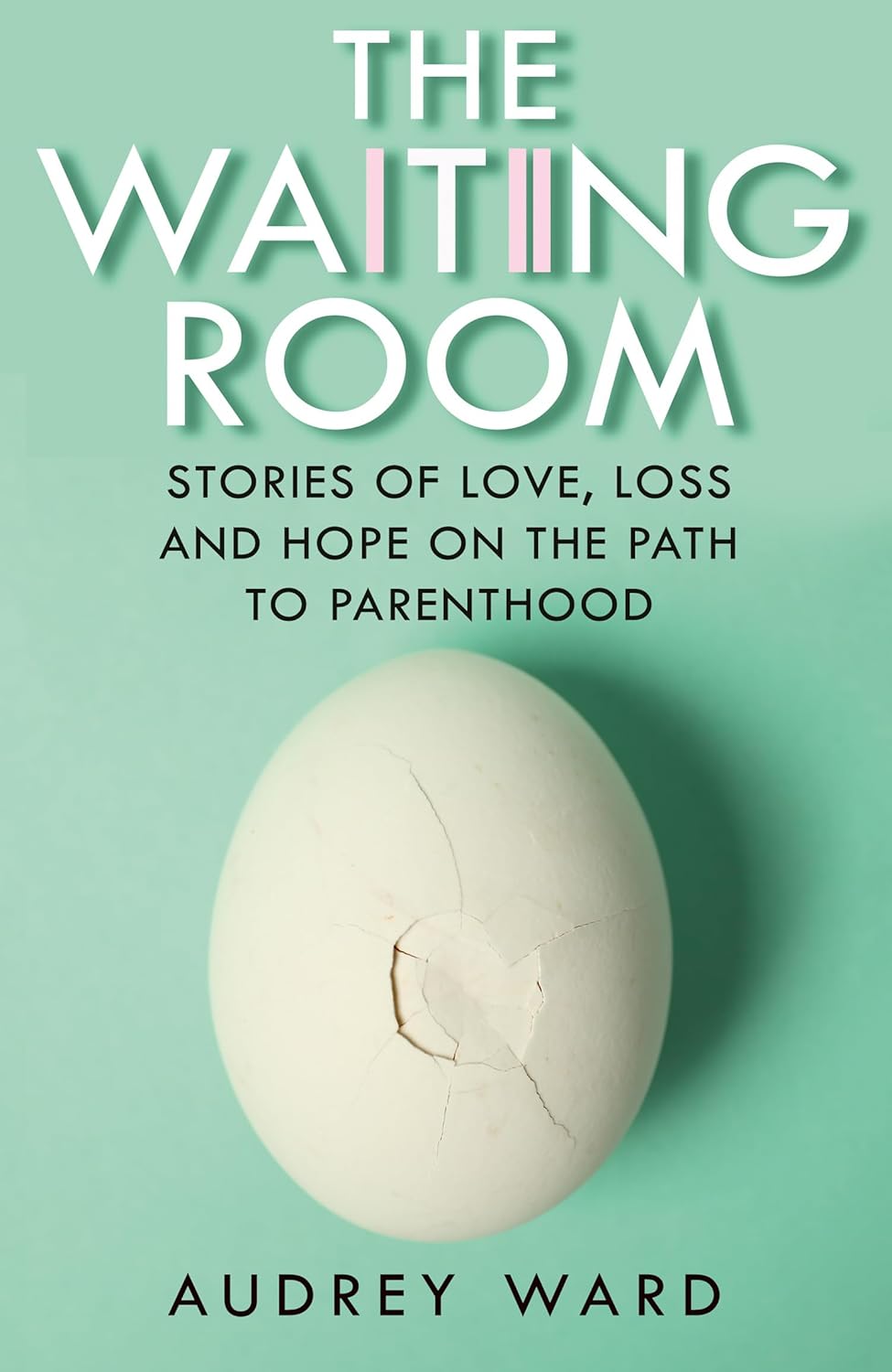
The Waiting Room: Stories of Love, Loss and Hope on the Path to Parenthood by Audrey Ward (HarperCollins £22) is out on May 21. To order a copy go to timesbookshop.co.uk. Free UK standard P&P on orders over £25. Special discount available for Times+ members