
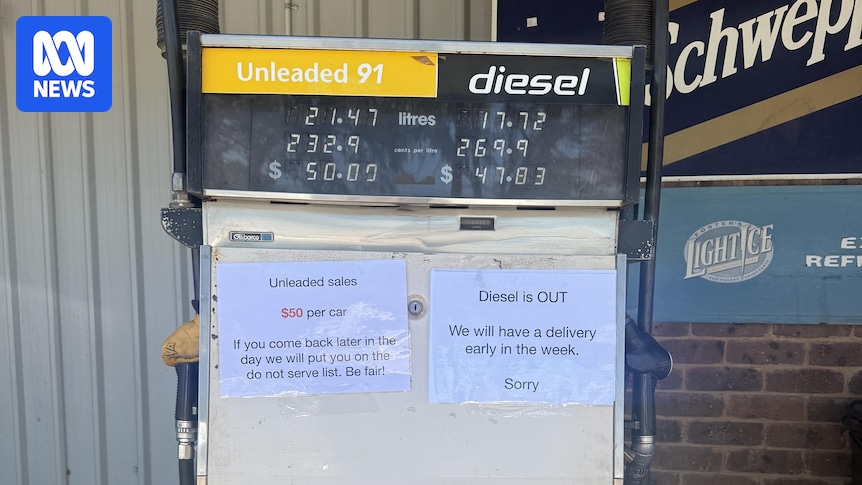
Two towns in Victoria’s north-west are believed to be the first towns in the state to run out of fuel.
Robinvale, located about 70 kilometres east from Mildura, ran out of fuel on Saturday evening, while Hattah, to Mildura’s south, hit empty on Sunday.
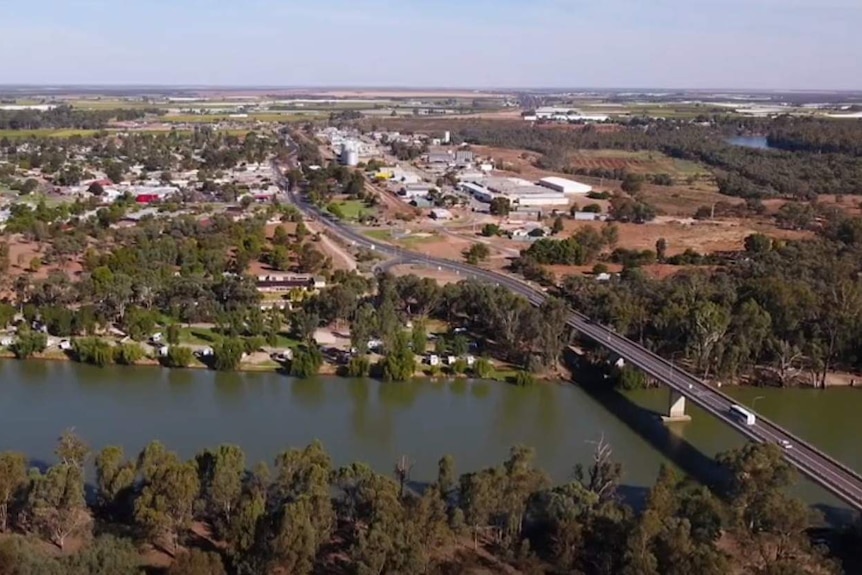
Robinvale in north-west Victoria. (ABC Backroads)
Robinvale’s Happy Valley Store owner Nathan Falvo said his store had an influx of customers in the mid-morning on Saturday after fuel had run out at the town’s other stores.
“We’re the smallest service station in our area. The two biggest service stations had run out of fuel, and we had 40-50 cars lined up to come in to try and get some fuel,” he said.
“We limited the sales to $50 per bid. We wanted to try and keep it fair, and it worked for a little while, and then unfortunately, we ran out as well.”
Mr Falvo said the service station received a small supply of fuel on Sunday morning but even rationing it out at $50 sales, it only equated to about 130 vehicles.
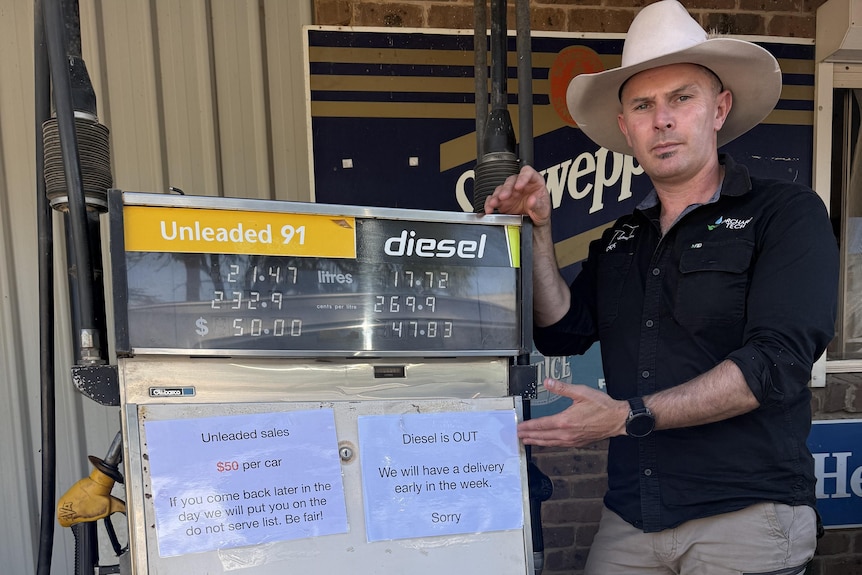
Nathan Falvo is hopeful fuel will be supplied to his store early in the week. (Supplied: Nathan Valvo)
He said that was not a lot during the fruit and almond harvest period at this time of year.
The ABC understands other stores in town will receive a fuel supply on Sunday afternoon.
The small town of Hattah, 63km south of Mildura, was also out of fuel yesterday afternoon but had been resupplied.
Mr Falvo said the fuel shortage in Robinvale had impacted the farming industry.
“Our whole town is based on the farming sector. There’s thousands of people working here at the moment,” Mr Falvo said.
“There’s fruit ready to be picked, there’s grapes ready to be picked, there’s almonds ready to be harvested, it’s go time.”
Mr Falvo, who also owns a large labour supply business in the area, said they had 400 staff working on Sunday, mainly in the almond industry.
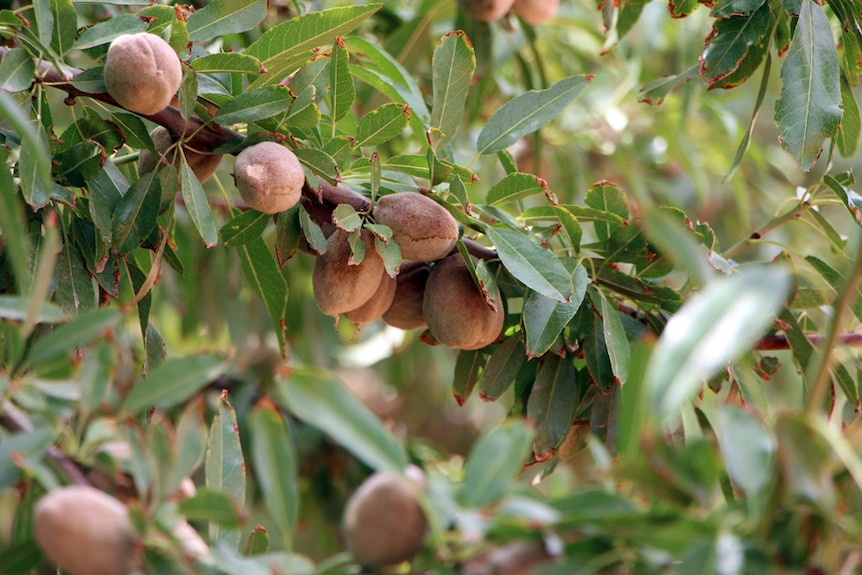
Robinvale’s farming industry has been hit by fuel shortages. (ABC News: Brett Worthington)
“We started panicking yesterday, some of our farms are 60-70km one way from Robinvale to service with our labour,” he said.
“So, it started to become a problem [around] how our labour is going to get to site tomorrow to work.
“It’s the same with all the farms in the area. They’re worried how the workers are going to get to site to harvest and pick the fruit.”
He was hopeful his fuel would be restocked early in the week.
“We’re stuck in these country areas, feeding the cities and no-one can give a definite answer when the fuel supply is going to come back,” Mr Falvo said.
“I’m just baffled that the government didn’t pick up on this sooner.
“They should have prioritised the farming sectors as soon as possible.”
Energy Minister Chris Bowen has been contacted for comment.

Julieanne Loy says fuel shortages have a flow-on effect in small community towns. (
ABC News: Emile Pavlich
)
Robinvale Euston Business Association president Julieanne Loy said there was a flow-on effect when a small community town ran out of fuel.
“It’s not just the employees who can’t get to their employers. It will be the employers who actually can’t run their machinery. It’s the employers who can’t run just general functionalities of their business,” she said.
“The flow-on effect is incredible. I don’t think people have really considered the impacts of what happens when we excessively purchase fuel and run out in a small community town.”
Supply chain challenges
Australasian Convenience and Petroleum Marketers Association chief executive officer Rowan Lee said supply chain challenges had impacted Robinvale.
He said the town’s fuel supplies should be restocked within the next 24-48 hours.
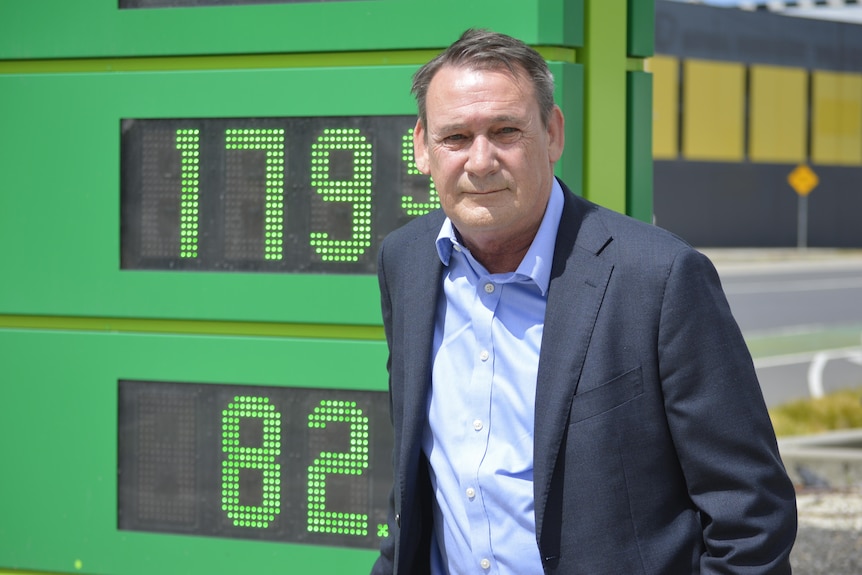
Rowan Lee says supply chain challenges had impacted Robinvale. (ABC News: Ed Gannon)
“This is not an isolated incident at all, it’s happening in communities right across Australia, and even in suburban areas,” Mr Lee said.
“There’s enough fuel stock in the system. It’s a matter of getting it to where it needs to be at the right time.
“So, supply chain for fuel is really a challenge at this moment.”
He said panic buying also had not helped the situation.
“If people just went around to purchase fuel as they normally do, we wouldn’t be having these issues, because there is enough fuel to go around,” Mr Lee said.
“[Panic buying] lowers stock in the ground.
“Inventory is running what you might call skinning, so instead of having three or five days of fuel in your tanks, they might be down to 24 hours.”
Mr Falvo said the farming sector needed a lot of fuel.
“This is not panic buying, this is necessity fuel,” he said.
“[Farmers] aren’t panic buying, they actually need this fuel to harvest.
“The commodities we grow here, they’re perishable, they can’t sit on the vine and they can’t sit on the tree.
“It needs to be picked, it needs to happen now and it can’t wait.”
At Dargo, in Gippsland’s high country, the town’s only outlet is selling diesel for $3.10 a litre.
Dargo General Store owner Grant Shields said the wholesale price had risen dramatically.
“We were at $2.30 before all this started, then we got the next load, we put it to $2.50,” Mr Shields said.
“People were saying your fuel up here is cheaper than Traralgon and Sale, and then the load I got [on] Saturday killed us, that was 85c extra on the week before.
“I just paid $2.90 a litre for diesel, so as you can imagine with delivery and everything factored into that, that’s why it’s at $3.10.
“Otherwise I’d rather just lock the bowsers and not sell it because it’s our dearest commodity. We have to make something out of it or it’s not worth having.
“I reckon the way things are going it will get to $4.”