
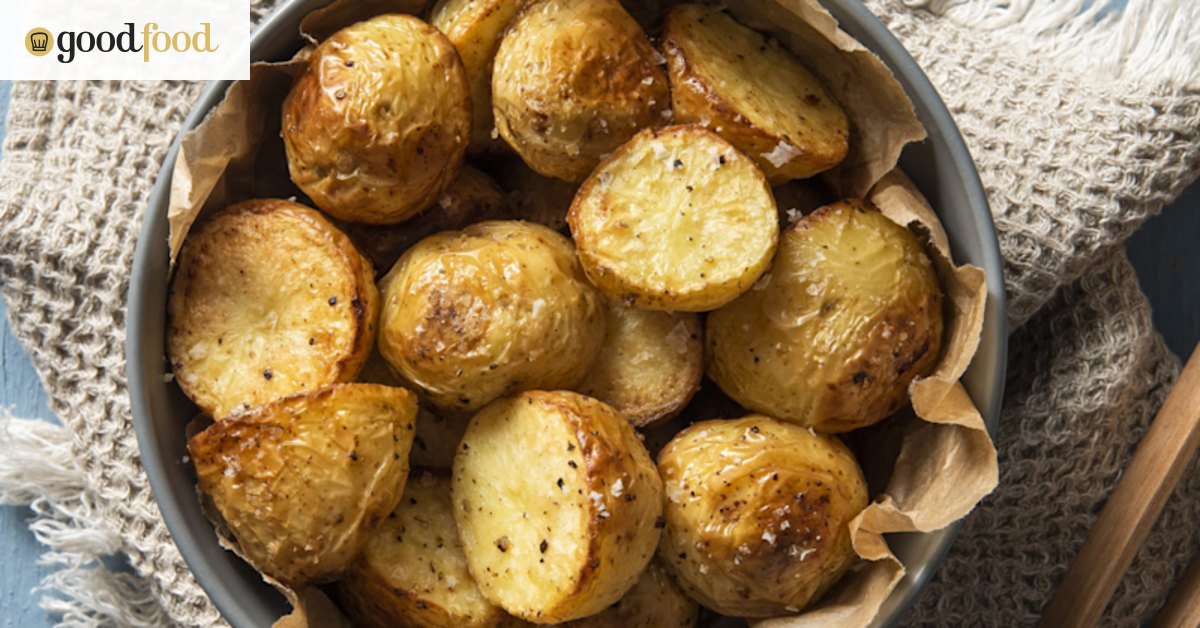
Yes, you can (and should) include potatoes as part of a healthy diet – you just have to know how to prepare them, says dietitian Susie Burrell.
 Save
Save
You have reached your maximum number of saved items.
Remove items from your saved list to add more.
Save this article for later
Add articles to your saved list and come back to them anytime.
Got it
AAA
This story appears in the Good Food Guide to chips Victoria collection. See all stories.
The potato is frequently tainted as a vegetable to avoid. Its crime? A perceived high carbohydrate content, the very reason it has served as a nutrient-rich staple for so long.
A closer look at the nutritional make-up, though, reveals we’ve probably been a tad harsh banishing the potato from our nightly vegetable line-up.
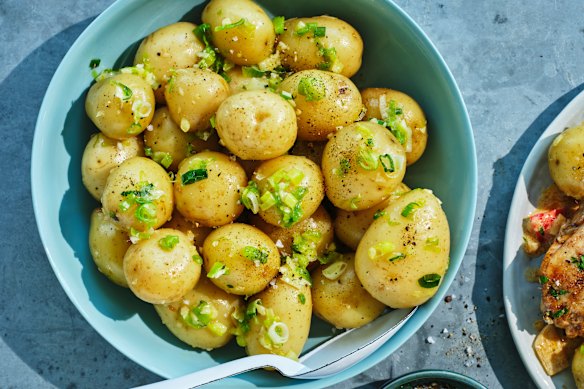 Adam Liaw’s spring onion and parsley potatoes are healthier because they have been cooled and use less dressing.William Meppem
If we consumed potatoes the way nature intended, it would be hard to find anything except praise nutrition-wise for this filling form of nourishment.
Let’s dig a little deeper into the carbs, GI and other components worth knowing about the often misunderstood spud.
Potatoes are packed with fibre and vitamins
The best recipes from Australia’s leading chefs straight to your inbox.
From a nutritional perspective, spuds tick a number of boxes with a single medium-sized potato enjoyed with the skin offering close to 4g of dietary fibre, and 4g of protein along with vitamin C, potassium, folate and B group vitamins.
Specifically, the growing range of coloured potatoes, including the red and purple varieties, are higher in key antioxidants including the anthocyanins compared to white potatoes.
Related Potatoes are not the carb criminals they are made out to be
While they are undeniably a rich source of carbohydrates, with 20-30g per average-sized spud (roughly equivalent to a couple of slices of bread), they are still much lower than other carb-rich foods such as pasta and rice, which contain 45g and 60g of carbohydrate, respectively, per cup-sized serve.
What is less commonly known about potatoes is that they are one of the most filling of all carbohydrate-rich foods, with studies showing that individuals eat fewer kilojoules overall when a whole potato is included as part of a balanced meal.
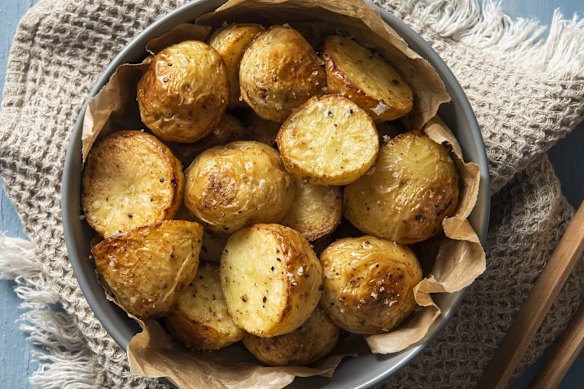 Spud Lite potatoes have 25 per cent less carbohydrates than regular potatoes.What about potatoes that claim 25 per cent less carbs?
For those who remain carb conscious, the good news is that those new lighter potatoes nestled next to those regular varieties at supermarket really do contain 25 per cent less carbs than their counterparts.
Spud Lites are potatoes grown for shorter periods of time and as such they have a lower starch concentration whilst retaining all the nutrients potatoes offer. This means that the average Spud Lite offers just 10-15g of carbohydrate per potato with no discernible difference in taste or texture. They are available in regular and baby spud sizes.
Potatoes are one of a handful of foods, which, when cooked and then cooled before eating, become a rich source of resistant starch.
Not all potatoes have a high Glycaemic Index (GI)
The high-glycaemic index of potatoes, especially when potato is eaten without the skin or mashed is often a nutrition talking point, with high-GI foods associated with higher blood glucose levels.
But it’s important to know that not all potatoes have a high GI, and simply eating potatoes with their jacket on, or opting for smaller potatoes helps to counteract this effect, as does limiting our intake of more processed forms of potato, including fries and wedges.
Is it true that cooling potatoes before eating makes them healthier?
Yes. Cooling potatoes before eating further lowers the GI and boosts their resistant starch. Potatoes are one of a handful of foods, which, when cooked and then cooled before eating, become a rich source of resistant starch – a powerful molecule that has specific gut health-related benefits.
Resistant starch moves through the digestive tract undigested, helping nourish the gut bacteria. It has also been shown to support insulin action and weight control.
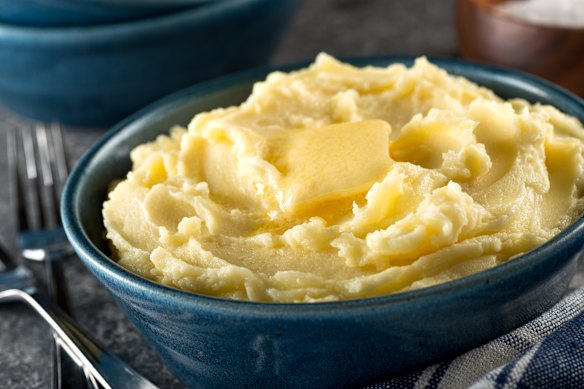 Enjoy mashed potato in moderation, as all that butter and cream isn’t helping anyone’s health.iStockUnhealthy ways to prepare potatoes
Australians eat plenty of potatoes, more than 60 kilograms per person per year. It’s when too much of that comes in the form of chips or potato-based snacks that it can become a problem.
Nutritionally, there is little positive that can be said about potatoes that have been deep-fried or processed into snack foods.
As mashed potato is generally made using potatoes without their skin, along with loads of butter and salt, it’s probably best avoided if the goal is to maximise nutrient intake.
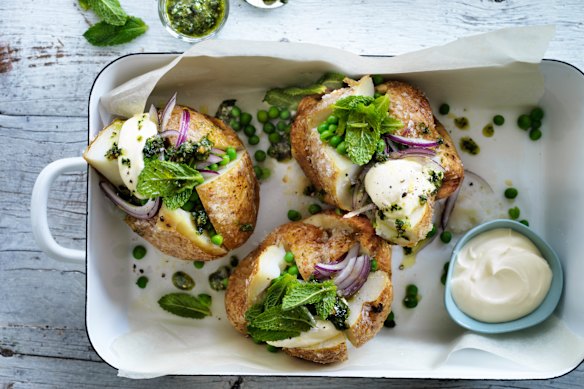 Baked potatoes make a filling, healthy meal.William MeppemHealthy ways to prepare potatoes
The best way to enjoy potatoes is whole, baked, steamed or boiled, (try Jill Dupleix’s baked potato recipe, pictured above) and to opt for a size that is no larger than a tennis ball. If weight or carb control is your thing, choose smaller or lower carb spuds when you can.
If you love your spuds mashed, mix with other vegetables such as pumpkin or cauliflower to boost the overall fibre content and lower the carb content. Use extra-virgin olive oil rather than butter to flavour your mash.
If you love homemade chips, cook them using extra virgin olive oil and leave the skin on where possible.
Related
As cooled potatoes are shown to reduce carbs and increase resistant starch, make more potato salads — just limit the creamy dressings or opt for yoghurt instead.
One of the smartest ways to use potatoes is as a filling, satisfying lunch option. Cook them in a microwave and fill with tuna or leftover mince, cheese and serve with salad. Quick meals don’t get much more nutritious, or delicious.
Which potato for what?
Russet: The most common type of potato, russets are versatile and enjoyed baked, roasted, mashed or made into chips.
Kestral: With bright purple dots on their skin, not only do kestrals taste sweet but you get extra antioxidants thanks to the presence of anthocyanin.
Kipfler: Long in shape, kiplers are best roasted and are a great option for stuffing as a filling lunch.
Dutch cream: Rich in flavour and with slightly yellow flesh, dutchies are perfect for mashing.
Chat: These are small, round potatoes. Their small size makes them perfect for those looking to control their carbohydrate intake but who still love their spuds.
Desiree: With red skins and yellow flesh, desirees are good for salads or to cut into homemade chips.
Spud Lites: With 25 per cent less carbs, these make a great everyday potato for guilt-free enjoyment.
Related Article Related ArticleSave
You have reached your maximum number of saved items.
Remove items from your saved list to add more.
 Susie Burrell is an accredited practising dietitian and nutritionist.From our partners