
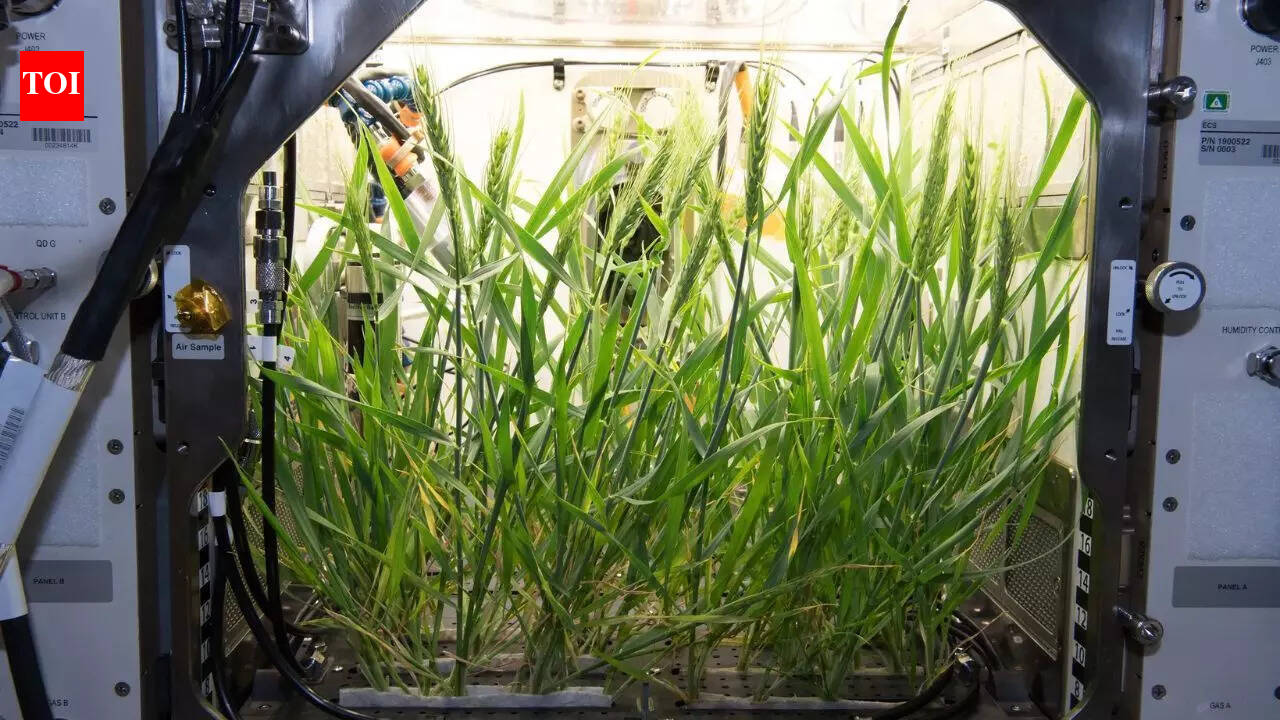
 Research scientists are saying that recycled human waste could help grow crops on the Moon and Mars, representing a significant change in how we think about living on the Moon or Mars for an extended time. In the past, there has been no hope of farming on the sterile and chemically powerful lunar regolith, but scientists are working on creating closed-loop systems. That means that waste materials from astronauts will be put through an automated system to make high-quality fertiliser, introducing essential nitrogen and phosphorus nutrients into the toxic soil of these phenomena, allowing this alien dirt to become farmable land. Additionally, the potential to avoid globally transporting heavy food across the solar system and to create an ecosystem that can replenish itself over time are positive aspects of this newly developing scientific technology. As governmental agencies begin to prepare for missions that will last longer than 12 months, this bio-recycling technology will be the cornerstone of establishing permanent colonies where astronauts can grow and eat their own fresh food while existing among the stars.
Chemical weathering may turn Moon and Mars dust into soil for growing plants
‘Chemical weathering’ is the key to converting the surface of the moon or Mars into a usable farming surface. A study from Texas A&M University, performed by scientist Harrison Coker and published in ACS Earth and Space Chemistry has shown that recycling of effluent mixed with a simulant of space dust will change the chemical structure of the crystalline structure of the minerals present in the space dust. In a microscope, the jagged edges of the glass-like dust were seen to have pitted and been reduced in size; this provides a much smoother surface for growing roots of plants. In addition to providing a smoother soil structure, the process of chemical weathering uses chemical reactions to pull nutrients from the minerals, such as calcium, sulfur, and magnesium, from the rock into a form that is absorbed by plant roots.
The BLiSS system to turn human waste into crops
Scientists use the Bioregenerative Life Support System (BLiSS) to turn human waste into an agricultural product. This space refinery was created by scientists at NASA’s Kennedy Space Centre using anaerobic bioreactors to break down solid waste and filtration units to collect nutrient-dense liquid effluent. A study has highlighted how BLiSS provides more than just fertiliser but also forms a very important safety barrier for growing crops. The BLiSS system utilises specific microbial colonies to neutralise perchlorates or salts that are toxic found in Martian soil, which in turn allows crops grown with BLiSS to be safely eaten by humans. This technology makes a closed-loop economy possible to create sustainability because every ounce of biological output can be reclaimed to produce the next generation of food.
Is food grown in recycled waste safe to eat
Concerns over growing crops on space stations using human waste for fertiliser are very common. The good news is that if the human waste has been properly processed through a bio-thermal process (using anaerobic and aerobic methods) and treated at high enough temperatures to eliminate harmful pathogens, you can safely consume crops grown using human waste.NASA’s Biological and Physical Sciences Division endorses this position. They state that the proper bio-thermal treatment of human waste (as done at Texas A&M University) utilises the benefits of anaerobic and aerobic conditions by using anaerobic bioreactors to achieve sufficient temperature (above 55 degrees Celsius) to eliminate harmful pathogens and parasites. Plants grown in these systems also naturally filter out nutrients and remove solid impurities from the crops during their growth cycle.When you eat a tomato or a head of lettuce grown in a Martian greenhouse, it has been subjected to the same treatment as produce grown with manure in traditional agricultural systems. The tomatoes and heads of lettuce will be more biologically and materially intact than the same produce coming from a traditional agriculture system on earth, or, at the very least, have been treated to the same level of sanitation.