
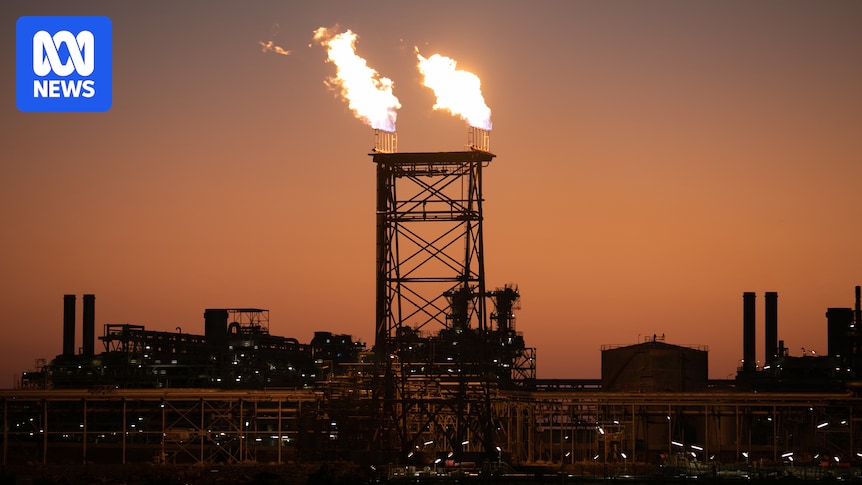
Financial support from governments around the world to industries that facilitate harm to the environment is one of the biggest barriers to stopping biodiversity loss.
So much so that an international agreement signed by Australia in 2022 known as the Global Biodiversity Framework (GBF), called for an annual reduction of $700 billion worth of this support by 2030 globally.
But in its first GBF progress report, the federal government left out any data on incentives it provided to the fossil fuel industry.
$26b hole in Australia’s biodiversity targets
That’s despite estimates from the Organisation for Economic Co-operation and Development (OECD), of which Australia is a member country, that it provides $8 billion annually in fossil fuel support.
There are also concerns from conservation groups that Australia won’t meet its other biodiversity targets, despite the government saying it is mostly “on track” to do so.
Brendan Sydes, the Australian Conservation Foundation’s national biodiversity policy adviser, said all the details that were provided in Australia’s progress report could not hide more effort was needed for it to meet 2030 targets.
“Reform of Australia’s national protection laws is mentioned several times in the report as evidence of progress,” he said.
“But what happens next to implement these reforms looms as the real test of whether the government will deliver the stronger nature protection promised.”
The federal government, on the other hand, claimed it had made significant progress in protecting Australia’s unique species and habitats, reducing the risk of extinction, and restoring vital ecosystems.
Fossil fuel data to remain unreported
While the GBF has outlined 23 biodiversity targets for countries to meet, Australia has decided to focus on 17 of them.
That’s despite Australia, which supports about 8 per cent of the world’s biodiversity, committing to report on progress for all 23.
One of the GBF targets left out of Australia’s priorities was Target 18, which seeks the elimination, phase out or reform of annual incentives that harm biodiversity and countering them with more programs that benefit nature.
Australia’s first progress report, submitted earlier this month, noted there was $242 million of financial support to the agriculture and fishing sectors that could harm the environment.
But the progress report said it would not use the OECD estimate for fossil fuels “as it considers that the data incorrectly includes schemes not within scope”.
“No data set will be reported for the fossil fuel sector under this indicator,” the report said.
An independent estimate prepared with Australia’s Biodiversity Council, a group of scientific experts formed by 11 Australian universities, suggested fossil fuel support could be even higher than OECD estimates.
The study, led by Paul Elton of the Australian National University, estimated fossil fuel support at $14 billion in 2022–23.
Mr Elton wrote in an analysis that the exclusion of fossil fuel data from Australia’s progress report was “untenable”.
“Australia has both the responsibility, as one of only 17 megadiverse nations, and the capacity, as one of only two wealthy and megadiverse nations, to be a leader on GBF delivery and biodiversity conservation,” he said.
“This report does not reflect the urgency or ambition that this status demands.”Almost half of Earth’s land surface ‘needs protecting’
A government spokesperson said it was strongly committed to action on climate change and net zero targets.
“Since coming to government, we have approved more than 137 renewable energy projects, and cleaner and more reliable renewable energy is now powering more than 50 per cent of our grid,” they said.
“Ongoing climate change is the greatest threat facing nature in Australia, so the transition to cleaner, cheaper, renewable energy is critical for the long-term survival of Australia’s native species.”
Australia needs to triple rate of emissions reduction by 2035 to meet the country’s first target on its path to net zero.
Most rich, large countries ignore fossil fuel contributions
Australia wasn’t the only rich nation to ignore the 2025 deadline for identifying nature-harming funding.
One hundred and ninety-six countries have signed up to the GBF, so far 122 have submitted a progress report.
The United States hasn’t submitted a progress report, Canada provided no data and New Zealand said harm to biodiversity couldn’t be attributed to any subsidies.
Indonesia claimed the target was not relevant.
China said it had undergone reform and there were no subsidies harmful to the environment in 2024.
But OECD data suggested China had $121 billion worth of fossil fuel subsidies that year.
The European Union, with 27 member states, was one of the few major GBF participants to calculate its harmful subsidies.
About $150 billion of fossil fuels support was identified by the EU with phase-out plans for about half of that value by 2030.
No new extinctions claim
Australia said it was on track for no new extinctions in its GBF progress report.
But the report also said there were data gaps for threatened species, particularly invertebrates.
Independent studies have suggested one to three species of invertebrates have gone extinct every week in Australia since European colonisation.
The Australian government said no species had been documented as going extinct since 2022.
That might be true for the government’s official list of threatened species, but the global authority on conservation statuses, the IUCN, declared the Christmas Island shrew extinct in 2025.
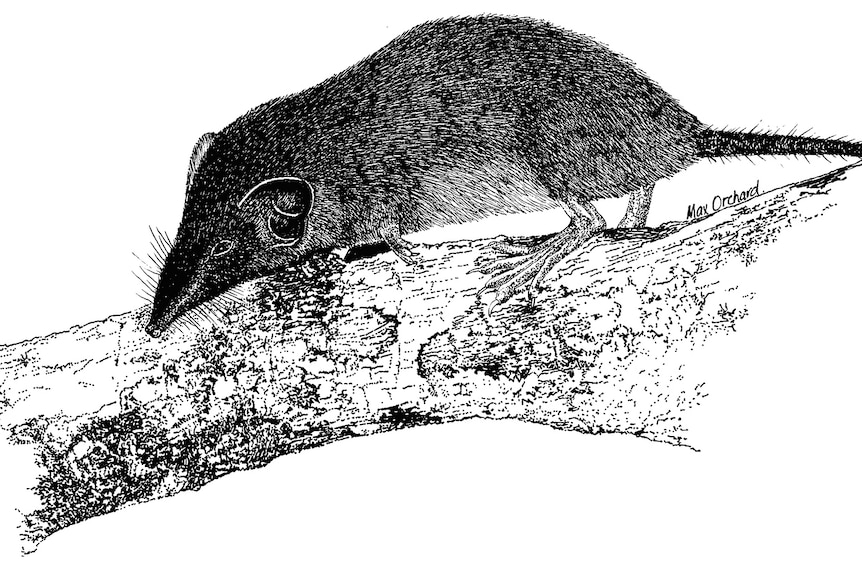
The Christmas Island shrew was rarely pictured before its extinction. (Supplied: Max Orchard)
Mr Sydes said key Albanese government promises such as zero new extinctions needed to be backed by funding.
“The report fails to mention that there’s no commitment to continue the Saving Native Species program, which supports threatened species recovery,” he said.
“Whether or not May’s federal budget renews funding for the Saving Native Species will give a clear indication of whether the Albanese government is serious about its international commitments.”
The government had spent $700 million in the past four years on threatened flora and fauna, as part of Saving Native Species, but with a focus on 110 species.
That equates to about 6 per cent of the more than 2,000 listed species.
A government spokesperson said Australia was on track to deliver on seven of its nine national priorities as outlined in its Strategy for Nature.
“This is underpinned by billions of dollars of investment from the Albanese government for environmental protection,” they said.
The progress report indicated $19 billion was spent on environmental protection annually in Australia.
When you break down this number it includes funding for things such as waste management, while “protection of biodiversity and landscapes” specifically receives about $2 billion.
Independent estimates prepared for the Biodiversity Council, however, suggested biodiversity spending was below $1 billion.
Outside of the criticism, the Australian government has noted it was behind, by its own assessment, on some GBF targets.
Restoration efforts lagging
The GBF has a target for 30 per cent of degraded ecosystems to be restored by 2030.
Australia has a commitment to restore landscapes but hasn’t set any kind of target percentage. Unlike its commitment for 30 per cent of land and marine to be made into areas with high protection.
The progress report said there were significant challenges to try and upscale ecosystem restoration in Australia such as the continent’s large size, changing climate, widespread degradation, and limited resources.
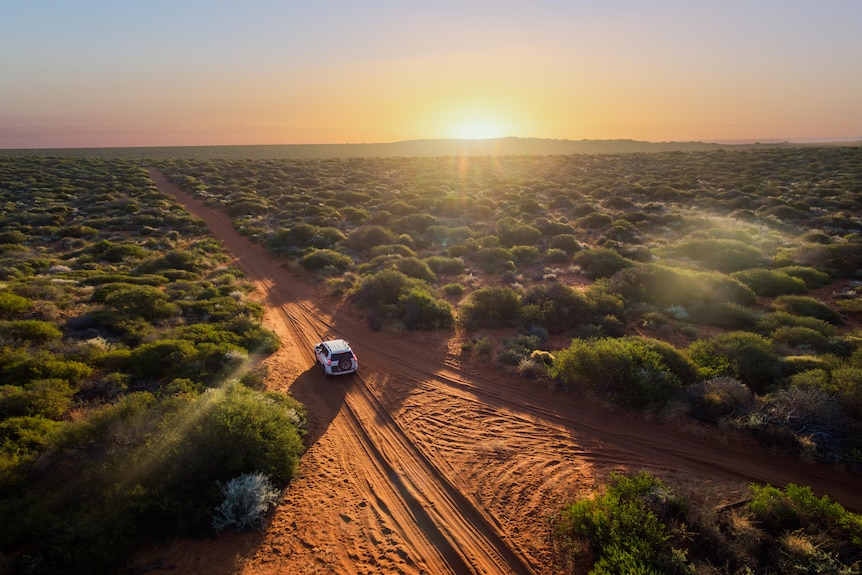
Thirty per cent of Australia’s lands are set to become protected areas by 2030 to help meet a GBF target. (Getty image: Francesco Riccardo Iacomino)
The government said it still needed to clearly define what the priority degraded areas were.
Mr Elton was concerned whether Australia would be able to meet this kind of target since it still had not made an “implementation plan”.
“The report itself notes that it is ‘expected to be publicly released in early 2026,'” he said.
“Many of the GBF’s targets are framed as actions to be achieved by 2025 or 2030.
“Time is not on Australia’s side.”
An Australian government spokesperson said it recognised there was more work to do.
“We’re working with states and territories to develop an implementation plan for the Strategy for Nature to guide collective national action to address biodiversity decline and drive systemic change,” they said.