
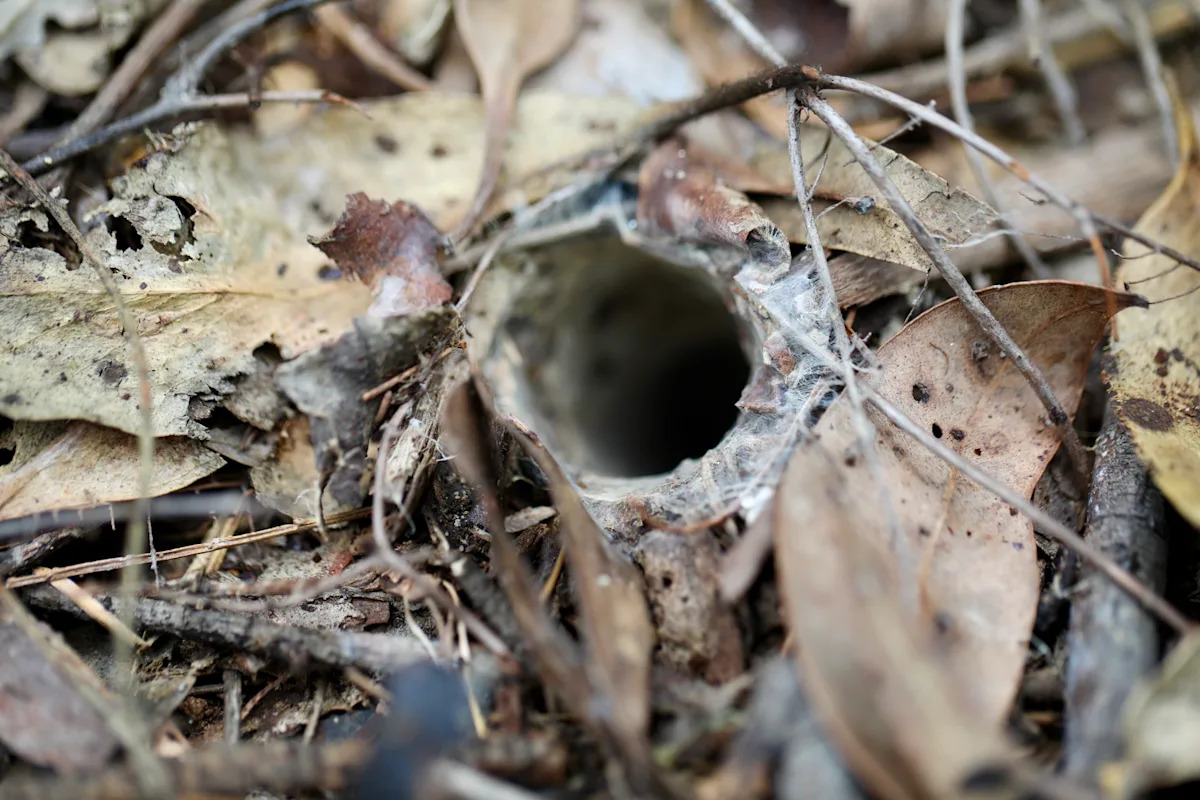
Aussies have just four weeks to aid a critical lifesaving program before the nation’s deadliest spider vanishes from view and into the safety of its burrow.
Sydney funnel-web spiders are at their most active during the warmer months, as this is when breeding season occurs, and males travel long distances for a mate.
Before the weather cools and these stocky, black creatures become less active, the Australian Reptile Park is hoping some brave residents in NSW can safely catch, contain, and then take them to one of its 15 drop-off locations.
It is the only facility in Australia that milks funnel-webs for their venom, so it can be turned into anti-venom to treat bites, but its spider stock is at a historical low.
The park estimates that around 50 lives are saved by the program each year, and since the inception of anti-venom, there have been zero fatalities in Australia caused by the species.
Expert reveals toxic symptoms of funnel-web bite
Funnel-web keeper Emma Teni explained that the impact of its bite is “extremely fast”.
“The venom has killed a child in 13 minutes, and the average death of an adult occurs in 76 minutes,” she said.
Because the funnel-web’s fangs are so large, they cause localised pain around the bite site.
“The venom then travels through your lymphatic system, and it basically hyper-stimulates everything and then starts shutting everything down,” Teni explained.
“You get excessive salivation, excessive tear production, and excessive blood pressure.
“It will go to your heart, and you start having cardio responses.”
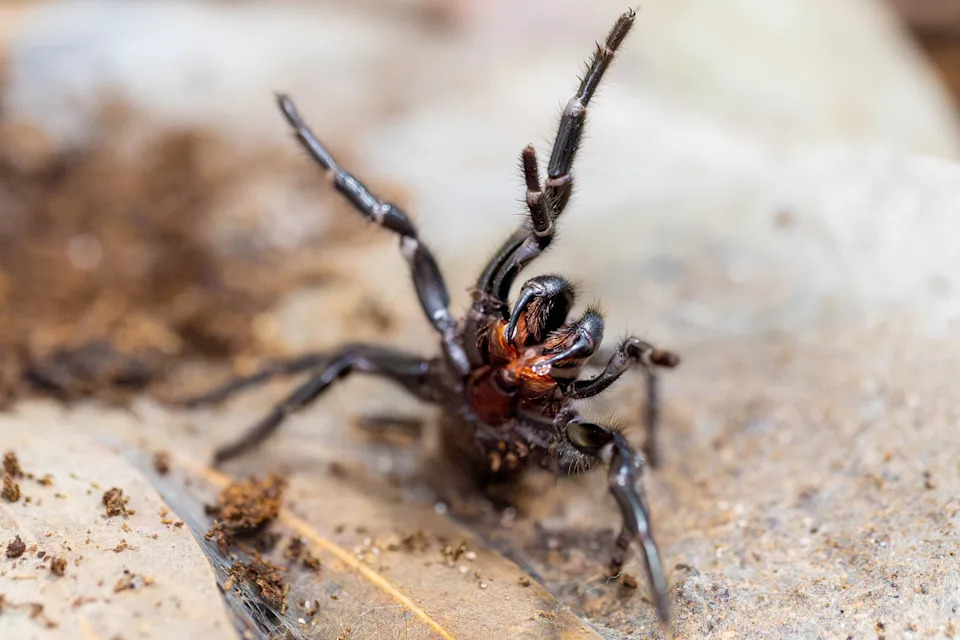
The Sydney funnel-web spider has large fangs that initally cause localised pain. Source: ARP
Spider numbers are worryingly low
The Reptile Park has around 200 spiders that are milked weekly for the program, but they’d like that number to be closer to 300 to 400.
They also have around 6,000 juveniles, but hatching and raising them to adulthood takes around three years.
It’s a slow process gathering enough venom to create anti-venom, as a single dose requires 150 to 200 milkings.
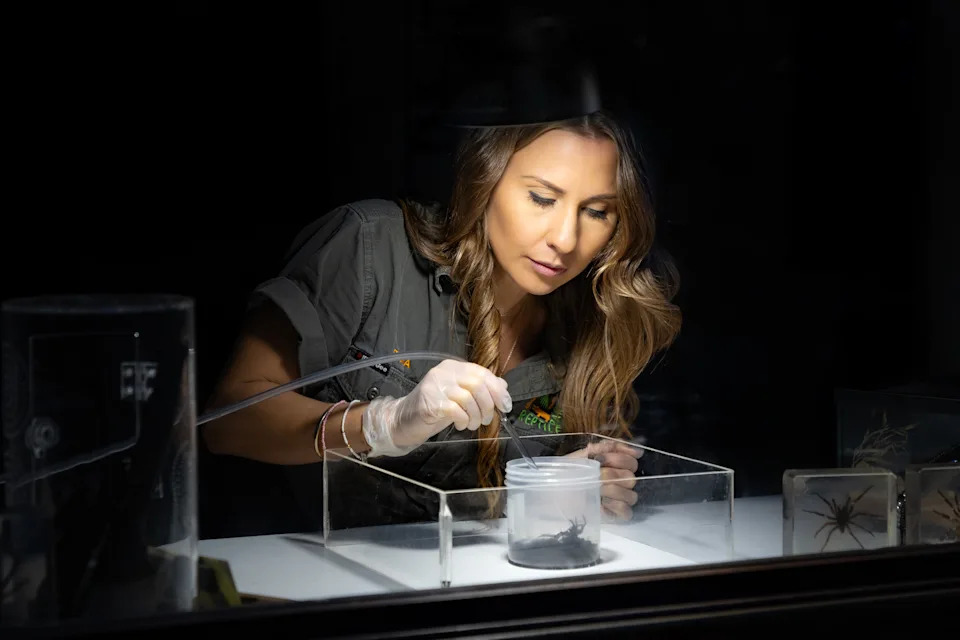
Emma Teni is a funnel-web keeper at the Australian Reptile Park. Source: ARP
(CAITLIN VINE AUSTRALIAN REPTILE PARK)Directions for catching a funnel-web
Teni said the “bizarre” weather being experienced across much of the state is perfect for catching the often elusive spider species, which usually prefers to hide underground in its burrow.
“We’re having really hot days, and lots of rain, and that humidity is the perfect environment for these spiders,” she told Yahoo News.
“Although we’re coming to the end of the breeding season, we’re still seeing a lot of activity.”
The park said it’s important to have a good understanding of both first aid before attempting to catch a spider.
It offered this important guidance for anyone wishing to help with the program, noting it should be done using extreme caution.
Place a smooth-sided jar next to the spider
Using a smooth, long-handled utensil, nudge the spider into the jar
Add in damp soil or a wet cotton bud
Deliver the spider to one of the Reptile Park’s official drop-off locations ASAP
Do you have a story tip? Email: newsroomau@yahoonews.com.
You can also follow us on Facebook, Instagram, TikTok, Twitter and YouTube.