
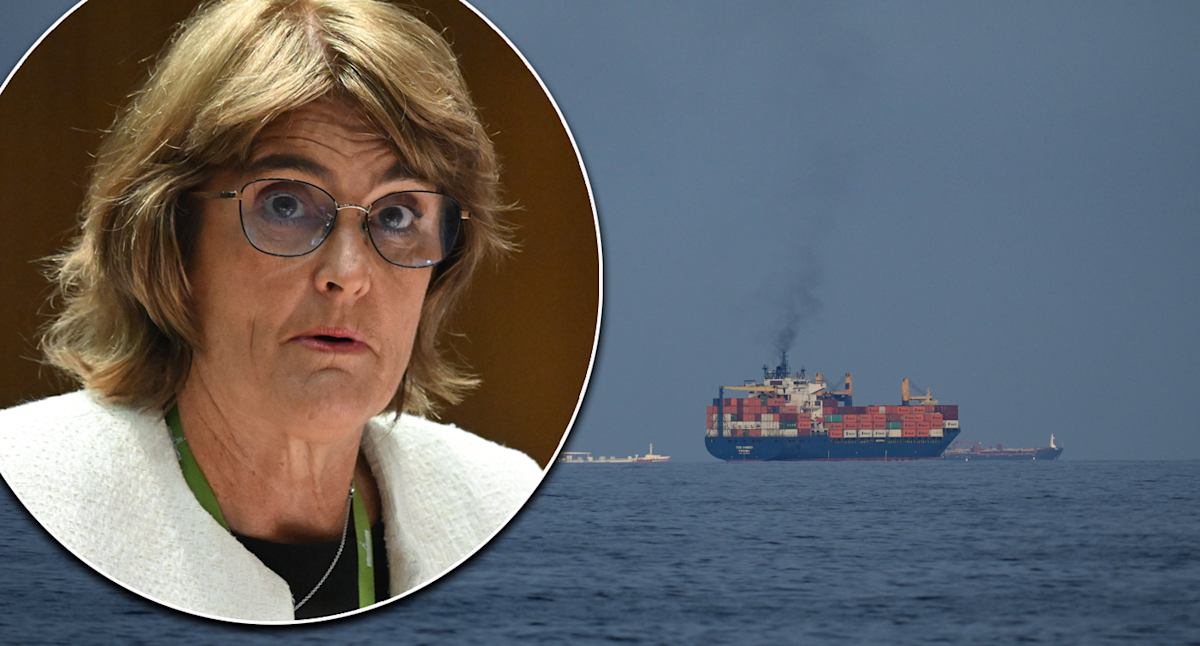
 Another supply side shock has the RBA backed into a corner. (Source: AAP)
Australian motorists and rural residents have been spotted stockpiling petrol in recent days over concerns about fuel shortages. As some pumps do run dry in regional Australia, policymakers cautioned how expectations can become reality.
That’s the difficult “problem” facing the Reserve Bank of Australia (RBA) as it tries to stamp out fears of ever rising prices as the nation suffers through another major supply-side shock. “If it becomes one supply shock on top of another – and we’ve had a few over the last few years – then people start to regard them as normal,” AMP economist Shane Oliver told Yahoo Finance.
And that’s when the 1970s-style inflation genie can get out of the bottle.
RELATED
Since the US started its war in Iran, prices at the bowser have surged more than 55 cents a litre on average across the six capital cities compared to the previous month.
“An average household given the rise in petrol prices, will be paying an extra $18 a week, pushing towards $80 a month just to keep their car running,” Oliver said, adding that he suspects retailers have been “running ahead of things” a bit.
The sharp increase in petrol seen across the country amounts to about a 33 per cent jump in recent weeks. “When you multiply it out with CPI weights, that adds about 1.1 per cent to inflation,” Oliver said.
Before the conflict broke out, the RBA was predicting inflation to be around 4.2 per cent in the middle of the year, but the new reality – if the war and disruptions drag on – would push that easily over 5 per cent, he warned.
“I think that’s starting to go beyond the RBA’s comfort zone.”
When Michele Bullock fronted the media following the February rate hike, she said the bank was surprised at how quickly the economy appeared to be operating at capacity – a scenario caused by a lack of productivity growth and was pushing up prices.
Raising interest rates won’t lower the price of petrol, but the blunt tool is all the RBA has to cool demand.
“They would be thinking that prior to this happening, we were already at capacity constraints in the economy,” Oliver said.
“If we don’t knock it on the head quickly, then we’ll see increased demands for wage rises. We’ll see increased preponderance of higher price rises from businesses just as we’ve seen from petrol prices, and that will make it even harder to get inflation back down.
Story continues
“That was the lesson of the 1970s – that as the decade wore on, inflation expectations rose and then it got harder and harder to get inflation back down without having a major recession, which of course began in the early 1980s.”
Now, he said, the recipe is to err on the side of tighter monetary policy.
Oliver noted that lurching from the Covid pandemic to the Russian invasion of Ukraine which rattled energy markets to the current Middle East conflict, risks supply-side driven inflation becoming the norm in people’s minds.
It’s been a long time since inflation was actually within the RBA’s target band of 2 – 3 per cent. And another big surge could dispel the belief that it will ever get back there.
“People start to disbelieve the target going forward, they start to have a loss of faith,” Oliver said.
“So people say, well we need to get 5 per cent wage rises rather than three and a half. We need to put through much bigger price rises if we’re a company, to keep ahead of things. And once that mentality takes hold, it’s a lot harder to get inflation back down.”
 A fuel station with pumps out of order is seen in Reservoir, Melbourne, Friday, March 13th, 2026. (Source: AAP)
Aussie companies say they are already being forced to pass on costs. According to The Australian, the only maker of polypropylene in the country, Viva Energy, told customers it was hiking plastics costs and rationing products due to the conflict.
Meanwhile another manufacturer, Impact International, which makes food, cosmetic and pharmaceutical tubes said it feels like a return to the start of the pandemic.
“I’m calling it personally Covid 2.0,” the company’s managing director Aleks Lajovic told the publication.
“When the pandemic started to reveal itself, the circumstances were almost the same. People were scared. People couldn’t get information, people couldn’t get pricing, people couldn’t get delivery confirmation. And people also couldn’t get an accurate shipping date.
“And this is exactly what we’re seeing play out in supply chains. Again, it’s really like the start of a pandemic,” he said.
Treasurer Jim Chalmers has downplayed the potential of a recession in Australia, saying in an interview on Sunday his upcoming budget will very much include tax reform aimed at driving productivity growth.
“I see developments around the world and pressures on Australians here at home not as a reason to go slower, but a reason to go further, and that’s the approach that I’ll be taking to the deliberations that I lead with the cabinet colleagues,” he told Sky News.
“I’ll be working up a number of reform packages for this budget and they’ll be focused on savings, they’ll be focused on productivity.
“I’ll give the colleagues a whole bunch of options when it comes to tax reform.”
Meanwhile Greens leader Larissa Waters called on the government to stop supporting the US and Israeli war on Iran, and urged the RBA not to hit borrowers because of supply issues.
“The RBA should not lift rates when this latest inflation pressure is a supply side mess caused by a pointless war that rate rises can’t stop,” she said.
“The RBA must not punish people for inflation caused by an illegal war that Labor is supporting.”
Get the latest Yahoo Finance news – follow us on Facebook, LinkedIn and Instagram.