
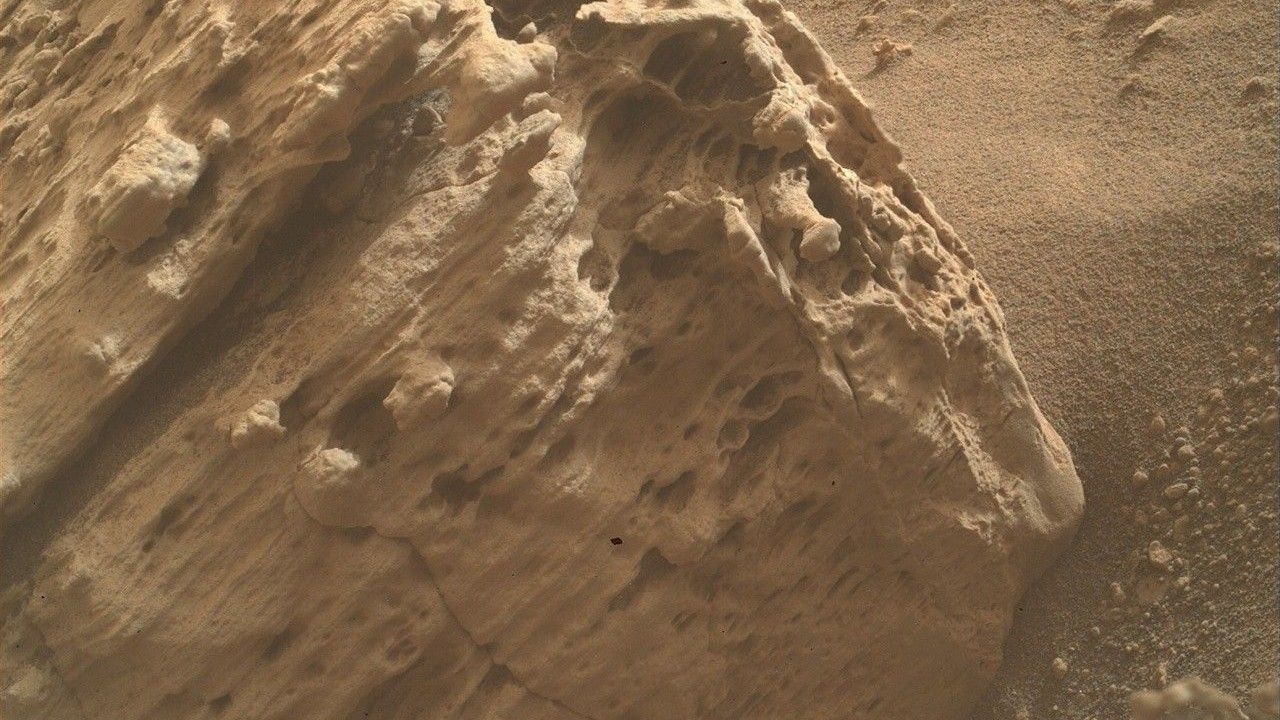
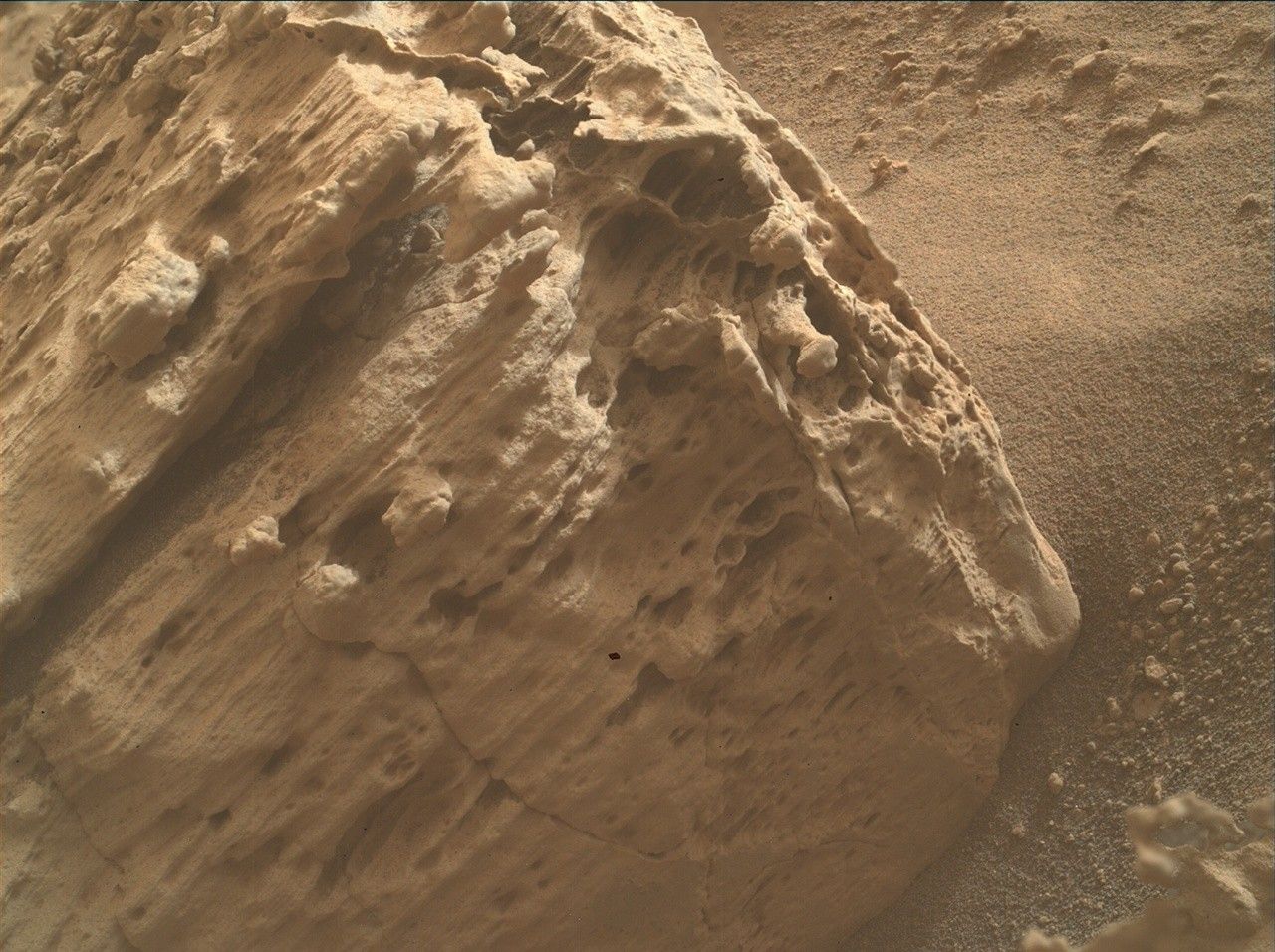
NASA’s Mars rover Curiosity acquired this image of a pitted vertical rock face dubbed “Timboy Chaco” on March 5, 2026. (Image credit: NASA/JPL-Caltech/MSSS)
NASA’s Curiosity Mars rover has spied a pitted rock face as it explores a region of the Red Planet known as Mount Sharp, a mountain 3 miles (5 kilometers) tall within Mars’ Gale Crater. NASA has named the rock “Timboy Chaco.”
What is it?
Curiosity has been investigating the region for months, examining rocks that mission team members call “boxwork formations.” These geological features resemble spiderwebs when viewed from orbit, but up close appear as low-lying ridges and hollows carved into the Martian rock by wind and erosion.
Curiosity is currently exploring the eastern and southern “borderlands” of this region, according to a NASA statement accompanying the image.
Article continues below
You may like
Why is it amazing?
Curiosity has discovered evidence that water once flowed through the area, leaving behind rich mineral deposits. Over the course of Martian history, winds have blown the Red Planet sands away, revealing these deposits that now appear as pitted, scarred rock formations like Timboy Chaco.
Scientists hope that detailed investigations of these rocks, like the ones Curiosity is currently undertaking, could reveal whether there is evidence of microbial life left behind in the mineral deposits. Some of these formations have led scientists to theorize that groundwater could have been present much later in Mars’ history than we previously thought.
“Seeing boxwork this far up the mountain suggests the groundwater table had to be pretty high,” said Tina Seeger, a mission scientist from Rice University, in a September 2025 statement from NASA’s Jet Propulsion Laboratory about Curiosity’s investigation of the region. “And that means the water needed for sustaining life could have lasted much longer than we thought, looking from orbit.”