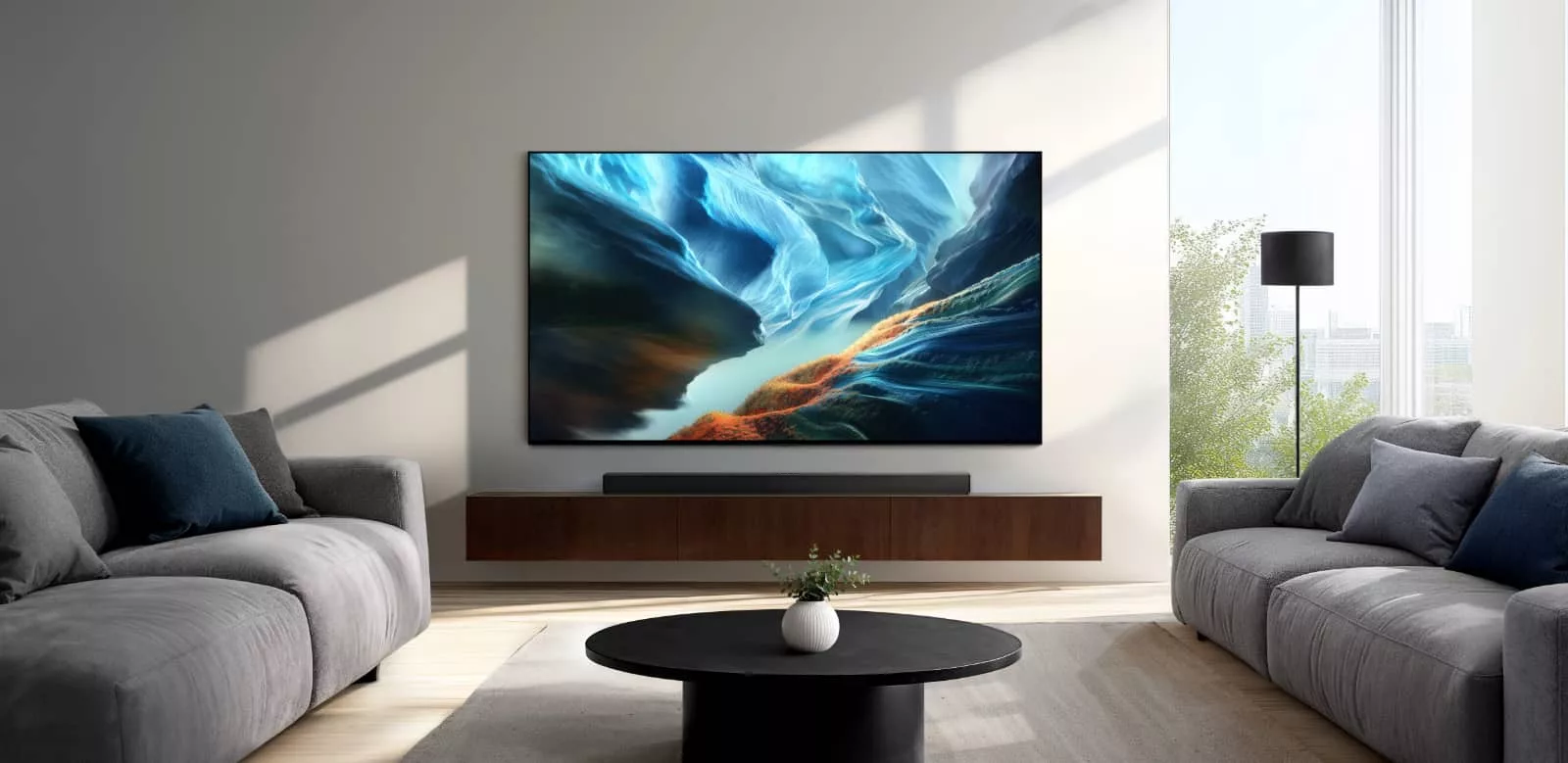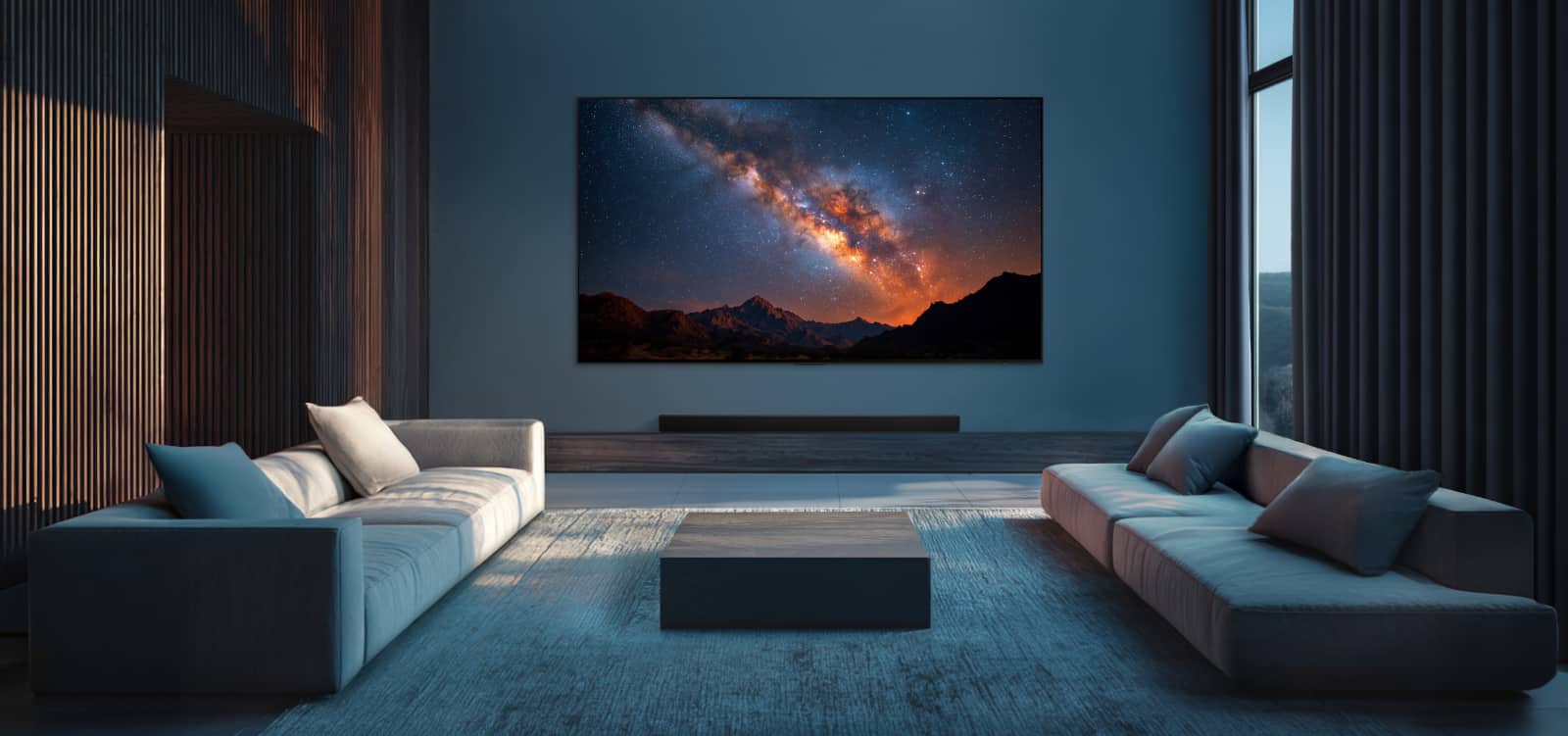
If you’ve been waiting to buy a TV, your patience might have paid off because TV changeover season is here.
Roughly three months into the year, the first manufacturer is talking about what’s coming, turning their CES announcements from earlier into something tangible that Australians will be able to touch, but more importantly watch and listen to.
While quite a few screens and technologies are expected, the first assortment appears to come in the form of OLED, with Samsung talking about a few models on the way to Australian stores in the coming weeks, and the features they’ll get.
For folks playing along at home, OLED is still one of the premium screen technologies, using organic pixels that turn on and off, delivering a real black thanks to the pixels being in an “off” state. OLED has long been seen as one of the more premium technologies, but it’s not the only one, and is assisted by Neo QLED and Micro RGB, technologies that use tiny LEDs for precision backlighting control.
While we expect both will make an appearance shortly, Samsung’s OLED models are on the way first, offering Pantone validated colours on two of the models as well as a glare-free screen, and support for an art store feature much like Samsung’s “The Frame” lifestyle TVs.
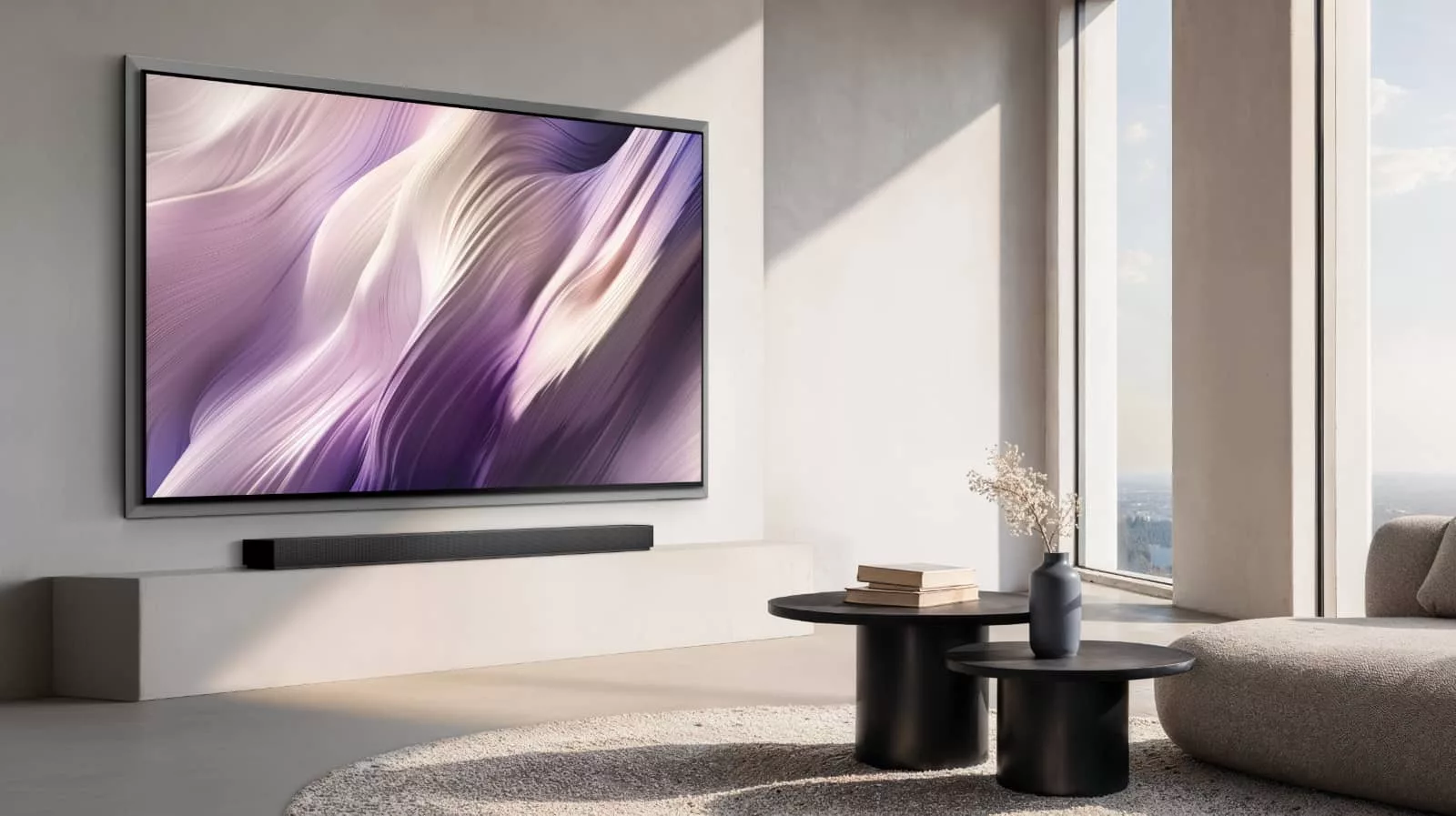
New to the lineup, Samsung’s Art Store now appears on its 2026 OLED TVs, allowing downloads of major art to appear on the screen.
Other modes will also be included, such as Samsung’s TV channels in TV Plus, an AI-enhanced Soccer Mode to detect live matches and improve the picture and sound, and even an AI Sound Controller to separate dialogue from background to help clarity. Granted, it might affect what your film’s director intended, but not every speaker system does a good job, and from the sound of things (pun intended), Samsung is hoping AI helps here.
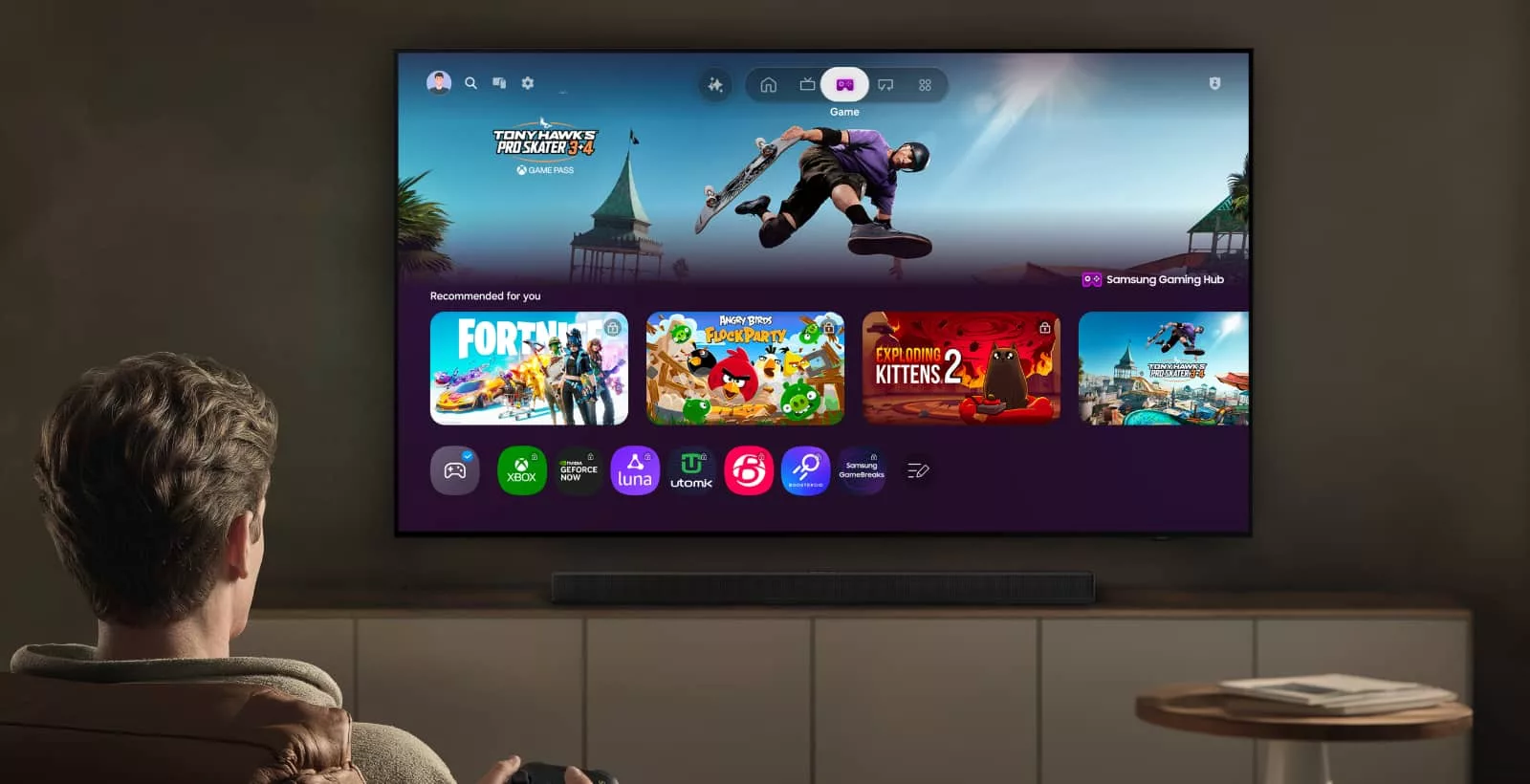
Both the S90H and S95H OLED models use a new AI processor for scene analysis and upscaling, the NQ4 AI Gen 3, which apparently uses 128 neural networks to understand pictures and scenes, and boosts colour and picture quality accordingly. They’ll both also support a 165Hz refresh rate for gaming, and can use AI to optimise gameplay visuals, as well.
Between the models, there’s a difference of design, with the premium S95H OLED using a floating design for wall-mounting and support for a wireless connection box, supporting up to 165Hz screens at 4K inside of 10 metres.
Below the S90H and S95H, Samsung’s S85H appears ready to provide the entry-level for a Samsung OLED model, but still keep the design slick.
In Australia, the S85H OLED starts at $1999 for a 48 inch, offering a 55 inch for $2499, 65 inch for $3299, a 77 inch for $4499 and the 83 inch S85H OLED for $6499.
The S90H OLED models are a little more, priced from $1999 for a 42 inch (likely focused on gamers), with a 55 inch from $2999, 65 inch for $3999, 77 inch for $5499, and an 83 inch for $7499. Meanwhile, the premium model starts from a shade under $4K, with the 55 inch S95H OLED for $3999, 65 inch from $5299, 77 inches at $7999, and 83 inches at $9999.
Clearly, they won’t be the only OLED models or even only TVs on the way, but Samsung’s are the first out, which also means you might find last year’s OLED offerings from the same brand and potentially others on sale, as well.