
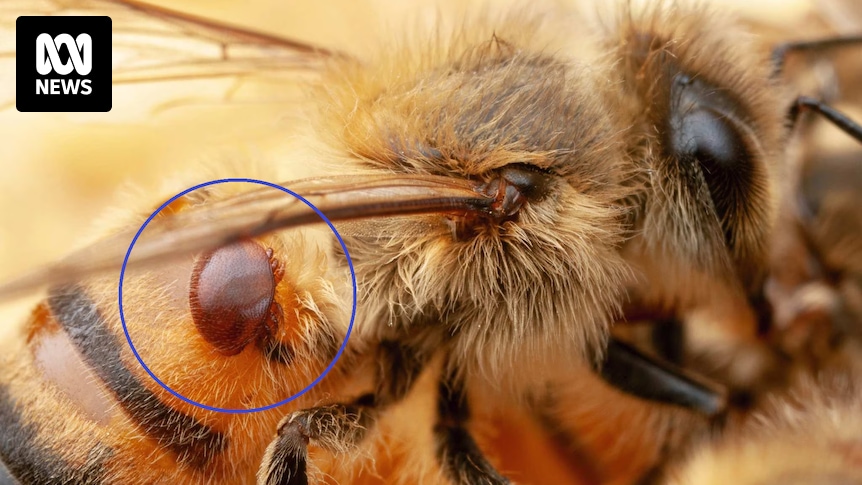
A team of Australia’s leading biosecurity experts has been unable to confirm the source of the deadly varroa mite which has changed the face of beekeeping and pollination in Australia.
The federal government’s final report into how the pest arrived on Australian shores has ruled out illegal importation, but could not definitively confirm where the mite came from or how long it had been in Australia before its discovery.
Varroa mites feed on host bees, essentially depriving them of nutrition and weakening their immune system.
Australia was the last inhabited continent free of the Varroa destructor until June 2022 when it was detected in a sentinel hive at the Port of Newcastle.
But the NSW Department of Primary Industries and Regional Development (DPIRD) and the CSIRO believe the mite incursion may have originated in Kempsey, “or arrived in Kempsey and Newcastle around the same time”.
“It is possible infected bees had been moved to Newcastle prior to varroa mite being identified in the sentinel hives,” the report said.
“Viruses identified on the varroa mites and bees link the two regions and rule out the possibility of two separate varroa mite incursions.”
The report said it could not conclusively determine when varroa mite entered Australia.
“Whilst the Newcastle data indicates the infestation possibly commenced around June 2021, it could have been earlier due to inconclusive data from the Kempsey region,” it said.
Genetic analysis done by the Australian National University found the mites “likely originated from North America, most probably Canada”.
The report said there was not enough evidence for further investigation into whether illegal importation was the source of the incursion.
It said 19 search warrants were executed as part of investigations.
“The evidence does not indicate owners associated with properties initially infested with varroa mite were involved in the illegal importation of bees infected with varroa mite,” the report said.Industry frustrated
Within 18 months of the detection experts deemed the fight lost and Australia turned from eradication efforts to managing a new world with varroa mite.
At that point 300,000 hives had been destroyed.
Managing the parasite was tipped to cost Australian honey and pollination-reliant industries around $70 million per year.
In NSW alone, one in four commercial beekeepers have left the industry since the incursion.
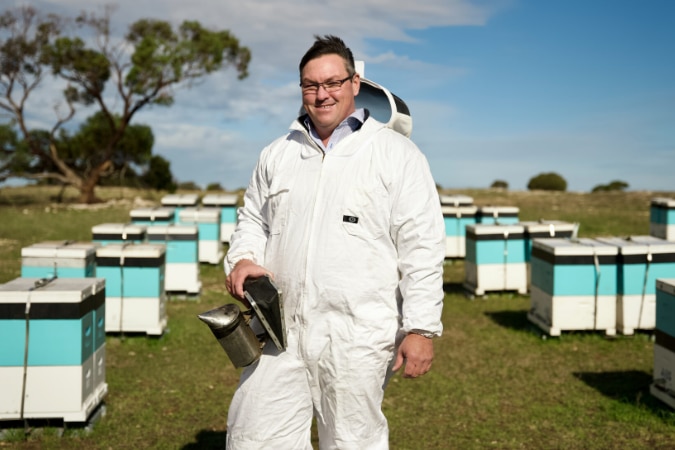
Danny Le Feuvre says the report failed to provide the clarity and answers the industry was hoping for. (Supplied: AHBIC)
Australian Honey Bee Industry Council (AHBIC) CEO Danny Le Feuvre said the past four years had been devastating.
“Colonies were destroyed, businesses disrupted and confidence in the biosecurity system shaken,” he said.
“Beekeepers have waited nearly four years for answers about how varroa entered Australia. This report unfortunately fails to provide those answers.
“The pathway of entry for one of the world’s most destructive bee pests remains unknown.”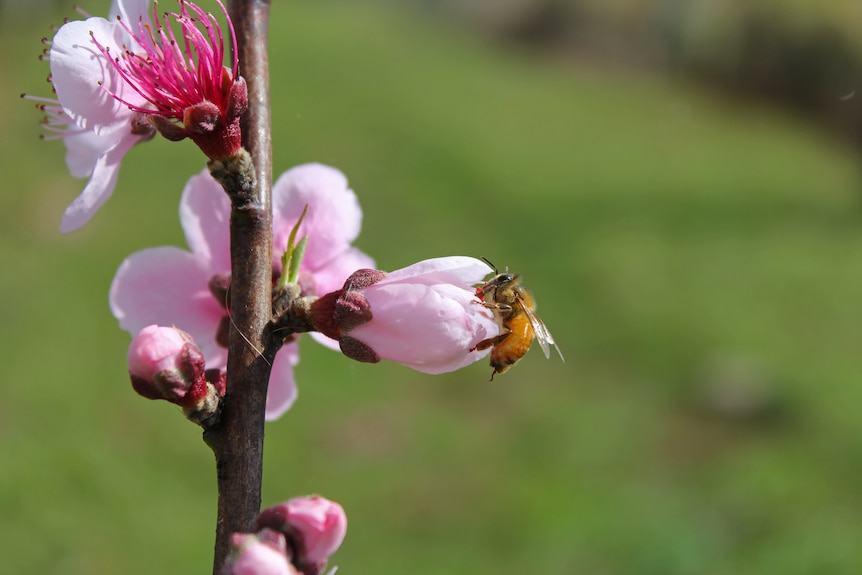
Pollination is critical for a range agricultural crops. (ABC Rural: Kim Honan)
Mr Le Feuvre said the honey sector is worth about $270 million, but said the biggest contribution was through pollination services — “a $4.2 billion contribution directly to pollination-dependent industries, so apples, cherries, pears, even canola.”
“There’s a real risk around food security too because our industry is underpinning the food security in Australia through those pollination services,” he said.
Mr Le Feuvre said beekeepers were feeling deflated.
“If we do not understand how varroa entered the country, it becomes far more difficult to ensure the same pathway cannot be exploited again,” he said.
“This matters not just for beekeepers but for every agricultural industry that relies on Australia’s biosecurity protections.”
Mr Le Feuvre said recent reports of treatment resistance in varroa populations in New South Wales and Queensland was concerning and highlighted the ongoing challenges facing Australian beekeepers.
AHBIC has called on the federal government to take further action to ensure the investigation leads to meaningful improvements in Australia’s biosecurity system.
It wants the federal government to publish a review into the gaps and biosecurity vulnerabilities, and support ongoing scientific investigations, including “virus-origin research” being undertaken by the NSW DPIRD.
Agriculture Minister Julie Collins said her government would “never compromise on biosecurity”.
“I know the outcome of this investigation will be disappointing for Australia’s beekeepers and our wider agricultural community — I share this disappointment,” she said.
“Since the first detection of varroa mite in Australia, the government has committed over $2 billion in additional resourcing to strengthen Australia’s biosecurity.
“We have added 20 additional detector dogs around the country, and have more than 1,000 biosecurity officers across Australia’s international airports, seaports and mail centres.”
The federal government said that while the investigation had been finalised, further inquiries would be made should new information become available.