
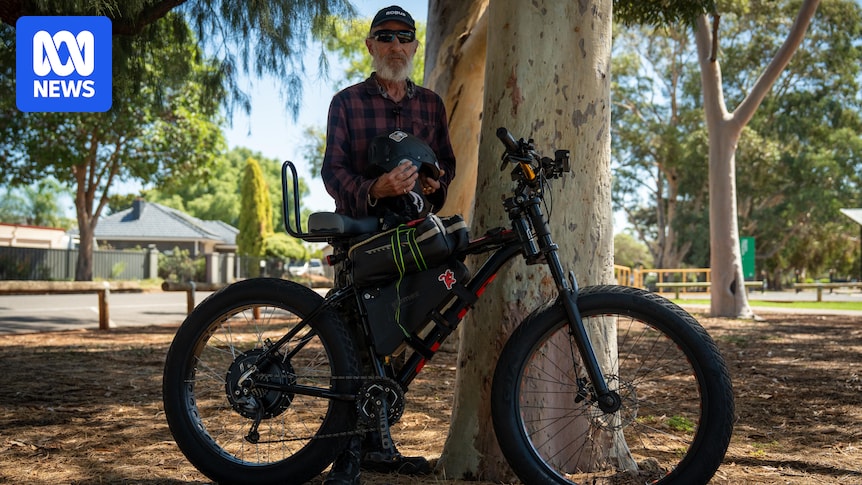
When Jeff lifts the back wheel of his push bike off the ground, his speedometer reaches 104 kilometres per hour at full throttle — all with the help of a conversion kit he purchased from China.
While he said the fastest he has actually travelled is 70km/h, his bike is 20 times more powerful than what is currently allowed on South Australian roads.
The result, he said, was “just like riding a motorbike”.
Jeff said the whole set-up, including the bike, cost about $1,000 but was cheap to run — he has solar panels and charges the bike during the day.
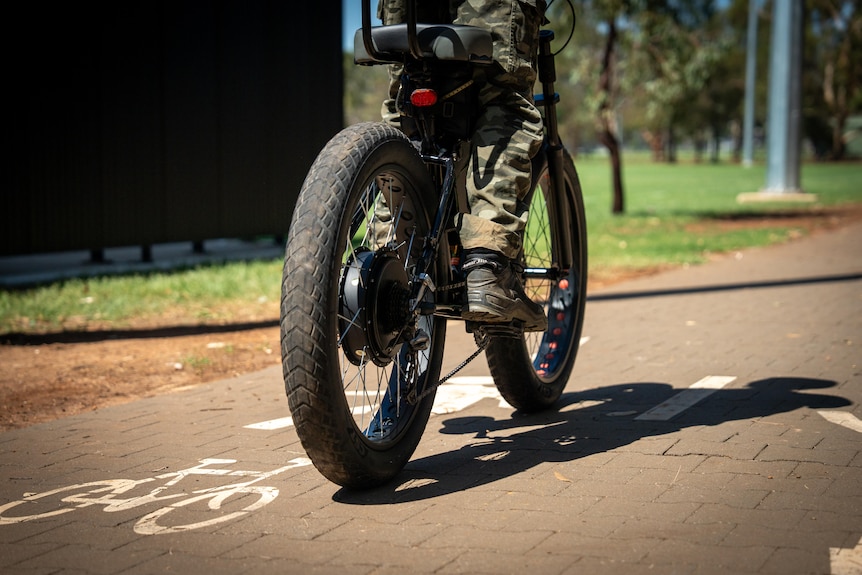
Jeff says he has reached speeds of up to 70 km/h on the road but goes “slow” on footpaths. (ABC News: Ashlin Blieshke)
While it is not illegal to own a modified bike like this, riding it away from private property is, and can come with a hefty fine.
“I’ll ride it quite often because, of course, our petrol’s going up,” Jeff said.
“If you’re doing silly stuff the cops are going to pick on you … just be sensible.”
Above the limits
The maximum power on a legal e-bike motor on South Australian roads is 250W.
The motor needs to cut off when an e-bike reaches 25km/h and the power must come mostly from pedalling.
While Jeff said both finding and installing the kit onto his pushbike was an easy process, many store-bought e-bikes are also relatively simple to soup up.
According to Adelaide e-bike seller Scott Pearce many sold in Australia only require a quick tinker to exceed the limit.
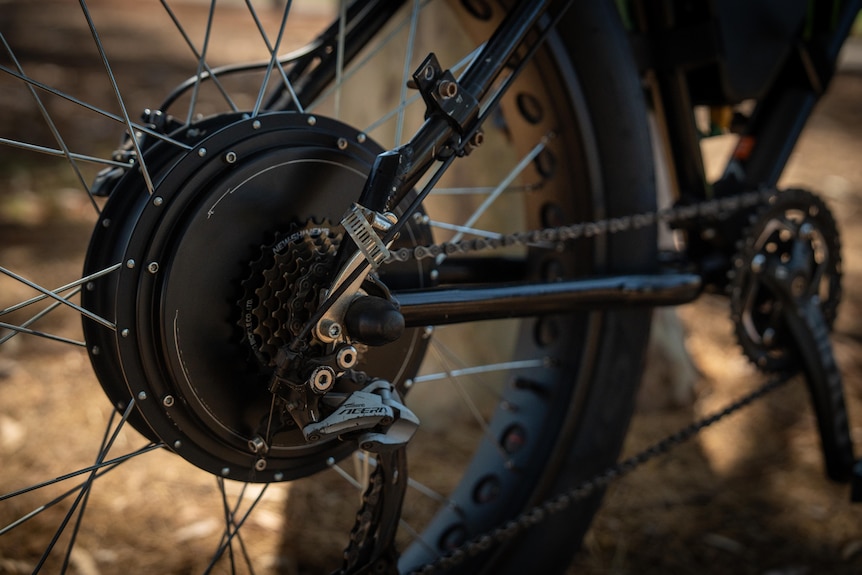
The motor on Jeff’s modified bicycle is more powerful than the legal road use limit of 250 watts. (ABC News: Ashlin Blieschke)
“Some, an eight-year-old could probably unrestrict,” he said.
Mr Pearce said it was impossible for him to stop customers using the devices unlawfully.
“Ultimately, once someone leaves the store … they can do whatever it is they want to it,” he said.
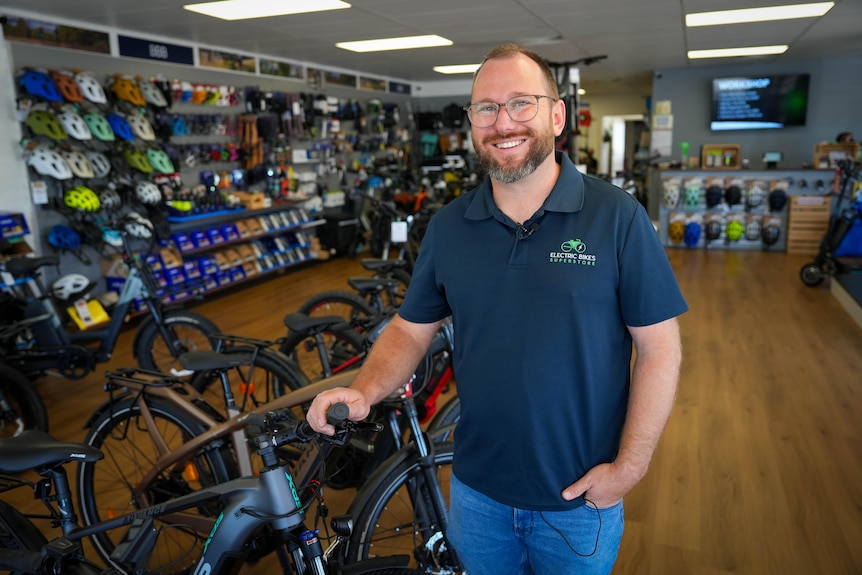
Scott Pearce says he can’t control what people do once they leave the store. (ABC News: Brant Cumming)
Mr Pearce said online comments, media reporting and the way websites marketed high-performance devices had muddied the public’s understanding of e-bikes.
“Unless it’s got a registration and number plate, if it’s doing 70km/h, it’s definitely not legal,” he said.
“Realistically, they’re e-motorbikes.”
Another police crackdown
In December and February, SA police targeted reckless riding, illegal modifications and non-compliance with road rules.
Speaking to ABC Radio Adelaide this month, Police Commissioner Grant Stevens said the state had not seen the “extensive behaviour” witnessed in Queensland, New South Wales and Victoria.
“The swarming … the kids who are really behaving in a way that makes your heart stop,” he said.
His comments coincided with social media videos of teenagers performing dangerous manoeuvrers on e-bikes during organised rides in suburban Adelaide.
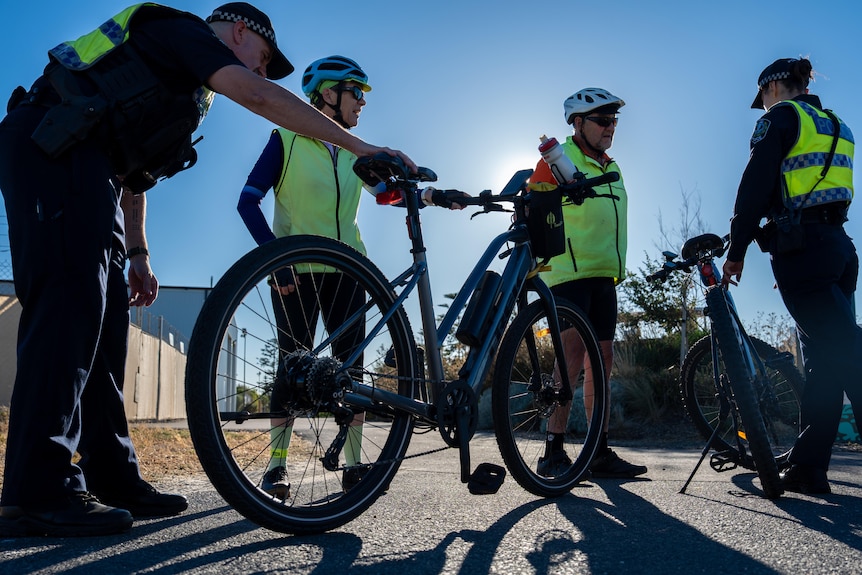
A police operation in February cracking down on illegal modifications and reckless riding. (ABC News: Daniel Taylor)
Commissioner Stevens said he was concerned about the behaviour, but acknowledged the “inability” of officers to stop and pursue reckless riders.
“We don’t want to be egging them on or giving them a reason to go faster or take more risks,” he said.
Crashes under-reported
Figures from interstate show a rise in injuries related to electric-powered devices.
A Queensland Children’s Hospital study found e-scooter admissions more than doubled between 2021 and 2024 and data from Sydney’s St Vincent Hospital told a similar story for e-bikes, with injuries doubling last year.
Last week, a 16-year-old boy and a 15-year-old girl died after a motorcycle collided with the e-bike they were riding, south of Brisbane.
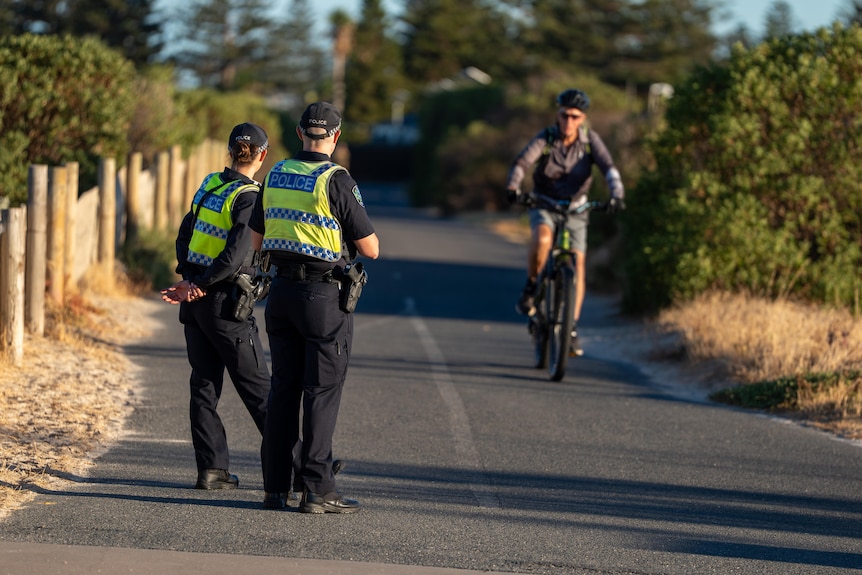
Many collisions involving pedestrians or cyclists are under-reported, SA Police says. (ABC News: Daniel Taylor)
In South Australia, emergency departments have seen limb fractures, lacerations, and concussions.
“We have seen first-hand the significant injuries resulting from electric scooter and e-bike incidents,” Royal Adelaide Hospital Trauma Service Nursing Director, Nicole Kelly, told ABC News in a statement.
According to SA Heath, hospital presentation files have no fields to record whether an injury has resulted from an e-device.
SAPOL’s collision data has only recently carved out separate sections for e-device incidents — ahead of changes by the SA government last year which gave private e-scooters the green-light for public use.
Before July 2024, any incidents were recorded as either pedestrians or cyclists.
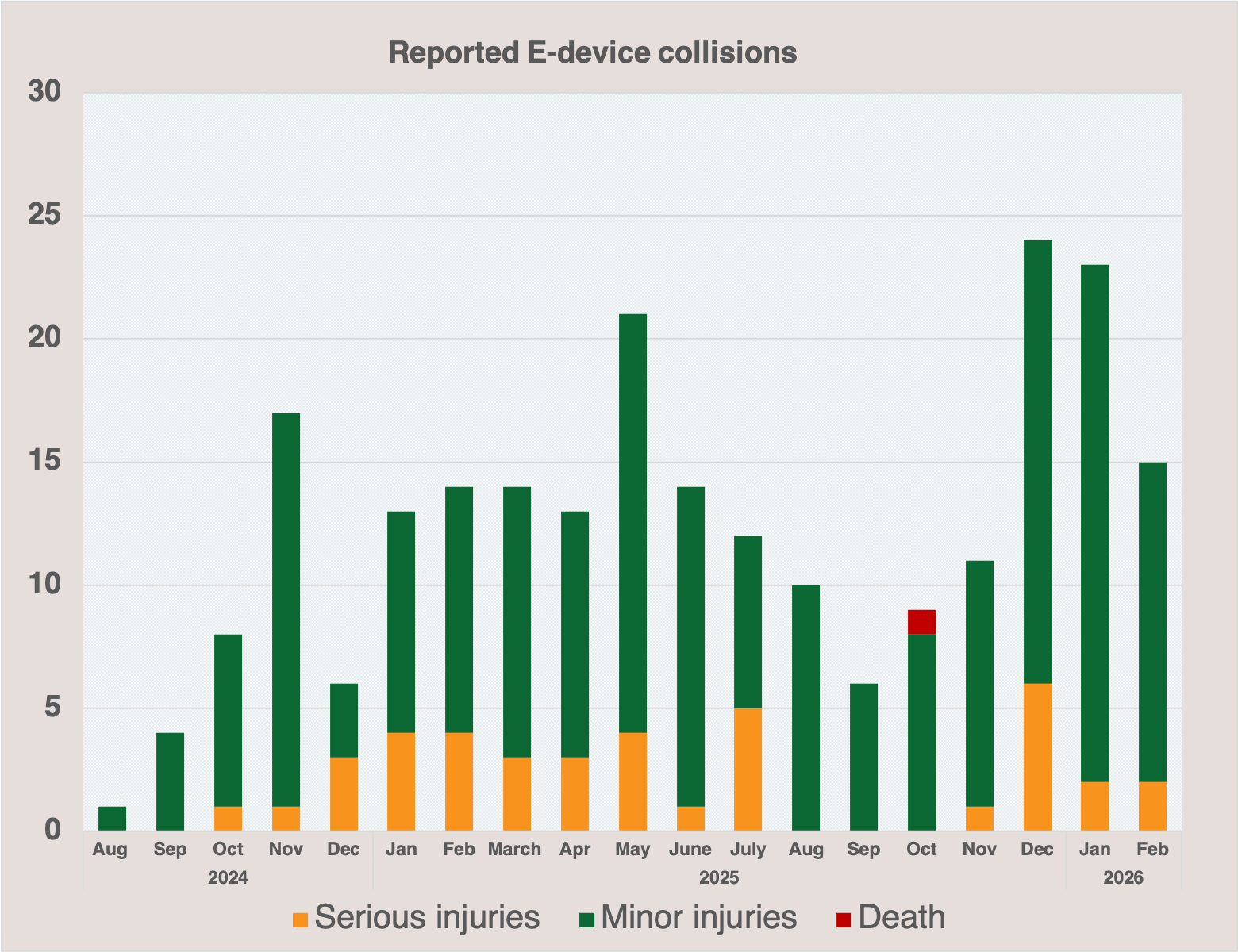
SA Police started recording e-devices crashes separately ahead of legislative changes. (ABC News: Aiden McNamara/Source: SA Police)
According to SAPOL, crashes involving vulnerable road users were significantly under-reported and riders often left the scene of a collision without reporting it.
Councils consider e-device bans
The trend in electric rideables has caused concerns on a local level, including from Jane Cadzow, a resident of the Adelaide coastal suburb of Grange.
“I just feel very vulnerable that they’ll just knock you and that’ll be it,” she said.
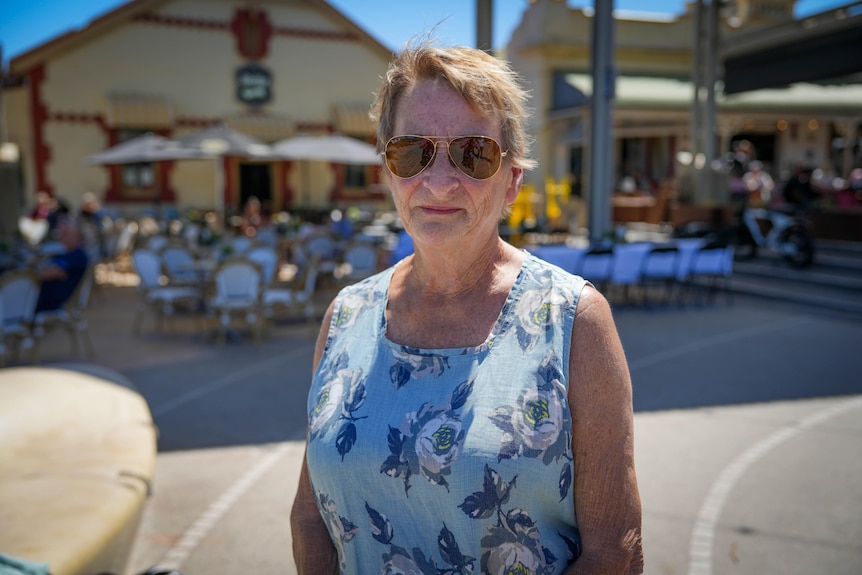
Jane Cadzow says she is worried about getting hit by an e-bike or e-scooter. (ABC News: Brant Cumming)
Some councils, including Holdfast Bay, are looking at banning e-devices along certain strips.
SA Transport Minister Emily Bourke said she was happy to meet with councils to discuss specific issues and welcomed the role of police in enforcing road rules.
“The state government is actively assessing all options to stop the illegal and idiotic behaviour by some e-riders in the community,” Ms Bourke said in a statement.
Avoiding a knee-jerk reactionUnder 16s should be banned from e-scooters and e-bikes, report says
As debates continue around Australia about age limits, registration and what devices can actually be sold, some riders say the benefits of green transport are often forgotten.
“We really need to be looking for broad and all kinds of solutions to be moving away from car and petrol-based transport,” e-bike rider Emma Dawes said.
Ms Dawes and her wife take their three kids to school via e-bike, which has been the family’s main means of transport for the last five years.
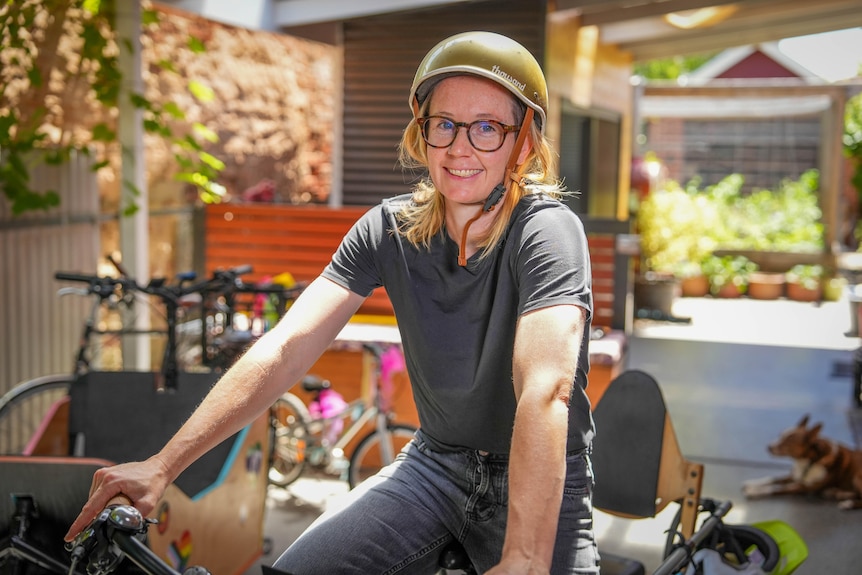
Emma Dawes says her family travels around using e-bikes. (ABC News: Brant Cumming)
“The kids love it … it’s a lot better than fighting with them to get into car seats,” she said.
Ms Dawes warns against a knee-jerk against e-devices and said modified, high-speed e-bikes are a “very different kettle of fish”.
“If you police that, you can keep that to the minority,” she said.