
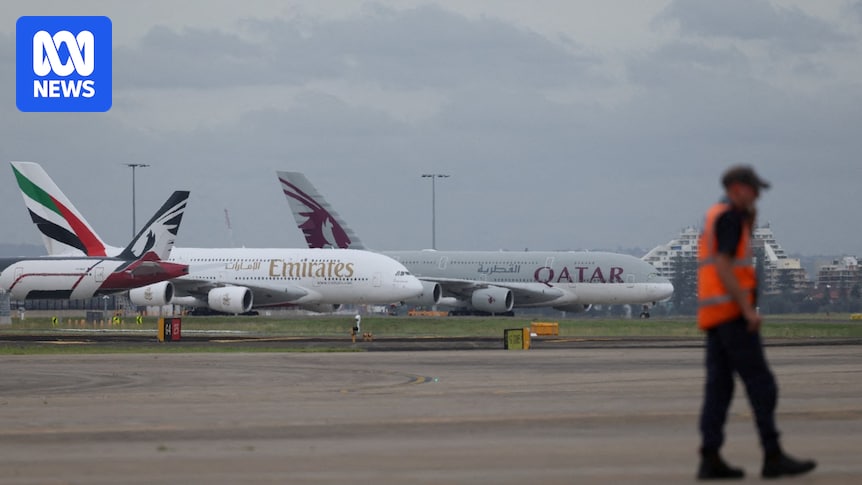
At airports across Australia, some Middle East carriers remain grounded.
Flights from hubs like the UAE and Qatar are operating, but only at a reduced capacity.
If you have a trip coming up that goes through the Middle East, you may be wondering whether your travel insurance covers any losses relating to the war.
Here’s what you need to know.
Iran war live updates: For the latest news on the Middle East crisis, read our blog.
Does insurance cover acts of war?
No.
The moment a country goes to “do not travel” with Smartraveller your insurance is void straight away for travelling to that country.
While this is relevant for people planning to or transitioning through Middle Eastern hubs, it would not void an entire policy once the air travel component is completed.
“War and armed conflict are standard exclusions in most travel insurance policies worldwide, as the scale and unpredictability of these events make them extremely difficult to price,” a spokesperson from the Insurance Council of Australia said.
Should I cancel my flight through the Middle East?
No.
Don’t cancel your tickets or travel arrangements.
The minute you cancel your flights, you are effectively doing a “change of mind” and can therefore lose a significant number of the consumer rights that you have.
That includes refunds, travel credits or re-booking options.
Airline refund and booking policies (subject to change)
Middle East and Gulf carriers:
Emirates: Offering full refunds if a flight is cancelled or passengers choose not to travel with flight bookings to March 31.Qatar Airways: Offering full refunds or free re-booking on the unused value of tickets for travel dates between February 28 and March 28.Etihad Airways: Passengers booked to travel between February 28 and March 21 can request a full refund or free re-booking until May 15.
European and other international airlines:
Lufthansa, British Airways, United Airlines, Singapore Airlines, Wizz Air: Offering full refunds or free re-booking for flights to and from the Middle East for affected travel until March 15.
Australia:
Qantas: Continuing to operate its QF9 Perth-London service, with a refuelling stop in Singapore due to the longer route required to avoid restricted airspace.
Travel Agent Finder CEO Anna Shannon said you should contact whoever you booked your trip through to confirm your options.
“Airlines typically work through disruptions in date order, prioritising travellers departing soon, so sometimes it’s best to wait for the airline’s official guidance,” Ms Shannon said.
As a general rule, if your airline cancels your flight, you should be entitled to a full cash refund for the part of the carriage not used or re-booked on a future flight.
Loading
Australian Travel Industry Association CEO Dean Long said the three Middle Eastern carriers have responded positively to helping passengers.
“They’re [the airlines] reviewing and extending the window for refunds every day,” Mr Long said.
Keep in mind these refunds won’t include any additional costs incurred to try and get back to your final destination.
Is it too late to get travel insurance now if you’re going overseas via the Middle East soon?
It depends.
You still want to purchase travel insurance to cover for incidents unrelated to the conflict — such as medical emergencies, illness, accidents, lost luggage or theft.
But when it comes to financial loss that has arisen from events already widely reported when the policy was purchased, that becomes uninsurable.
This is called a “known event” exclusion.
“Insurance is designed to cover unforeseen events, so if something is already known at the time of purchase it may not be covered,” Ms Shannon said.
How Australians can protect their travel plans
Don’t panic-cancel: If your flight via the Middle East is booked soon, wait for your airline to make any cancellations to preserve your refund and re-booking rights.
Check alternative routes: Consider flying via Asia, North America, or carriers that avoid Middle Eastern airspace.
Book flexible fares: If possible, choose tickets with cancellation options.
Accommodation flexibility: Stick with free-cancellation or refundable bookings whenever possible.
Use accredited travel agents: They can help navigate options, re-book flights, and advise on the safest and most efficient routes.
Stay informed: Follow your airline’s app, DFAT travel advice, and Smartraveller updates to track changing conditions.
Travel insurance: Most travel insurance policies don’t cover disruptions caused by war, so check coverage carefully before relying on it.
In travel insurance policies the exclusions normally take the following form:
You are not covered for any incident that does not occur during the period of insurance.
Or;
Claims which in any way relate to circumstances You knew of, or a person in Your circumstances would have reasonably known or foreseen, at the Relevant Time, that could lead to the Journey being delayed, abandoned or cancelled.
If you buy travel insurance today for a Middle East trip you won’t be covered for disruption caused by this conflict.
“The cut off date varies by insurer, but for most people that window has already closed for Middle East-related claims,” Mr Long said.
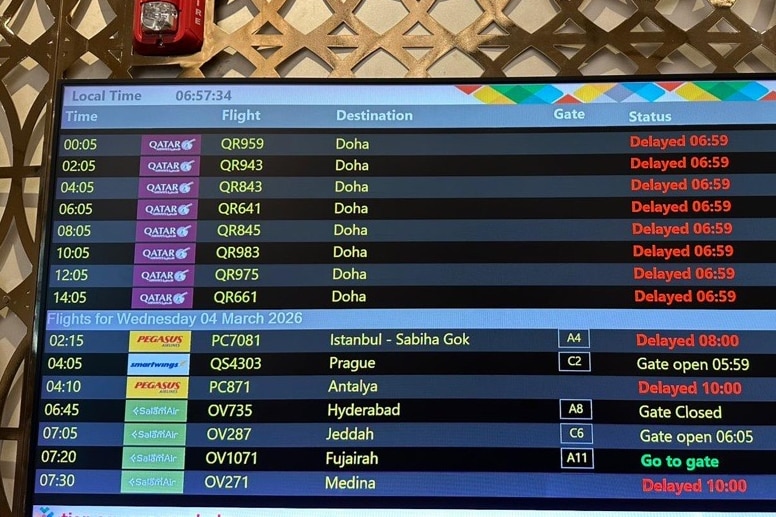
Only limited flights are operating out of key Middle Eastern hubs. (Supplied)
Here’s an example of a “known event” to consider:
If a traveller purchased their insurance before a volcanic eruption occurred and their flight was later cancelled because of it, their policy may respond depending on the cover.
But if the insurance was purchased after the eruption had already happened and the disruption was widely known, it would likely be considered a known event.
Check Smartraveller regularly as your cover can be directly affected by a destination’s travel advisory rating.
UK resident unable to get home as flight prices rise above $10K
If you’re transitioning through a “do not travel” country you may not be covered even for unrelated losses.
What to look for when buying travel insurance
Start by looking beyond the top-line benefits on the website and dig into the exclusions.
Every product disclosure statement (PDS) has a section called general exclusions, which you should read.
One of the biggest things travellers should understand is that not all travel insurance policies are the same.
“Many people compare policies purely on price, but it’s really important to read the PDS and understand what the policy actually covers,” Ms Shannon said.
“If it’s a lot cheaper find out why and discover what’s missing.”
Loading…