

March 17, 2026 — 11:21am
Save
You have reached your maximum number of saved items.
Remove items from your saved list to add more.
Save this article for later
Add articles to your saved list and come back to them anytime.
Got it
AAA
For the past week, Flex: The Series has flooded the social media stream, turning up in paid airspace on TikTok and Instagram, and during a commercial break in last week’s episode of Married at First Sight.
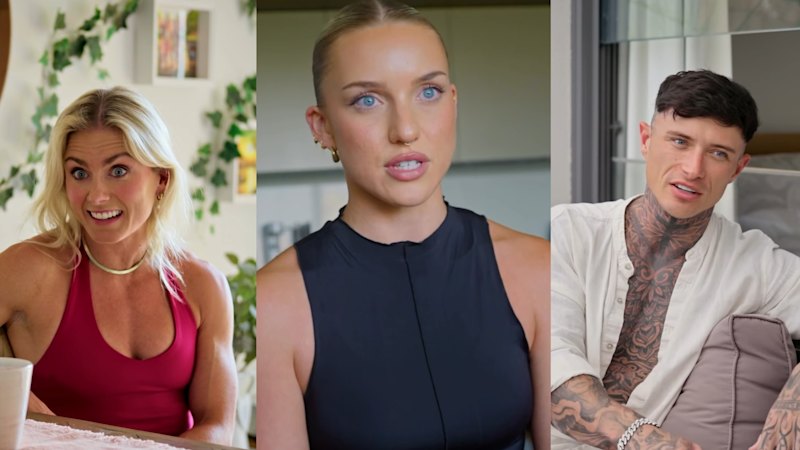
There’s Marcus, the most expensive male escort in Sydney. Sarah, the former child gymnast turned … gymnast? Henry, the “single man”. Willow, who “absolutely loves creating content and posting content”. And Ryan, who, at 31, says he’s “over the hill”.
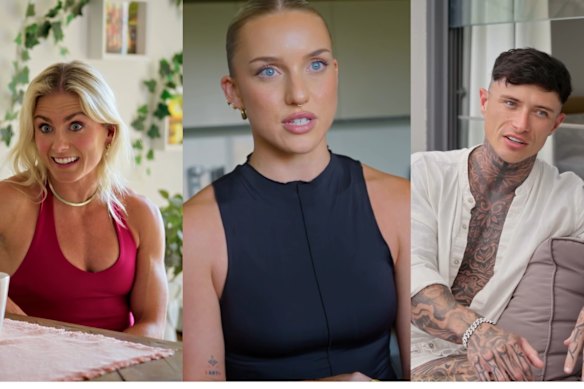 Say hello to Sarah, Willow and Marcus, three of the “stars” of Flex: The Series.Instagram
The cohesive force driving them together and onto the phone in your hand is that they all live in Sydney’s eastern suburbs, and appear to spend a lot of time exercising. Not to be impolite, but at first glance it all seems ropey enough to make Married at First Sight look like MasterChef Australia.
But the made-for-social reality TV “micro-series” might be more than an interesting experiment. Intended to look like it’s a backyard production, the only thing it can’t hide is the fact it has substantial TV dollars behind it.
Editor’s pick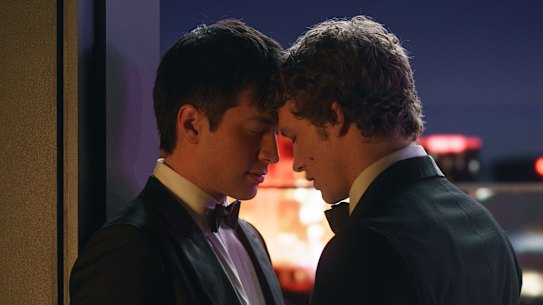
Here’s what we know: clips from Flex: The Series began circulating on social media a week ago. They have a Temu-MAFS vibe to them, which puts them into the genre shared by Netflix’s social media fright-fest Byron Baes, Ten’s horror-comedy The Shire and Foxtel’s infamous double helping: the magazine docu-soap Park Street and the footy spouse self-satire WAG Nation.
Here’s what is not immediately obvious: it is being produced by Ronde Media, a production company with a broad slate: the perennial staple Bondi Rescue, the sitcom Here Come The Habibs, the NITV documentary series The First Inventors and (with co-producer Easy Tiger) the Netflix drama series Territory.
The company’s most recently title is Billion Dollar Playground, set in the “exclusive world of the uber wealthy who pay a premium for high-end vacation homes”, for Foxtel.
But unlike its stablemates, Flex: The Series is a “micro” reality series, which means it comes in two-minute episodes, dropped daily via social channels. You’re expected to watch it on your phone, in between clips of comedian Matt Rife and cut-downs of Law & Order: SVU.
Micro-reality TV is still something of an emerging genre. Its better known sibling – “micro-drama” – is the home of addictive watch-on-your-phone mini-soap operas where secret billionaires and love-torn mistresses jockey with vindictive mothers-in-law and corporate mean girls.
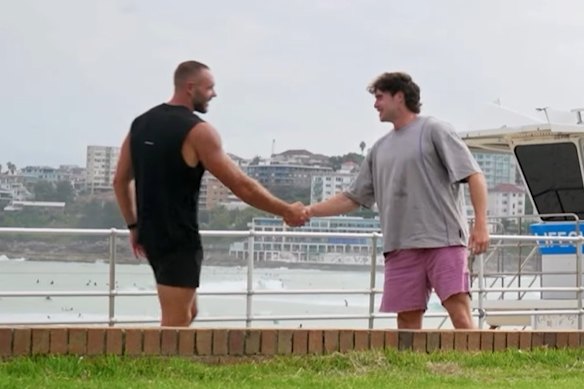 Ryan and Henry in Flex: The Series.Instagram
They have titles such as The Double Life of My Billionaire Husband, From One Night to Mrs Billionaire, The Maid’s Revenge and Hot Lesson: My Tempting Professor. The scripts read like reheated Mills & Boon novels, with titles borrowed from B-grade porn movies. Disposable plots. Disposable twists. (And, weirdly, a lot of billionaires.)
So, imagine if you will, the world of micro-reality TV. Or, put simply, if The Double Life of My Billionaire Husband is the Game of Thrones of the mobile phone TV drama world, then where exactly does Flex: The Series sit on the food chain?
But so far, no free-to-air broadcaster has owned up to backing the series. Seven, Ten and Foxtel have confirmed the series is not theirs. Nine has been contacted for comment. (Working theory: we can safely say it’s neither ABC nor SBS.)
As much as it seems easy to dismiss the series as social media noise, there’s no doubt there is a lot riding on it. Internationally, micro-drama, and its sibling, micro-reality TV, are exploding. Talk of both dominated the conversation at last year’s Mipcom television market in Cannes.
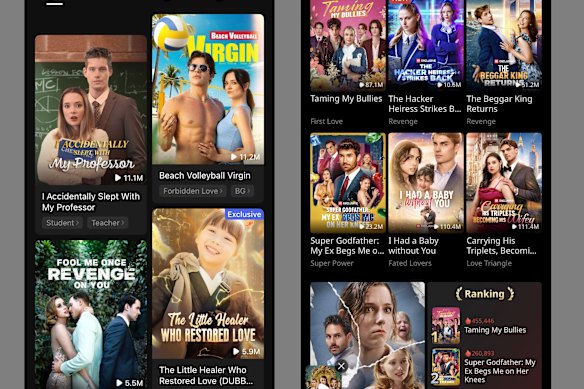 Big studios are moving into the vertical video soap drama market.
The offspring of low-budget soaps from South Korea, Europe and Latin America, micro-dramas are now an $US8 billion ($12.2 billion) market globally, and the best estimate is that the value of the business will double annually. There is no reason to imagine micro-reality TV will not follow suit.
Unlike big-ticket TV series, “micro” series are shot for less than $US500,000 apiece. (Translation: they are cheap.) And unlike big-ticket series, the market is dominated globally by non-American indies, mostly from Ukraine, Poland, Singapore and China.
Related Article
Hollywood, meanwhile, is catching up: Fox Entertainment signed a deal last year with Holywater, one of the world’s largest producers of short-form vertical content, with plans to produce more than 200 English-language vertical titles in the next two years, focused more on reality than scripted drama.
But for now, where does that leave Marcus, Sarah, Henry, Willow, Ryan and their Flex co-stars Ben and Maria?
Will they become the next Jules Robinson or Martha Kalifatidis, who parlayed their Married at First Sight fame into post-reality TV prominence? Or are they destined to join Simon, Tegan, Folksy and Beckaa from The Shire, as footnotes to a genre that gives new meaning to “coming off a low base”?
All of it lives and dies on how hard or fast Flex: The Series can flex its social media muscles. And whether it is trashy enough to capture the notoriously fickle social media zeitgeist.
Save
You have reached your maximum number of saved items.
Remove items from your saved list to add more.
 Michael Idato is the culture editor-at-large of The Sydney Morning Herald and The Age.Connect via X or email.From our partners