
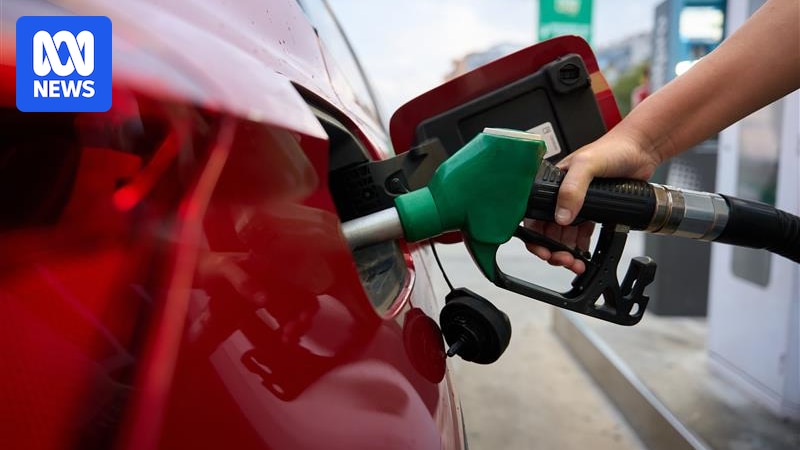
A shortage of fuel supplies in some locations and a dramatic price increase at the bowser have many of us feeling understandably on edge and worried about household budgets.
Motorists are being asked not to panic buy as the government offers assurances that Australia’s fuel supply is secure.
Experts say there are some practical things we can do to help get more out of a tank of fuel and to make our travel more sustainable.
How to improve fuel efficiency
The Royal Automobile Club of Queensland (RACQ) recommends drivers begin by tracking their fuel use.
“Keep a log of the distance you’ve travelled by resetting your odometer when you go to fill up and when you refuel again,” says Andrew Kirk, RACQ’s principal technical researcher.
“Then [you can] work out how many kilometres you’re getting to the litre so you can [eventually] track how much you’re saving.”
Heavy acceleration and hard braking cause engines to work harder, resulting in your car consuming more fuel in a short amount of time.
Loading…
“Toning that down and having safer, better driving practices, [can result] in up to 30 per cent reduction in fuel,” Peter Natrass from the Royal Automobile Association of South Australia (RAA) told ABC Radio Adelaide.
He says data from Monash University’s Accident Research Centre also shows that using cruise control on open roads can save up to five per cent in petrol use, while removing roof racks to improve aerodynamics can save 15 per cent.
He says lightening your load can have an impact too: “Anything you don’t need in the car or boot, take it out.”
When using air conditioning, choose a moderate to low temperature, maximum fan speed and the recirculation button.
More stories on fuel prices:
This means you are recirculating the already-cold cabin air rather than trying to cool the warm air coming from outside the car.
Mr Kirk says driving with the windows down if you’re travelling under 80 kilometres per hour can also save on fuel without creating drag.
Stay on top of car maintenance
Car wheels that are not aligned and under-inflated tyres can also cause a vehicle to work harder, so staying on top of car maintenance and checking air pressure (once a week) is recommended.
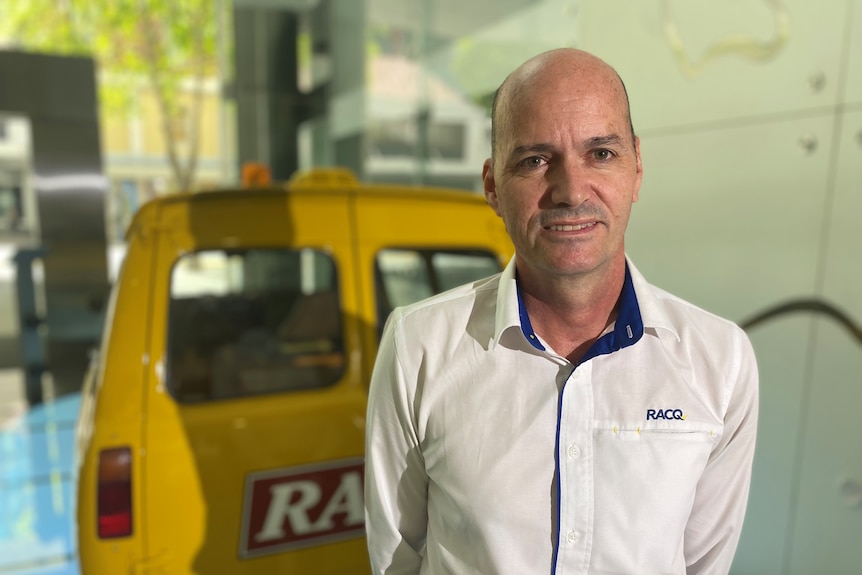
The RACQ’s Andrew Kirk says regular car maintenance can help improve fuel efficiency. (ABC News: Jemima Burt)
“You can go four to six PSI above the manufacturer’s pressures, that will give the tyre a bit more firmness and less flex in the sidewall,” Mr Kirk says.
“We found that depending on the driver and the vehicle, [doing that] had fuel savings of up to about 10 per cent.”
He says some cars also have an “eco mode” setting — short for economy or economical mode — which changes the way the car’s transmission works and may help fuel efficiency.
“Meaning that the engine’s not revving as much and saving you a little bit of fuel,” Mr Kirk says.
In some vehicles, it may also be beneficial to fork out more for higher-grade petrol.
Have you taken steps to reduce your fuel usage and spend? Share with us here.
Changing our travel behaviours
Matthew Burke is a former urban transport researcher based in Brisbane/Meanjin, who also heads Queensland’s peak cycling body.
“For most Australians, you can actually get rid of about one-fifth of your motoring pretty easily,” he says.

Matthew Burke says reducing car travel in small ways can lead to big savings. (ABC News: Greg Nelson)
Dr Burke recommends trying the following to reduce car use:
Carpooling with neighbours to work or schoolChildren riding bikes to school (if safe to do so)Car sharing apps through schoolsWorking from home one day per weekUsing low-powered, pedal-assisted e-bikes for shorter tripsReplacing one journey a week with public transport
“A lot of Australians in the cities do actually have a public transport option that can replace one or two journeys a week,” he says.
“It does mean sacrificing certain things or reorganising your life in little ways, but none of these are dramatic, huge changes to your lifestyle.
“And it’s not having to go out and buy a $35,000 electric car.”
Loading…