
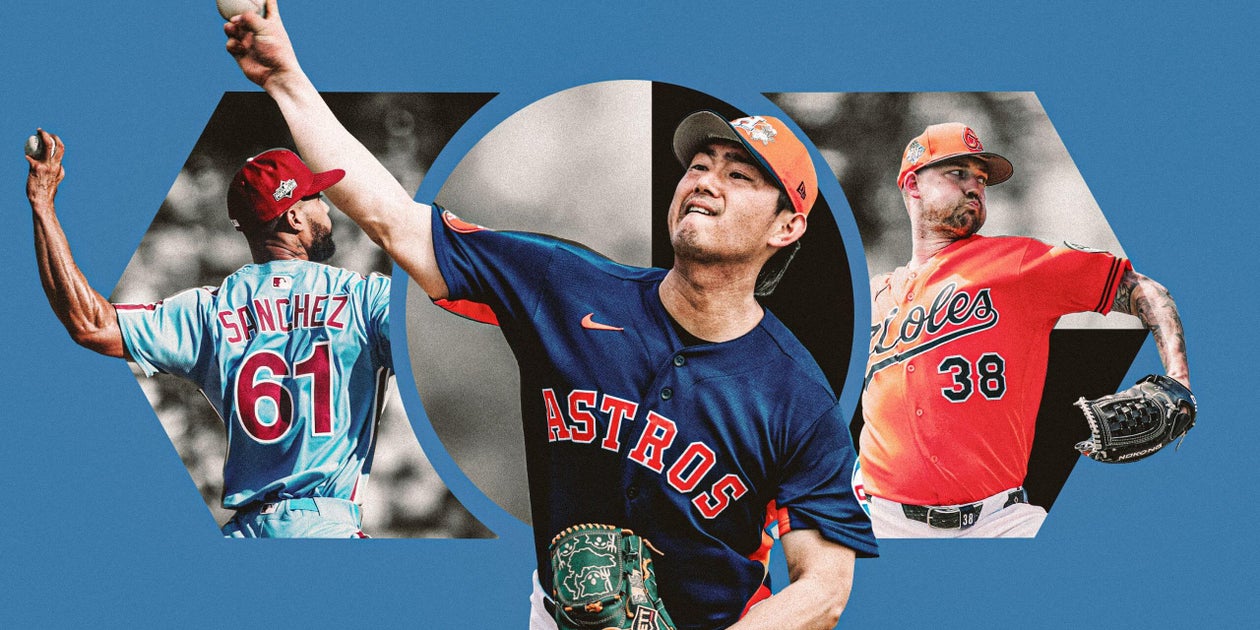
The very first pitcher rankings of the offseason carry a lot of noise with them. The first week of spring training is the time period with the most injury notes for the entire year, as players return to their organizations after time away training (or rehabbing) only to find that a nagging soreness is actually something worse and requires attention. At the very least, you have to update your rankings to reflect all the injury data coming through.
But the players are also playing in games. Not super high intensity games, outside of the World Baseball Classic, but still baseball games. They’re throwing pitches and at least trying to compete on some level. We probably shouldn’t pay attention to spring ERA — well actually, that number is almost never predictive so if we care about the future we should very rarely be looking at ERA — but there are things we can highlight. New pitches. New shapes. New velocities.
This is the kind of thing Stuff+ can capture, but with its own spring caveats. A pitcher airing it out in a two-inning stint is more like a reliever than a starter, and so you might want to apply the five-point reduction in stuff that a reliever experiences when he starts. And any model that forces league average to be 100 like Stuff+ does will also do some wonky things in the spring, when many players who are not going to be deemed major-league quality are still in the database. Deduct a couple points for that phenomenon, if you will.
Still, any starter who’s improved their stuff by more than 10 points deserves notice.
Spring Starters Stuff Surgers
We talked about some of these pitchers last week, and it’s not surprising that they are among the pitchers moving up in the rankings update this week. Someone like Shane McClanahan showing that he’s at the very least healthy, and maybe even approaching past levels of stuff — that’s something we should notice. The Cardinals on this list suggest better days ahead for that rotation, too.
On the flip side, there are some veterans to worry about. They might be taking it easy in the spring, but when you see Kevin Gausman, Sean Manaea and Joe Ryan all down double-digits in Stuff+, you have to wonder how age and injury will impact them. Players who are down and also returning from big injuries like Brandon Woodruff and Michael King give you a couple of reasons to worry.
Listed on the rankings today is last year’s Stuff+ number. Because of the spring caveats, that’s still a better sense of where their arsenal sits right now. But incorporated into these ranks is some information from their spring Stuff+ number, which will be listed in the copy of the rankings that will be available in this Google doc. I’ll also put some minor-league numbers in their as that season progresses.
It’s the last week-plus of drafting. Good luck in your leagues!
Team ARI ATH ATL BAL BOS CHC CHW CIN CLE COL DET HOU KCR LAA LAD MIA MIL MIN NYM NYY PHI PIT SDP SEA SFG STL TBR TEX TOR WSN

Loading
Try changing or resetting your filters to see more.
What is there to say about this power lefty coming off two straight Cy Young seasons that everyone doesn’t know by now? How about a quick discussion of his health risk, that wet blanket that hangs over all pitchers in the game today. It’s true that Tarik Skubal has had some injuries in the past, and that he throws hard (only three pitchers with 100+ innings last year had faster four-seamers), and that these things often lead to more injuries. But it’s also true that, at 97.6 mph on the fastball, he sits a whopping five miles per hour under his maximum (the average difference is just under three). Having a large gap like that has been shown by peer-reviewed research to be less stressful on the arm. Good news for once.
What is there to say about this power lefty coming off two straight Cy Young seasons that everyone doesn’t know by now? How about a quick discussion of his health risk, that wet blanket that hangs over all pitchers in the game today. It’s true that Tarik Skubal has had some injuries in the past, and that he throws hard (only three pitchers with 100+ innings last year had faster four-seamers), and that these things often lead to more injuries. But it’s also true that, at 97.6 mph on the fastball, he sits a whopping five miles per hour under his maximum (the average difference is just under three). Having a large gap like that has been shown by peer-reviewed research to be less stressful on the arm. Good news for once.
What is there to say about this power lefty coming off two straight Cy Young seasons that everyone doesn’t know by now? How about a quick discussion of his health risk, that wet blanket that hangs over all pitchers in the game today. It’s true that Tarik Skubal has had some injuries in the past, and that he throws hard (only three pitchers with 100+ innings last year had faster four-seamers), and that these things often lead to more injuries. But it’s also true that, at 97.6 mph on the fastball, he sits a whopping five miles per hour under his maximum (the average difference is just under three). Having a large gap like that has been shown by peer-reviewed research to be less stressful on the arm. Good news for once.

When it comes to injury risk, Paul Skenes provides a fascinating foil to Tarik Skubal. Because while his health bill has largely been clean so far, he sits only 2 mph off of his maximum fastball velocity. But he still gets an “A” in the health department, as well as all the other departments. If he did lose a little bit of gas, what would happen to his four-seamer with boring shape that’s already approaching league-average Stuff+? The good news this spring is that he’s added three inches of ride to his fastball, enough to overcome the inevitable half-tick drop in velocity on the pitch.
When it comes to injury risk, Paul Skenes provides a fascinating foil to Tarik Skubal. Because while his health bill has largely been clean so far, he sits only 2 mph off of his maximum fastball velocity. But he still gets an “A” in the health department, as well as all the other departments. If he did lose a little bit of gas, what would happen to his four-seamer with boring shape that’s already approaching league-average Stuff+? The good news this spring is that he’s added three inches of ride to his fastball, enough to overcome the inevitable half-tick drop in velocity on the pitch.
When it comes to injury risk, Paul Skenes provides a fascinating foil to Tarik Skubal. Because while his health bill has largely been clean so far, he sits only 2 mph off of his maximum fastball velocity. But he still gets an “A” in the health department, as well as all the other departments. If he did lose a little bit of gas, what would happen to his four-seamer with boring shape that’s already approaching league-average Stuff+? The good news this spring is that he’s added three inches of ride to his fastball, enough to overcome the inevitable half-tick drop in velocity on the pitch.
With a top-10 fastball in the league and the best cutter thrown by a starter (both by Stuff+), Garrett Crochet has an excellent foundation. For his long-term success, though, some of his evolution last year might be just as important as the dominance of those two pitches. He diversified. Throwing more sinkers and sliders may not seem ideal for a lefty (given the platoon splits on pitches like those), but they did make him a four-pitch power dude with command. He also debuted a new changeup that gets more drop than his old one and hasn’t allowed a hit yet this spring. Even his biggest fans have to admit there’s a little whiff of injury risk here still, though.
With a top-10 fastball in the league and the best cutter thrown by a starter (both by Stuff+), Garrett Crochet has an excellent foundation. For his long-term success, though, some of his evolution last year might be just as important as the dominance of those two pitches. He diversified. Throwing more sinkers and sliders may not seem ideal for a lefty (given the platoon splits on pitches like those), but they did make him a four-pitch power dude with command. He also debuted a new changeup that gets more drop than his old one and hasn’t allowed a hit yet this spring. Even his biggest fans have to admit there’s a little whiff of injury risk here still, though.
With a top-10 fastball in the league and the best cutter thrown by a starter (both by Stuff+), Garrett Crochet has an excellent foundation. For his long-term success, though, some of his evolution last year might be just as important as the dominance of those two pitches. He diversified. Throwing more sinkers and sliders may not seem ideal for a lefty (given the platoon splits on pitches like those), but they did make him a four-pitch power dude with command. He also debuted a new changeup that gets more drop than his old one and hasn’t allowed a hit yet this spring. Even his biggest fans have to admit there’s a little whiff of injury risk here still, though.
Last spring training, Cristopher Sánchez was a top-40 ranked young starting pitcher with some upside and some downside. He had a nasty sinker, kept the ball on the ground and didn’t walk guys — but he also had a below-average strikeout rate and seemed to need a cutter. After teasing us in the spring with a cutter, he broke out the old-fashioned way. He threw harder. Now 95+ on the fastball and 85+ on the slider, his stuff and strikeout numbers surged, and he looks like an ace. If the strikeout rates regress a little, he may end up being more of a high-end No. 2 starter, but that’s still an excellent combo of floor and ceiling. He ended up last year ranked fifth among starters.
Last spring training, Cristopher Sánchez was a top-40 ranked young starting pitcher with some upside and some downside. He had a nasty sinker, kept the ball on the ground and didn’t walk guys — but he also had a below-average strikeout rate and seemed to need a cutter. After teasing us in the spring with a cutter, he broke out the old-fashioned way. He threw harder. Now 95+ on the fastball and 85+ on the slider, his stuff and strikeout numbers surged, and he looks like an ace. If the strikeout rates regress a little, he may end up being more of a high-end No. 2 starter, but that’s still an excellent combo of floor and ceiling. He ended up last year ranked fifth among starters.
Last spring training, Cristopher Sánchez was a top-40 ranked young starting pitcher with some upside and some downside. He had a nasty sinker, kept the ball on the ground and didn’t walk guys — but he also had a below-average strikeout rate and seemed to need a cutter. After teasing us in the spring with a cutter, he broke out the old-fashioned way. He threw harder. Now 95+ on the fastball and 85+ on the slider, his stuff and strikeout numbers surged, and he looks like an ace. If the strikeout rates regress a little, he may end up being more of a high-end No. 2 starter, but that’s still an excellent combo of floor and ceiling. He ended up last year ranked fifth among starters.
A statistic like Stuff+ matters the most in the first five starts of a pitcher’s career. After that, you start folding in result statistics like strikeout minus walk rate, ground-ball rate and so on. So the fact that Yoshinobu Yamamoto’s Stuff+ is merely above-average for a starting pitcher is not incredibly important any more. He’s demonstrated that he can put results on the field, and even managed more than 170 innings for a Dodgers team that was running a six-man rotation out there — bulk doesn’t seem like a problem either. That stone-cold ace on the mound in the World Series Game 7 seems likely to put up another stunner of a season in 2026.
A statistic like Stuff+ matters the most in the first five starts of a pitcher’s career. After that, you start folding in result statistics like strikeout minus walk rate, ground-ball rate and so on. So the fact that Yoshinobu Yamamoto’s Stuff+ is merely above-average for a starting pitcher is not incredibly important any more. He’s demonstrated that he can put results on the field, and even managed more than 170 innings for a Dodgers team that was running a six-man rotation out there — bulk doesn’t seem like a problem either. That stone-cold ace on the mound in the World Series Game 7 seems likely to put up another stunner of a season in 2026.
A statistic like Stuff+ matters the most in the first five starts of a pitcher’s career. After that, you start folding in result statistics like strikeout minus walk rate, ground-ball rate and so on. So the fact that Yoshinobu Yamamoto’s Stuff+ is merely above-average for a starting pitcher is not incredibly important any more. He’s demonstrated that he can put results on the field, and even managed more than 170 innings for a Dodgers team that was running a six-man rotation out there — bulk doesn’t seem like a problem either. That stone-cold ace on the mound in the World Series Game 7 seems likely to put up another stunner of a season in 2026.
Ever since he added a sinker, Hunter Brown has been an ace. Over the last two seasons, he’s top 15 in innings and strikeouts while putting up a 2.94 ERA that would be fourth among qualified starters. A tiny orange flag popped up in the second half last year, when his strikeout rate dropped to 24 percent and his velo was down a slight bit. But his arsenal still has some remaining upside he can mine: the cutter (6 percent) and curveball (18 percent) are both well-regarded by pitching models. He could throw those more and become a little more deceptive to hitters once again.
Ever since he added a sinker, Hunter Brown has been an ace. Over the last two seasons, he’s top 15 in innings and strikeouts while putting up a 2.94 ERA that would be fourth among qualified starters. A tiny orange flag popped up in the second half last year, when his strikeout rate dropped to 24 percent and his velo was down a slight bit. But his arsenal still has some remaining upside he can mine: the cutter (6 percent) and curveball (18 percent) are both well-regarded by pitching models. He could throw those more and become a little more deceptive to hitters once again.
Ever since he added a sinker, Hunter Brown has been an ace. Over the last two seasons, he’s top 15 in innings and strikeouts while putting up a 2.94 ERA that would be fourth among qualified starters. A tiny orange flag popped up in the second half last year, when his strikeout rate dropped to 24 percent and his velo was down a slight bit. But his arsenal still has some remaining upside he can mine: the cutter (6 percent) and curveball (18 percent) are both well-regarded by pitching models. He could throw those more and become a little more deceptive to hitters once again.
In terms of some advanced metrics, Max Fried looked like he was virtually the same in 2024 and 2025. That wasn’t really the case. He had a completely new sinker that he threw more often last season, his slider and sweeper separated further into two better pitches, he had career-best ride on his four-seamer, his cutter gained five ticks of gas, his changeup dropped more and he threw almost everything just a little harder from a slightly lower arm angle. So yeah, he was as good as he’s ever been — maybe even better, considering how diversified his arsenal is now in New York.
In terms of some advanced metrics, Max Fried looked like he was virtually the same in 2024 and 2025. That wasn’t really the case. He had a completely new sinker that he threw more often last season, his slider and sweeper separated further into two better pitches, he had career-best ride on his four-seamer, his cutter gained five ticks of gas, his changeup dropped more and he threw almost everything just a little harder from a slightly lower arm angle. So yeah, he was as good as he’s ever been — maybe even better, considering how diversified his arsenal is now in New York.
In terms of some advanced metrics, Max Fried looked like he was virtually the same in 2024 and 2025. That wasn’t really the case. He had a completely new sinker that he threw more often last season, his slider and sweeper separated further into two better pitches, he had career-best ride on his four-seamer, his cutter gained five ticks of gas, his changeup dropped more and he threw almost everything just a little harder from a slightly lower arm angle. So yeah, he was as good as he’s ever been — maybe even better, considering how diversified his arsenal is now in New York.
Forearm tightness. Around that injury, Logan Gilbert looked as good as ever under the hood, with the best strikeout rate of his career, the customary low walk rate and his ability to stifle balls in play. Now a splitter guy, his awesome extension makes it hard on hitters to put their “A” swing on any of his pitches, let alone the dip-diving changeup. But there was that injury, and he did look a little gassed in the playoffs. How much are you going to let that bother you? In the worst fantasy year of his career, he was still a top-30 starting pitcher overall.
Forearm tightness. Around that injury, Logan Gilbert looked as good as ever under the hood, with the best strikeout rate of his career, the customary low walk rate and his ability to stifle balls in play. Now a splitter guy, his awesome extension makes it hard on hitters to put their “A” swing on any of his pitches, let alone the dip-diving changeup. But there was that injury, and he did look a little gassed in the playoffs. How much are you going to let that bother you? In the worst fantasy year of his career, he was still a top-30 starting pitcher overall.
Forearm tightness. Around that injury, Logan Gilbert looked as good as ever under the hood, with the best strikeout rate of his career, the customary low walk rate and his ability to stifle balls in play. Now a splitter guy, his awesome extension makes it hard on hitters to put their “A” swing on any of his pitches, let alone the dip-diving changeup. But there was that injury, and he did look a little gassed in the playoffs. How much are you going to let that bother you? In the worst fantasy year of his career, he was still a top-30 starting pitcher overall.
This health grade for Bryan Woo seems a little rosy. It probably doesn’t include his college Tommy John surgery, and though some of Woo’s nicks and cuts have been to his body rather than his arm, they seem relevant. Last year, he ran out of gas at the end of the season and a right pec injury kept him from starting in the playoffs. He set a career high in innings with 191, an increase of more than 50 over his previous high. While that kind of jump is not a definite precursor to injury, it certainly seems to be at least an orange flag when combined with his history. He’s so, so good on the field, though, even if it’s really fastball-heavy.
This health grade for Bryan Woo seems a little rosy. It probably doesn’t include his college Tommy John surgery, and though some of Woo’s nicks and cuts have been to his body rather than his arm, they seem relevant. Last year, he ran out of gas at the end of the season and a right pec injury kept him from starting in the playoffs. He set a career high in innings with 191, an increase of more than 50 over his previous high. While that kind of jump is not a definite precursor to injury, it certainly seems to be at least an orange flag when combined with his history. He’s so, so good on the field, though, even if it’s really fastball-heavy.
This health grade for Bryan Woo seems a little rosy. It probably doesn’t include his college Tommy John surgery, and though some of Woo’s nicks and cuts have been to his body rather than his arm, they seem relevant. Last year, he ran out of gas at the end of the season and a right pec injury kept him from starting in the playoffs. He set a career high in innings with 191, an increase of more than 50 over his previous high. While that kind of jump is not a definite precursor to injury, it certainly seems to be at least an orange flag when combined with his history. He’s so, so good on the field, though, even if it’s really fastball-heavy.
Just when the 2024 season workload made us think that Chris Sale might’ve found some extra longevity after his trade to Atlanta, 2025 reminded us that while he’s still an ace, he’s also 36 years old. This time, the culprit was a freak injury: a fractured ribcage suffered on an acrobatic defensive play. But age alone, even without Sale’s own history, means this kind of thing will happen more often. He’s nasty, dynamic and on a team that will hand him wins, but the number of innings Sale will put up is definitely in question. If your league doesn’t have injured list slots, Sale should probably be ranked a little lower.
Just when the 2024 season workload made us think that Chris Sale might’ve found some extra longevity after his trade to Atlanta, 2025 reminded us that while he’s still an ace, he’s also 36 years old. This time, the culprit was a freak injury: a fractured ribcage suffered on an acrobatic defensive play. But age alone, even without Sale’s own history, means this kind of thing will happen more often. He’s nasty, dynamic and on a team that will hand him wins, but the number of innings Sale will put up is definitely in question. If your league doesn’t have injured list slots, Sale should probably be ranked a little lower.
Just when the 2024 season workload made us think that Chris Sale might’ve found some extra longevity after his trade to Atlanta, 2025 reminded us that while he’s still an ace, he’s also 36 years old. This time, the culprit was a freak injury: a fractured ribcage suffered on an acrobatic defensive play. But age alone, even without Sale’s own history, means this kind of thing will happen more often. He’s nasty, dynamic and on a team that will hand him wins, but the number of innings Sale will put up is definitely in question. If your league doesn’t have injured list slots, Sale should probably be ranked a little lower.
It ended up just being shoulder inflammation. Among his piers in this little mini-tier of pitchers with Cy-worth upside and health risk, George Kirby’s inflammation was a comparative blip. He’s had some soreness there in other years, but he’s mostly posted and seems like a better bet to put up 180 innings than the five or six guys ahead of him on the list. Should he just leapfrog them and land higher up then? Possibly. But his projections aren’t quite as good. He’s more command than stuff, and his career strikeout rate is about 1 percentage point higher than league average. So much of this part of the rankings is negotating that trade-off between per-inning upside and volume downside.
It ended up just being shoulder inflammation. Among his piers in this little mini-tier of pitchers with Cy-worth upside and health risk, George Kirby’s inflammation was a comparative blip. He’s had some soreness there in other years, but he’s mostly posted and seems like a better bet to put up 180 innings than the five or six guys ahead of him on the list. Should he just leapfrog them and land higher up then? Possibly. But his projections aren’t quite as good. He’s more command than stuff, and his career strikeout rate is about 1 percentage point higher than league average. So much of this part of the rankings is negotating that trade-off between per-inning upside and volume downside.
It ended up just being shoulder inflammation. Among his piers in this little mini-tier of pitchers with Cy-worth upside and health risk, George Kirby’s inflammation was a comparative blip. He’s had some soreness there in other years, but he’s mostly posted and seems like a better bet to put up 180 innings than the five or six guys ahead of him on the list. Should he just leapfrog them and land higher up then? Possibly. But his projections aren’t quite as good. He’s more command than stuff, and his career strikeout rate is about 1 percentage point higher than league average. So much of this part of the rankings is negotating that trade-off between per-inning upside and volume downside.
A wider arsenal took some of the pressure off of Logan Webb’s best two pitches — the sinker and the changeup — and pushed the Giants’ ace to the best season of his career in 2025. Should he repeat that 26 percent strikeout rate and get a little better luck on balls in play this season, there might be one more level for the pitcher with the highest floor in baseball. If he gets there, he probably nets some personal hardware and definitely benefits those fantasy managers who believed in him. Most likely, the mid-level strikeout rate makes him a solid fantasy No. 2 starter who fits nicely with an injury risk ace.
A wider arsenal took some of the pressure off of Logan Webb’s best two pitches — the sinker and the changeup — and pushed the Giants’ ace to the best season of his career in 2025. Should he repeat that 26 percent strikeout rate and get a little better luck on balls in play this season, there might be one more level for the pitcher with the highest floor in baseball. If he gets there, he probably nets some personal hardware and definitely benefits those fantasy managers who believed in him. Most likely, the mid-level strikeout rate makes him a solid fantasy No. 2 starter who fits nicely with an injury risk ace.
A wider arsenal took some of the pressure off of Logan Webb’s best two pitches — the sinker and the changeup — and pushed the Giants’ ace to the best season of his career in 2025. Should he repeat that 26 percent strikeout rate and get a little better luck on balls in play this season, there might be one more level for the pitcher with the highest floor in baseball. If he gets there, he probably nets some personal hardware and definitely benefits those fantasy managers who believed in him. Most likely, the mid-level strikeout rate makes him a solid fantasy No. 2 starter who fits nicely with an injury risk ace.
Statistically speaking, Framber Valdez has been a rock. Last year was probably his worst season, fantasy-wise, and he still was a top 40 starting pitcher because he kept the ball on the ground and paired that with his customary above-average strikeout rate, which is not usual for a worm-burner. The command is not great, and it was his worst walk rate in four years, but command isn’t as sticky year to year as stuff. If he returns to his 2023-24 value, he’ll be a top 20 starting pitcher and well worth this rank. If the decline has started, he’ll still return mid-rotation value. Great floor pick.
Statistically speaking, Framber Valdez has been a rock. Last year was probably his worst season, fantasy-wise, and he still was a top 40 starting pitcher because he kept the ball on the ground and paired that with his customary above-average strikeout rate, which is not usual for a worm-burner. The command is not great, and it was his worst walk rate in four years, but command isn’t as sticky year to year as stuff. If he returns to his 2023-24 value, he’ll be a top 20 starting pitcher and well worth this rank. If the decline has started, he’ll still return mid-rotation value. Great floor pick.
Statistically speaking, Framber Valdez has been a rock. Last year was probably his worst season, fantasy-wise, and he still was a top 40 starting pitcher because he kept the ball on the ground and paired that with his customary above-average strikeout rate, which is not usual for a worm-burner. The command is not great, and it was his worst walk rate in four years, but command isn’t as sticky year to year as stuff. If he returns to his 2023-24 value, he’ll be a top 20 starting pitcher and well worth this rank. If the decline has started, he’ll still return mid-rotation value. Great floor pick.
The promise is tantalizing. With a 98-mph fastball, an 86-mph power slider, a 90-mph changeup and a couple more nasty pitches to boot, Eury Pérez has everything he needs to make a Cristopher Sánchez-type leap into the top 15. Like the young Phillie, Pérez had top-10 overall Stuff+ among starters last year. Pérez’s personal obstacle is a little bit of homeritis, but he has a great home park and there’s no glaring reason he can’t leap this hurdle and be the next Marlins ace.
The promise is tantalizing. With a 98-mph fastball, an 86-mph power slider, a 90-mph changeup and a couple more nasty pitches to boot, Eury Pérez has everything he needs to make a Cristopher Sánchez-type leap into the top 15. Like the young Phillie, Pérez had top-10 overall Stuff+ among starters last year. Pérez’s personal obstacle is a little bit of homeritis, but he has a great home park and there’s no glaring reason he can’t leap this hurdle and be the next Marlins ace.
The promise is tantalizing. With a 98-mph fastball, an 86-mph power slider, a 90-mph changeup and a couple more nasty pitches to boot, Eury Pérez has everything he needs to make a Cristopher Sánchez-type leap into the top 15. Like the young Phillie, Pérez had top-10 overall Stuff+ among starters last year. Pérez’s personal obstacle is a little bit of homeritis, but he has a great home park and there’s no glaring reason he can’t leap this hurdle and be the next Marlins ace.
Kyle Bradish came back and pitched after his Tommy John surgery, and though the stuff numbers weren’t quite as good as before, the strikeout rate certainly was. He retired nearly 40 percent of opposing batters by way of the K, so the breaking ball at least was really working. Whether or not there really is a grace period after Tommy John, he seems healthy now, and at the point in his career where it’s unlikely the Orioles are going to baby him innings-wise. You take some innings off the projection to reflect the risk, but otherwise, he’s good to go.
Kyle Bradish came back and pitched after his Tommy John surgery, and though the stuff numbers weren’t quite as good as before, the strikeout rate certainly was. He retired nearly 40 percent of opposing batters by way of the K, so the breaking ball at least was really working. Whether or not there really is a grace period after Tommy John, he seems healthy now, and at the point in his career where it’s unlikely the Orioles are going to baby him innings-wise. You take some innings off the projection to reflect the risk, but otherwise, he’s good to go.
Kyle Bradish came back and pitched after his Tommy John surgery, and though the stuff numbers weren’t quite as good as before, the strikeout rate certainly was. He retired nearly 40 percent of opposing batters by way of the K, so the breaking ball at least was really working. Whether or not there really is a grace period after Tommy John, he seems healthy now, and at the point in his career where it’s unlikely the Orioles are going to baby him innings-wise. You take some innings off the projection to reflect the risk, but otherwise, he’s good to go.
A couple of elbow surgeries sidelined Cole Ragans for a while in the Rangers organization. In the Royals organization after a trade, he broke free of perpetual rehab and became a capital ‘S’ stud in 2024 and finished fourth in the American League Cy Young voting. Last year, though, it was a new affliction: a rotator cuff strain, on the heels of a groin strain. The bad news was that it limited him to just over 60 innings and kept him out of the top 100 starting pitchers on the year. The good news was that he came back and showed the same stuff that launched his career just a year before. With that wide arsenal of high-stuff pitches and good command, he’s on a short list of pitchers who could win hardware this year. Which is why you take on the injury risk.
A couple of elbow surgeries sidelined Cole Ragans for a while in the Rangers organization. In the Royals organization after a trade, he broke free of perpetual rehab and became a capital ‘S’ stud in 2024 and finished fourth in the American League Cy Young voting. Last year, though, it was a new affliction: a rotator cuff strain, on the heels of a groin strain. The bad news was that it limited him to just over 60 innings and kept him out of the top 100 starting pitchers on the year. The good news was that he came back and showed the same stuff that launched his career just a year before. With that wide arsenal of high-stuff pitches and good command, he’s on a short list of pitchers who could win hardware this year. Which is why you take on the injury risk.
A couple of elbow surgeries sidelined Cole Ragans for a while in the Rangers organization. In the Royals organization after a trade, he broke free of perpetual rehab and became a capital ‘S’ stud in 2024 and finished fourth in the American League Cy Young voting. Last year, though, it was a new affliction: a rotator cuff strain, on the heels of a groin strain. The bad news was that it limited him to just over 60 innings and kept him out of the top 100 starting pitchers on the year. The good news was that he came back and showed the same stuff that launched his career just a year before. With that wide arsenal of high-stuff pitches and good command, he’s on a short list of pitchers who could win hardware this year. Which is why you take on the injury risk.
That’s a nice projection for Jacob deGrom. Coming off a season in which he threw more than 170 innings for the first time since 2019, and did so sitting once again in the high 90s with his fastball, it makes sense. He was almost vintage. But it was his worst fastball velocity since 2019, his worst strikeout rate since 2016, his worst homer rate of his career and his whiff rate wasn’t quite there either. Even the walk rate was a five-year high. You make him your ace if you have injury list slots, and if you are in a shallower league where the alternative when he’s out won’t be so bad. In deep leagues with no IL, it’s time to decide how many innings you think he’ll pitch this year.
That’s a nice projection for Jacob deGrom. Coming off a season in which he threw more than 170 innings for the first time since 2019, and did so sitting once again in the high 90s with his fastball, it makes sense. He was almost vintage. But it was his worst fastball velocity since 2019, his worst strikeout rate since 2016, his worst homer rate of his career and his whiff rate wasn’t quite there either. Even the walk rate was a five-year high. You make him your ace if you have injury list slots, and if you are in a shallower league where the alternative when he’s out won’t be so bad. In deep leagues with no IL, it’s time to decide how many innings you think he’ll pitch this year.
That’s a nice projection for Jacob deGrom. Coming off a season in which he threw more than 170 innings for the first time since 2019, and did so sitting once again in the high 90s with his fastball, it makes sense. He was almost vintage. But it was his worst fastball velocity since 2019, his worst strikeout rate since 2016, his worst homer rate of his career and his whiff rate wasn’t quite there either. Even the walk rate was a five-year high. You make him your ace if you have injury list slots, and if you are in a shallower league where the alternative when he’s out won’t be so bad. In deep leagues with no IL, it’s time to decide how many innings you think he’ll pitch this year.
Freddy Peralta was the seventh-best starting pitcher in fantasy baseball last year. The year before, though, he was the 41st-best. He’s had some good and bad streaks along the way, so it could be tempting to call last year one of the good streaks and say he’s really more of a mid-level pitcher than a top one. But he’s gone to work over the years, improving his breaking balls and changeup to the point where he’s a full-arsenal starter with decent command. And now he’s in a nice home park. Maybe he actually needs to move up!
Freddy Peralta was the seventh-best starting pitcher in fantasy baseball last year. The year before, though, he was the 41st-best. He’s had some good and bad streaks along the way, so it could be tempting to call last year one of the good streaks and say he’s really more of a mid-level pitcher than a top one. But he’s gone to work over the years, improving his breaking balls and changeup to the point where he’s a full-arsenal starter with decent command. And now he’s in a nice home park. Maybe he actually needs to move up!
Freddy Peralta was the seventh-best starting pitcher in fantasy baseball last year. The year before, though, he was the 41st-best. He’s had some good and bad streaks along the way, so it could be tempting to call last year one of the good streaks and say he’s really more of a mid-level pitcher than a top one. But he’s gone to work over the years, improving his breaking balls and changeup to the point where he’s a full-arsenal starter with decent command. And now he’s in a nice home park. Maybe he actually needs to move up!
Joe Ryan may not throw as hard as the other pitchers around him at this ranking, but his unique arm slot and fastball shape combination, plus his willingness to pitch up in the zone even if it means more homers, has made him a high-strikeout No. 2 starter for a while now. Only 14 pitchers have more strikeouts than Ryan since 2022. Over that time frame, he’s figured out that his splitter is his best secondary, that two breaking balls make each of them play up, and that a sinker could be a real weapon for him. Expect 160+ innings of a good ERA with an iffy home run rate, and maybe you’ll be pleasantly surprised.
Joe Ryan may not throw as hard as the other pitchers around him at this ranking, but his unique arm slot and fastball shape combination, plus his willingness to pitch up in the zone even if it means more homers, has made him a high-strikeout No. 2 starter for a while now. Only 14 pitchers have more strikeouts than Ryan since 2022. Over that time frame, he’s figured out that his splitter is his best secondary, that two breaking balls make each of them play up, and that a sinker could be a real weapon for him. Expect 160+ innings of a good ERA with an iffy home run rate, and maybe you’ll be pleasantly surprised.
Joe Ryan may not throw as hard as the other pitchers around him at this ranking, but his unique arm slot and fastball shape combination, plus his willingness to pitch up in the zone even if it means more homers, has made him a high-strikeout No. 2 starter for a while now. Only 14 pitchers have more strikeouts than Ryan since 2022. Over that time frame, he’s figured out that his splitter is his best secondary, that two breaking balls make each of them play up, and that a sinker could be a real weapon for him. Expect 160+ innings of a good ERA with an iffy home run rate, and maybe you’ll be pleasantly surprised.
It seems like pitching is so secondary to Shohei Ohtani’s overall value, but in certain fantasy leagues, he’s draftable separately as a pitcher. He has a career 3.00 ERA built on impeccable stuff and poor command, and hopefully his elbow is in good shape right now. He could easily repeat his 2022 season, when he threw 166 innings with a 2.33 ERA. But that was three years ago, and it’s worth wondering if the double duty he puts in as a hitter and pitcher will always make him a little riskier on the mound, health-wise at least. Then one has to consider the way the Dodgers usually use six-man rotations and reduce regular season innings in anticipation of long October runs. He hasn’t pitched in any official spring games so far, but with live bullpens and side sessions, he’s kept up the pace and is expected to at least go three or four innings in his first regular season start.
It seems like pitching is so secondary to Shohei Ohtani’s overall value, but in certain fantasy leagues, he’s draftable separately as a pitcher. He has a career 3.00 ERA built on impeccable stuff and poor command, and hopefully his elbow is in good shape right now. He could easily repeat his 2022 season, when he threw 166 innings with a 2.33 ERA. But that was three years ago, and it’s worth wondering if the double duty he puts in as a hitter and pitcher will always make him a little riskier on the mound, health-wise at least. Then one has to consider the way the Dodgers usually use six-man rotations and reduce regular season innings in anticipation of long October runs. He hasn’t pitched in any official spring games so far, but with live bullpens and side sessions, he’s kept up the pace and is expected to at least go three or four innings in his first regular season start.
It seems like pitching is so secondary to Shohei Ohtani’s overall value, but in certain fantasy leagues, he’s draftable separately as a pitcher. He has a career 3.00 ERA built on impeccable stuff and poor command, and hopefully his elbow is in good shape right now. He could easily repeat his 2022 season, when he threw 166 innings with a 2.33 ERA. But that was three years ago, and it’s worth wondering if the double duty he puts in as a hitter and pitcher will always make him a little riskier on the mound, health-wise at least. Then one has to consider the way the Dodgers usually use six-man rotations and reduce regular season innings in anticipation of long October runs. He hasn’t pitched in any official spring games so far, but with live bullpens and side sessions, he’s kept up the pace and is expected to at least go three or four innings in his first regular season start.
It’s tempting just to re-write the Blake Snell blurb for Tyler Glasnow, who also shines bright in small samples in any given season. But there’s a little more worry about the stuff for the righty. He lost gas last season. A tick here or there, but nearly two full ticks on the curveball. His stuff number is dropping every year, and his command numbers oscillate from bad to average. He’s still mid-90s with great spin, but the likelihood of getting both excellent stuff and bulk from Glasnow goes down every year.
It’s tempting just to re-write the Blake Snell blurb for Tyler Glasnow, who also shines bright in small samples in any given season. But there’s a little more worry about the stuff for the righty. He lost gas last season. A tick here or there, but nearly two full ticks on the curveball. His stuff number is dropping every year, and his command numbers oscillate from bad to average. He’s still mid-90s with great spin, but the likelihood of getting both excellent stuff and bulk from Glasnow goes down every year.
It’s tempting just to re-write the Blake Snell blurb for Tyler Glasnow, who also shines bright in small samples in any given season. But there’s a little more worry about the stuff for the righty. He lost gas last season. A tick here or there, but nearly two full ticks on the curveball. His stuff number is dropping every year, and his command numbers oscillate from bad to average. He’s still mid-90s with great spin, but the likelihood of getting both excellent stuff and bulk from Glasnow goes down every year.
There are leagues where Drew Rasmussen is less valuable, for sure. He ranks 110th out of 123 pitchers with 350+ innings over the last four years in quality starts because he doesn’t go deep into games. His health risk probably isn’t fully captured here because of the multiple arm surgeries he had in college that aren’t included in the data set. But twice now he’s thrown around 150 innings with an ERA that starts with a “two.” The stuff is undeniable, and despite a downturn in strikeout rate, seems to be back after his latest surgery. Just look at that projection, it’s too tasty to pass up here.
There are leagues where Drew Rasmussen is less valuable, for sure. He ranks 110th out of 123 pitchers with 350+ innings over the last four years in quality starts because he doesn’t go deep into games. His health risk probably isn’t fully captured here because of the multiple arm surgeries he had in college that aren’t included in the data set. But twice now he’s thrown around 150 innings with an ERA that starts with a “two.” The stuff is undeniable, and despite a downturn in strikeout rate, seems to be back after his latest surgery. Just look at that projection, it’s too tasty to pass up here.
There are leagues where Drew Rasmussen is less valuable, for sure. He ranks 110th out of 123 pitchers with 350+ innings over the last four years in quality starts because he doesn’t go deep into games. His health risk probably isn’t fully captured here because of the multiple arm surgeries he had in college that aren’t included in the data set. But twice now he’s thrown around 150 innings with an ERA that starts with a “two.” The stuff is undeniable, and despite a downturn in strikeout rate, seems to be back after his latest surgery. Just look at that projection, it’s too tasty to pass up here.
It’s true that Dylan Cease sometimes underperforms his peripherals because he’s a two-pitch pitcher with iffy command. It’s also true that his peripherals are often top of the league, and that he can be super valuable even if he doesn’t attain all of that promise. The ride can be wild — he was the 10th-best starter in 2024, and the 99th-best in 2025 — but there’s also the fact that Cease has started to throw other pitches more often, and is joining a new team that may have new coaching for him. Over the last two seasons, Cease’s K-BB ranks seventh, among the giants of the game. That’s the short reason for this ranking. Though it should be noted that there’s no new changeup this spring, and the arsenal looks about the same as usual.
It’s true that Dylan Cease sometimes underperforms his peripherals because he’s a two-pitch pitcher with iffy command. It’s also true that his peripherals are often top of the league, and that he can be super valuable even if he doesn’t attain all of that promise. The ride can be wild — he was the 10th-best starter in 2024, and the 99th-best in 2025 — but there’s also the fact that Cease has started to throw other pitches more often, and is joining a new team that may have new coaching for him. Over the last two seasons, Cease’s K-BB ranks seventh, among the giants of the game. That’s the short reason for this ranking. Though it should be noted that there’s no new changeup this spring, and the arsenal looks about the same as usual.
It’s true that Dylan Cease sometimes underperforms his peripherals because he’s a two-pitch pitcher with iffy command. It’s also true that his peripherals are often top of the league, and that he can be super valuable even if he doesn’t attain all of that promise. The ride can be wild — he was the 10th-best starter in 2024, and the 99th-best in 2025 — but there’s also the fact that Cease has started to throw other pitches more often, and is joining a new team that may have new coaching for him. Over the last two seasons, Cease’s K-BB ranks seventh, among the giants of the game. That’s the short reason for this ranking. Though it should be noted that there’s no new changeup this spring, and the arsenal looks about the same as usual.
What’s the risk with a guy who sits 99 on the fastball, has a mid-90s slider and a high-80s curveball? Well with Jacob Misiorowski, it’s two-fold. The first is that he struggles with fastball command. He’s found a bit of a way out with the slider, which he can he throw for strikes when he needs one. Hitters may still be able to pigeonhole him in those counts, but they’ll still have to hit a 94-mph slider. The other risk is just that he throws so dang hard, there has to be more stress than usual on his elbow ligament. Otherwise, the world is his oyster.
What’s the risk with a guy who sits 99 on the fastball, has a mid-90s slider and a high-80s curveball? Well with Jacob Misiorowski, it’s two-fold. The first is that he struggles with fastball command. He’s found a bit of a way out with the slider, which he can he throw for strikes when he needs one. Hitters may still be able to pigeonhole him in those counts, but they’ll still have to hit a 94-mph slider. The other risk is just that he throws so dang hard, there has to be more stress than usual on his elbow ligament. Otherwise, the world is his oyster.
What’s the risk with a guy who sits 99 on the fastball, has a mid-90s slider and a high-80s curveball? Well with Jacob Misiorowski, it’s two-fold. The first is that he struggles with fastball command. He’s found a bit of a way out with the slider, which he can he throw for strikes when he needs one. Hitters may still be able to pigeonhole him in those counts, but they’ll still have to hit a 94-mph slider. The other risk is just that he throws so dang hard, there has to be more stress than usual on his elbow ligament. Otherwise, the world is his oyster.
A strikeout rate over 30 percent, a walk rate that was better than league average, his customary two-plane mid-90s fastball, his killer changeup — it was all there for Emmet Sheehan coming back from Tommy John surgery in 2025. If there is any worry, it’s that the Stuff+ model liked his changeup better than either of his breaking balls, and that he probably got to his good results on the slider mostly by command. He doesn’t have a long history of command and had below-average grades on that tool as a prospect. Last year was the outlier in terms of walks and command metrics. Overall, the stuff is probably good enough to survive some command regression, though, and he’s comfortably in the top six of that Dodgers rotation.
A strikeout rate over 30 percent, a walk rate that was better than league average, his customary two-plane mid-90s fastball, his killer changeup — it was all there for Emmet Sheehan coming back from Tommy John surgery in 2025. If there is any worry, it’s that the Stuff+ model liked his changeup better than either of his breaking balls, and that he probably got to his good results on the slider mostly by command. He doesn’t have a long history of command and had below-average grades on that tool as a prospect. Last year was the outlier in terms of walks and command metrics. Overall, the stuff is probably good enough to survive some command regression, though, and he’s comfortably in the top six of that Dodgers rotation.
A strikeout rate over 30 percent, a walk rate that was better than league average, his customary two-plane mid-90s fastball, his killer changeup — it was all there for Emmet Sheehan coming back from Tommy John surgery in 2025. If there is any worry, it’s that the Stuff+ model liked his changeup better than either of his breaking balls, and that he probably got to his good results on the slider mostly by command. He doesn’t have a long history of command and had below-average grades on that tool as a prospect. Last year was the outlier in terms of walks and command metrics. Overall, the stuff is probably good enough to survive some command regression, though, and he’s comfortably in the top six of that Dodgers rotation.
Pure rocket fuel is what comes out of Chase Burns’ right arm. He sat 99 mph last season with a 91-mph slider and struck out 36 percent of the guys he saw. Overall, the numbers may not have looked great because he gave up a couple homers, and had terrible luck on balls in play. Maybe some of that was earned, and he’ll need to trust a third pitch that he doesn’t quite trust now. But like Hunter Greene and Spencer Strider before him, it looks like Burns is going to try and out-stuff any problem he sees in front of him. It should work. His stuff-fueled OOPSY projections here are a full half-run lower than in other systems. It’s not great that he’s being slow-walked this spring and may not go deep into games in April, but with Greene out, there seems like very little risk of Burns starting in the minors.
Pure rocket fuel is what comes out of Chase Burns’ right arm. He sat 99 mph last season with a 91-mph slider and struck out 36 percent of the guys he saw. Overall, the numbers may not have looked great because he gave up a couple homers, and had terrible luck on balls in play. Maybe some of that was earned, and he’ll need to trust a third pitch that he doesn’t quite trust now. But like Hunter Greene and Spencer Strider before him, it looks like Burns is going to try and out-stuff any problem he sees in front of him. It should work. His stuff-fueled OOPSY projections here are a full half-run lower than in other systems. It’s not great that he’s being slow-walked this spring and may not go deep into games in April, but with Greene out, there seems like very little risk of Burns starting in the minors.
Pure rocket fuel is what comes out of Chase Burns’ right arm. He sat 99 mph last season with a 91-mph slider and struck out 36 percent of the guys he saw. Overall, the numbers may not have looked great because he gave up a couple homers, and had terrible luck on balls in play. Maybe some of that was earned, and he’ll need to trust a third pitch that he doesn’t quite trust now. But like Hunter Greene and Spencer Strider before him, it looks like Burns is going to try and out-stuff any problem he sees in front of him. It should work. His stuff-fueled OOPSY projections here are a full half-run lower than in other systems. It’s not great that he’s being slow-walked this spring and may not go deep into games in April, but with Greene out, there seems like very little risk of Burns starting in the minors.
That was a heck of a 48-inning MLB debut for Nolan McLean. The Mets righty struck out nearly a third of the batters he saw, and his great results were backed up by model numbers as well as the eye test. Why isn’t he ranked higher, then? He was more tentative against lefties, with a walk rate three times higher against southpaws, and at his core he’s a sinker/sweeper type — both pitches that have large platoon splits. He’s probably fine because the curveball, changeup and four-seamer are at least average pitches — if he can command them versus southpaws. McLean’s backstory as a former two-way player to full-time pitcher could mean that polish is coming. Or maybe the stuff doesn’t need polish. His appearance in the WBC should underline some of the risk he shows when facing lefties, though.
That was a heck of a 48-inning MLB debut for Nolan McLean. The Mets righty struck out nearly a third of the batters he saw, and his great results were backed up by model numbers as well as the eye test. Why isn’t he ranked higher, then? He was more tentative against lefties, with a walk rate three times higher against southpaws, and at his core he’s a sinker/sweeper type — both pitches that have large platoon splits. He’s probably fine because the curveball, changeup and four-seamer are at least average pitches — if he can command them versus southpaws. McLean’s backstory as a former two-way player to full-time pitcher could mean that polish is coming. Or maybe the stuff doesn’t need polish. His appearance in the WBC should underline some of the risk he shows when facing lefties, though.
That was a heck of a 48-inning MLB debut for Nolan McLean. The Mets righty struck out nearly a third of the batters he saw, and his great results were backed up by model numbers as well as the eye test. Why isn’t he ranked higher, then? He was more tentative against lefties, with a walk rate three times higher against southpaws, and at his core he’s a sinker/sweeper type — both pitches that have large platoon splits. He’s probably fine because the curveball, changeup and four-seamer are at least average pitches — if he can command them versus southpaws. McLean’s backstory as a former two-way player to full-time pitcher could mean that polish is coming. Or maybe the stuff doesn’t need polish. His appearance in the WBC should underline some of the risk he shows when facing lefties, though.
Coming off a season in which he struck out 28.5 percent of the batters he saw and only walked 7.5 percent off the back of a velocity and stuff resurgence, in front of a great lineup that gave him 15 wins, it’s very tempting to put Jesús Luzardo higher. After all, he was a little unlucky with balls in play, and there are projection systems that take almost a half run off of his 3.92 ERA from last year. But the lefty has bounced up and down when it comes to health and velocity, and he’s been hit fairly hard when his gas dips even just a tick — maybe because his fastballs don’t have ideal shape. Consider this weird fact: when his fastball velocity was under 96 mph, his ERA was well north of 4.00; when his fastball velocity was over that threshhold, he had a 3.60 ERA combined. He was at 96.4 mph last season, so any bit of aging could make a bigger difference than it first seems.
Coming off a season in which he struck out 28.5 percent of the batters he saw and only walked 7.5 percent off the back of a velocity and stuff resurgence, in front of a great lineup that gave him 15 wins, it’s very tempting to put Jesús Luzardo higher. After all, he was a little unlucky with balls in play, and there are projection systems that take almost a half run off of his 3.92 ERA from last year. But the lefty has bounced up and down when it comes to health and velocity, and he’s been hit fairly hard when his gas dips even just a tick — maybe because his fastballs don’t have ideal shape. Consider this weird fact: when his fastball velocity was under 96 mph, his ERA was well north of 4.00; when his fastball velocity was over that threshhold, he had a 3.60 ERA combined. He was at 96.4 mph last season, so any bit of aging could make a bigger difference than it first seems.
Coming off a season in which he struck out 28.5 percent of the batters he saw and only walked 7.5 percent off the back of a velocity and stuff resurgence, in front of a great lineup that gave him 15 wins, it’s very tempting to put Jesús Luzardo higher. After all, he was a little unlucky with balls in play, and there are projection systems that take almost a half run off of his 3.92 ERA from last year. But the lefty has bounced up and down when it comes to health and velocity, and he’s been hit fairly hard when his gas dips even just a tick — maybe because his fastballs don’t have ideal shape. Consider this weird fact: when his fastball velocity was under 96 mph, his ERA was well north of 4.00; when his fastball velocity was over that threshhold, he had a 3.60 ERA combined. He was at 96.4 mph last season, so any bit of aging could make a bigger difference than it first seems.
The Stuff+ model loves Cam Schlittler. Two above-average fastballs, three above-average breaking balls, with the cutter and sweeper scoring as elite by that metric. It’s easy to see why, given the high-90s gas and above-average movement on the cutter and curve. An 88-mph sweeper is also bananas for a starter. Weirdly, though, his breaking balls didn’t produce many whiffs. It could be that he didn’t get enough count leverage, as he was wild at times. Overall, he still managed a nice strikeout rate and seems primed for takeoff in 2026.
The Stuff+ model loves Cam Schlittler. Two above-average fastballs, three above-average breaking balls, with the cutter and sweeper scoring as elite by that metric. It’s easy to see why, given the high-90s gas and above-average movement on the cutter and curve. An 88-mph sweeper is also bananas for a starter. Weirdly, though, his breaking balls didn’t produce many whiffs. It could be that he didn’t get enough count leverage, as he was wild at times. Overall, he still managed a nice strikeout rate and seems primed for takeoff in 2026.
The Stuff+ model loves Cam Schlittler. Two above-average fastballs, three above-average breaking balls, with the cutter and sweeper scoring as elite by that metric. It’s easy to see why, given the high-90s gas and above-average movement on the cutter and curve. An 88-mph sweeper is also bananas for a starter. Weirdly, though, his breaking balls didn’t produce many whiffs. It could be that he didn’t get enough count leverage, as he was wild at times. Overall, he still managed a nice strikeout rate and seems primed for takeoff in 2026.
Nick Lodolo broke out last year, starting the year ranked in the top 60 here, and ending the year in the top 30 among all fantasy starting pitchers. The formula was simple. He evened out his pitch mix, throwing each of his four pitches nearly a quarter of the time. This gave him one of the better third-time-through-the-order splits in the game, as research has suggested it should. The other was just staying on the field. His innings total last year was a career high. Stuff and arsenal wise, he should be able to repeat. And the health grade is (surprisingly?) high!
Nick Lodolo broke out last year, starting the year ranked in the top 60 here, and ending the year in the top 30 among all fantasy starting pitchers. The formula was simple. He evened out his pitch mix, throwing each of his four pitches nearly a quarter of the time. This gave him one of the better third-time-through-the-order splits in the game, as research has suggested it should. The other was just staying on the field. His innings total last year was a career high. Stuff and arsenal wise, he should be able to repeat. And the health grade is (surprisingly?) high!
Nick Lodolo broke out last year, starting the year ranked in the top 60 here, and ending the year in the top 30 among all fantasy starting pitchers. The formula was simple. He evened out his pitch mix, throwing each of his four pitches nearly a quarter of the time. This gave him one of the better third-time-through-the-order splits in the game, as research has suggested it should. The other was just staying on the field. His innings total last year was a career high. Stuff and arsenal wise, he should be able to repeat. And the health grade is (surprisingly?) high!
Ryan Pepiot was the 41st-best starting pitcher in fantasy baseball last year. He did that in a minor-league park that had the second-most wind-aided homers in baseball (second to the other minor-league park, the one in Sacramento). His homer rate was more than 60 percent higher at home, and that should iron out with a return to the Trop. Beyond that, he’ll be in a dome, which makes stuff play up because there are no crosswinds to mess with movement. Treat last year as the floor and this ranking still makes sense without any growth in his third full season.
Ryan Pepiot was the 41st-best starting pitcher in fantasy baseball last year. He did that in a minor-league park that had the second-most wind-aided homers in baseball (second to the other minor-league park, the one in Sacramento). His homer rate was more than 60 percent higher at home, and that should iron out with a return to the Trop. Beyond that, he’ll be in a dome, which makes stuff play up because there are no crosswinds to mess with movement. Treat last year as the floor and this ranking still makes sense without any growth in his third full season.
Ryan Pepiot was the 41st-best starting pitcher in fantasy baseball last year. He did that in a minor-league park that had the second-most wind-aided homers in baseball (second to the other minor-league park, the one in Sacramento). His homer rate was more than 60 percent higher at home, and that should iron out with a return to the Trop. Beyond that, he’ll be in a dome, which makes stuff play up because there are no crosswinds to mess with movement. Treat last year as the floor and this ranking still makes sense without any growth in his third full season.
An easy reading of Nick Pivetta’s 2025 season is that he signed with a team in a more pitcher-friendly park, showed the best home run rate of his career and profited with the best season of his career. But that ignores the fact that, away from home, he still had a high home run rate (1.4 per nine) and yet managed to pitch to a mid-3s ERA. It also ignores that he changed his cutter profile and added a sinker, which widened his arsenal and allowed him to pitch deeper into games. There was certainly some luck involved — a career-low batting average on balls in play, a career-high strand rate and that career-best homer rate — that needs to be regressed. But the projection systems do all that and still like him for a high-3s ERA, a good WHIP and a fair amount of wins.
An easy reading of Nick Pivetta’s 2025 season is that he signed with a team in a more pitcher-friendly park, showed the best home run rate of his career and profited with the best season of his career. But that ignores the fact that, away from home, he still had a high home run rate (1.4 per nine) and yet managed to pitch to a mid-3s ERA. It also ignores that he changed his cutter profile and added a sinker, which widened his arsenal and allowed him to pitch deeper into games. There was certainly some luck involved — a career-low batting average on balls in play, a career-high strand rate and that career-best homer rate — that needs to be regressed. But the projection systems do all that and still like him for a high-3s ERA, a good WHIP and a fair amount of wins.
An easy reading of Nick Pivetta’s 2025 season is that he signed with a team in a more pitcher-friendly park, showed the best home run rate of his career and profited with the best season of his career. But that ignores the fact that, away from home, he still had a high home run rate (1.4 per nine) and yet managed to pitch to a mid-3s ERA. It also ignores that he changed his cutter profile and added a sinker, which widened his arsenal and allowed him to pitch deeper into games. There was certainly some luck involved — a career-low batting average on balls in play, a career-high strand rate and that career-best homer rate — that needs to be regressed. But the projection systems do all that and still like him for a high-3s ERA, a good WHIP and a fair amount of wins.
By Wins Above Replacement, Nathan Eovaldi has been a top 15 starting pitcher since the start of 2021. There aren’t a lot of leagues counting WAR as a category, but it does point to his consistency as an above-average starting pitcher in this league. Unfortunately, that consistency also includes injury, as he’s only twice accrued more than 150 innings in a season over that timeframe. This offseason, it was a hernia operation. He should be fine, but at 35, with his history, it’s best to expect 140 innings and be pleasantly surprised with more bulk.
By Wins Above Replacement, Nathan Eovaldi has been a top 15 starting pitcher since the start of 2021. There aren’t a lot of leagues counting WAR as a category, but it does point to his consistency as an above-average starting pitcher in this league. Unfortunately, that consistency also includes injury, as he’s only twice accrued more than 150 innings in a season over that timeframe. This offseason, it was a hernia operation. He should be fine, but at 35, with his history, it’s best to expect 140 innings and be pleasantly surprised with more bulk.
By Wins Above Replacement, Nathan Eovaldi has been a top 15 starting pitcher since the start of 2021. There aren’t a lot of leagues counting WAR as a category, but it does point to his consistency as an above-average starting pitcher in this league. Unfortunately, that consistency also includes injury, as he’s only twice accrued more than 150 innings in a season over that timeframe. This offseason, it was a hernia operation. He should be fine, but at 35, with his history, it’s best to expect 140 innings and be pleasantly surprised with more bulk.
Edward Cabera sits 97 on the fastball, 94 on the changeup, 89 on the slider and 84 on the changeup, all with decent-to-great movement. He dropped his arm angle and found command that he hasn’t shown so far in his career. He made good on a top-100 ranking here last March with a top-60 showing on the season. Now, resplendent with stuff and command, he’s been dropped onto a competitive team, seemingly ready to shine even further. He did sprain his elbow late last year, though, and a sprain is a tear. Just a question of how much of one.
Edward Cabera sits 97 on the fastball, 94 on the changeup, 89 on the slider and 84 on the changeup, all with decent-to-great movement. He dropped his arm angle and found command that he hasn’t shown so far in his career. He made good on a top-100 ranking here last March with a top-60 showing on the season. Now, resplendent with stuff and command, he’s been dropped onto a competitive team, seemingly ready to shine even further. He did sprain his elbow late last year, though, and a sprain is a tear. Just a question of how much of one.
Edward Cabera sits 97 on the fastball, 94 on the changeup, 89 on the slider and 84 on the changeup, all with decent-to-great movement. He dropped his arm angle and found command that he hasn’t shown so far in his career. He made good on a top-100 ranking here last March with a top-60 showing on the season. Now, resplendent with stuff and command, he’s been dropped onto a competitive team, seemingly ready to shine even further. He did sprain his elbow late last year, though, and a sprain is a tear. Just a question of how much of one.
The four-seam fastball comps to somewhere between Luis Castillo (with more gas) to Joe Ryan, so reports of a dead zone fastball seem overblown. The splitter seems plus, and led to near-30 percent strikeout rates in Japan. The slider is weird — it’s like Trey Yesavage’s reverse slider — but it doesn’t need to do the heavy lifting if the other two pitches work. Tatsuya Imai loves to compete, and is charting his own course in Houston, so the intangibles seem like they’re in a good spot. The only worry here is that the market took a look, and did not reward him with a huge contract. That’s a data point, as well. This spring so far, the fastball Stuff+ has stood up to its comps and remained above-average, though, and the splitter and slider as well. He might still be a sleeper at this cost.
The four-seam fastball comps to somewhere between Luis Castillo (with more gas) to Joe Ryan, so reports of a dead zone fastball seem overblown. The splitter seems plus, and led to near-30 percent strikeout rates in Japan. The slider is weird — it’s like Trey Yesavage’s reverse slider — but it doesn’t need to do the heavy lifting if the other two pitches work. Tatsuya Imai loves to compete, and is charting his own course in Houston, so the intangibles seem like they’re in a good spot. The only worry here is that the market took a look, and did not reward him with a huge contract. That’s a data point, as well. This spring so far, the fastball Stuff+ has stood up to its comps and remained above-average, though, and the splitter and slider as well. He might still be a sleeper at this cost.
The four-seam fastball comps to somewhere between Luis Castillo (with more gas) to Joe Ryan, so reports of a dead zone fastball seem overblown. The splitter seems plus, and led to near-30 percent strikeout rates in Japan. The slider is weird — it’s like Trey Yesavage’s reverse slider — but it doesn’t need to do the heavy lifting if the other two pitches work. Tatsuya Imai loves to compete, and is charting his own course in Houston, so the intangibles seem like they’re in a good spot. The only worry here is that the market took a look, and did not reward him with a huge contract. That’s a data point, as well. This spring so far, the fastball Stuff+ has stood up to its comps and remained above-average, though, and the splitter and slider as well. He might still be a sleeper at this cost.
Bubba Chandler sits 99 on the fastball with great command. The slider is at 89 mph and appeals to the models. The changeup was a scouting favorite and gave up a .120 slugging last year. There’s an argument he should be higher. But it isn’t as if there are no questions at all. Righties who are changeup-first always invite scrutiny of their breaking balls, and even though Chandler’s hard slider looks good on results and in models, it didn’t get many whiffs. So he struck out fewer righties had a reverse platoon split — and those sorts of splits are believable quicker for pitchers, especially when they are changeup-first. Could he tweak his breaking ball selection or location and coming out looking studly? Yes, yes he could. (This spring he has a 42 percent whiff rate on the slider, just saying.)
Bubba Chandler sits 99 on the fastball with great command. The slider is at 89 mph and appeals to the models. The changeup was a scouting favorite and gave up a .120 slugging last year. There’s an argument he should be higher. But it isn’t as if there are no questions at all. Righties who are changeup-first always invite scrutiny of their breaking balls, and even though Chandler’s hard slider looks good on results and in models, it didn’t get many whiffs. So he struck out fewer righties had a reverse platoon split — and those sorts of splits are believable quicker for pitchers, especially when they are changeup-first. Could he tweak his breaking ball selection or location and coming out looking studly? Yes, yes he could. (This spring he has a 42 percent whiff rate on the slider, just saying.)
Bubba Chandler sits 99 on the fastball with great command. The slider is at 89 mph and appeals to the models. The changeup was a scouting favorite and gave up a .120 slugging last year. There’s an argument he should be higher. But it isn’t as if there are no questions at all. Righties who are changeup-first always invite scrutiny of their breaking balls, and even though Chandler’s hard slider looks good on results and in models, it didn’t get many whiffs. So he struck out fewer righties had a reverse platoon split — and those sorts of splits are believable quicker for pitchers, especially when they are changeup-first. Could he tweak his breaking ball selection or location and coming out looking studly? Yes, yes he could. (This spring he has a 42 percent whiff rate on the slider, just saying.)
I’m not a doctor, I just play one every spring as I try to sort through the various injuries that have felled our favorite pitchers. Ah, I say with my spectacles pinched on the end of my nose, a ‘long thoracic nerve issue.’ Should be fine! More seriously, the best news was that Michael King didn’t have arm surgery last year, it really only ended up being a pinched nerve, and he was pretty close to vintage when he was on the bump. The bad news is that these were another set of injury setbacks that follow a pattern in his career, all the way back to the minor leagues. He’s a great pitcher, when he’s in there. A little note of concern this spring: his Stuff+ is only 90 so far, and even for a guy who has made more of his hay with command than stuff, that’s not great.
I’m not a doctor, I just play one every spring as I try to sort through the various injuries that have felled our favorite pitchers. Ah, I say with my spectacles pinched on the end of my nose, a ‘long thoracic nerve issue.’ Should be fine! More seriously, the best news was that Michael King didn’t have arm surgery last year, it really only ended up being a pinched nerve, and he was pretty close to vintage when he was on the bump. The bad news is that these were another set of injury setbacks that follow a pattern in his career, all the way back to the minor leagues. He’s a great pitcher, when he’s in there. A little note of concern this spring: his Stuff+ is only 90 so far, and even for a guy who has made more of his hay with command than stuff, that’s not great.
I’m not a doctor, I just play one every spring as I try to sort through the various injuries that have felled our favorite pitchers. Ah, I say with my spectacles pinched on the end of my nose, a ‘long thoracic nerve issue.’ Should be fine! More seriously, the best news was that Michael King didn’t have arm surgery last year, it really only ended up being a pinched nerve, and he was pretty close to vintage when he was on the bump. The bad news is that these were another set of injury setbacks that follow a pattern in his career, all the way back to the minor leagues. He’s a great pitcher, when he’s in there. A little note of concern this spring: his Stuff+ is only 90 so far, and even for a guy who has made more of his hay with command than stuff, that’s not great.
This spring, MacKenzie Gore is throwing harder, and he’s changed his curveball to more of a tighter, harder pitch. That’s not a whole lot to hang your hat on, but the circumstances around Gore changed in a big way. He went from a park that augments homers to one in Texas that has been playing more pitcher-friendly every year since it’s opening. That could be because it’s a dome and it’s easier to play defense in the outfield (and dial in defensive placement) when wind isn’t a factor. As a fly ball pitcher who has played in front of bad defenses so far in his career, just pitching in that park in front of those guys could make a huge difference. He’s always had good peripherals — though he does fade over the course of the season, in terms of fastball velocity and results on the field.
This spring, MacKenzie Gore is throwing harder, and he’s changed his curveball to more of a tighter, harder pitch. That’s not a whole lot to hang your hat on, but the circumstances around Gore changed in a big way. He went from a park that augments homers to one in Texas that has been playing more pitcher-friendly every year since it’s opening. That could be because it’s a dome and it’s easier to play defense in the outfield (and dial in defensive placement) when wind isn’t a factor. As a fly ball pitcher who has played in front of bad defenses so far in his career, just pitching in that park in front of those guys could make a huge difference. He’s always had good peripherals — though he does fade over the course of the season, in terms of fastball velocity and results on the field.
This spring, MacKenzie Gore is throwing harder, and he’s changed his curveball to more of a tighter, harder pitch. That’s not a whole lot to hang your hat on, but the circumstances around Gore changed in a big way. He went from a park that augments homers to one in Texas that has been playing more pitcher-friendly every year since it’s opening. That could be because it’s a dome and it’s easier to play defense in the outfield (and dial in defensive placement) when wind isn’t a factor. As a fly ball pitcher who has played in front of bad defenses so far in his career, just pitching in that park in front of those guys could make a huge difference. He’s always had good peripherals — though he does fade over the course of the season, in terms of fastball velocity and results on the field.
Trey Yesavage utilizes the most extreme over-the-top release among right-handed starters and it produces a big, booming fastball with a ton of ride that plays above its 95-mph sitting average. But Yesavage is as much about that as he is about his seam-shifted wake split-finger, which has more wiggle than you’d expect with that arm angle. Will the weird slider work? It has arm-side movement, one of a handful in the league like it, and there is no comparable pitch that is dominant. But if it just works, if it’s just enough to keep them guessing, there’s a working package here. The biggest question is probably the command. Or the fact that he hasn’t pitched in a major-league spring training game yet.
Trey Yesavage utilizes the most extreme over-the-top release among right-handed starters and it produces a big, booming fastball with a ton of ride that plays above its 95-mph sitting average. But Yesavage is as much about that as he is about his seam-shifted wake split-finger, which has more wiggle than you’d expect with that arm angle. Will the weird slider work? It has arm-side movement, one of a handful in the league like it, and there is no comparable pitch that is dominant. But if it just works, if it’s just enough to keep them guessing, there’s a working package here. The biggest question is probably the command. Or the fact that he hasn’t pitched in a major-league spring training game yet.
Trey Yesavage utilizes the most extreme over-the-top release among right-handed starters and it produces a big, booming fastball with a ton of ride that plays above its 95-mph sitting average. But Yesavage is as much about that as he is about his seam-shifted wake split-finger, which has more wiggle than you’d expect with that arm angle. Will the weird slider work? It has arm-side movement, one of a handful in the league like it, and there is no comparable pitch that is dominant. But if it just works, if it’s just enough to keep them guessing, there’s a working package here. The biggest question is probably the command. Or the fact that he hasn’t pitched in a major-league spring training game yet.
It’s the good Thoracic Outlet Syndrome surgery, supposedly. The nerve one, not the vascular one. The kind that just pops up and is fixed and isn’t indicative of a long-term problem. Hopefully it was for Zack Wheeler, because the outcomes on that surgery in general are not good. The righty has the kind of wide arsenal and command to survive a decline in stuff. He’ll be behind this spring, but if he manages 140 innings of anything at all like even the lesser versions of Wheeler (say a mid-3s ERA with a mid-20s strikeout percentage), he’d be a good value pick here. But he hasn’t pitched in a major-league spring game yet, and there’s always a chance that the next injury update isn’t as rosy as the last.
It’s the good Thoracic Outlet Syndrome surgery, supposedly. The nerve one, not the vascular one. The kind that just pops up and is fixed and isn’t indicative of a long-term problem. Hopefully it was for Zack Wheeler, because the outcomes on that surgery in general are not good. The righty has the kind of wide arsenal and command to survive a decline in stuff. He’ll be behind this spring, but if he manages 140 innings of anything at all like even the lesser versions of Wheeler (say a mid-3s ERA with a mid-20s strikeout percentage), he’d be a good value pick here. But he hasn’t pitched in a major-league spring game yet, and there’s always a chance that the next injury update isn’t as rosy as the last.
It’s the good Thoracic Outlet Syndrome surgery, supposedly. The nerve one, not the vascular one. The kind that just pops up and is fixed and isn’t indicative of a long-term problem. Hopefully it was for Zack Wheeler, because the outcomes on that surgery in general are not good. The righty has the kind of wide arsenal and command to survive a decline in stuff. He’ll be behind this spring, but if he manages 140 innings of anything at all like even the lesser versions of Wheeler (say a mid-3s ERA with a mid-20s strikeout percentage), he’d be a good value pick here. But he hasn’t pitched in a major-league spring game yet, and there’s always a chance that the next injury update isn’t as rosy as the last.
Usually, the stuff comes back first after Tommy John surgery. So it’s probably worrisome that Spencer Strider lost two ticks and two inches of ride off the fastball, a tick and an inch of drop on the slider, and that both were hit hard in 2025. A full offseason could buck the trend versus other arms that have followed his path, but he doesn’t have the benefit of a wide arsenal to fall back on if his fastball and slider don’t improve in 2026. He threw the curveball and changeup a combined 15 percent of the time last year, and neither was an above-average pitch by model or by results. This spring? The velocity and shapes are about the same as last year, which doesn’t bode extremely well.
Usually, the stuff comes back first after Tommy John surgery. So it’s probably worrisome that Spencer Strider lost two ticks and two inches of ride off the fastball, a tick and an inch of drop on the slider, and that both were hit hard in 2025. A full offseason could buck the trend versus other arms that have followed his path, but he doesn’t have the benefit of a wide arsenal to fall back on if his fastball and slider don’t improve in 2026. He threw the curveball and changeup a combined 15 percent of the time last year, and neither was an above-average pitch by model or by results. This spring? The velocity and shapes are about the same as last year, which doesn’t bode extremely well.
Usually, the stuff comes back first after Tommy John surgery. So it’s probably worrisome that Spencer Strider lost two ticks and two inches of ride off the fastball, a tick and an inch of drop on the slider, and that both were hit hard in 2025. A full offseason could buck the trend versus other arms that have followed his path, but he doesn’t have the benefit of a wide arsenal to fall back on if his fastball and slider don’t improve in 2026. He threw the curveball and changeup a combined 15 percent of the time last year, and neither was an above-average pitch by model or by results. This spring? The velocity and shapes are about the same as last year, which doesn’t bode extremely well.
At 36 years old, with a fastball that finally ducked under 92 mph, there’s pretty much one reason Sonny Gray is ranked this high: his sweeper. One of the best pitches in the game, it has kept his strikeout rate high. He’s always had a low walk rate, so most of the projection systems think he’ll get that ERA back under 4.00 this year. A great breaking ball can extend a career — just ask Adam Wainwright, Charlie Morton, Justin Verlander, John Lackey and Max Scherzer, who have together put up the bulk of the best seasons by old pitchers in recent memory. But the risk is that there will only be more home runs off the low-velo fastball when the hitter anticipates it correctly. And he’s not really moving into an ‘easier’ park by most park factors.
At 36 years old, with a fastball that finally ducked under 92 mph, there’s pretty much one reason Sonny Gray is ranked this high: his sweeper. One of the best pitches in the game, it has kept his strikeout rate high. He’s always had a low walk rate, so most of the projection systems think he’ll get that ERA back under 4.00 this year. A great breaking ball can extend a career — just ask Adam Wainwright, Charlie Morton, Justin Verlander, John Lackey and Max Scherzer, who have together put up the bulk of the best seasons by old pitchers in recent memory. But the risk is that there will only be more home runs off the low-velo fastball when the hitter anticipates it correctly. And he’s not really moving into an ‘easier’ park by most park factors.
At 36 years old, with a fastball that finally ducked under 92 mph, there’s pretty much one reason Sonny Gray is ranked this high: his sweeper. One of the best pitches in the game, it has kept his strikeout rate high. He’s always had a low walk rate, so most of the projection systems think he’ll get that ERA back under 4.00 this year. A great breaking ball can extend a career — just ask Adam Wainwright, Charlie Morton, Justin Verlander, John Lackey and Max Scherzer, who have together put up the bulk of the best seasons by old pitchers in recent memory. But the risk is that there will only be more home runs off the low-velo fastball when the hitter anticipates it correctly. And he’s not really moving into an ‘easier’ park by most park factors.
That was a great season for a 35-year-old Kevin Gausman. He arrested a decline in both fastball velocity and strikeout rate, and put up nearly 200 innings of a 3.59 ERA. He’s been everything Toronto needed him to be, and his peripherals were what you want, right? Well… a 24-percent strikeout rate is only barely above average, and even that 94.5-mph fastball is about average for a righty starter these days (incredibly, 94.1 last season). The splitter is decidedly great, but without a wide arsenal, without a decent breaking ball, it will always feel like he’s on the precipice and that next velocity decline will be the one that makes a huge difference. And velocity only goes down with age.
That was a great season for a 35-year-old Kevin Gausman. He arrested a decline in both fastball velocity and strikeout rate, and put up nearly 200 innings of a 3.59 ERA. He’s been everything Toronto needed him to be, and his peripherals were what you want, right? Well… a 24-percent strikeout rate is only barely above average, and even that 94.5-mph fastball is about average for a righty starter these days (incredibly, 94.1 last season). The splitter is decidedly great, but without a wide arsenal, without a decent breaking ball, it will always feel like he’s on the precipice and that next velocity decline will be the one that makes a huge difference. And velocity only goes down with age.
That was a great season for a 35-year-old Kevin Gausman. He arrested a decline in both fastball velocity and strikeout rate, and put up nearly 200 innings of a 3.59 ERA. He’s been everything Toronto needed him to be, and his peripherals were what you want, right? Well… a 24-percent strikeout rate is only barely above average, and even that 94.5-mph fastball is about average for a righty starter these days (incredibly, 94.1 last season). The splitter is decidedly great, but without a wide arsenal, without a decent breaking ball, it will always feel like he’s on the precipice and that next velocity decline will be the one that makes a huge difference. And velocity only goes down with age.
Last year, these ranks had Gavin Williams 45th, he ended up 29th among starters, he’s 26 and throws in the upper 90s. He even found a cutter that seemed to pull together his arsenal. Shouldn’t he be higher? There were some warning signs last year that this might not be sustainable. He had a below-average strikeout-minus-walk rate, which is a very powerful predictor. He got lucky on balls in play. He didn’t show great command and he didn’t get good command grades from prospect evaluators. Add in an injury history that seems to outpace his injury grade here, and this ranking probably makes a little more sense.
Last year, these ranks had Gavin Williams 45th, he ended up 29th among starters, he’s 26 and throws in the upper 90s. He even found a cutter that seemed to pull together his arsenal. Shouldn’t he be higher? There were some warning signs last year that this might not be sustainable. He had a below-average strikeout-minus-walk rate, which is a very powerful predictor. He got lucky on balls in play. He didn’t show great command and he didn’t get good command grades from prospect evaluators. Add in an injury history that seems to outpace his injury grade here, and this ranking probably makes a little more sense.
Last year, these ranks had Gavin Williams 45th, he ended up 29th among starters, he’s 26 and throws in the upper 90s. He even found a cutter that seemed to pull together his arsenal. Shouldn’t he be higher? There were some warning signs last year that this might not be sustainable. He had a below-average strikeout-minus-walk rate, which is a very powerful predictor. He got lucky on balls in play. He didn’t show great command and he didn’t get good command grades from prospect evaluators. Add in an injury history that seems to outpace his injury grade here, and this ranking probably makes a little more sense.
Cade Horton had poor peripherals behind his strong debut, that’s true. His strikeout rate was below average, his strikeout-minus-walk rate was, too, and it looked like he got lucky on balls in play and with stranding base runners. All those things should regress if he follows the path of most major leaguers in the past. But there’s something about his stuff that maybe public models aren’t capturing. He has cut and ride on his four-seamer, and supinates well — he throws two breaking balls that performed well all year, and the curveball got better as the season progressed (and better still this spring!). This is an archetype that the Cubs have had a lot of success with. Maybe it has something to do with how that arsenal fits the defense behind him, or the park he pitches in, but there’s definitely something here. Those things aren’t changing next year, at least!
Cade Horton had poor peripherals behind his strong debut, that’s true. His strikeout rate was below average, his strikeout-minus-walk rate was, too, and it looked like he got lucky on balls in play and with stranding base runners. All those things should regress if he follows the path of most major leaguers in the past. But there’s something about his stuff that maybe public models aren’t capturing. He has cut and ride on his four-seamer, and supinates well — he throws two breaking balls that performed well all year, and the curveball got better as the season progressed (and better still this spring!). This is an archetype that the Cubs have had a lot of success with. Maybe it has something to do with how that arsenal fits the defense behind him, or the park he pitches in, but there’s definitely something here. Those things aren’t changing next year, at least!
Cade Horton had poor peripherals behind his strong debut, that’s true. His strikeout rate was below average, his strikeout-minus-walk rate was, too, and it looked like he got lucky on balls in play and with stranding base runners. All those things should regress if he follows the path of most major leaguers in the past. But there’s something about his stuff that maybe public models aren’t capturing. He has cut and ride on his four-seamer, and supinates well — he throws two breaking balls that performed well all year, and the curveball got better as the season progressed (and better still this spring!). This is an archetype that the Cubs have had a lot of success with. Maybe it has something to do with how that arsenal fits the defense behind him, or the park he pitches in, but there’s definitely something here. Those things aren’t changing next year, at least!
Until last season, Braxton Ashcraft’s injury history and poor four-seam shape seemed to suggest a future in the bullpen despite his legendary breaking ball. But then he added a sinker, gradually added bulk to his outings and maintained a 97-mph fastball even in longer outings. Now he looks like a legitimate starter, allbeit with injury concerns, since he’s had Tommy John surgery, knee problems, surgery to his non-throwing shoulder and a bout of forearm and elbow tightness that limited him in 2024. Hey, most pitchers have injury concerns. Smoke ’em while you got ’em.
Until last season, Braxton Ashcraft’s injury history and poor four-seam shape seemed to suggest a future in the bullpen despite his legendary breaking ball. But then he added a sinker, gradually added bulk to his outings and maintained a 97-mph fastball even in longer outings. Now he looks like a legitimate starter, allbeit with injury concerns, since he’s had Tommy John surgery, knee problems, surgery to his non-throwing shoulder and a bout of forearm and elbow tightness that limited him in 2024. Hey, most pitchers have injury concerns. Smoke ’em while you got ’em.
Until last season, Braxton Ashcraft’s injury history and poor four-seam shape seemed to suggest a future in the bullpen despite his legendary breaking ball. But then he added a sinker, gradually added bulk to his outings and maintained a 97-mph fastball even in longer outings. Now he looks like a legitimate starter, allbeit with injury concerns, since he’s had Tommy John surgery, knee problems, surgery to his non-throwing shoulder and a bout of forearm and elbow tightness that limited him in 2024. Hey, most pitchers have injury concerns. Smoke ’em while you got ’em.
On the surface, Tanner Bibee’s 2025 was decidedly forgettable. A 4.24 ERA, with an okay WHIP, a below-average strikoeut rate… there’s not a lot to hold on to there. The good news comes in snippets. He again showed his ability to command that excellent cutter, with excellent model rates on the pitch, and also a good overall walk rate. Stuff+ said he had five above-average pitches, so the breaking ball quality is there. The fastball isn’t a great pitch, but it’s 94 mph at least, and he does have a wide arsenal. By September, when he was throwing the cutter more than the fastball and was generally pitching backwards off of all his breaking stuff, Bibee found a groove. There’s a good history of breaking-ball forward pitchers finding success in Cleveland, and he fits the bill more than that (unpredictive) ERA last year suggests.
On the surface, Tanner Bibee’s 2025 was decidedly forgettable. A 4.24 ERA, with an okay WHIP, a below-average strikoeut rate… there’s not a lot to hold on to there. The good news comes in snippets. He again showed his ability to command that excellent cutter, with excellent model rates on the pitch, and also a good overall walk rate. Stuff+ said he had five above-average pitches, so the breaking ball quality is there. The fastball isn’t a great pitch, but it’s 94 mph at least, and he does have a wide arsenal. By September, when he was throwing the cutter more than the fastball and was generally pitching backwards off of all his breaking stuff, Bibee found a groove. There’s a good history of breaking-ball forward pitchers finding success in Cleveland, and he fits the bill more than that (unpredictive) ERA last year suggests.
On the surface, Tanner Bibee’s 2025 was decidedly forgettable. A 4.24 ERA, with an okay WHIP, a below-average strikoeut rate… there’s not a lot to hold on to there. The good news comes in snippets. He again showed his ability to command that excellent cutter, with excellent model rates on the pitch, and also a good overall walk rate. Stuff+ said he had five above-average pitches, so the breaking ball quality is there. The fastball isn’t a great pitch, but it’s 94 mph at least, and he does have a wide arsenal. By September, when he was throwing the cutter more than the fastball and was generally pitching backwards off of all his breaking stuff, Bibee found a groove. There’s a good history of breaking-ball forward pitchers finding success in Cleveland, and he fits the bill more than that (unpredictive) ERA last year suggests.
From the end of August until the end of the season, Sandy Alcantara had a 3.21 ERA supported by lots of ground balls and a good walk rate. That might be more notable than it seems for a couple reasons. For one, that wasn’t just an easy stretch, as he was in Colorado and faced the Mets a couple times. And it was also his longest stretch of showing command of his slider in 2025. Command comes back last after Tommy John, and it took some time for the power righty. But it looked like he got there at the end, and he’s almost always good for the innings. Be a little careful in leagues with innings caps, because he won’t help you in the strikeouts category.
From the end of August until the end of the season, Sandy Alcantara had a 3.21 ERA supported by lots of ground balls and a good walk rate. That might be more notable than it seems for a couple reasons. For one, that wasn’t just an easy stretch, as he was in Colorado and faced the Mets a couple times. And it was also his longest stretch of showing command of his slider in 2025. Command comes back last after Tommy John, and it took some time for the power righty. But it looked like he got there at the end, and he’s almost always good for the innings. Be a little careful in leagues with innings caps, because he won’t help you in the strikeouts category.
From the end of August until the end of the season, Sandy Alcantara had a 3.21 ERA supported by lots of ground balls and a good walk rate. That might be more notable than it seems for a couple reasons. For one, that wasn’t just an easy stretch, as he was in Colorado and faced the Mets a couple times. And it was also his longest stretch of showing command of his slider in 2025. Command comes back last after Tommy John, and it took some time for the power righty. But it looked like he got there at the end, and he’s almost always good for the innings. Be a little careful in leagues with innings caps, because he won’t help you in the strikeouts category.
Yeah, Luis Castillo is in decline. For five straight seasons, he’s lost fastball velocity, and without great shape on those pitches, it threatens to become a bigger deal as he approaches average in that category. His strikeout rate is down three straight seasons. His Stuff+ dropped to average for a starter for the first time. But around here in the ranks, you could choose instead to look at the birght side. He’s durable. He pitches in Seattle. You can probably still use him in 120-140 of his innings and assure you keep his ERA on the right side of 4.00. He probably won’t hurt you.
Yeah, Luis Castillo is in decline. For five straight seasons, he’s lost fastball velocity, and without great shape on those pitches, it threatens to become a bigger deal as he approaches average in that category. His strikeout rate is down three straight seasons. His Stuff+ dropped to average for a starter for the first time. But around here in the ranks, you could choose instead to look at the birght side. He’s durable. He pitches in Seattle. You can probably still use him in 120-140 of his innings and assure you keep his ERA on the right side of 4.00. He probably won’t hurt you.
Yeah, Luis Castillo is in decline. For five straight seasons, he’s lost fastball velocity, and without great shape on those pitches, it threatens to become a bigger deal as he approaches average in that category. His strikeout rate is down three straight seasons. His Stuff+ dropped to average for a starter for the first time. But around here in the ranks, you could choose instead to look at the birght side. He’s durable. He pitches in Seattle. You can probably still use him in 120-140 of his innings and assure you keep his ERA on the right side of 4.00. He probably won’t hurt you.
Here’s a weird thing about Robbie Ray: he had virtually the same ERA in San Francisco (the best pitcher’s park in ball) as he had on the road last season. Here’s another weird thing: his fastball is easily his best pitch, his slider his second, and he threw fewer of both and it was probably a good idea. Ray has usually racked up the strikeouts but also the homers as a mostly two-pitch (sometimes one-pitch) pitcher. Some tweaks to his other secondaries have made him a little wider in the arsenal and have brought his floor up. He’s probably not going to strike out 30 percent of the batters he sees and put up an ERA that starts with a two again, but he’ll most likely — despite last year’s splits — be very useful at home and mostly useful on the road.
Here’s a weird thing about Robbie Ray: he had virtually the same ERA in San Francisco (the best pitcher’s park in ball) as he had on the road last season. Here’s another weird thing: his fastball is easily his best pitch, his slider his second, and he threw fewer of both and it was probably a good idea. Ray has usually racked up the strikeouts but also the homers as a mostly two-pitch (sometimes one-pitch) pitcher. Some tweaks to his other secondaries have made him a little wider in the arsenal and have brought his floor up. He’s probably not going to strike out 30 percent of the batters he sees and put up an ERA that starts with a two again, but he’ll most likely — despite last year’s splits — be very useful at home and mostly useful on the road.
Here’s a weird thing about Robbie Ray: he had virtually the same ERA in San Francisco (the best pitcher’s park in ball) as he had on the road last season. Here’s another weird thing: his fastball is easily his best pitch, his slider his second, and he threw fewer of both and it was probably a good idea. Ray has usually racked up the strikeouts but also the homers as a mostly two-pitch (sometimes one-pitch) pitcher. Some tweaks to his other secondaries have made him a little wider in the arsenal and have brought his floor up. He’s probably not going to strike out 30 percent of the batters he sees and put up an ERA that starts with a two again, but he’ll most likely — despite last year’s splits — be very useful at home and mostly useful on the road.
By the highly scientific approach of “he’s good every other year,” Aaron Nola is due to put up another strong season in 2026. That’s not to say that he didn’t deserve any of his poor results in 2025. He lost nearly a tick on the fastball, and had the worst Stuff+ of his career (and his other two worst years were the other two bad years on his ledger). He gave up a ton of homers. But he still struck guys out an above-average rate, still showed his customary excellent command and still had that excellent curveball. And single-season homer rate is one of the flukiest metrics on a pitcher’s page. So, yeah, time for him to flip the script. Again. (The good news this spring is that he’s locating all of his pitches really well.)
By the highly scientific approach of “he’s good every other year,” Aaron Nola is due to put up another strong season in 2026. That’s not to say that he didn’t deserve any of his poor results in 2025. He lost nearly a tick on the fastball, and had the worst Stuff+ of his career (and his other two worst years were the other two bad years on his ledger). He gave up a ton of homers. But he still struck guys out an above-average rate, still showed his customary excellent command and still had that excellent curveball. And single-season homer rate is one of the flukiest metrics on a pitcher’s page. So, yeah, time for him to flip the script. Again. (The good news this spring is that he’s locating all of his pitches really well.)
By the highly scientific approach of “he’s good every other year,” Aaron Nola is due to put up another strong season in 2026. That’s not to say that he didn’t deserve any of his poor results in 2025. He lost nearly a tick on the fastball, and had the worst Stuff+ of his career (and his other two worst years were the other two bad years on his ledger). He gave up a ton of homers. But he still struck guys out an above-average rate, still showed his customary excellent command and still had that excellent curveball. And single-season homer rate is one of the flukiest metrics on a pitcher’s page. So, yeah, time for him to flip the script. Again. (The good news this spring is that he’s locating all of his pitches really well.)
In almost every way, Shane Bieber seemed to prove he was back, all the way back, late in 2025. He had his best velocity in four years, he located his slider as well as he ever had, and he even returned from Tommy John with a new kick-change that had a whopping six inches more drop than his last changeup. He got good results, even pitched well enough in the postseason … and then we got the news that he had forearm fatigue late in the year, and that he might not be ready to start the season. Best you can do with that news is just to adjust his expected innings down a bit, I guess.
In almost every way, Shane Bieber seemed to prove he was back, all the way back, late in 2025. He had his best velocity in four years, he located his slider as well as he ever had, and he even returned from Tommy John with a new kick-change that had a whopping six inches more drop than his last changeup. He got good results, even pitched well enough in the postseason … and then we got the news that he had forearm fatigue late in the year, and that he might not be ready to start the season. Best you can do with that news is just to adjust his expected innings down a bit, I guess.
In almost every way, Shane Bieber seemed to prove he was back, all the way back, late in 2025. He had his best velocity in four years, he located his slider as well as he ever had, and he even returned from Tommy John with a new kick-change that had a whopping six inches more drop than his last changeup. He got good results, even pitched well enough in the postseason … and then we got the news that he had forearm fatigue late in the year, and that he might not be ready to start the season. Best you can do with that news is just to adjust his expected innings down a bit, I guess.
After a terrible debut, Carlos Rodón has been really good for the Yankees. That’s a 3.50 ERA in 370+ innings, supported by an excellent strikeout minus walk rate and some small changes to his arsenal. A few more cutters, sinkers and changeups don’t seem like a big deal but the lefty had sometimes fallen into traps as a two-pitch guy in the past. All is well otherwise for Rodón, other than a small surgery to remove some loose bodies in his elbow … that will keep him out for as much as the first month of the season. If you don’t have injury list spots, that makes him tough to draft, so mentally move him down the list if that’s the case.
After a terrible debut, Carlos Rodón has been really good for the Yankees. That’s a 3.50 ERA in 370+ innings, supported by an excellent strikeout minus walk rate and some small changes to his arsenal. A few more cutters, sinkers and changeups don’t seem like a big deal but the lefty had sometimes fallen into traps as a two-pitch guy in the past. All is well otherwise for Rodón, other than a small surgery to remove some loose bodies in his elbow … that will keep him out for as much as the first month of the season. If you don’t have injury list spots, that makes him tough to draft, so mentally move him down the list if that’s the case.
After a terrible debut, Carlos Rodón has been really good for the Yankees. That’s a 3.50 ERA in 370+ innings, supported by an excellent strikeout minus walk rate and some small changes to his arsenal. A few more cutters, sinkers and changeups don’t seem like a big deal but the lefty had sometimes fallen into traps as a two-pitch guy in the past. All is well otherwise for Rodón, other than a small surgery to remove some loose bodies in his elbow … that will keep him out for as much as the first month of the season. If you don’t have injury list spots, that makes him tough to draft, so mentally move him down the list if that’s the case.
On a per-inning basis, there are few better than Blake Snell. Over the last three seasons, only Paul Skenes and Tarik Skubal have a lower ERA in 300+ innings. But Snell only has about 20 more innings than Skenes, who wasn’t even in the big leagues in 2023. Which is, of course, the rub with Snell. Coming off of 61 1/3 innings with a 2.35 ERA last season, the lefty didn’t make much of an argument to change that book on him. He’s behind this spring, and will open on the IL, but you always knew he wasn’t going to pitch for a full season.
On a per-inning basis, there are few better than Blake Snell. Over the last three seasons, only Paul Skenes and Tarik Skubal have a lower ERA in 300+ innings. But Snell only has about 20 more innings than Skenes, who wasn’t even in the big leagues in 2023. Which is, of course, the rub with Snell. Coming off of 61 1/3 innings with a 2.35 ERA last season, the lefty didn’t make much of an argument to change that book on him. He’s behind this spring, and will open on the IL, but you always knew he wasn’t going to pitch for a full season.
On a per-inning basis, there are few better than Blake Snell. Over the last three seasons, only Paul Skenes and Tarik Skubal have a lower ERA in 300+ innings. But Snell only has about 20 more innings than Skenes, who wasn’t even in the big leagues in 2023. Which is, of course, the rub with Snell. Coming off of 61 1/3 innings with a 2.35 ERA last season, the lefty didn’t make much of an argument to change that book on him. He’s behind this spring, and will open on the IL, but you always knew he wasn’t going to pitch for a full season.
You’re flying a little blind if you’re taking Gerrit Cole here, and you’ll need an injury slot or a tough stomach to make it to June, when the Yankees say they expect him back. Could you then get 120 excellent innings? Sure, he’s been a metronome, one of the highest-floor pitchers in the sport. He was durable before this injury, too, so you could talk yourself into the likelihood that he doesn’t have a setback. But, unlike a Kyle Bradish in 2025 or a Jacob deGrom in 2024, you won’t have seen Cole on the mound, demonstrating the return of his stuff, before you take the leap.
You’re flying a little blind if you’re taking Gerrit Cole here, and you’ll need an injury slot or a tough stomach to make it to June, when the Yankees say they expect him back. Could you then get 120 excellent innings? Sure, he’s been a metronome, one of the highest-floor pitchers in the sport. He was durable before this injury, too, so you could talk yourself into the likelihood that he doesn’t have a setback. But, unlike a Kyle Bradish in 2025 or a Jacob deGrom in 2024, you won’t have seen Cole on the mound, demonstrating the return of his stuff, before you take the leap.
You’re flying a little blind if you’re taking Gerrit Cole here, and you’ll need an injury slot or a tough stomach to make it to June, when the Yankees say they expect him back. Could you then get 120 excellent innings? Sure, he’s been a metronome, one of the highest-floor pitchers in the sport. He was durable before this injury, too, so you could talk yourself into the likelihood that he doesn’t have a setback. But, unlike a Kyle Bradish in 2025 or a Jacob deGrom in 2024, you won’t have seen Cole on the mound, demonstrating the return of his stuff, before you take the leap.
Anterior capsule surgery is a serious thing. It pretty much ended the careers of Rich Harden, Dallas Braden and Johan Santana. The good thing for Brandon Woodruff is that pitchers who have had the surgery more recently have had a better run, and he had it done a little earlier in his career than the aforementioned trio. That’s not to say that all his stuff came back despite the pristine strikeout rate and good results in 2025. He lost nearly three ticks on his fastball, didn’t throw his slider or curveball much at all, and relied on command much more than nastiness this time around. The projection systems largely don’t know about the surgery, so there is some risk when it comes to results … as well as health. This spring, his stuff is down but he’s also ramping up pretty slowly, so he may get to where he was last year by April (but it doesn’t look like a full recovery to the Woodruff of olden times is on the docket).
Anterior capsule surgery is a serious thing. It pretty much ended the careers of Rich Harden, Dallas Braden and Johan Santana. The good thing for Brandon Woodruff is that pitchers who have had the surgery more recently have had a better run, and he had it done a little earlier in his career than the aforementioned trio. That’s not to say that all his stuff came back despite the pristine strikeout rate and good results in 2025. He lost nearly three ticks on his fastball, didn’t throw his slider or curveball much at all, and relied on command much more than nastiness this time around. The projection systems largely don’t know about the surgery, so there is some risk when it comes to results … as well as health. This spring, his stuff is down but he’s also ramping up pretty slowly, so he may get to where he was last year by April (but it doesn’t look like a full recovery to the Woodruff of olden times is on the docket).
Anterior capsule surgery is a serious thing. It pretty much ended the careers of Rich Harden, Dallas Braden and Johan Santana. The good thing for Brandon Woodruff is that pitchers who have had the surgery more recently have had a better run, and he had it done a little earlier in his career than the aforementioned trio. That’s not to say that all his stuff came back despite the pristine strikeout rate and good results in 2025. He lost nearly three ticks on his fastball, didn’t throw his slider or curveball much at all, and relied on command much more than nastiness this time around. The projection systems largely don’t know about the surgery, so there is some risk when it comes to results … as well as health. This spring, his stuff is down but he’s also ramping up pretty slowly, so he may get to where he was last year by April (but it doesn’t look like a full recovery to the Woodruff of olden times is on the docket).
It probably doesn’t matter that Ranger Suárez dropped to the worst fastball velocity of his career last year, right? Or that he’s never thrown 160 innings in a season? Or that none of his pitches rate as above-average by Stuff+? Or that he just showed the worst ground-ball rate of his career? It’s hard to ignore all of that, but it’s worth pointing out that Suárez has a wide arsenal with great command, has succeeded with below-average velocity for a while now and has been pretty steady around the 150-inning mark, as well. His new park suppresses right-handed homers, and he’s just 30. It’s not all bad news.
It probably doesn’t matter that Ranger Suárez dropped to the worst fastball velocity of his career last year, right? Or that he’s never thrown 160 innings in a season? Or that none of his pitches rate as above-average by Stuff+? Or that he just showed the worst ground-ball rate of his career? It’s hard to ignore all of that, but it’s worth pointing out that Suárez has a wide arsenal with great command, has succeeded with below-average velocity for a while now and has been pretty steady around the 150-inning mark, as well. His new park suppresses right-handed homers, and he’s just 30. It’s not all bad news.
It probably doesn’t matter that Ranger Suárez dropped to the worst fastball velocity of his career last year, right? Or that he’s never thrown 160 innings in a season? Or that none of his pitches rate as above-average by Stuff+? Or that he just showed the worst ground-ball rate of his career? It’s hard to ignore all of that, but it’s worth pointing out that Suárez has a wide arsenal with great command, has succeeded with below-average velocity for a while now and has been pretty steady around the 150-inning mark, as well. His new park suppresses right-handed homers, and he’s just 30. It’s not all bad news.
The year-long surface-level numbers for Shota Imanaga don’t seem to suggest there’s a problem here. A 3.73 ERA with a 0.99 WHIP looks pretty good. But a little digging produces some issues. He dropped to a 90.8-mph fastball velocity — fourth worst among pitchers with 140+ innings last year — and he also lost nearly 5 percentage points off his strikeout rate year over year. In the second half, his ERA jumped to nearly 5.00 and his home run rate was over 2 per nine innings. He doesn’t have a particurarly wide arsenal to fall back on, and when he needs a strike he generally goes to the four-seamer. That four-seamer allowed a .567 slugging in 2025. Hence the offseason contract issues. Still, he landed in a good place, and this spring he’s gotten some of the sorely needed zip back on his fastball, so he’s got some upside here.
The year-long surface-level numbers for Shota Imanaga don’t seem to suggest there’s a problem here. A 3.73 ERA with a 0.99 WHIP looks pretty good. But a little digging produces some issues. He dropped to a 90.8-mph fastball velocity — fourth worst among pitchers with 140+ innings last year — and he also lost nearly 5 percentage points off his strikeout rate year over year. In the second half, his ERA jumped to nearly 5.00 and his home run rate was over 2 per nine innings. He doesn’t have a particurarly wide arsenal to fall back on, and when he needs a strike he generally goes to the four-seamer. That four-seamer allowed a .567 slugging in 2025. Hence the offseason contract issues. Still, he landed in a good place, and this spring he’s gotten some of the sorely needed zip back on his fastball, so he’s got some upside here.
The year-long surface-level numbers for Shota Imanaga don’t seem to suggest there’s a problem here. A 3.73 ERA with a 0.99 WHIP looks pretty good. But a little digging produces some issues. He dropped to a 90.8-mph fastball velocity — fourth worst among pitchers with 140+ innings last year — and he also lost nearly 5 percentage points off his strikeout rate year over year. In the second half, his ERA jumped to nearly 5.00 and his home run rate was over 2 per nine innings. He doesn’t have a particurarly wide arsenal to fall back on, and when he needs a strike he generally goes to the four-seamer. That four-seamer allowed a .567 slugging in 2025. Hence the offseason contract issues. Still, he landed in a good place, and this spring he’s gotten some of the sorely needed zip back on his fastball, so he’s got some upside here.
No model — be it Stuff+, ERA estimators, strikeouts minus walks — thought Kris Bubic earned all of that spectacular 2.55 ERA last year. His strikeout and walk rates were barely above average, his velocity was below-average and the stuff models really only liked his fastball and changeup. Throwing an 83-mph sweeper left-on-right should theoretically be a bad idea since that pitch has big platoon splits, but righties only slugged .292 when they hit it. Maybe the arsenal worked because he has good command, or maybe the sweeper and changeup were tunneling off each other and hard to see, but it obviously worked. For a year. Expect something closer to his career 4.14 ERA.
No model — be it Stuff+, ERA estimators, strikeouts minus walks — thought Kris Bubic earned all of that spectacular 2.55 ERA last year. His strikeout and walk rates were barely above average, his velocity was below-average and the stuff models really only liked his fastball and changeup. Throwing an 83-mph sweeper left-on-right should theoretically be a bad idea since that pitch has big platoon splits, but righties only slugged .292 when they hit it. Maybe the arsenal worked because he has good command, or maybe the sweeper and changeup were tunneling off each other and hard to see, but it obviously worked. For a year. Expect something closer to his career 4.14 ERA.
No model — be it Stuff+, ERA estimators, strikeouts minus walks — thought Kris Bubic earned all of that spectacular 2.55 ERA last year. His strikeout and walk rates were barely above average, his velocity was below-average and the stuff models really only liked his fastball and changeup. Throwing an 83-mph sweeper left-on-right should theoretically be a bad idea since that pitch has big platoon splits, but righties only slugged .292 when they hit it. Maybe the arsenal worked because he has good command, or maybe the sweeper and changeup were tunneling off each other and hard to see, but it obviously worked. For a year. Expect something closer to his career 4.14 ERA.
There are a lot commonalities between Trevor Rogers and Kris Bubic. Both have been up and down in their careers, both have seen their below-average velocity fluctuate, both outpaced the models significantly last year and both lefties throw sweepers and changeups low in the zone. When I quizzed him on his breakout mid-season, Rogers wondered if batters saw pitches down, assumed they were changeups, and then took what was actually the sweeper for called strikes. Modelers mostly think of tunneling as happening off the fastball, so that could be a way to outperform the metrics. But even just last year, Rogers had an ERA over five in the minor leagues on his way up, and there’s precious little there to hang your hat on in the peripherals. Something closer to his career ERA (3.83) and WHIP (1.30) would make more sense for him in 2026.
There are a lot commonalities between Trevor Rogers and Kris Bubic. Both have been up and down in their careers, both have seen their below-average velocity fluctuate, both outpaced the models significantly last year and both lefties throw sweepers and changeups low in the zone. When I quizzed him on his breakout mid-season, Rogers wondered if batters saw pitches down, assumed they were changeups, and then took what was actually the sweeper for called strikes. Modelers mostly think of tunneling as happening off the fastball, so that could be a way to outperform the metrics. But even just last year, Rogers had an ERA over five in the minor leagues on his way up, and there’s precious little there to hang your hat on in the peripherals. Something closer to his career ERA (3.83) and WHIP (1.30) would make more sense for him in 2026.
There are a lot commonalities between Trevor Rogers and Kris Bubic. Both have been up and down in their careers, both have seen their below-average velocity fluctuate, both outpaced the models significantly last year and both lefties throw sweepers and changeups low in the zone. When I quizzed him on his breakout mid-season, Rogers wondered if batters saw pitches down, assumed they were changeups, and then took what was actually the sweeper for called strikes. Modelers mostly think of tunneling as happening off the fastball, so that could be a way to outperform the metrics. But even just last year, Rogers had an ERA over five in the minor leagues on his way up, and there’s precious little there to hang your hat on in the peripherals. Something closer to his career ERA (3.83) and WHIP (1.30) would make more sense for him in 2026.
Ryan Weathers may not put up a ton of innings this year if his injury history is any guide, but he’s healthy now, and the stuff looks great. Weathers has fully revamped his arsenal since his rookie year, with a new arm slot, new four-seam, new changeup and two new breaking balls. He’s a totally different pitcher now. So don’t worry about how long he’ll go into the season and take a chance on a power lefty with a wide arsenal and no command concerns. We’re already at the point in the rankings where the odds that these pitchers end up on your roster at the end of the year fall below 50 percent.
Ryan Weathers may not put up a ton of innings this year if his injury history is any guide, but he’s healthy now, and the stuff looks great. Weathers has fully revamped his arsenal since his rookie year, with a new arm slot, new four-seam, new changeup and two new breaking balls. He’s a totally different pitcher now. So don’t worry about how long he’ll go into the season and take a chance on a power lefty with a wide arsenal and no command concerns. We’re already at the point in the rankings where the odds that these pitchers end up on your roster at the end of the year fall below 50 percent.
Ryan Weathers may not put up a ton of innings this year if his injury history is any guide, but he’s healthy now, and the stuff looks great. Weathers has fully revamped his arsenal since his rookie year, with a new arm slot, new four-seam, new changeup and two new breaking balls. He’s a totally different pitcher now. So don’t worry about how long he’ll go into the season and take a chance on a power lefty with a wide arsenal and no command concerns. We’re already at the point in the rankings where the odds that these pitchers end up on your roster at the end of the year fall below 50 percent.
Another relatively low velocity lefty with good command makes this a mini tier! But Matthew Boyd actually saw career-best velocity in 2025, and at least the stuff models thought his secondaries were above-average. The fit with Wrigley — which suppresses right-handed offense — was a good one for Boyd, who had an ERA that was almost a run and a half lower at home than on the road. Using him heavily at home during the cold early season, and then perhaps shopping him if your league allows such a thing, might be a decent idea. Boyd’s production sagged in the second half along with his fastball velocity.
Another relatively low velocity lefty with good command makes this a mini tier! But Matthew Boyd actually saw career-best velocity in 2025, and at least the stuff models thought his secondaries were above-average. The fit with Wrigley — which suppresses right-handed offense — was a good one for Boyd, who had an ERA that was almost a run and a half lower at home than on the road. Using him heavily at home during the cold early season, and then perhaps shopping him if your league allows such a thing, might be a decent idea. Boyd’s production sagged in the second half along with his fastball velocity.
Another relatively low velocity lefty with good command makes this a mini tier! But Matthew Boyd actually saw career-best velocity in 2025, and at least the stuff models thought his secondaries were above-average. The fit with Wrigley — which suppresses right-handed offense — was a good one for Boyd, who had an ERA that was almost a run and a half lower at home than on the road. Using him heavily at home during the cold early season, and then perhaps shopping him if your league allows such a thing, might be a decent idea. Boyd’s production sagged in the second half along with his fastball velocity.
Shane Baz was bad last year. At home at least. In that minor-league park that featured pitch-altering and fly-ball helping wind patterns, he had a 5.90 ERA and gave up 18 homers. But on the road, he gave up less than half that many in a similar amount of innings and had a 3.86 ERA. His strikeout and walk numbers were nearly identical home and away (and both pretty good), and his ERA estimators sat under 4.00. The righty features a strong 97-mph fastball and a killer knuckle curve, but spent half the year throwing a slider middle/middle before converting to a cutter that went to better locations. Another year out from surgery, in a new park, with a new lease on life and a great offense behind him — it’s a good time to buy low on Baz.
Shane Baz was bad last year. At home at least. In that minor-league park that featured pitch-altering and fly-ball helping wind patterns, he had a 5.90 ERA and gave up 18 homers. But on the road, he gave up less than half that many in a similar amount of innings and had a 3.86 ERA. His strikeout and walk numbers were nearly identical home and away (and both pretty good), and his ERA estimators sat under 4.00. The righty features a strong 97-mph fastball and a killer knuckle curve, but spent half the year throwing a slider middle/middle before converting to a cutter that went to better locations. Another year out from surgery, in a new park, with a new lease on life and a great offense behind him — it’s a good time to buy low on Baz.
Shane Baz was bad last year. At home at least. In that minor-league park that featured pitch-altering and fly-ball helping wind patterns, he had a 5.90 ERA and gave up 18 homers. But on the road, he gave up less than half that many in a similar amount of innings and had a 3.86 ERA. His strikeout and walk numbers were nearly identical home and away (and both pretty good), and his ERA estimators sat under 4.00. The righty features a strong 97-mph fastball and a killer knuckle curve, but spent half the year throwing a slider middle/middle before converting to a cutter that went to better locations. Another year out from surgery, in a new park, with a new lease on life and a great offense behind him — it’s a good time to buy low on Baz.
We tend to love movement when it comes to breaking balls, but most stuff models agree that velocity is more important even for that class of pitches. So when Will Warren dials up the gas on his curveball and sweeper, it’s a good thing even if they are moving less. He’s shifted where he stands on the mound and is having a great spring by results. If he really has figured out how to retire lefties, that would be a huge leap forward for a guy who’s already projected to be a decent back-end starter in most leagues.
We tend to love movement when it comes to breaking balls, but most stuff models agree that velocity is more important even for that class of pitches. So when Will Warren dials up the gas on his curveball and sweeper, it’s a good thing even if they are moving less. He’s shifted where he stands on the mound and is having a great spring by results. If he really has figured out how to retire lefties, that would be a huge leap forward for a guy who’s already projected to be a decent back-end starter in most leagues.
We tend to love movement when it comes to breaking balls, but most stuff models agree that velocity is more important even for that class of pitches. So when Will Warren dials up the gas on his curveball and sweeper, it’s a good thing even if they are moving less. He’s shifted where he stands on the mound and is having a great spring by results. If he really has figured out how to retire lefties, that would be a huge leap forward for a guy who’s already projected to be a decent back-end starter in most leagues.
The new Stuff+ update confirms what we probably already knew about Joey Cantillo: it’s a plus changeup and a plus curveball for the Guardians’ lefty. But the flaws are still there, too. He didn’t locate any of his three primary pitches at an above-average rate, which fits with his minor-league walk rates and prospect command grades. He also should probably get a worse health grade than we see here since his minor league tenure was innings-light at times. In 2024, as an example, he put together just over 78 innings total between the big leagues and the minors. If you don’t pencil him in for a ton of innings, and stay aware of the command issues, though, you’ll see a nice sleeper in that Cleveland rotation.
The new Stuff+ update confirms what we probably already knew about Joey Cantillo: it’s a plus changeup and a plus curveball for the Guardians’ lefty. But the flaws are still there, too. He didn’t locate any of his three primary pitches at an above-average rate, which fits with his minor-league walk rates and prospect command grades. He also should probably get a worse health grade than we see here since his minor league tenure was innings-light at times. In 2024, as an example, he put together just over 78 innings total between the big leagues and the minors. If you don’t pencil him in for a ton of innings, and stay aware of the command issues, though, you’ll see a nice sleeper in that Cleveland rotation.
The new Stuff+ update confirms what we probably already knew about Joey Cantillo: it’s a plus changeup and a plus curveball for the Guardians’ lefty. But the flaws are still there, too. He didn’t locate any of his three primary pitches at an above-average rate, which fits with his minor-league walk rates and prospect command grades. He also should probably get a worse health grade than we see here since his minor league tenure was innings-light at times. In 2024, as an example, he put together just over 78 innings total between the big leagues and the minors. If you don’t pencil him in for a ton of innings, and stay aware of the command issues, though, you’ll see a nice sleeper in that Cleveland rotation.
So far this spring, Kodai Senga is up two ticks on his fastball velocity from last season. That has cascading effects on his other pitches, which he’s showcasing a little more often this spring. The Stuff+ model thinks his forkball is elite (of course), his slider is good, his fastball comfortably above-average with this velo, his sweeper is average and that he’s locating the cutter well enough to make it a viable pitch. The injury risk is palpable but so is the upside of Senga regaining his form.
So far this spring, Kodai Senga is up two ticks on his fastball velocity from last season. That has cascading effects on his other pitches, which he’s showcasing a little more often this spring. The Stuff+ model thinks his forkball is elite (of course), his slider is good, his fastball comfortably above-average with this velo, his sweeper is average and that he’s locating the cutter well enough to make it a viable pitch. The injury risk is palpable but so is the upside of Senga regaining his form.
So far this spring, Kodai Senga is up two ticks on his fastball velocity from last season. That has cascading effects on his other pitches, which he’s showcasing a little more often this spring. The Stuff+ model thinks his forkball is elite (of course), his slider is good, his fastball comfortably above-average with this velo, his sweeper is average and that he’s locating the cutter well enough to make it a viable pitch. The injury risk is palpable but so is the upside of Senga regaining his form.
Could Shane McClanahan be back? OK, not back back, but maybe better than he was in a tiny sample in 2025? He’s not throwing as hard as he did pre-surgery, but he’s 94+ from the left side, his changeup hasn’t given up a hit all spring (and Stuff+ loves it), and his breaking balls look like they’re in decent shape when it comes to models and results as well. He’s not the flame-thrower he once was, but he might be better than this ERA projection, especially back in the Trop.
Could Shane McClanahan be back? OK, not back back, but maybe better than he was in a tiny sample in 2025? He’s not throwing as hard as he did pre-surgery, but he’s 94+ from the left side, his changeup hasn’t given up a hit all spring (and Stuff+ loves it), and his breaking balls look like they’re in decent shape when it comes to models and results as well. He’s not the flame-thrower he once was, but he might be better than this ERA projection, especially back in the Trop.
Could Shane McClanahan be back? OK, not back back, but maybe better than he was in a tiny sample in 2025? He’s not throwing as hard as he did pre-surgery, but he’s 94+ from the left side, his changeup hasn’t given up a hit all spring (and Stuff+ loves it), and his breaking balls look like they’re in decent shape when it comes to models and results as well. He’s not the flame-thrower he once was, but he might be better than this ERA projection, especially back in the Trop.
The final nail in the 2025 coffin for Grayson Rodriguez doesn’t sound all that bad — bone spur surgery. But Rodriguez still managed to miss the entire season with an amalgam of afflictions. A lat strain. Shoulder soreness. Triceps soreness. The bottom line is that the stuff is tantalizing — though changeup-forward, which can be dicey for a righty — and the health is still a question mark. He’s throwing and looks fine right now, but even if he’s healthy in March it doesn’t mean he’ll throw more than 100 or 120 innings during the season. He’s been dealing with these injuries for a while. A new wrinkle this spring has been that his fastball Stuff+ number is now comfortably below average, which makes for a new possible outcome: healthy, but not as good as he was when the stuff was great.
The final nail in the 2025 coffin for Grayson Rodriguez doesn’t sound all that bad — bone spur surgery. But Rodriguez still managed to miss the entire season with an amalgam of afflictions. A lat strain. Shoulder soreness. Triceps soreness. The bottom line is that the stuff is tantalizing — though changeup-forward, which can be dicey for a righty — and the health is still a question mark. He’s throwing and looks fine right now, but even if he’s healthy in March it doesn’t mean he’ll throw more than 100 or 120 innings during the season. He’s been dealing with these injuries for a while. A new wrinkle this spring has been that his fastball Stuff+ number is now comfortably below average, which makes for a new possible outcome: healthy, but not as good as he was when the stuff was great.
The final nail in the 2025 coffin for Grayson Rodriguez doesn’t sound all that bad — bone spur surgery. But Rodriguez still managed to miss the entire season with an amalgam of afflictions. A lat strain. Shoulder soreness. Triceps soreness. The bottom line is that the stuff is tantalizing — though changeup-forward, which can be dicey for a righty — and the health is still a question mark. He’s throwing and looks fine right now, but even if he’s healthy in March it doesn’t mean he’ll throw more than 100 or 120 innings during the season. He’s been dealing with these injuries for a while. A new wrinkle this spring has been that his fastball Stuff+ number is now comfortably below average, which makes for a new possible outcome: healthy, but not as good as he was when the stuff was great.
Jared Jones debuted with all sorts of flames coming out of his elbow in 2024. Those flames consumed his elbow eventually, and he lost all of last season to recovery from surgery. Jones threw harder as he approached the big leagues, and hardest in Pittsburgh, probably in an effort to prove he belonged. Now that he’s had some success, where will he sit with the fastball? Will he throw more curveballs and changeups just to take the pressure of his best two pitches? What will his command look like in Year 1 back? How will they manage his innings? Considerable stuff, countless questions regarding where he fits.
Jared Jones debuted with all sorts of flames coming out of his elbow in 2024. Those flames consumed his elbow eventually, and he lost all of last season to recovery from surgery. Jones threw harder as he approached the big leagues, and hardest in Pittsburgh, probably in an effort to prove he belonged. Now that he’s had some success, where will he sit with the fastball? Will he throw more curveballs and changeups just to take the pressure of his best two pitches? What will his command look like in Year 1 back? How will they manage his innings? Considerable stuff, countless questions regarding where he fits.
Jared Jones debuted with all sorts of flames coming out of his elbow in 2024. Those flames consumed his elbow eventually, and he lost all of last season to recovery from surgery. Jones threw harder as he approached the big leagues, and hardest in Pittsburgh, probably in an effort to prove he belonged. Now that he’s had some success, where will he sit with the fastball? Will he throw more curveballs and changeups just to take the pressure of his best two pitches? What will his command look like in Year 1 back? How will they manage his innings? Considerable stuff, countless questions regarding where he fits.
Jack Flaherty wasn’t great last year. His velocity slipped again, as did his strikeout rate, and he ended up with a high-4s ERA. He got a little unlucky on balls in play, but he’s always had higher home-run rates, and his strand rate was fine. What do you do with a player like this? One who is obviously in decline, and whose career has been pretty erratic to begin with? His ERA was a run better at home, so I guess you start him there … and you’re cautious with him elsewhere.
Jack Flaherty wasn’t great last year. His velocity slipped again, as did his strikeout rate, and he ended up with a high-4s ERA. He got a little unlucky on balls in play, but he’s always had higher home-run rates, and his strand rate was fine. What do you do with a player like this? One who is obviously in decline, and whose career has been pretty erratic to begin with? His ERA was a run better at home, so I guess you start him there … and you’re cautious with him elsewhere.
Jack Flaherty wasn’t great last year. His velocity slipped again, as did his strikeout rate, and he ended up with a high-4s ERA. He got a little unlucky on balls in play, but he’s always had higher home-run rates, and his strand rate was fine. What do you do with a player like this? One who is obviously in decline, and whose career has been pretty erratic to begin with? His ERA was a run better at home, so I guess you start him there … and you’re cautious with him elsewhere.
It’s easy to think the book on Jack Leiter is fully written: pretty good stuff, terrible command and inconsistent start to start. But he hasn’t yet thrown 200 innings in his major-league career, and there’s always room for a 25-year-old to grow. This spring, all of his pitches are above-average or much better by Stuff+, but that’s the same old narrative. What’s more interesting is that he’s locating his four-seam, slider and curveball better than ever and has a great walk rate. Sure, that’s only in a handful of innings. But it serves as a reminder that there could be another level for the righty.
It’s easy to think the book on Jack Leiter is fully written: pretty good stuff, terrible command and inconsistent start to start. But he hasn’t yet thrown 200 innings in his major-league career, and there’s always room for a 25-year-old to grow. This spring, all of his pitches are above-average or much better by Stuff+, but that’s the same old narrative. What’s more interesting is that he’s locating his four-seam, slider and curveball better than ever and has a great walk rate. Sure, that’s only in a handful of innings. But it serves as a reminder that there could be another level for the righty.
It’s easy to think the book on Jack Leiter is fully written: pretty good stuff, terrible command and inconsistent start to start. But he hasn’t yet thrown 200 innings in his major-league career, and there’s always room for a 25-year-old to grow. This spring, all of his pitches are above-average or much better by Stuff+, but that’s the same old narrative. What’s more interesting is that he’s locating his four-seam, slider and curveball better than ever and has a great walk rate. Sure, that’s only in a handful of innings. But it serves as a reminder that there could be another level for the righty.
We’ve done this before with Reid Detmers. Why should it be any different this time? He has a great slider and nothing else, right? Just because his bad fastball worked better out of the bullpen when he could throw it faster doesn’t mean this will work as a starter again this year. But a couple things have changed since Detmers last flamed out in the rotation. For one, he has a new splitter that the models love and that no hitter has gotten a hit off of this spring yet. The sinker is also new and holds some promise. And lastly, he figured out that his slider — a hard, low-movement slider — doesn’t have big platoon splits. He spammed the pitch against lefties last year and had his best year against southpaws. The hope here is that this all represents real growth.
We’ve done this before with Reid Detmers. Why should it be any different this time? He has a great slider and nothing else, right? Just because his bad fastball worked better out of the bullpen when he could throw it faster doesn’t mean this will work as a starter again this year. But a couple things have changed since Detmers last flamed out in the rotation. For one, he has a new splitter that the models love and that no hitter has gotten a hit off of this spring yet. The sinker is also new and holds some promise. And lastly, he figured out that his slider — a hard, low-movement slider — doesn’t have big platoon splits. He spammed the pitch against lefties last year and had his best year against southpaws. The hope here is that this all represents real growth.
We’ve done this before with Reid Detmers. Why should it be any different this time? He has a great slider and nothing else, right? Just because his bad fastball worked better out of the bullpen when he could throw it faster doesn’t mean this will work as a starter again this year. But a couple things have changed since Detmers last flamed out in the rotation. For one, he has a new splitter that the models love and that no hitter has gotten a hit off of this spring yet. The sinker is also new and holds some promise. And lastly, he figured out that his slider — a hard, low-movement slider — doesn’t have big platoon splits. He spammed the pitch against lefties last year and had his best year against southpaws. The hope here is that this all represents real growth.
At his core, Hunter Barco is a four-seam/splitter/slider guy with just enough stuff and command to be intriguing situationally at the very least. But this offseason, he added three pitches and is now a wide arsenal guy with outpitches, and that changes his ceiling. Sure, the sinker and changeup are below-average pitches by the models. But the sweeper could be a legit out-pitch against righties, and even a below-average sinker takes the pressure off the four-seamer. Maybe be careful with him in the early going, but he has the upside to improve this ranking by leaps and bounds by the time we do this again in April.
At his core, Hunter Barco is a four-seam/splitter/slider guy with just enough stuff and command to be intriguing situationally at the very least. But this offseason, he added three pitches and is now a wide arsenal guy with outpitches, and that changes his ceiling. Sure, the sinker and changeup are below-average pitches by the models. But the sweeper could be a legit out-pitch against righties, and even a below-average sinker takes the pressure off the four-seamer. Maybe be careful with him in the early going, but he has the upside to improve this ranking by leaps and bounds by the time we do this again in April.
At his core, Hunter Barco is a four-seam/splitter/slider guy with just enough stuff and command to be intriguing situationally at the very least. But this offseason, he added three pitches and is now a wide arsenal guy with outpitches, and that changes his ceiling. Sure, the sinker and changeup are below-average pitches by the models. But the sweeper could be a legit out-pitch against righties, and even a below-average sinker takes the pressure off the four-seamer. Maybe be careful with him in the early going, but he has the upside to improve this ranking by leaps and bounds by the time we do this again in April.
No pitch is very flashy for Mike Burrows, but his pitches fit together well. This spring, his four-seam and curveball are playing up and his changeup has long been a strength. That’s three fairly platoon-neutral pitches before you add a usable sinker-slider combo. He throws all five of his pitches and commands them well. Success doesn’t always come in a GIF-able format.
No pitch is very flashy for Mike Burrows, but his pitches fit together well. This spring, his four-seam and curveball are playing up and his changeup has long been a strength. That’s three fairly platoon-neutral pitches before you add a usable sinker-slider combo. He throws all five of his pitches and commands them well. Success doesn’t always come in a GIF-able format.
No pitch is very flashy for Mike Burrows, but his pitches fit together well. This spring, his four-seam and curveball are playing up and his changeup has long been a strength. That’s three fairly platoon-neutral pitches before you add a usable sinker-slider combo. He throws all five of his pitches and commands them well. Success doesn’t always come in a GIF-able format.
There’s always room for a LODEM guy. For those who don’t listen to Rates & Barrels, that’s a MODEL spelled backwards (incorrectly) guy. That’s a guy who doesn’t have pleasing peripherals but still has something going for him. Parker Messick has average-ish stuff, a bad strikeout-minus walk rate this spring, a boring ground ball rate … and yet he’s intriguing. He has a plus changeup and curveball combo, and though his fastballs aren’t great, he locates them really well. Want a new Kris Bubic? Here’s your guy.
There’s always room for a LODEM guy. For those who don’t listen to Rates & Barrels, that’s a MODEL spelled backwards (incorrectly) guy. That’s a guy who doesn’t have pleasing peripherals but still has something going for him. Parker Messick has average-ish stuff, a bad strikeout-minus walk rate this spring, a boring ground ball rate … and yet he’s intriguing. He has a plus changeup and curveball combo, and though his fastballs aren’t great, he locates them really well. Want a new Kris Bubic? Here’s your guy.
There’s always room for a LODEM guy. For those who don’t listen to Rates & Barrels, that’s a MODEL spelled backwards (incorrectly) guy. That’s a guy who doesn’t have pleasing peripherals but still has something going for him. Parker Messick has average-ish stuff, a bad strikeout-minus walk rate this spring, a boring ground ball rate … and yet he’s intriguing. He has a plus changeup and curveball combo, and though his fastballs aren’t great, he locates them really well. Want a new Kris Bubic? Here’s your guy.