
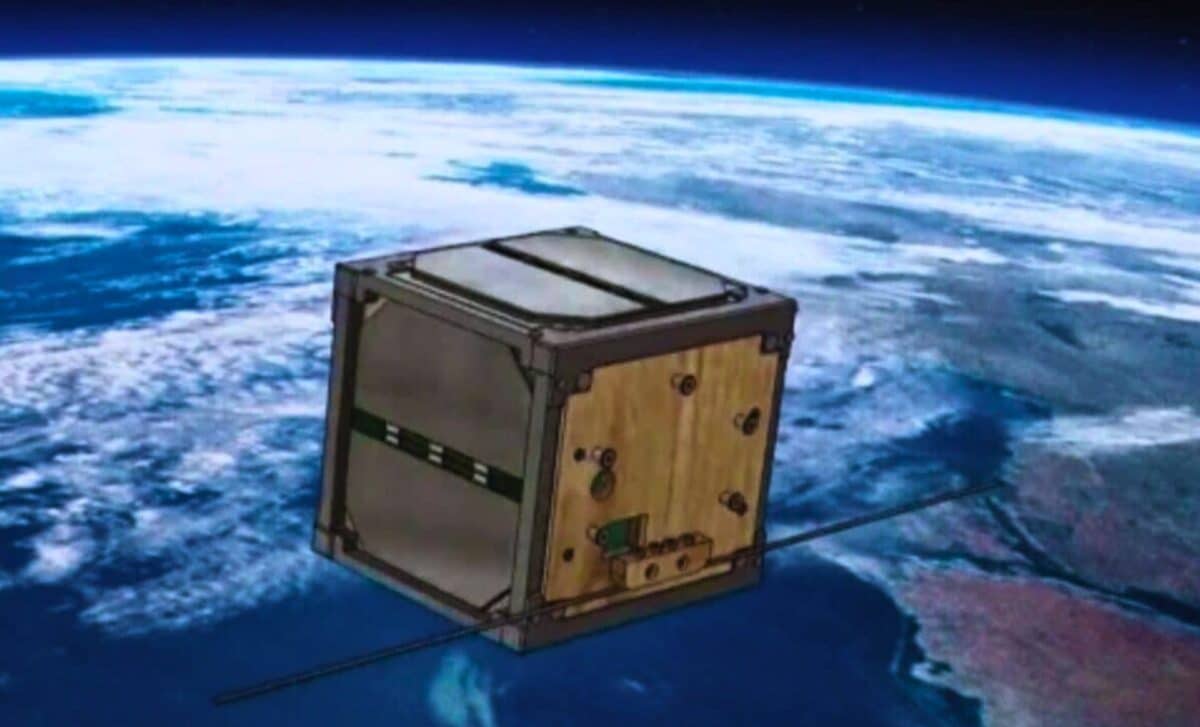
What would make aerospace researchers send wood into orbit at a time when satellite design is becoming more advanced, more miniaturized, and more dependent on specialized materials? The answer is not nostalgia or novelty. It is the growing concern over what conventional satellites leave behind when they burn up in the atmosphere.
Japan’s wooden satellite is a small experimental spacecraft built to test whether wood can function as part of a satellite structure in low Earth orbit. The project has attracted attention because it sounds improbable at first glance: a wooden satellite in space. But the real story is less about surprise than about environmental tradeoffs.
As more spacecraft are launched, more of them will eventually reenter the atmosphere, and that has raised new questions about satellite reentry pollution, space sustainability, and whether lower-impact materials might have a role in future missions.
Why Wood Ended Up in Orbit
The environmental concern behind the mission becomes clearer in the scientific literature. A study published in the Proceedings of the National Academy of Sciences found that metals from spacecraft reentry can be detected in stratospheric sulfuric acid particles. The paper reported that about 10% of particles larger than 120 nanometers contained aluminum and other elements linked to reentering spacecraft, and it warned that the share could rise substantially as traffic in low Earth orbit continues to increase.
That does not mean every satellite is an atmospheric crisis in itself. It does mean the cumulative effect of a growing orbital economy deserves more attention than it once did. The upper atmosphere is no longer shaped only by natural processes and aviation. It is also being influenced, in measurable ways, by the remains of spacecraft burning up after mission end.
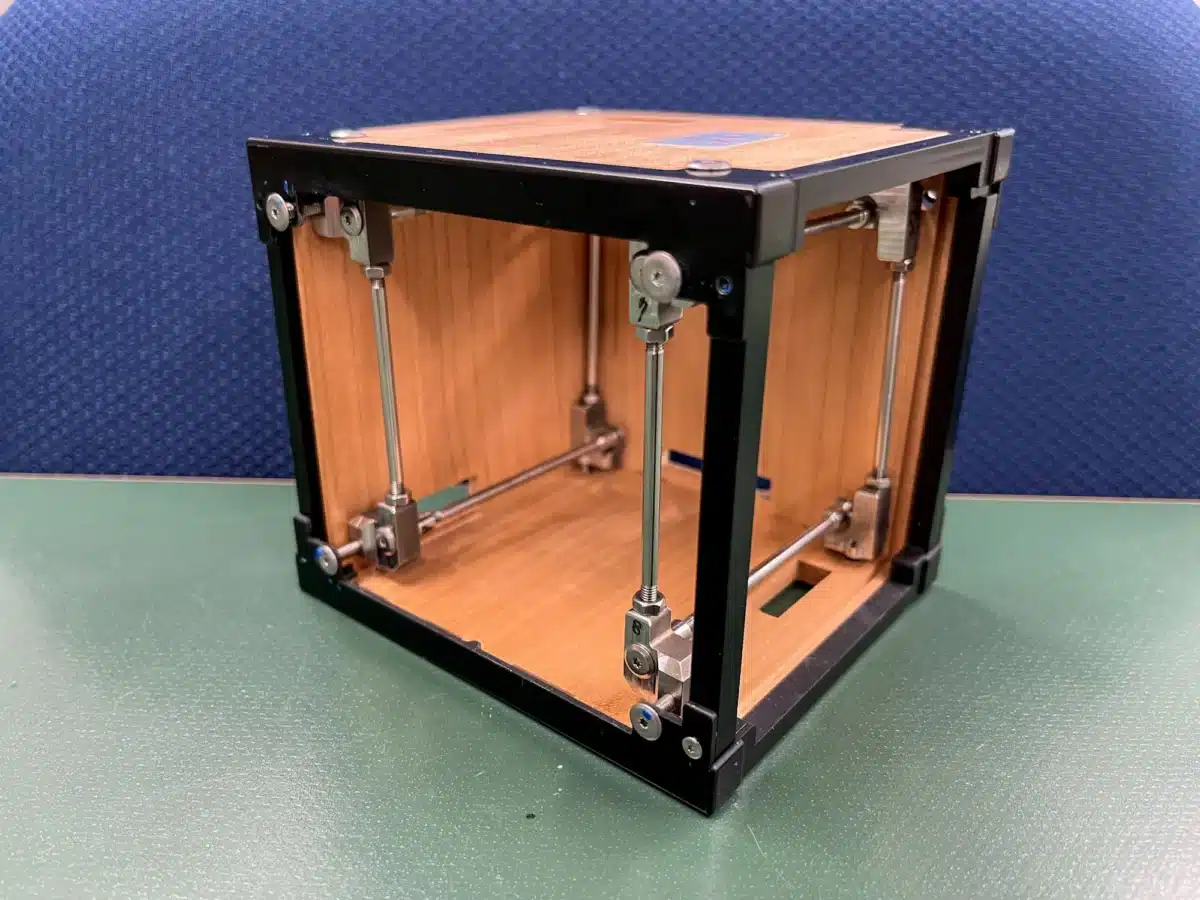 LignoSat’s internal view shows how the wooden panels, aluminum frames, and steel shafts are arranged. Credit: Kyoto University
That is the context in which a wooden satellite starts to look less eccentric and more practical. If some structural materials produce less metallic residue during reentry, then testing those alternatives becomes a legitimate engineering question. LignoSat is one attempt to explore that possibility without pretending the problem is already solved.
What Satellite Reentry Leaves Behind
The clearest description of the spacecraft itself comes from NASA, which reported that LignoSat was among five CubeSats deployed from the International Space Station in December 2024. Its description is also precise about the hardware: “The final design used 10 cm long honoki magnolia wood panels assembled with a Japanese wood-joinery method.”
That wording matters because it grounds the story in what is actually flying. LignoSat is not a folk-art gesture or a symbolic object placed in orbit for attention. It is a compact working satellite designed to gather data. According to the mission description, researchers plan to monitor how the wood responds to strain, temperature, and radiation, while also examining whether the geomagnetic field penetrates the wooden body in ways that could affect onboard systems.
In other words, the mission is asking straightforward engineering questions. Can wood remain dimensionally stable in orbit? Can it tolerate the thermal swings and radiation environment of space? Can it coexist with electronics inside a functioning spacecraft? Those are narrow questions, but they are the kind that matter when turning an unusual idea into testable aerospace research.
From ISS Testing to a Real Mission
Before wood could be used in a satellite, researchers had to establish whether it could survive space exposure at all. Coverage in Daily Galaxy points to earlier tests in which wood samples were exposed on the International Space Station for nearly a year and showed little visible deterioration. That summary aligns with the mission background describing prior orbital testing of multiple wood species before the final material was selected.
The academic trail behind the project also helps place it in a serious research context. ResearchGate lists Koji Murata’s scientific contributions and connects him to Kyoto University, where the wood-based satellite work has been developed. That does not prove every broader claim made about the future of satellite materials, but it does show that the project is rooted in published research rather than headline-driven speculation.
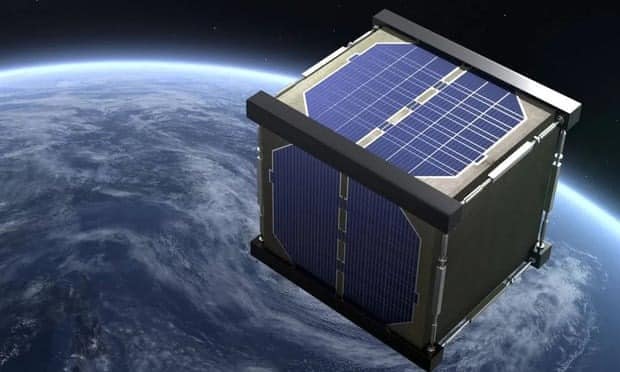 An artist’s impression of LignoSat. Credit: Kyoto University
The choice of honoki magnolia was not arbitrary. It followed screening and exposure testing aimed at finding a wood species suitable for machining, joining, and structural use in a small spacecraft. That development path is what gives LignoSat its real significance.
The point was never simply to say that wood can be placed in orbit. The point was to examine whether it can perform under orbital conditions well enough to justify further study as a sustainable space material.
The Small Satellite That Made Experts Pay Attention
Part of the attention around LignoSat comes from the people and institutions linked to it. JAXA identifies Takao Doi as a former astronaut with a doctorate in engineering and notes that he became the first Japanese astronaut to perform an extravehicular activity in 1997. That background adds weight to a project that might otherwise be dismissed as a gimmick.
Still, the importance of LignoSat should not be overstated. It does not solve the broader problem of orbital debris. It does not prove that future mega-constellations will use timber-based structures. And it does not erase the technical advantages that conventional aerospace materials still offer. What it does provide is a real in-orbit test of whether one part of satellite construction can be reconsidered in light of environmental costs.
The mission has drawn attention because it combines an unusual material choice with a clearly defined engineering objective. LignoSat was deployed from the International Space Station in December 2024 to test honoki magnolia wood panels under orbital conditions.