
The Reserve Bank of Australia has raised the cash rate for a second consecutive time as it grapples to mitigate against major inflationary market shocks.
At its March meeting, the RBA raised the official cash rate by 25 basis points, which brings it to an eight-month high of 4.1%.
The move had been widely expected by banks and economists, with markets pricing in around a 58% chance of tightening on Monday in the wake of severe market volatility from the ongoing conflict in the Middle East.
In its post-meeting statement, the RBA board said inflation expectations were already rising as the conflict drives up global fuel costs.
“As a result, the board judged that there is a material risk that inflation will remain above target for longer than previously anticipated,” it said.
“The board will be attentive to the data and the evolving assessment of the outlook and risks to guide its decisions. In doing so, it will pay close attention to developments in the global economy and financial markets, trends in domestic demand and the outlook for inflation and the labour market.”
The board was split in its decision to raise the cash rate, with five members voting to hike by 25 basis points, while four members voted to leave rates unchanged at 3.85%.
But in a press conference following the decision, RBA governor Michele Bullock said all members agreed inflation was too high, and the split was over timing, not direction.

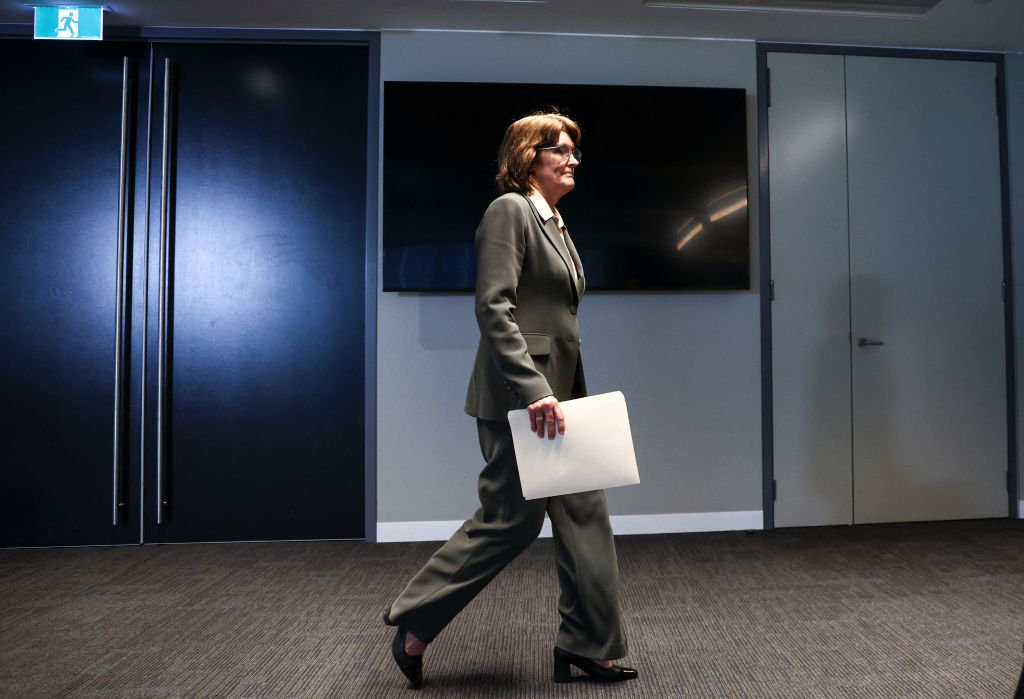
RBA governor Michele Bullock has delivered back-to-back rate hikes. Picture: Getty
Almost three weeks of Israel-United States coordinated attacks across Iran are continuing to severely impact oil availability and fuel pricing internationally.
Petrol prices have jumped around 50 cents per litre in Australia over the last week, while key farming areas in rural Victoria have already run dry with no access to fuel.
Knock-on effects on grocery prices are expected to escalate cost of living pressures in the lead up to winter, with inflation now expected to tick up again from levels that were already above the RBA’s target range before March.
REA Group senior economist Eleanor Creagh said the decision reflects “ongoing concern that inflation is proving more persistent than expected”.
“The economy continues to operate with limited spare capacity,” she added.
Inflation tensions rising
The cash rate has now climbed from 3.6% at the start of the year to 4.1%, reversing most of the benefits of last year’s three interest rate cuts.
Mortgage Choice has calculated the potential cost to borrowers if their lenders pass on the latest hike in full, with repayments on a $750,000 home loan jumping by around $120 per month.
Source: Mortgage Choice | Figures rounded to the nearest $10 and assume a starting rate of 6.01%.Remaining repaymentCurrent monthly repaymentsMonthly repayments with today’s hikeMonthly extra cost$1,000,000$6000$6160$160$750,000$4500$4620$120$500,000$3000$3080$80$250,000$1500$1540$40
Inflation was already running hotter-than-expected ahead of the recent global oil shock, with the Consumer Price Index rising by 3.8% over the year to January – well above the RBA’s 2-3% inflation target.
Underlying inflation, also known as the trimmed mean, rose 3.4% over the 12 months to January, up from 3.3% in December.
The trimmed mean is an inflation measure which discounts the items with the biggest price jumps or drops to provide a more stable picture of price movements.
Both headline and underlying inflation had been outside the RBA’s 2-3% target range for more than six months before the onset of new conflict in the Middle East.
“Underlying price pressures remain above the RBA’s target band, while housing costs and services inflation remain sticky,” Ms Creagh said.
“With unemployment still low and economic activity holding up better than expected, the board judged that a modest further tightening in policy was warranted to ensure inflation returns to target over time.”
All of the big four banks are tipping a third rate hike when the RBA next meets in May, a move that would completely undo the three rate cuts seen in 2025.
Domestic pressures
Prior to the start of United States-Israel coordinated attacks across Iran, RBA governor Michele Bullock said pressures around inflation are mostly linked to domestic issues.
The stronger-than-expected growth of the Australian economy in recent months is one of these concerns.
Recent data from the Australian Bureau of Statistics shows Australia is experiencing the fastest economic growth in almost three years.
The housing market has remained buoyant in the new year, but experts say rising interest rates will weigh on price growth. Picture: Getty
Australia’s economy expanded 2.6% over the year to December 2025, with Gross Domestic Product rising 0.8% in the three months to December ahead of the 0.7% economists had tipped.
“The pace remains above the RBA’s estimate of sustainable growth,” Ms Creagh said.
“While household spending growth has softened in recent months, it continues to expand overall, and the labour market remains resilient.”
While high living standards, wages and employment opportunities sound positive, the combination risks overheating the economy and ramping up inflation even more.
“In that environment, the RBA will be wary of declaring the inflation fight over too soon,” Ms Creagh added.
Property market buoyant, but price forecasts downgraded
The rate cuts over 2025 contributed to strong property market activity, with February marking the 14th consecutive month of home price growth, pushing median prices to a record $897,000. The value of a median home in the nation is around $90,000 more than this time last year.
But all four major banks have recently downgraded their housing market forecasts on the back of the February rate hike, with interest costs and lower borrowing capacities expected to weigh on buyer activity.
Get your realEstimate™
Track your property’s value and unlock insights and data tailored for property owners.
Search an address now
Sydney remains the most expensive capital city in which to buy a home, though it has seen significantly less growth in the last year compared to the boom markets of Brisbane, Perth and Adelaide.
Housing economist Eliza Owen told realestate.com.au the year-on-year increase in new listings across Sydney and Melbourne has helped to keep prices relatively flat through the year to date.
“Not only that, but Victoria has completed more homes than any other state and territory in the past decade,” Ms Owen said.
“Interest rate rises slow housing demand, but it’s supply that ultimately determines the extent of that slowdown.”
Eyes on spending
The all-important quarterly inflation data for the first few months of 2026 will not be published until later this month. New employment numbers are also expected then, giving the bank time to decide its approach for May.
“The board has clearly prioritised pre-emptive action over a wait-and-see approach,” Mortgage Choice CEO Anthony Waldron said.
The next RBA rates decision is scheduled for 5 May. Picture: Getty
The next meeting for the monetary policy board will come just one week before the Labor Government hands down the 2026 Federal Budget.
The next cash rate decision will come on 5 May.