
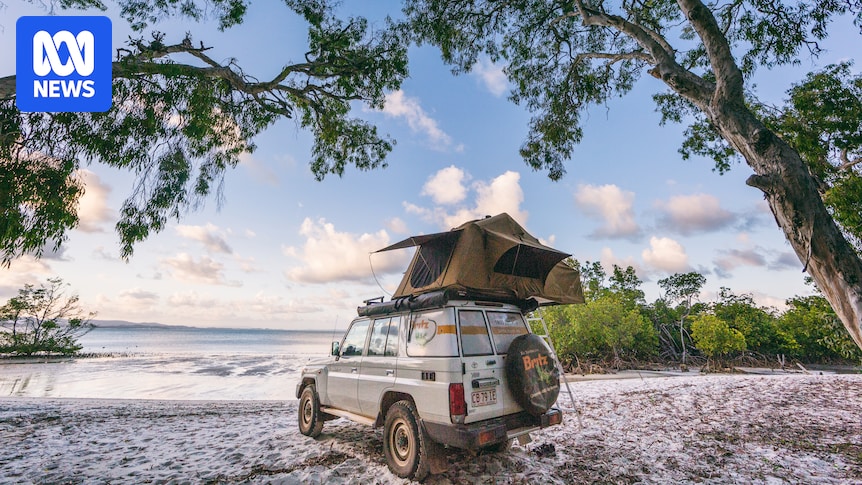
For Leigh and Lindsay Ludwig, a six-month caravan trip around Australia has stalled before it even began.
The Gold Coast retirees have been planning the trip for months, eager to tick off iconic sights from their bucket list, travelling through remote areas of far north Queensland, the Northern Territory, and Western Australia.
But diesel shortages in remote towns and rising fuel costs due to the war in the Middle East have forced them to postpone.
Fuel panic buying ‘causing system to break down’
“I’m more than disappointed. I’m really quite annoyed,” Ms Ludwig said.
“We can’t risk getting stranded in the bush with no fuel. If you can’t move your car, you can’t buy food, you can’t survive.”
Professor Susanne Becken, a sustainable tourism expert at Griffith University, said the rising fuel costs were putting pressure on all areas of travel including aviation, cruising, and road.

Professor Becken says it will have a ripple effect into regional communities who rely on the drive market. (Supplied: Susanne Becken)
It comes at a challenging time for Australia’s tourism sector, with international visitor numbers down 8.2 per cent for February compared to last year, according to Australian Bureau of Statistics data.
“Whether you take a local trip by car, fly somewhere, or go on a cruise, it all depends on energy,” Professor Becken said.
“When fuel prices rise sharply, travellers postpone or cancel their holidays.
“That’s going to have an impact on a lot of regional communities that rely on the drive market.”
Iran war live updates: For the latest news on the Middle East crisis, read our blog.
Regional communities to miss out
Caravan Industry Association of Australia CEO Stuart Lamont said there had not yet been widespread cancellations for the Easter travel period.
“[However] we acknowledge that those people planning a bigger trip around Australia may be influenced by fuel pricing,” he said.
“The bigger concern is around fuel availability in regional areas as well as current flooding in northern Australia rather than pricing.”
He warned some regions could be hit hard.
“We are deeply concerned that these areas will have their season obliterated based around media commentary.”

Leigh and Lindsay Ludwig say regional communities are missing out if more families like them, cancel due to fuel shortages. (Supplied)
The Ludwigs have travelled around Australia before. They spent six months on the road in 2021. That trip cost about $42,000, with the pair spending roughly $1,500 a week in regional communities on fuel, tourism activities, and supplies.
Ms Ludwig said they had budgeted closer to $2,000 a week for their now delayed trip.
Loading
“That’s $8,000 a month not going into those areas,” Ms Ludwig said.
“And it’s not just us. Lots of caravanners that were planning on going through these towns are delaying.
“They buy fuel, groceries, go to the pubs, the chemists, fill up their gas cylinders.”
At the tip of Australia, Queensland’s Cape York Peninsula has long been a bucket-list destination for campers and four-wheel-drive enthusiasts, who tackle thousands of kilometres of rugged, red-dirt roads to reach the remote frontier.
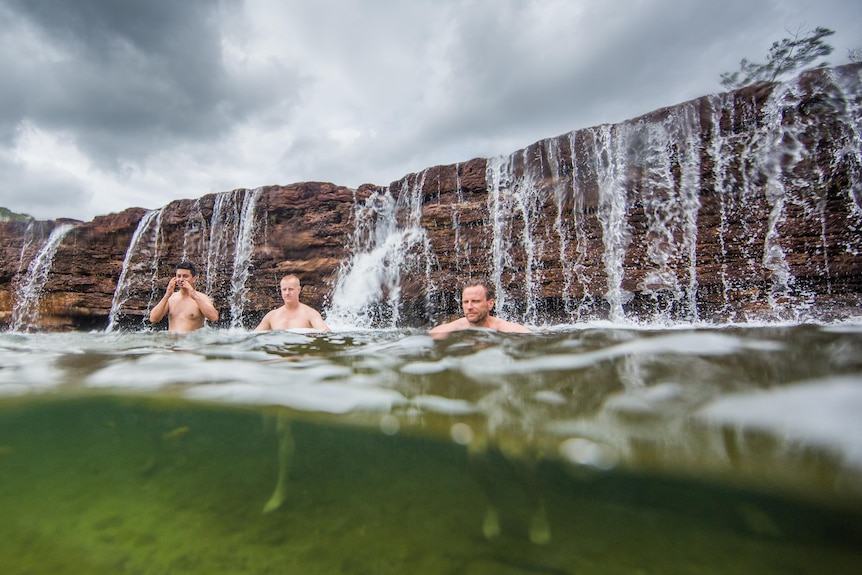
Fruit Bat Falls in Cape York is a popular swimming spot. (Supplied: Tourism Tropical North Queensland )
Jack Colquhoun, general manager of his family-run campground at Punsand Bay, said fuel was a lifeline for both travellers and local communities in the area.
“Without it, they’d be pretty stranded. Every community runs on diesel generators for pretty much everything, so it’s a very important resource,” Mr Colquhoun said.
He said fuel prices were around $2.59 a litre and he remained hopeful travellers would not be put off visiting the area as the peak tourism season in far north Queensland begins.

Jack Colquhoun and his family run Cape York Camping Punsand Bay, at the tip of Queensland, which welcomes thousands of tourists each year.
“If we keep seeing airfares increasing, we may even see a silver lining, similar to what happened during COVID, when people started holidaying at home,” he said.
“That’s what we’re all hoping for.”
Rough seas ahead for cruise tourism
Cruising could also become more expensive for passengers with ships burning hundreds of tonnes of fuel each day to power engines, kitchens, air conditioning, lighting, and entertainment.
The Australian cruise industry, contributed AU$7.32 billion to the economy in 2024–25 — a $1.11 billion drop on the previous year.
The Cruise Lines International Association (CLIA) and Australian Cruise Association (ACA) said high operating costs, including harbour fees, and red tape contributed to the decline.
Professor Becken said cruise companies may start looking at implementing fuel surcharges; an extra fee per passenger added to tickets.
“Those really cheap family holidays on cruise ships are the ones most at risk,” she said.
“If fuel goes up, the cruise fare will have to go up.”
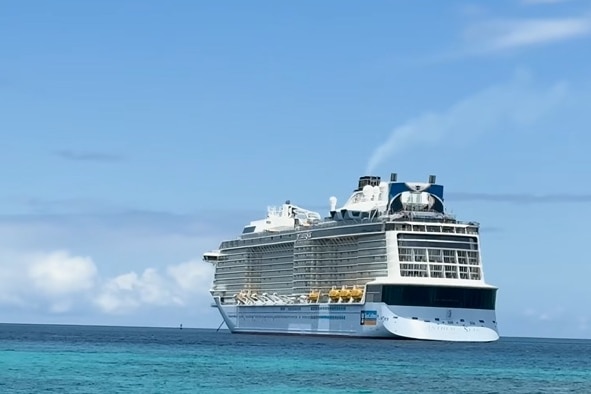
The cruise industry has already taken a huge financial hit, down $1.1 billion from 2024-2025. (ABC News: Lillyrose Welwel)
Professor Becken said any reduction in cruise activity would ripple through the ports they berth in, hitting both city and regional communities in Australia.
“Cruise visits create a huge windfall for businesses around the country, many of which are small-to-medium sized operators like local tour companies, shops, restaurants, travel agents, farmers and other suppliers,” she said.
She said the current fuel crunch was a chance to rethink the tourism sector.
“We need to think about how we can remove tourism’s dependence on fossil fuels. Renewable energy and electrification are the way forward for tourism,” she said.