

Updated March 18, 2026 — 1:19pm,first published 12:02pm
Save
You have reached your maximum number of saved items.
Remove items from your saved list to add more.
Save this article for later
Add articles to your saved list and come back to them anytime.
Got it
AAA
Victoria’s transport department failed to resolve early contract disputes and accepted an unrealistic timeline for the rollout of the new myki system before the program suffered a $136.8 million blowout and an 18-month delay, an audit has found.
A report by the Victorian Auditor-General’s Office released Wednesday also highlights the high cost of running the new public transport ticketing scheme, which it estimates will absorb 26¢ of every $1 it collects in fare revenue.
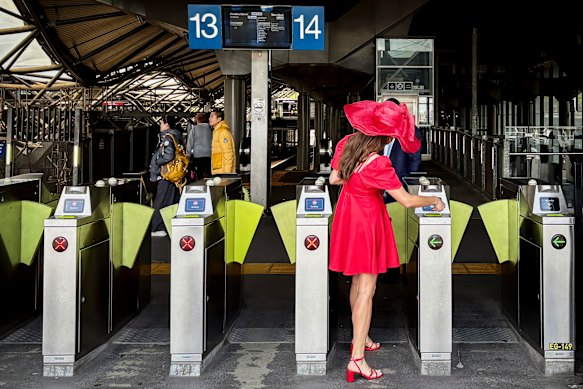 A trial of the new myki system launched on Monday. Paul Rovere
In contrast, the Department of Transport and Planning (DTP) received advice in 2021 that “based on other global ticketing implementations, the cost of fare collection for a modern account-based system could be less than 10¢ per dollar collected,” the audit says.
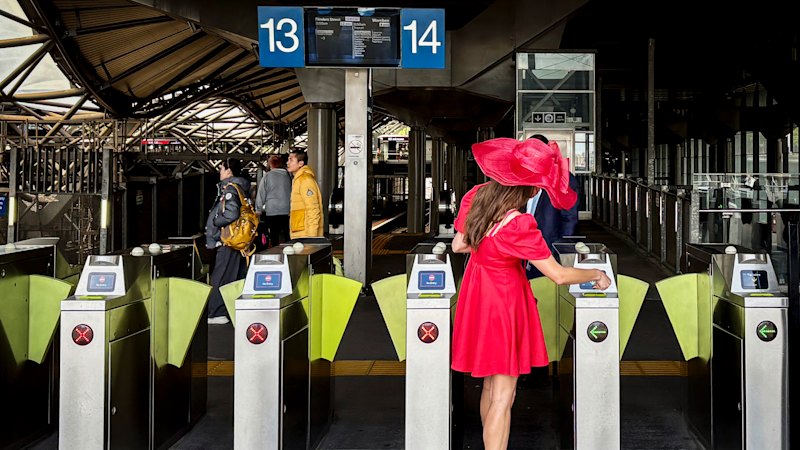
The report comes two days after Transport Victoria launched a trial of the new ticket technology on a handful of V/Line and Metro train lines, allowing passengers to touch on with bank cards and iPhones for the first time.
Related Article
Victoria signed a contract, now valued at $1.96 billion, with US outfit Conduent in 2023 to install and run the new ticket system across the state for 15 years.
But, as revealed by this masthead, the transport department and Conduent were at loggerheads by June 2024 over the contract and rollout schedule, with a “standstill” agreement in place for six months. They eventually agreed to reset the project, with a $136.8 million budget increase and 18-month delay.
“Before awarding the project contract, DTP received advice that [Conduent’s] delivery schedule was overly optimistic and did not contain enough detail. Ultimately, the schedule was proven to be unrealistic,” the VAGO report says.
“DTP did not address these known issues before signing the contract. It instead deferred this work… which contributed to disputes.”
VAGO found that the DTP was slow to hand over source code from the existing myki software that Conduent needed so it could continue to run the old and new systems side-by-side during the rollout, which contributed to delays.
The audit reveals that the program’s current timeline sets a target to enable tap-and-go payments across the state by mid-2027 and for the entire system to be rolled out by mid-2028.
That will include the installation of 23,000 reader devices and introduction of “account-based ticketing”, which will link customers’ cards and devices to accounts, apply concessions and automatically calculate the lowest possible fare based on their travel patterns.
The audit says the program is on track with the revised timeline, but warns of upcoming challenges that could cause more delays.
Related Article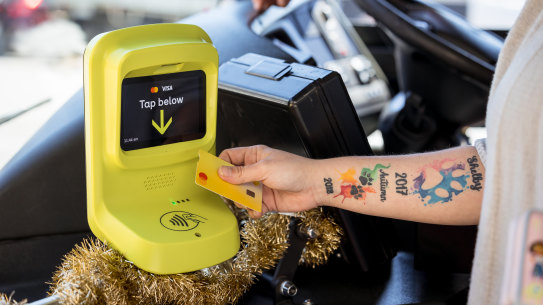
The contractor responsible for developing a system so passengers can use concession fares with tap-and-go payments, HCLTech, told the auditor the DTP had recently paused its work, “directly impacting” the rollout timeline.
Transport department secretary Jeroen Weimar told the auditor that it had paused HCLTech’s work in response to policy changes, including the introduction of free travel for under-18s through the new youth myki.
The transport department has estimated the project will return a benefit of $1.45 for every $1 spent over the 15-year life of the project.
That includes a 1 per cent increase in public transport passengers, a 35 per cent reduction in fare evasion and 50 per cent decline in concession fare fraud, and time saving and convenience for commuters.
But the auditor said the project’s value for money was “unclear”, as data showed Victoria already had very low rates of fare evasion and concession fraud.
It estimated that the total cost of running the project over 15 years would be $2.8 billion, including the cost of the tender process, new software build, infrastructure rollout and oversight of the new system.
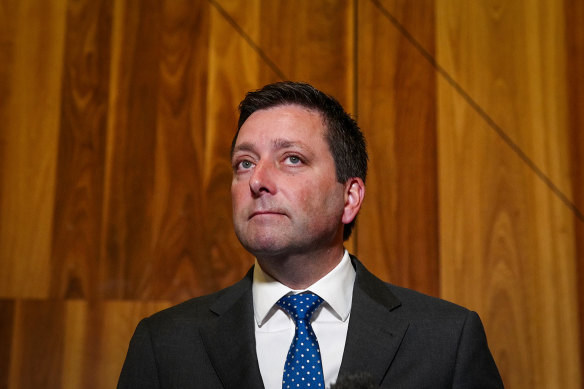 Opposition public transport spokesman Matthew Guy.Luis Enrique Ascui
Opposition public transport spokesman Matthew Guy said: “It beggars belief that upgrading transport ticketing could be this hard or this expensive.”
“This latest myki fiasco again shows that Labor can’t manage money and can’t deliver any projects on time,” Guy said.
Related Article
A spokesperson for the Allan government said international experience showed that it usually took about four years to introduce a new ticket system.
“We’re delivering the projects Victorians need – we’re also making it easier for people to catch public transport, offering better services, cheaper fares,” they said.
Be the first to know when major news happens. Sign up for breaking news alerts on email or turn on notifications in the app.
Save
You have reached your maximum number of saved items.
Remove items from your saved list to add more.
 Patrick Hatch is transport reporter at The Age and a former business reporter.Connect via X or email.From our partners